

In this article
Applying hair oil to damp hair works best when you want light, even coverage after washing. Applying it to dry hair gives you more control when smoothing flyaways, adding shine, or softening specific rough areas.
Neither method wins in every routine. The better choice depends on what you want the oil to do.
It also matters whether your hair is damp or dripping wet. Oil applied to saturated hair can be difficult to distribute and judge. For post-wash use, gently blotted hair gives you more control.
Key Takeaways
-
Damp application supports even distribution across freshly washed hair.
-
Dry application gives more control over shine, flyaways, and rough ends.
-
Hair density and oil weight affect how much each method can tolerate.
-
Testing both methods with small amounts prevents unnecessary buildup.
Hair Oil on Damp vs Dry Hair at a Glance
The simplest way to choose is to separate coverage from correction.
Damp application spreads a small amount across a wider area. Dry application lets you correct individual areas after you can see the finished texture.
|
Decision Factor |
Damp Hair |
Dry Hair |
|
Best for |
Even distribution and post-wash layering |
Targeted smoothing and finishing |
|
Starting amount |
A small amount spread through sections |
A smaller amount applied selectively |
|
Finish |
Softer and more diffused |
More visible shine and polish |
|
Main risk |
Applying while hair is too wet or using too much |
Creating concentrated greasy patches |
|
Best placement |
Mid-lengths and ends |
Ends, flyaways, and rough sections |
|
Feedback speed |
The full result appears after drying |
Weight and shine appear immediately |
Damp means towel-blotted and no longer dripping. If water is still running from the ends or soaking your clothes, wait before adding oil.
Apply Oil to Damp Hair for Even Post-Wash Coverage

Damp hair gives you a larger working area. A small amount of oil can move across several sections before settling into one spot.
This method often suits people who want their air-dried hair to feel softer or look less puffy. It also works when oil is the final layer in a post-wash routine.
The tradeoff is delayed feedback. You will not know how much shine, weight, or volume remains until your hair finishes drying. Starting conservatively matters.
Start After Conditioner or a Water-Based Leave-In
Hair oil and conditioner have different jobs.
Conditioner helps detangle hair and improve manageability. A water-based leave-in can add slip and support a softer post-wash result. Oil works better as a light surface-conditioning or finishing layer, not as a replacement for those steps.
When you use both, apply the leave-in first. Then add oil to the mid-lengths and ends. This order is especially useful with richer botanical oils that can feel heavy when layered too early.
Keyoma’s guide to layering oil with leave-in conditioner explains how to separate the moisture step from the finishing step without coating the hair.
Remove Excess Water Before Applying Oil
Do not twist or rub your hair aggressively to make it dry faster.
The American Academy of Dermatology recommends gentle handling because hair is delicate when wet. Its dermatologists advise absorbing moisture with a towel or T-shirt and using care when detangling.
Blot your hair until it feels damp. Apply any leave-in product, then wait briefly if needed before smoothing oil over the lengths.
This timing gives you better control than applying oil while water is still dripping through the strands.
Adjust the Amount to Density and Texture
Hair type labels can help, but density and product tolerance often tell you more.
Fine or low-density hair may lose volume after a thin layer that thicker hair barely notices. Thick, coarse, curly, or coily hair may need section-by-section application to prevent the oil from collecting on the outer layer.
Use these observations to guide the amount:
-
If your strands separate into shiny, stringy pieces, use less.
-
If the outer layer looks polished but the inner sections stay rough, divide the hair before applying.
-
If your ends respond well but the upper lengths collapse, keep the oil below ear level.
-
If your hair dries stiff despite looking shiny, it may need a water-based product instead of more oil.
Start with less than you expect to need. You can add a trace to dry hair later, but removing an excessive post-wash layer usually requires washing again.
Apply Oil to Dry Hair for Targeted Smoothing

Dry application is less about broad coverage and more about correction.
Once your hair has dried, you can see which ends look rough, which flyaways interrupt the style, and whether the surface needs more shine. You can then treat those areas without adding weight everywhere else.
This makes dry application useful for fine hair, layered cuts, straightened styles, or any routine where volume matters.
Smooth Flyaways and Rough Ends Without Coating Everything
Warm a trace of oil between your palms or fingertips. Your hands should look lightly conditioned, not wet.
Press the remaining film onto the areas that need it. Avoid dragging oily palms from the roots to the ends, since the upper sections may not need additional product.
If dryness is limited to the last few inches, oiling only the ends is more controlled than coating the full length. This approach can preserve movement near the roots while giving older, more weathered ends extra slip.
Use the Finished Style to Judge the Amount
Dry application gives immediate feedback.
After each pass, pause and look at the hair in normal light. Check its movement as well as its shine. Hair can look polished while remaining flexible, or it can appear glossy because too much product has grouped the strands together.
Stop when the roughness softens. You do not need to continue until every strand reflects the same amount of light.
This is why a smaller amount usually works better on dry hair. The oil stays where you place it instead of spreading with residual water.
Avoid Re-Oiling Hair That Needs Water or Cleansing
A dry surface does not always mean your hair needs more oil.
If your hair feels stiff, oil cannot supply the missing water. If it feels tacky, dull, or coated, another layer may trap more residue on the strand. Hair that looked smooth after the first application but feels heavier each day may need cleansing rather than continued reapplication.
Keyoma’s guide to deciding whether to re-oil or re-wet hair can help when dryness appears between wash days.
Choose the Method Based on the Result You Want
Do not choose damp or dry application based only on curl pattern. Decide what needs to change in the finished hair.
Choose damp hair when you want:
-
Broad, lightweight distribution after washing
-
Oil layered over a water-based leave-in
-
Softer-looking air-dried texture
-
A small amount spread through thick or dense sections
Choose dry hair when you want:
-
More control over placement
-
A touch of shine on a finished style
-
Smoother flyaways or rough ends
-
Immediate feedback before adding more
Using both can work, but the second application should not repeat the first.
For example, you might apply a light layer to damp mid-lengths after washing. Once the hair dries, use the residue left on your fingertips to smooth two or three rough ends. That is different from coating the full length twice.
Skip the second application if the roots look separated, the lengths feel waxy, or your natural movement has disappeared.
Run a Split-Hair Test Before Changing Your Routine
General hair-type advice cannot account for your haircut, climate, existing products, or the condition of your ends. A split-hair test gives you a more useful answer in one wash cycle.
-
Wash and condition your hair as usual.
-
Gently blot until your hair is damp instead of dripping.
-
Divide it into two comparable sides.
-
Apply a small amount of oil to one side while it is damp.
-
Leave the other side untreated until it is completely dry.
-
Apply a smaller finishing amount to the dry side.
-
Compare softness, shine, definition, volume, frizz, and residue.
-
Check both sides again the following day.
Keep your leave-in, styling method, drying time, and amount of heat the same on both sides. If you change several parts of the routine, you will not know whether the application timing made the difference.
Pay attention to the second-day result. The damp side may dry beautifully but feel heavier the next morning. The dry side may retain more volume but need extra attention on the ends. That delayed feedback helps you choose a method you can maintain, not one that works for only a few hours.
Prevent Greasiness and Buildup With Either Method
Most oiling mistakes begin with treating the suggested amount as a target instead of a limit.
The right amount is the smallest quantity that produces the result you want. That quantity changes with the oil, hair density, other styling products, and time since your last wash.
A few adjustments can prevent most problems:
-
Start at the ends and move upward only when necessary.
-
Avoid automatic root application when the concern is dry lengths.
-
Use less oil on dry hair because it remains more concentrated.
-
Check whether your leave-in or styling cream already contains oils.
-
Let damp hair dry before deciding that it needs another layer.
-
Wash the hair when it feels coated instead of layering over residue.
Greasy roots, limp lengths, persistent residue, or scalp discomfort may indicate that your routine has gone beyond simple finishing. Review the possible side effects of over-oiling before increasing the amount or frequency.
Oil also should not replace a heat-protection product. If you plan to blow-dry, straighten, or curl your hair, use a product with a verified heat-protection claim according to its directions.
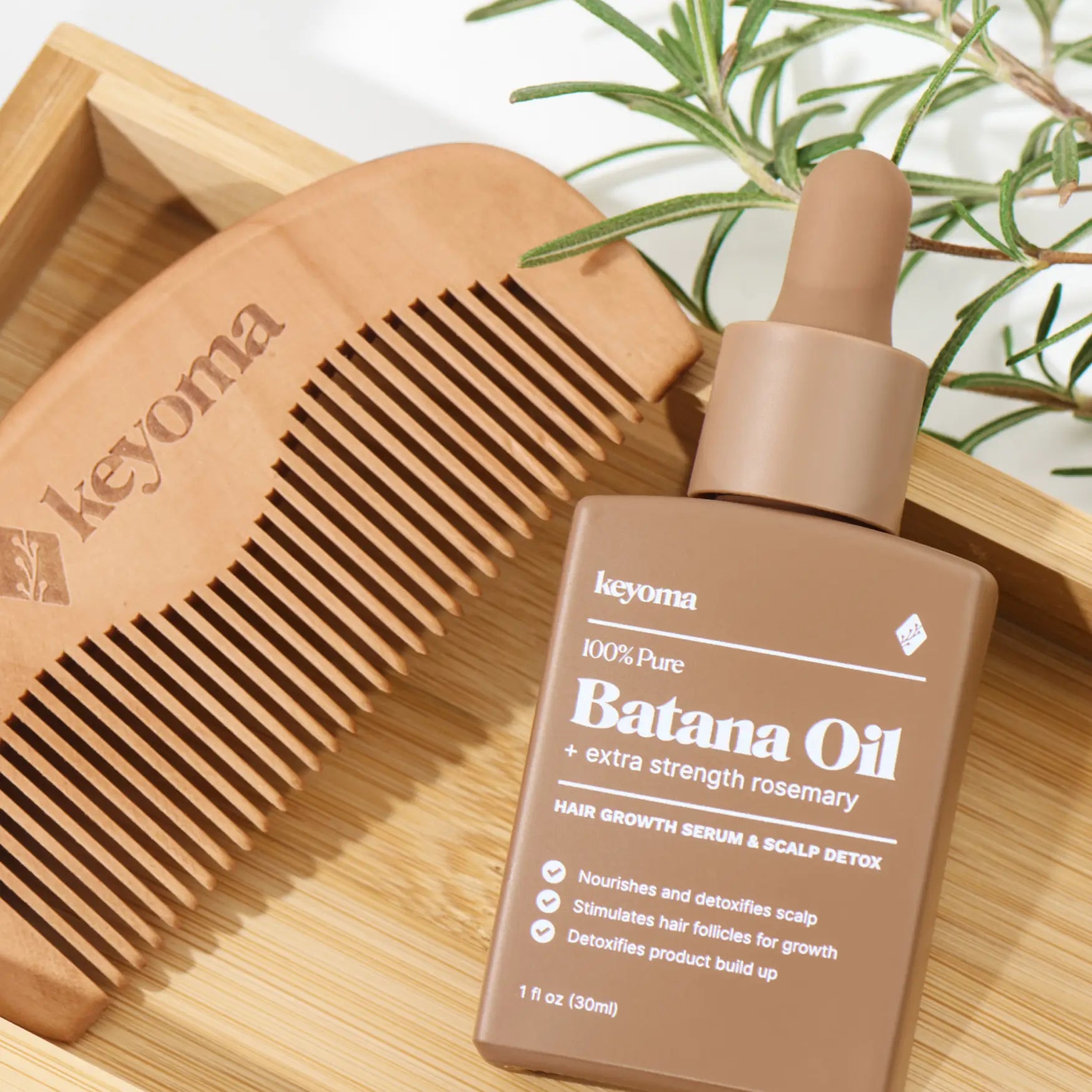
Can You Use Keyoma Batana Oil on Damp or Dry Hair?
You can test Keyoma Batana Oil with either method.
After washing, smooth a small amount over damp mid-lengths and ends. If you prefer to judge the finish first, wait until your hair is dry and press a smaller trace onto rough ends or flyaways.
Batana oil has a richer feel than some lightweight finishing products, so restraint matters. Fine, low-density, or buildup-prone hair may respond best to a narrow ends-only application. Thick, coarse, or textured hair may benefit from dividing the lengths into sections so the oil spreads evenly.
Treat the first application as a test. A natural oil does not need to be used heavily to earn a place in your routine.
Frequently Asked Questions
Is damp hair the same as wet hair for applying oil?
No. Damp hair has been gently blotted and is no longer dripping.
This distinction gives you better control over placement. When hair is saturated, water can carry the oil unevenly or make it difficult to recognize how much product you applied.
Does hair oil lock water inside damp hair?
“Locking water inside” is too literal.
Oil can coat and lubricate the hair surface, which may help the strand feel smoother and reduce a rough finish. The result depends on the oil, amount, products underneath it, and condition of your hair.
Oil does not add water to dry hair. If the hair feels stiff or lacks flexibility, start with water-based care rather than adding repeated oil layers.
Should fine hair receive oil when damp or dry?
Either method can work, but dry application gives fine hair faster feedback.
You can see immediately whether the oil improves shine or begins reducing volume. Damp application may still work when you need to spread a tiny amount evenly, especially if you keep it on the ends.
Can I apply oil to dry hair every day?
Daily use is not automatically beneficial.
Reapply only when the hair still moves freely and a specific area needs more slip or polish. Pause when the strands become flat, separated, sticky, or harder to cleanse. Those are common signs of hair oil overuse.
Should hair oil go before or after leave-in conditioner?
Apply a water-based leave-in conditioner first, then add a small amount of oil.
The leave-in supports conditioning, slip, and manageability. The oil works as the lighter final layer when used in an appropriate amount.
Match Your Hair Oil Timing to the Finish You Need
Use hair oil on damp hair when you want even post-wash coverage. Use it on dry hair when you need targeted smoothing and want to see the result immediately.
If you are unsure, test each method on one side during the same wash cycle. Your hair’s movement, softness, volume, and second-day feel will give you a clearer answer than a fixed rule.
For a richer botanical finishing option, start with a small amount of Keyoma Batana Oil on damp lengths or dry ends. Give the result time before adding more. The goal is not to make your hair hold as much oil as possible. It is to find the least product needed for a softer, more polished finish.
Featured Product
30% Off + 3 FREE Gifts
100% Pure Batana Oil + Rosemary


