

In this article
Oil rinsing places a small amount of hair oil between shampoo and rinse-out conditioner. The basic order is shampoo, oil, conditioner, and rinse.
That sequence may give rough lengths more lubrication during conditioning. It can also leave fine or easily coated hair looking flat, stringy, or greasy. The method is optional, even for curly, coily, or natural hair.
The real test is not how slippery your hair feels in the shower. It is how your hair behaves once dry. If your lengths feel softer while retaining their normal movement, the added step may be useful. If your roots flatten or strands clump into oily sections, your regular conditioner may already be doing enough.
Key Takeaways
-
Oil rinsing places oil between shampoo and rinse-out conditioner.
-
Dry, coarse, tangled lengths may tolerate the technique better than fine or buildup-prone hair.
-
Keep the first test small, targeted, and away from the scalp.
-
Judge the method by the dried result, not shower-time slip alone.
What Is the Oil Rinse Method?
The oil rinse method is a wash-day technique that adds oil directly to freshly shampooed, wet hair before conditioner.
A typical sequence looks like this:
-
Shampoo and rinse your hair.
-
Smooth a small amount of oil over the mid-lengths and ends.
-
Apply your usual rinse-out conditioner.
-
Detangle if that is already part of your routine.
-
Rinse both products thoroughly.
Despite the name, you are not rinsing your hair with oil. You are adding a thin oil layer before conditioning.
The purpose is also narrower than many online descriptions suggest. Oil can add lubrication and change how the hair surface feels, but it does not repair structural damage or hydrate hair by itself. Think of oil rinsing as a way to adjust wash-day handling and softness, not as a treatment for every form of dryness.
Oil Rinsing vs. Pre-Wash and Post-Wash Oiling
Oil timing changes how much product remains on your hair and how easily you can control the result.
Pre-wash oil goes on before shampoo. Much of it is cleansed away, making this timing useful when you want to coat dry lengths before washing.
An oil rinse goes on after shampoo but before conditioner. It adds richness during the conditioning stage.
Post-wash oil goes on damp or dry hair after conditioning. Because it stays on the hair, it works better for targeted smoothing but requires a lighter hand.
Keyoma’s guide to choosing between pre-wash and post-wash hair oil explores the two outer steps in more detail. Oil rinsing occupies the space between them rather than replacing both.
Oil Rinsing vs. Mixing Oil Into Conditioner
Oil rinsing layers the products separately. You apply oil directly to wet lengths and then place conditioner over it.
Mixing combines a small portion of oil and conditioner in your palm before one application. This can distribute both products together, but it ties their amounts and placement to each other. Separate oil rinsing gives you more control when only the ends need extra richness.
Do not pour oil into the conditioner bottle. If you want to combine the products, Keyoma’s guide to mixing hair oil with conditioner explains why it is better to mix only one portion for immediate use.
Who May Benefit From Oil Rinsing?
Curl pattern alone cannot tell you whether oil rinsing will work. Strand thickness, density, conditioner richness, previous chemical processing, and buildup tendency often matter more.
The method is worth considering when your shampoo and conditioner work well overall, but specific sections still feel rough or difficult to handle.
Hair That Stays Rough After Regular Conditioning
Coarse, porous, weathered, or chemically treated lengths can remain rough even when the conditioner provides adequate slip. A small amount of oil may make those areas feel more lubricated as you work through the hair.
This does not mean the oil is rebuilding weakened strands. It is changing the surface feel and reducing some of the drag you notice during handling.
Look for a practical improvement. Your hair should be easier to separate and should dry with normal movement. A heavily coated finish is not a sign that the method is working more effectively.
Dense Curls and Coils That Need More Wash-Day Slip
Dense curls and coils often need to be handled in sections. When conditioner alone does not provide enough slip, an oil rinse may make it easier to move through one section without repeatedly adding more conditioner.
The goal is not to make the hair as slippery as possible. Excess product can make it harder to tell whether a knot has actually released or whether the strands are simply coated.
Use your usual detangling method and compare the effort required. If detangling becomes more manageable and the dried curls still feel light enough, the added step may suit your wash day.
Natural or textured hair does not automatically need oil rinsing. If your existing conditioner already helps your sections separate comfortably, adding oil may provide little benefit.
Dry Ends With Roots That Do Not Need More Oil
Oil rinsing can be more useful as a placement technique than as a full-head treatment.
If your roots become oily quickly but the last few inches stay rough, apply oil only to those ends. Conditioner can cover the broader area while oil addresses the section that needs more lubrication.
This targeted approach also helps prevent a common failed result: soft ends paired with flat, coated roots.
Who Should Skip Oil Rinsing?
Oil rinsing adds another coating product to wash day. That makes it a poor fit when your current problem is already too much weight, residue, or scalp discomfort.
Skipping the method does not mean oil is unsuitable in every context. It may mean this particular timing gives you less control than pre-wash or targeted post-wash application.
Fine, Low-Density, or Easily Weighed-Down Hair
Fine strands have less surface area to carry rich layers without looking separated or limp. Low-density hair can also reveal coating quickly because there are fewer strands contributing to overall volume.
Watch for these signs after drying:
-
Roots sit flatter than usual.
-
Sections look stringy instead of separated.
-
Hair takes noticeably longer to dry.
-
The surface appears dull or waxy.
-
Clean hair feels as though it needs washing again.
If you recognize these patterns, regular conditioner is likely the cleaner starting point. You can always apply a trace of oil to individual dry ends after styling, where the amount and placement are easier to control.
Oily Roots or Frequent Product Buildup
An oily scalp does not necessarily prevent you from applying oil to dry ends, but it makes full-length oil rinsing harder to manage.
Keep oil away from the roots and scalp. If your hair regularly develops residue, simplify the routine before adding another layer. Shampoo and conditioner alone can provide a clearer baseline.
Repeatedly adding oil, deep conditioner, leave-in conditioner, styling cream, and finishing oil in one routine can blur the source of heaviness. More layers do not necessarily produce a better-conditioned result.
A Flaky, Itchy, or Irritated Scalp
Do not use oil rinsing as a dandruff treatment or apply oil over an irritated scalp.
A Cleveland Clinic dermatologist advises that scalp oiling does not suit everyone and may be particularly problematic for people prone to dandruff or seborrheic dermatitis. The same guidance notes that dry, coarse, tightly curled hair may tolerate oil better than fine, straight hair, which can become weighed down. Cleveland Clinic’s hair-oiling guidance reinforces why placement and individual response matter.
Stop the test if you notice burning, redness, persistent itching, or worsening flakes. Strong or recurring scalp symptoms deserve professional assessment rather than another product experiment.
Hair That Already Feels Soft After Conditioner
A technique can be unnecessary without being inherently harmful.
If your conditioner already gives you enough slip, softness, and movement, oil rinsing adds another variable without solving a clear problem. The added layer may simply make rinsing less predictable or reduce volume after drying.
Keeping a routine simple is not missing an opportunity. It is often the most reliable way to preserve a result that already works.
How to Test Oil Rinsing Without Overloading Your Hair
Treat the first oil rinse as a one-wash comparison, not a commitment to use it every week.
Keep your shampoo, conditioner, styling products, and drying method unchanged. That gives you a better chance of recognizing what the oil actually changed.
Keep the First Test Small and Scalp-Free
After shampooing and rinsing, leave your hair wet but not pouring with water. Spread the smallest practical amount of oil between your palms and smooth it over the mid-lengths and ends.
There is no universal drop count. A dense oil behaves differently from a light finishing oil, and the right amount depends on more than hair length. Density, strand thickness, conditioner richness, and the size of the target area all affect the result.
If your hair builds up easily, test the method on one section or only the driest ends. This gives you useful information without committing the entire head to an unfamiliar layer.
Use the oil at room temperature or warm it gently between your palms. Extremely hot oil and hot rinse water are unnecessary.
Apply Conditioner Without Adding More Variables
Apply the rinse-out conditioner you already use, following its normal contact time and label directions. Do not switch to a new shampoo, rich mask, and styling cream during the same test.
Detangle only if your hair normally tolerates detangling at this stage. Oil can increase surface slip, but it does not make aggressive pulling safe.
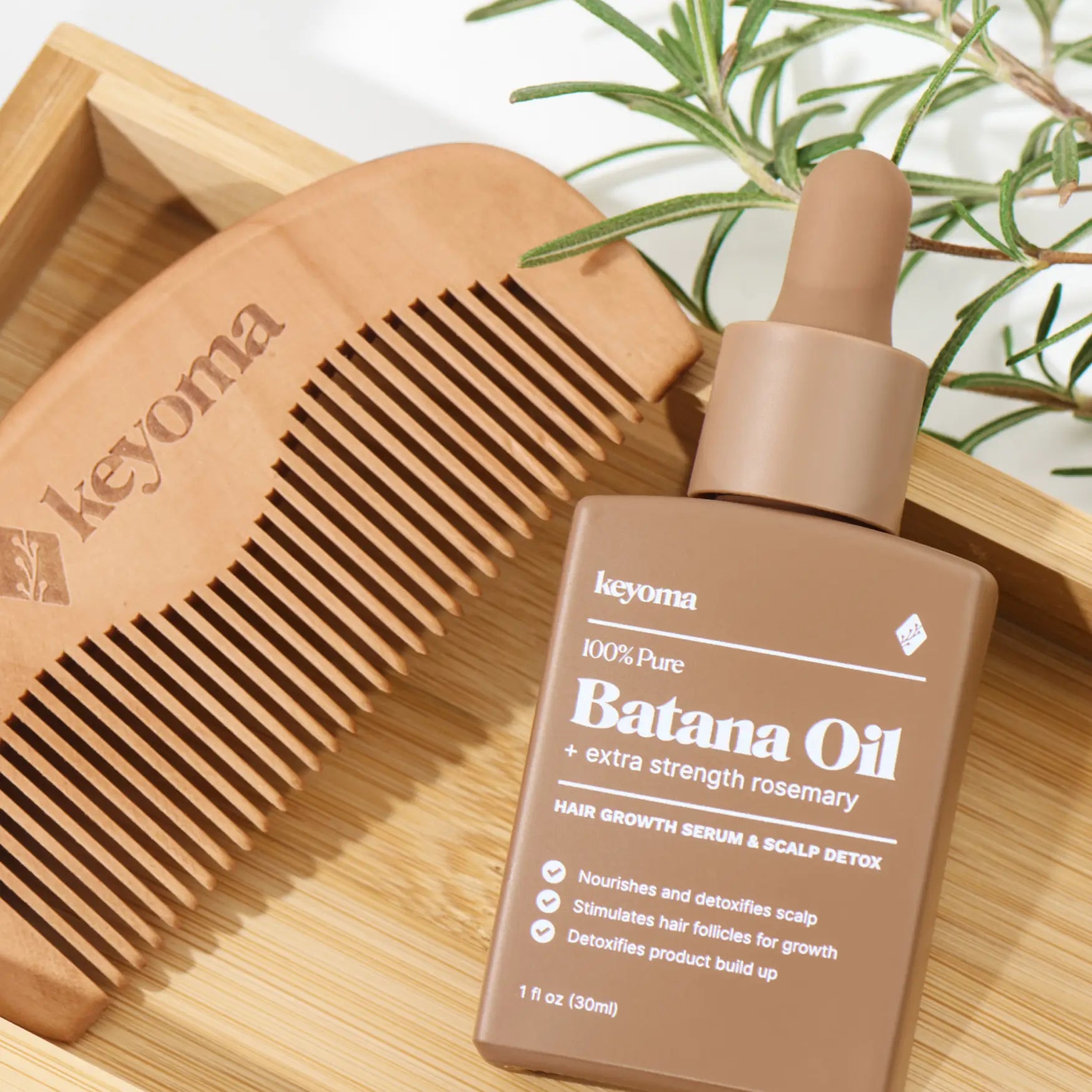
If you want to try a rich oil, a small amount of Keyoma Pure Batana Oil with Rosemary can be reserved for the driest lengths where its texture makes sense. Avoid automatically covering the scalp or full length. Keeping the application targeted makes it easier to judge whether the oil improved the routine or simply added weight.
Rinse Thoroughly and Evaluate the Dried Result
Rinse according to your conditioner’s directions. Do not intentionally leave extra residue behind to preserve more oil.
Then evaluate your hair after it dries:
|
Result After Drying |
Likely Interpretation |
Next Wash |
|
Softer lengths with normal movement |
The amount and placement may suit your hair |
Repeat only when useful |
|
Soft ends but flat roots |
The oil traveled too high |
Restrict application to the ends |
|
Stringy, waxy, or greasy hair |
The routine was too rich |
Reduce the oil or skip the method |
|
No meaningful difference |
The extra step may be unnecessary |
Return to regular conditioning |
|
Itching, redness, or worsening flakes |
The oil may not suit your scalp |
Stop using it |
A successful test should produce a specific improvement without introducing a larger problem. Extra softness is not a win if it comes with greasy roots, slower drying, or loss of movement.
Choose the Wash-Day Oil Step That Solves the Actual Problem
Oil rinsing is only one possible placement. Start with the problem you want to solve, then choose the simplest step that addresses it.
|
Primary Need |
Better Starting Method |
|
Reduce the harsh feel of shampoo on dry lengths |
Pre-wash oil |
|
Add slip between cleansing and conditioning |
Oil rinse |
|
Support conditioning and detangling after washing |
Leave-in conditioner |
|
Smooth only dry ends after styling |
Targeted post-wash oil |
|
Hair already feels conditioned and light |
Add no extra oil step |
Leave-in conditioner and hair oil are not interchangeable. Leave-in conditioner supplies a conditioning base designed to remain on the hair, while oil mainly adds lubrication and surface smoothing. Keyoma’s comparison of how hair oil and leave-in conditioner serve different roles can help when the problem appears after washing rather than during conditioning.
Try one purposeful placement before stacking oil before, during, and after the same wash. If you use several new layers at once, a good result is difficult to repeat and a poor result is difficult to diagnose.
Keep Oil Rinsing Optional and Easy to Reverse
Oil rinsing is most useful when it solves a narrow wash-day problem: rough lengths that remain difficult to handle after shampooing.
It is less useful when your conditioner already provides enough slip, your strands flatten easily, or your scalp is flaky and irritated. In those cases, adding an oil layer creates more opportunities for buildup than meaningful improvement.
Start with a small, scalp-free application and change only that one variable. Once your hair dries, look for softness, movement, root volume, and residue. Those observations will tell you more than the slippery feeling you experienced in the shower.
If the result works, repeat the method only when your hair needs it. If it does not, remove the step. A thoughtful routine is not the one with the most products. It is the one in which every product has a clear job.
Frequently Asked Questions
Is oil rinsing good for natural hair?
Oil rinsing may suit some dry, coarse, curly, or coily lengths, but natural hair does not automatically need it. Strand thickness, conditioner richness, and buildup tendency are more useful decision factors than the “natural hair” label alone.
Do you oil rinse before or after conditioner?
The classic oil rinse method places oil on wet hair after shampooing and before rinse-out conditioner. Applying oil before shampoo or after conditioning creates a different routine with a different amount of oil left on the hair.
Do you rinse the oil out before applying conditioner?
Some versions rinse away part of the oil first, while others place conditioner directly over it. For a controlled test, use very little oil, apply conditioner over the targeted lengths, and rinse both products thoroughly afterward.
Can oil rinsing make hair greasy?
Yes. Too much oil, application near the roots, or combining oil with an already-rich conditioner can leave hair limp, stringy, or waxy after drying.
How often should you oil rinse your hair?
There is no universal schedule. Test it during one wash and repeat it only when your hair needs additional slip without becoming coated.
Featured Product
30% Off + 3 FREE Gifts
100% Pure Batana Oil + Rosemary


