

In this article
Yes, you can mix hair oil with conditioner for one application. Blend a small amount in your palm, use it immediately, and leave the rest of both products unchanged.
The goal is not to create a new homemade formula. It is to make one conditioning session richer for dry, rough, tangled, or frizzy lengths. If your hair dries limp, stringy, or waxy, the mix was likely too rich or placed too close to the roots.
Rinse-out conditioner, deep conditioner, and leave-in conditioner also need different handling. A blend that rinses clean in the shower may feel heavy when left on the hair.
Key Takeaways
-
Mix only the conditioner needed for one application.
-
Use less oil for fine hair, rich conditioner, or oily roots.
-
Focus the mixture on rough mid-lengths and dry ends.
-
Layer separately when you need more control over weight.
Can You Add Hair Oil to Conditioner?
Adding hair oil to conditioner can make the final rinse feel richer, but it does not automatically make the conditioner more hydrating. Conditioner already coats the hair, smooths rough areas, and improves slip. Oil adds another lubricating layer that may increase softness, shine, and ease during detangling.
A review of how conditioning films interact with the hair surface explains that these coatings can smooth the cuticle and reduce friction between strands. Added oil changes the feel of that surface layer, but the result depends on oil weight, conditioner richness, hair density, strand thickness, and rinse quality.
Treat the mix as a controlled test, not a fixed recipe. Dry, coarse, curly, bleached, or weathered ends often tolerate more richness than fine, straight, low-density hair.
|
Method |
Best Use |
Application |
Main Drawback |
Recommended? |
|
In-hand mixing |
Dry or rough lengths |
Blend one portion and use at once |
Easy to overdo |
Yes, sparingly |
|
Separate layering |
Dry ends with flat roots |
Condition first, then target oil |
Adds one step |
Often best |
|
Altering the bottle |
No clear home-use advantage |
Add oil to the container |
Poor dose control and unknown stability |
No |
Do not pour oil into the full conditioner bottle. The FDA’s guidance on cosmetic microbiological safety explains that contamination can result from added ingredients, ineffective preservation, storage, packaging, and consumer handling. Mixing one clean portion for immediate use avoids storing a combination the manufacturer did not test.
How to Mix Hair Oil Into Rinse-Out Conditioner
Rinse-out conditioner is the easiest format to test because most of the mixture leaves during rinsing. You can judge the result after drying and adjust at your next wash.
Dispense Your Usual Conditioner Amount
Use the amount of conditioner you already know spreads through your hair. Changing the conditioner and oil amounts together makes it harder to identify what caused heaviness.
Squeeze out excess water first. Hair should stay wet, but water should not be running through the mixture before it reaches the drier areas.
Add the Smallest Practical Amount of Oil
Place the conditioner in your palm, touch a small amount of oil into it, and blend with a fingertip. It only needs to be dispersed enough for immediate use.
There is no universal drop count. Droppers vary, and dense oils behave differently from light finishing oils. Hair length also tells only part of the story. Coarse curls may accept more richness than longer, fine strands.
The blend should still feel like conditioner with slightly more slip. If it becomes runny or unusually slick, use less oil next time.
Apply From Mid-Lengths to Ends
Work the mixture into areas that feel rough, catch during detangling, or dry faster than the rest of your hair. For many people, that means the mid-lengths and ends.
Keep the roots and scalp clear unless both labels direct application there. The American Academy of Dermatology advises placing conditioning products where hair needs them and using the smallest amount that works. Its leave-in conditioner guidance also notes that scalp application can contribute to buildup or irritation.
If only the last few inches feel brittle, place the mix there. Coating the whole head for a local problem raises the chance of flat roots.
Rinse and Check the Final Texture
Rinse according to the conditioner label. Do not shorten the rinse to keep more oil behind. Add a separate finishing layer later when you can control its placement.
Judge the test after your hair dries. A successful mix should improve detangling and softness without removing movement. Limp roots, oily strings, or waxy ends point to too much richness.
What Changes With Deep Conditioner or Leave-In?
Deep conditioners stay on longer before rinsing, while leave-in conditioners are made to remain on the hair. Treating them as interchangeable can create buildup.
Adding Oil to Deep Conditioner
Hair oil in deep conditioner may suit coarse, curly, porous, or chemically stressed lengths that already respond well to rich treatments. It does not turn a standard conditioner into a deep conditioner. The base formula and label directions still control how the product should be used.
Check the ingredient list first. A mask that already contains several oils and butters may need no addition. Test the mask alone before changing it. Add oil only when correct use still leaves the lengths rough.
Keep the mix to one application and follow the stated contact time. More oil or a longer wait does not guarantee a softer result.
Combining Oil With Leave-In Conditioner
Leave-in formulas require more restraint because nothing is rinsed away. The AAD warns against using rinse-out conditioner as leave-in because the products have different chemistry and intended use. Only combine oil with a product labeled to stay on the hair.
Mixing in your palm may work for thick or textured hair, but separate layering gives better control. Apply leave-in through damp areas that need moisture and slip, then press oil over the driest ends.
Keyoma’s hair oil vs. leave-in conditioner comparison explains their separate roles in more detail. Leave-in provides the conditioning base, while oil works better as a targeted finishing layer.
When Separate Layering Works Better
Mixing ties the amount and placement of both products together. Separate layering works better when conditioner is needed across a wide area but oil is needed only on a few dry spots.
Fine, Oily, or Buildup-Prone Hair
Fine hair can look coated before it feels conditioned. Apply conditioner normally, rinse well, and assess the ends after drying. Add oil only if they still feel rough.
This method also suits roots that become oily quickly. You can keep conditioner away from the scalp, then use a trace of oil at the ends. If residue, itching, or flatness keeps returning, Keyoma’s guide to the side effects of over-oiling can help you separate a rich finish from buildup.
Rich Oils and Specialty Scalp Oils
Rich oils are easier to control when used alone. Batana oil can be reserved for the parts of the routine where its texture makes sense instead of being added to every conditioner.
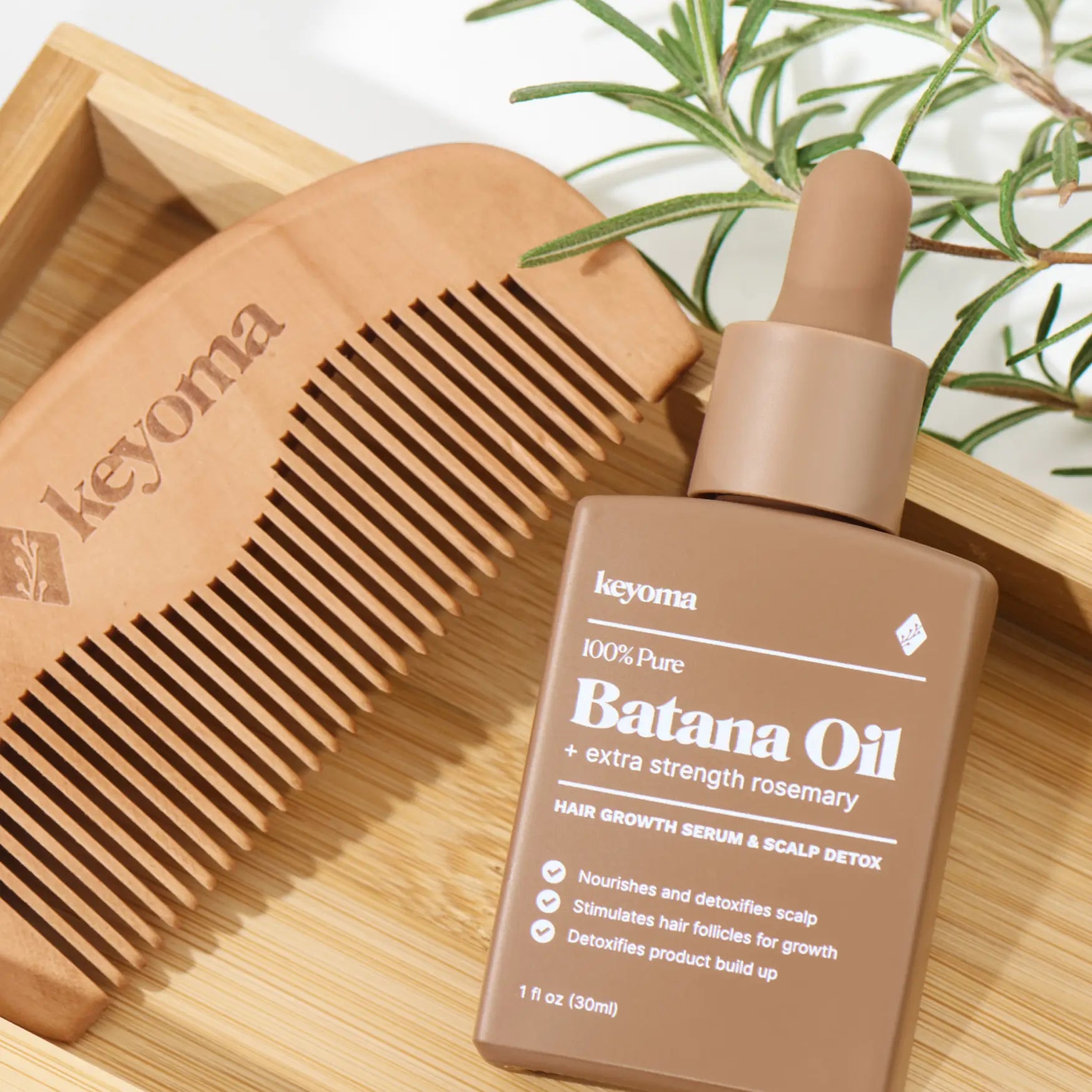
After conditioning, Keyoma Pure Batana Oil with Rosemary can be used as a separate, label-directed step. Keeping it separate lets you target the scalp or dry lengths as instructed while leaving the conditioner formula intact. It also makes adjustment easier because you can change the oil amount without changing conditioner coverage.
Keyoma’s guide to how much Batana Oil to use offers a better next step than guessing inside a conditioner blend.
What to Do If Hair Feels Greasy or Coated
Greasy hair after conditioning does not always mean oil is unsuitable. Placement, rinse quality, conditioner richness, and total product load can create the same result.
Use the dry finish to narrow down the issue:
-
Limp roots: Keep conditioner and oil farther from the scalp.
-
Stringy sections: Reduce the oil and spread the conditioner more evenly.
-
Waxy ends: Check whether the conditioner is already rich.
-
Weak rinse-out: Follow the label instead of leaving residue behind.
-
Coating after drying: Skip the mix next wash and cleanse as directed.
Change one variable at a time. Remove the added oil first. If heaviness remains, the conditioner may be too rich or later styling products may be stacking on top.
Stop using the new mixture if your scalp develops burning, redness, persistent itching, or worsening flakes. Seek professional guidance when symptoms are strong or recurring.
Mix Hair Oil With Conditioner for Softer Ends
Mix hair oil with conditioner only when your lengths need more richness than the conditioner provides alone. Keep the test small, blend one application in your hand, and place it where the hair feels rough.
Choose separate layering when roots flatten easily, the oil is rich, or only the ends need support. Conditioner can handle the broad smoothing step, while oil stays targeted and adjustable. That approach gives you softer ends without turning a finished formula into an unpredictable stored mixture.
Featured Product
30% Off + 3 FREE Gifts
100% Pure Batana Oil + Rosemary


