

In this article
When hair oil leaves one section glossy and another almost untouched, the problem may begin before your hands reach your hair. Applying a concentrated drop directly can deposit too much in the first place you touch.
To emulsify hair oil, place a small amount in one palm, press your palms together, and rub gently until the oil forms a thin film across both palms and your finger pads. Then apply that film in controlled passes. Your body heat is enough. You do not need to heat the oil separately.
Key Takeaways
-
Emulsifying hair oil means spreading it into a thin film with your hands, not creating a true chemical emulsion.
-
The oil is ready when the concentrated bead disappears and both hands have a light, even sheen.
-
Starting with less oil matters more than rubbing it for a specific number of seconds.
-
Hand emulsification improves distribution, but it cannot make an excessive dose or rich formula inherently lighter.
What It Means to Emulsify Hair Oil in Your Hands
In cosmetic chemistry, an emulsion combines oil and water with an emulsifying system that helps them remain mixed. That is not what happens when you rub pure hair oil between dry palms.
In everyday hair care, “emulsifying” is useful shorthand for softening and spreading oil with the warmth of your hands. Instead of leaving the product as one concentrated bead, you distribute it across a larger surface before it touches your hair.
This matters because your hands become part of the dosing system. If a drop remains pooled in the center of one palm, the first section you touch may receive most of it. When the same amount becomes a thin film across your palms and fingers, you can make lighter contact with more strands.
Emulsifying can improve control, but it does not change the oil itself. A rich formula remains rich. It will not suddenly suit every hair type, and an excessive starting amount can still leave hair coated.
How to Emulsify Hair Oil Before Applying It
The core process is simple:
-
Dispense a small amount into one palm.
-
Press both palms together to begin spreading it.
-
Rub gently until the concentrated bead disappears.
-
Move the remaining film across your finger pads.
-
Apply everything already on your hands before dispensing more.
The details within those steps determine whether the application feels precise or heavy.
Start With Less Oil Than You Think You Need
Begin with the amount recommended for your product and application method. If the oil is unfamiliar or you only want to smooth dry ends, start at the low end of that recommendation.
There is no reliable universal drop count. One dropper may release more than another, while different oils vary in viscosity. Hair length, density, texture, existing product buildup, and the intended result also affect how much you need.
Starting small gives you room to adjust. You can add a second micro-layer to an area that still needs oil. Removing an excessive first layer usually requires washing or restyling.
This measured approach aligns with Cleveland Clinic’s hair-oiling guidance, which notes that a small amount can go a long way and recommends spreading oil evenly rather than saturating the hair indiscriminately.
Spread the Oil Across Both Palms
Place the oil in the center of one palm, then press your palms together. That initial press moves the product outward without throwing it toward your wrists or concentrating it along the edge of one hand.
Rub your palms with a few gentle, controlled passes. Extend the movement toward your fingers so the oil reaches the finger pads as well as the broad surface of your palms.
You are not trying to create substantial heat. The mild warmth produced by normal hand movement is enough to help many oils spread. Vigorous rubbing adds no meaningful application advantage and can make it harder to assess how much product remains on your hands.
Stop When the Oil Forms a Thin, Even Film
Do not judge the process by a rigid five- or ten-second countdown. Instead, look at your hands.
The oil is ready to apply when:
-
The original bead or dollop is no longer visible.
-
Neither palm contains a wet pool.
-
Both hands have a consistent, light sheen.
-
The finger pads feel lightly lubricated.
-
No thick streak remains in the center of either palm.
Your hands should glide against each other without feeling saturated. If the oil is running toward your wrists or collecting between your fingers, you probably dispensed more than you need for a light application.
Apply the Film in Controlled Passes
Choose the hand movement based on the area you want to cover.
Flat palms work well for lightly skimming a broader outer layer. Finger pads give you more control around dry ends or individual sections. For dense or coily hair, sectioning helps the existing amount reach more strands without forcing you to compensate with a larger dose.
Start where the hair needs the most coverage. If your ends feel dry but your roots become oily easily, touch the ends first. Use the faint residue left on your hands for any secondary area.
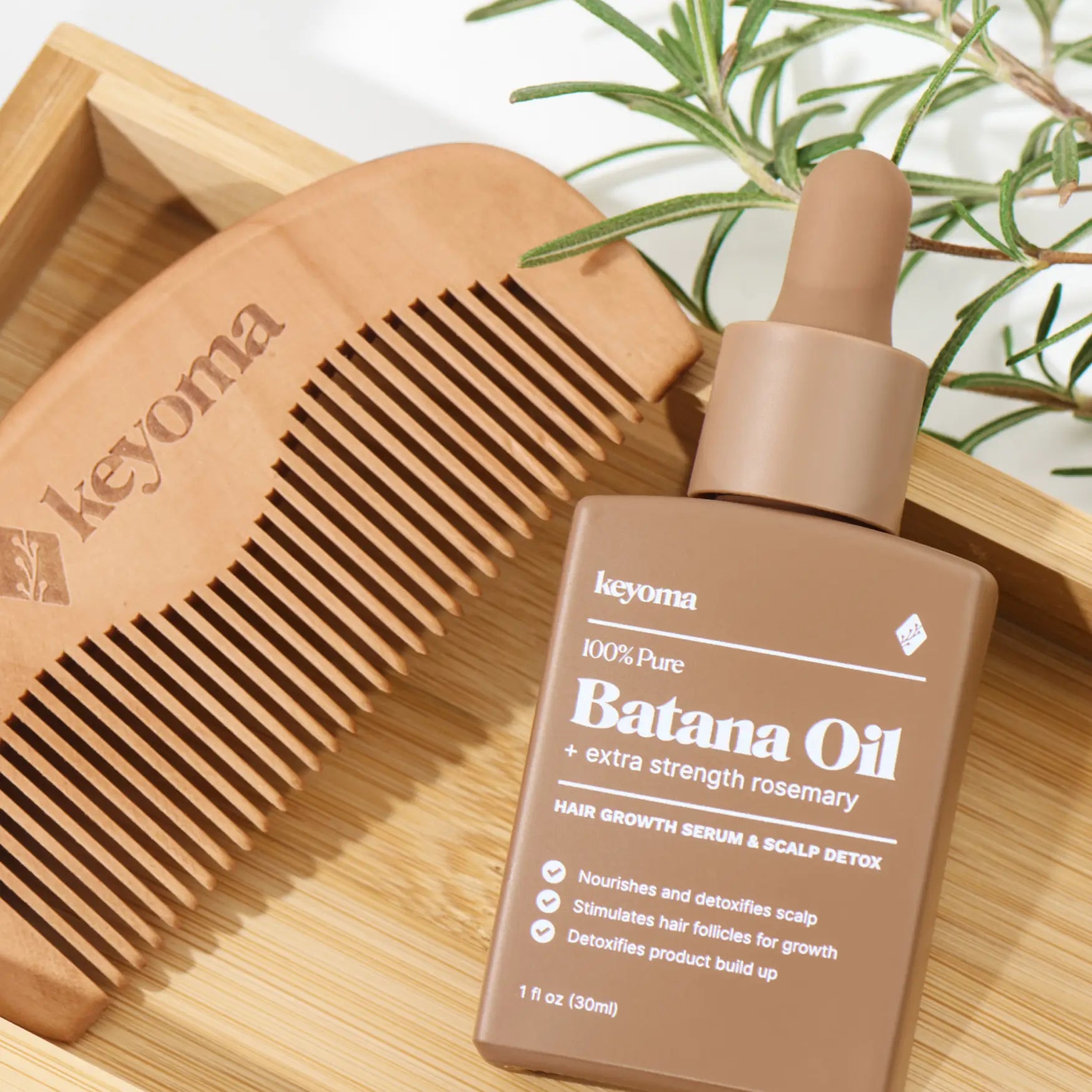
For example, when applying a small amount of Keyoma Batana Oil with Rosemary, distribute the oil across your fingers before targeting the intended area. Apply what is already on your hands before reaching for more, and follow the product directions for its intended use.
Match the Application Method to the Result You Want
Emulsifying prepares the oil, but placement determines the finish. Use the lightest hand movement that can cover the intended area.
|
Goal |
Where to Apply |
Hand Technique |
|
Smooth dry ends |
Ends first |
Lightly press or pinch with your finger pads |
|
Reduce surface frizz |
Outer layer and flyaways |
Skim with palms after most of the oil has transferred |
|
Cover dense or coily hair |
Small, separated sections |
Alternate finger-raking with gentle palm pressure |
|
Apply a pre-wash treatment |
Intended treatment area |
Build coverage in thin layers |
|
Avoid a flat finish |
Mid-lengths and ends |
Use the residue remaining after the first pass |
The first point of contact receives the most product. Make that choice deliberately.
If you begin near the crown with freshly oiled palms, the roots may look flat even when your ends receive very little. Reversing the order can create a more balanced finish without changing the amount of oil.
Dense hair introduces a different problem. Oil applied only to the visible surface may never reach the inner sections. Dividing the hair gives you better access. Adding more oil without sectioning may simply make the outer layer greasy.
Why Hair Oil Still Feels Heavy After Emulsifying
Emulsifying is a distribution technique, not a cure for every heavy or greasy result. Hair can still feel coated for several reasons.
You may have started with too much. A large amount spread evenly is still a large amount. Even distribution can prevent isolated oily patches, but it cannot make excess product disappear.
You may also be adding more before the first layer has fully transferred. After one pass, the hands can still feel slippery even though there is enough product to cover another section. Continue working with that residue before dispensing more.
Placement matters too. Oil near the roots tends to affect lift and movement more visibly than the same amount on dry ends. Existing leave-ins, creams, silicones, or previous oil applications may also create a coated finish when layered together.
Finally, the formula may be richer than your intended use requires. Fine or straight hair can respond differently from dry, coarse, or tightly curled hair. Cleveland Clinic likewise notes that oiling is not one-size-fits-all and may weigh down some hair types.
If heaviness keeps returning despite a smaller dose and better placement, use the finished result to assess whether the hair oil is too heavy for your hair. The issue may be the amount, application area, existing buildup, or formula fit rather than the emulsifying step alone.
Avoid Heat When Hand Warming Is Enough
You do not need a microwave, stovetop, or hot-water bath to spread a small amount of hair oil between your palms. Normal body heat is sufficient for the technique described here.
Do not microwave the bottle or place it directly over a heat source. Uneven heating can create hot spots, and the container may not be designed for that use. Never apply oil that feels hot against your skin.
If an oil feels thicker in a cool room, place the recommended amount in your hands and give it a few gentle passes. Follow the manufacturer’s storage and usage directions if its texture changes significantly.
Hand warming is about spreading the dose, not forcing the oil to penetrate more deeply or “opening” the hair. Those claims go beyond what this simple application step can accomplish.
Use the Finish to Adjust Your Next Application
A good oiling method should become repeatable. Instead of treating every application as a fresh guess, read the result and make one specific adjustment next time.
-
Hair feels soft and looks even: Repeat the same amount, placement, and sequence.
-
One section looks noticeably oilier: Spread the oil more completely across both hands or change your first contact point.
-
The entire length feels coated: Reduce the starting amount rather than rubbing it longer.
-
The ends still feel dry: Add a second micro-layer only to the ends.
-
The outer hair is oily but inner sections feel untouched: Section the hair instead of using more product.
-
Hair repeatedly loses movement: Reconsider the dose, root placement, product buildup, or formula fit.
Change one variable at a time. If you reduce the amount, change the placement, and apply to a different hair state all at once, you will not know which adjustment improved the result.
A Thin, Even Layer Gives You More Control
Learning how to emulsify hair oil is less about warming and more about control. A thin film across your palms and fingers lets you decide where the oil lands, how much reaches each section, and whether another layer is actually necessary.
Start small. Watch for the concentrated bead to disappear. Apply the full amount already on your hands, then judge the finish before adding more.
That process will not alter the oil’s formula, but it can make the application lighter, more even, and easier to repeat.
Frequently Asked Questions
Do you need water to emulsify hair oil?
No. In this application method, emulsifying means spreading the oil into a thin film between your hands. Pure oil and water will not form a stable emulsion without an appropriate emulsifying system.
How long should you rub hair oil between your hands?
Rub only until the concentrated amount becomes a thin, even film across both palms and your finger pads. The appearance and feel of the oil matter more than a fixed number of seconds.
Does emulsifying make hair oil lighter?
Emulsifying may make the application feel lighter because it distributes the dose more evenly. It does not change the oil’s formula or actual richness.
Can you emulsify thick hair oil without heating it?
Yes. A small amount of thick hair oil can often be softened and spread with normal body heat. External heating is unnecessary for this technique.
Why does my hair still look greasy after emulsifying oil?
You may have used too much oil, started too close to the roots, layered it over existing residue, or chosen a formula that is too rich for the intended finish. Emulsifying improves distribution, but it cannot compensate for substantial overapplication.
Featured Product
30% Off + 3 FREE Gifts
100% Pure Batana Oil + Rosemary


