

In this article
Collagen is the beauty industry’s go-to protein, so let’s get into it. It’s a major category, and it’s the most plentiful protein in your body. It supports skin elasticity and can help skin look healthier. It’s also a key part of bones, muscles, tendons, and cartilage. Hair is the big question. Does collagen actually help hair grow?
Current evidence suggests collagen isn’t a proven hair-growth solution. Still, collagen may offer a few hair-adjacent benefits, like thicker hair. If you’re dealing with shedding or thinning, options with stronger research are usually a better place to start.
Keep going to learn what collagen can and can’t do for hair growth, plus a rundown of more science-backed approaches.
Key Takeaways
-
Collagen is a connective-tissue protein, and your body needs vitamin C to make it.
-
Evidence for collagen as a hair-growth treatment remains limited and isn’t scientifically proven.
-
Collagen supplies amino acids that may indirectly support keratin and overall strand strength.
-
Other options include minoxidil, scalp massage, essential oils, stress management, and deficiency testing.
What Is Collagen
Collagen is a protein that forms connective tissues like skin, cartilage, and bone, and it also helps create the framework that holds cells and tissues together. You find it throughout most living organisms, including the human body. Researchers describe 28 types of collagen in the living world, each with a slightly different structure and role.
Some types show up heavily in connective tissue, others form thin fiber networks that support soft organs and tissues, and others help anchor cells or provide a sturdy base for them. Your body makes its own collagen, but it needs vitamin C to do that. So it helps to eat plenty of foods rich in vitamin C for hair health.
Getting nutrients from food is usually more helpful than relying mainly on hair vitamin supplements. Collagen used in supplements is usually sourced from natural materials (for example, tissues from livestock or fish). The most widely studied types of collagens in the cosmetic industry are bovine (sourced from cattle) and marine (sourced from fish).
How Collagen Might Support Hair Growth
You know why collagen matters for skin, so here’s how it connects to hair. It’s rich in amino acids your body uses to build keratin, the protein that makes up each strand, so any support would start at the building-block level. Keep expectations realistic and stick with what fits your routine. Think of it as inside-out support for strands.
1. Fighting Free Radical Damage: Collagen has antioxidant properties that may help reduce oxidative stress, which can damage hair follicles. Healthier follicles are important for steady, resilient growth.
2. Supporting the Dermis: Collagen makes up a large share of the dermis, the skin layer where hair follicles sit. A healthier dermis can help support stronger hair growth.
3. Amino Acid Supply: Collagen contains amino acids your body uses to build keratin. When you consume collagen, you may give your body more building blocks that could support hair growth.
4. Skin Health: Healthy skin helps set the stage for healthy hair. Collagen supports skin elasticity and hydration, which both matter for the environment where hair follicles do best.
Collagen Types Tied to Hair Support
Not every collagen type is the same, and the kind you choose may affect what you get out of it. Here are the types most often connected to hair support:
-
Type I Collagen: Found mostly in skin, tendons, and bones, Type I collagen is the most abundant in the body and is known for supporting skin elasticity and hair strength.
-
Type III Collagen: Often paired with Type I, Type III collagen helps maintain the health and structure of skin and hair. It supports skin hydration, which can indirectly support hair follicles.
For hair growth, many people choose a blend of Type I and Type III collagen. These types are common in bovine and marine collagen supplements, and they’re often picked for their bioavailability, meaning your body can absorb and use them.
Possible Benefits of Collagen for Hair

From supporting hair elasticity to potentially reducing hair loss, here are five ways collagen may help with hair growth and contribute to stronger, healthier-looking hair.
Increase Hair Elasticity
Another potential perk of collagen is better hair elasticity and flexibility. By supporting the hair shaft and reinforcing its structure, collagen may lower the chance of breakage and split ends. That can leave you with hair that feels more manageable and less prone to damage. By strengthening hair fibers, collagen may support better resilience and overall hair health.
Support Hair Hydration
Lastly, collagen may help your hair stay better hydrated by supporting moisture retention. It may do this by reinforcing hair structure and helping reduce moisture loss. When collagen is low, hair can look drier and feel more brittle, which makes it easier to damage.
When collagen levels are more optimal, hair may hold onto moisture better, leading to a healthier, glossier look. By supporting hydration, collagen may contribute to overall hair health and help hair stay shiny and strong.
Support Hair Growth
Collagen contains three key amino acids: proline, glycine and hydroxyproline. Together, these amino acids help support the protein structure of hair, which can promote healthier growth.
Proline and glycine support keratin production (the protein that makes up hair strands), while hydroxyproline helps maintain collagen's structural integrity in the scalp, supporting an environment where hair follicles can thrive. By providing these building blocks, collagen may play a role in supporting fuller-looking hair.
Reduce Hair Loss and Support Roots
Collagen may help with both hair loss and root support. It supports the dermis layer (where hair follicles are anchored), which can help keep hair more stable. Some research notes regenerative properties that may support a resilient scalp and help limit hair loss, pointing to collagen’s possible benefits for hair loss and scalp health.
How to Use Collagen in Your Hair Care Routine
Working collagen into your daily routine is straightforward, and you have a few options:
-
Topical Collagen Treatments: These tend to be less effective than ingestible forms, but some collagen-infused hair products may help strengthen hair and support scalp health.
-
Collagen-Rich Diet: Foods like bone broth, fish, and eggs naturally contain collagen and can help boost your intake along with supplements.
-
Collagen Powders: collagen powders are flexible and can fit into most diets. In my smoothies, I whisk it first so it doesn’t clump. You can mix it into water, coffee, smoothies, or even baked goods.
-
Collagen Gummies and Capsules: If you’re always on the go, these give you an easy way to take collagen without any prep.
Other Options That May Support Hair Growth

Collagen supplementation isn’t a scientifically proven way to improve hair loss or drive hair growth. You may want to look at other approaches for supporting growth. A dermatologist can help diagnose what’s going on and build a plan that may include medications, diet changes, and other treatments.
Essential Oils That May Support Hair Growth
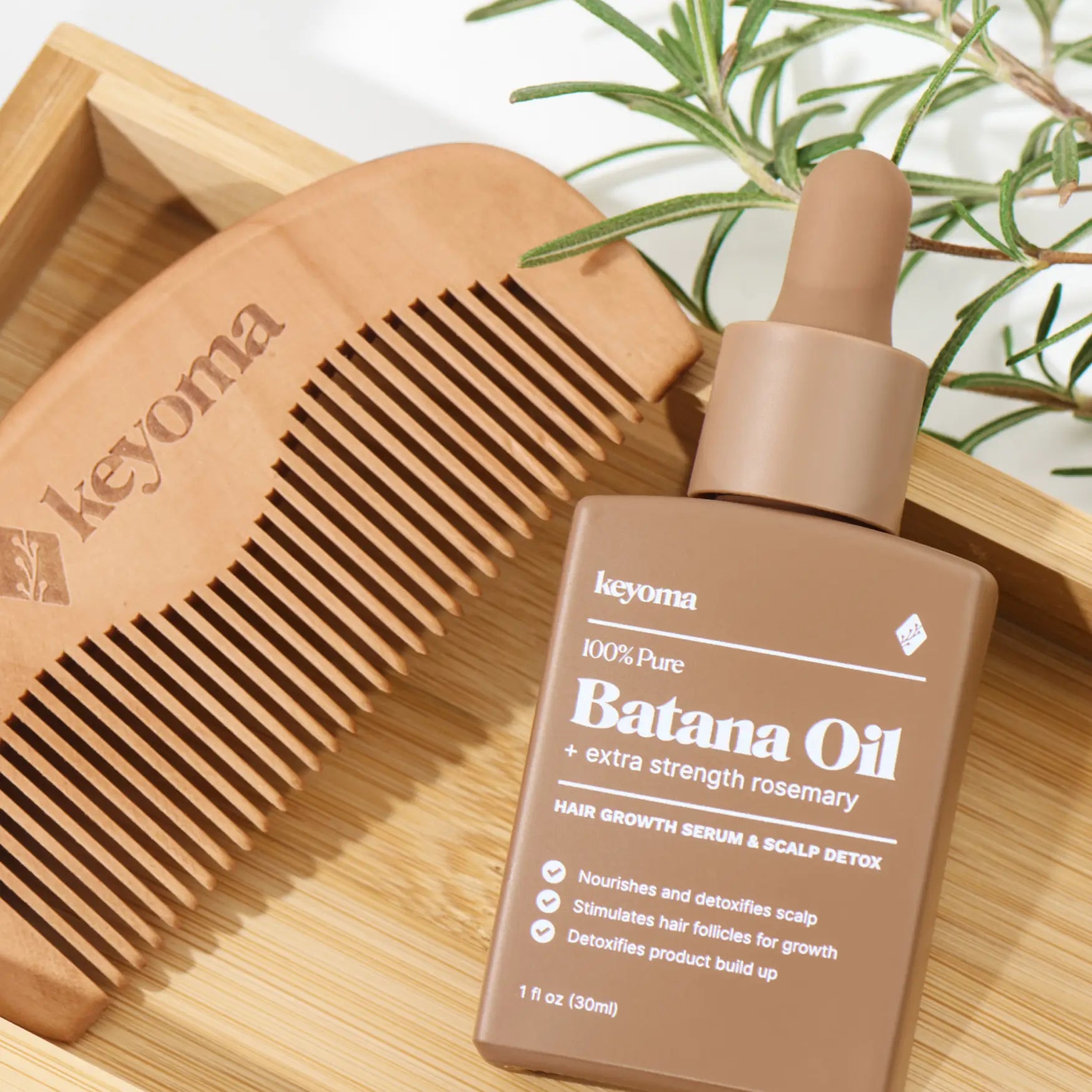
Essential oils may help stimulate hair growth. Some evidence suggests rosemary oil may be as effective as minoxidil for hair growth, and people often use it diluted in a carrier oil. Pure batana oil with rosemary can work as that carrier and may help condition the scalp and hair, which can support healthier-looking growth over time.
Stress Relief and Hair Shedding
Chronic stress can play a major role in hair loss. Do what you can to decrease stress and lean on relaxation habits, like deep breathing.
Minoxidil as an Option
Minoxidil is an over-the-counter (OTC) medication that may help stimulate hair growth. However, results can reverse if you stop using it. Talk to a doctor to make sure it’s the right option for you.
Look for Nutrient Deficiencies
Hair loss can relate to vitamin or mineral deficiencies, like low vitamin D or low B levels. Getting too much of nutrients like selenium, vitamin A, or vitamin E can also contribute to hair loss. Only take supplements when you know your body actually needs them.
Scalp Massage to Support Hair
Even though research is limited, some people report changes with scalp massage. One 2016 study found that people had thicker hair after using a scalp massager for four minutes daily for 24 weeks.
Strengthen Your Hair With Collagen and Batana Oil
Build your routine around pure batana oil so your hair breaks less as it grows out. I noticed my ends snagged less when I warmed a few drops between my palms.
Collagen isn’t a proven fix for hair growth, and chasing powders can pull attention from what damaged hair needs most, which is protection from friction and moisture loss. “Stronger hair” often comes from what you prevent, not what you add.
When you keep strands flexible and slick, you can cut down on snapping and hold onto more length, even before hair looks thicker. Stay in the simple support lane, and make Keyoma Batana Oil the one step you truly keep up with.
Featured Product
30% Off + 3 FREE Gifts
100% Pure Batana Oil + Rosemary


