

In this article
Natural hair care can feel like a small science project at times. And like any experiment, you may need to test a few ideas, adjust your steps, and see what works for you.
One tried-and-true approach many naturalistas rely on is the LOC hair method. It’s the layering of leave-in conditioner, oil, and cream, used to style curly and coily hair and help it hold moisture.
If you’re not sure what that means, or you haven’t settled on an LOC routine that fits your hair, you’re in the right place. In this deep dive, we’ll break down the LOC method and what to know or do at each step, without guesswork.
Keep reading to learn how the LOC method can help your hair thrive, per experts today.
Key Takeaways
-
LOC means layer leave-in, oil, then cream to add moisture and seal it.
-
Works best for wavy, curly, and coily hair that struggles to retain moisture.
-
Choose leave-in weight and oil type based on curl pattern and hair porosity.
-
Doing LOC on wash day helps limit buildup; daily layering can weigh hair down.
What Is the LOC Method?
What is LOC? To start, let’s clear up the confusion right away. The LOC hair method has nothing to do with locs or locking your hair.
It’s simply a shorthand for a layering order that helps add moisture to dry curls and then seal it in. It refers to the steps and timing of product application on your hair. So what does LOC stand for? L is leave-in conditioner or liquid, O is oil, and C is cream too.
The LOC method for natural hair uses the different densities of each product type to maximize how well your hair retains the moisture you’re adding during styling.
This means you start with the lightest layer and build up to the heaviest product, similar to how it’s often suggested for skincare routines. Lighter leave-in conditioners can absorb into the hair shaft to moisturize, and a penetrating hair oil can, too.
Other hair oils can serve as the sealant over your leave-in. Your final step, the cream, also helps seal in moisturizers, smooth the cuticle down, cut frizz, add extra definition, and help hold the style longer overall.
What Hair Type Does the LOC Method Work For?
According to experts, the LOC method works best for those with wavy, curly, and coily hair. It’s most helpful on dry hair that struggles to retain moisture between wash days. This is often seen in high porosity hair types on the curly, coily, and kinky side, which can feel like they’re always thirsty.
These textures with low porosity can also be a fit for the LOC method, but they may need a different approach since compact cuticles can take longer to saturate and absorb product evenly, without rushing.
Although porosity plays a major role in whether the LOC method works for you, it can still be an effective tactic for treating hair across curl pattern and density, including chemically processed hair (such as hair coloring) and similar changes.
Hair textures with loose curls or waves can end up limp or greasy, plus you can get product buildup if you’re not careful. The same can be true for straight hair types, including type 1 hair. Still, if you’re in this group and want to try LOC, you can, you just need products that are as lightweight as possible and you’ll want to keep amounts small.
Below is a quick and easy cheat sheet to help you figure out your hair type fast.
Type 1: This hair is straight in texture and sits closest to the head. This type can range from silky and fine to coarse and thick, and it can also be prone to excess oil buildup.
Type 2: This hair is wavy in texture with a defined S-pattern. These tresses lay closer to the head and can range from fine to coarse.
Type 3: This hair is curly in texture with a springy pattern that can be loose or tightly compact. These tresses tend to grow away from the head, have a natural sheen, and are also prone to frizz.
Type 4: This hair is extra coily in texture with a Z-pattern that’s commonly called afro or kinky. These tresses grow away from the head and are the most delicate, dry, and prone to both frizz and shrinkage, ranging from soft and fine to coarse and wiry overall.
How to Do the LOC Method

Because the LOC method focuses more on the styling side of your routine, make sure your curls are properly prepped and you’ve covered the basics first. Wash with a gentle, non-stripping sulfate-free shampoo or co-wash, detangle thoroughly, and then get ready to LOC.
There may need to be some trial and error before you hone in on the right combo of products for your hair, or you may already have your lineup in place. For me, small sections tended to prevent using too much product. Either way, next is putting it together and completing the three key steps.
1. Liquid/Leave-In Conditioner
The leave-in conditioner you choose depends on your curl pattern. If your curls get weighed down easily, go with a lighter weight leave-in for this step. It should be liquid-y enough to really penetrate the hair, so spray-on formulas are often best for this step rather than thicker leave-in creams.
2. Oil
Choose your oil based on hair porosity. Oils that can penetrate the hair shaft include batana oil, coconut oil, olive oil, and avocado oil. Thicker textures like 4C hair may do well with both, while low porosity hair often needs a lighter oil so it can absorb.
You can apply a lighter oil first and then a richer one, unless your hair is fine, even if it’s curly. In that case, it’s usually better to stick with the lighter oil that can penetrate.
3. Cream
The LOC cream works as the top coat that helps keep your moisture inside each strand. The cream you choose depends on how light or heavy a formula your texture can handle. Heavier stylers are ideal for coarser textures, while a lighter cream is usually best for wavy and fine textures.
Can You Do the LOC Method Every Day?
Yes, you technically can, but chances are you aren’t washing your hair daily. Applying three layers of product every day is likely to cause buildup and weighed-down curls over time. The LOC method is most ideally done on wash day when you’re starting with freshly washed hair.
You can also do the LOC technique to refresh and rehydrate curls between washes, but in that case, use lighter versions of your products so hair doesn’t get greasy or heavy.
LOC Method vs. the LCO Method
If you’ve spent time on natural hair YouTube channels, you might have come across the LCO method online, which is the layering of leave-in conditioner, then cream, then oil to style curly and coily hair.
People who prefer the LCO method often want extra hydration from the cream product, and because the oil comes last, it “seals” in all the good stuff for longer, too.
If you have incredibly thick, coiled, kinky, and dry hair, you might benefit more from the LCO method. That extra layer of moisture from your cream product, followed by sealing it off with oil, can help support moisture retention. Low-porosity hair tends to do better under the LCO method.
Use the LOC Method to Lock In Moisture and Cut Frizz
Think of LOC as a flexible order, not a rule you force on every head of hair. Layering from light to heavy helps moisture go in and stay there, but too much product can leave curls limp, greasy, and coated with buildup.
Try this quick three-test check. After styling, your hair should feel hydrated, not coated. By day two, curls should still bounce back without needing another full layer. On wash day, your shampoo should lather normally instead of struggling with residue. If you fail any test, lighten one layer instead of adding more. Check out Keyoma's hair care blogs.
Featured Product
30% Off + 3 FREE Gifts
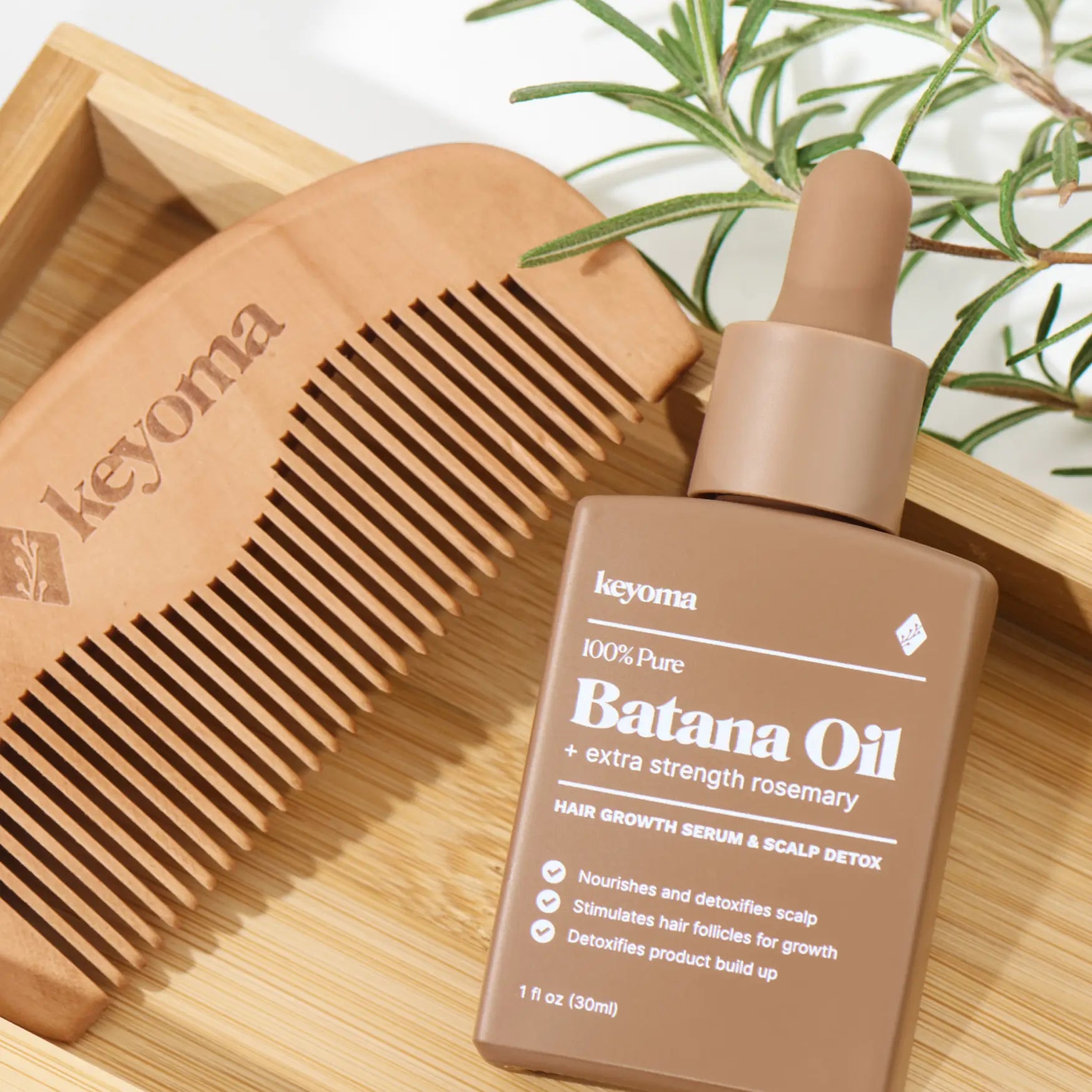
100% Pure Batana Oil + Rosemary


