

In this article
You can use batana oil between wash days, but it should be treated as a tiny dry-end refresh, not a full oiling session. The safest approach is to use a very small amount on dry ends only, then stop before the hair starts to feel coated.
Batana oil is richer than many lightweight finishing oils, so a little can change the way your hair looks and feels quickly. Used carefully, it may soften rough ends, smooth frizz, and make second-day hair look more controlled. Used too heavily, it can make clean hair look greasy before your next wash.
The goal is simple: add comfort to the driest parts of your hair without pushing oil into the roots, scalp, or already-coated areas. Your ends should feel smoother, not wet, sticky, or weighed down.
Key Takeaways
-
Use batana oil between wash days only on dry ends.
-
Start with less than you think you need.
-
Avoid your roots and scalp unless wash day is near.
-
Skip oil if your hair already feels greasy or coated.
Can You Use Batana Oil Between Wash Days?
Yes, you can use batana oil between wash days when your ends feel dry, frizzy, or rough. The best use case is a small touch-up on non-wash days, especially if your scalp still looks clean but your ends need softness. It should not replace your regular wash-day or pre-shampoo treatment.
A between-wash application works differently from a deeper oiling session. You are not trying to saturate the hair or coat every strand. Hair-oil usage guidance often treats oil on dry hair as a light finishing step for frizz and dry ends, with placement from the mid-shaft to ends and only a drop or less for spot correction.
Batana oil also needs extra control because of its rich texture. Trichologist Hannah Gaboardi notes that batana oil has a thick, butter-like feel and can leave fine or straight hair greasy or heavy if too much is used. If your hair is fine, oily, low-density, or easy to flatten, use it less often and only where your ends look dry.
For broader timing, separate this from your overall hair-oiling frequency. Between-wash use is a touch-up. Full oiling frequency is about how often your whole routine needs oil before or around wash day.
How Much Batana Oil Should You Use Between Washes?
The right amount is smaller than most people expect. Between washes, batana oil should almost disappear into your hands before it touches your hair. If you can clearly see a thick layer on your palms, you probably have too much for a dry-hair refresh.
Cleveland Clinic dermatologist Dr. Shilpi Khetarpal says a little oil goes a long way and recommends applying a small amount to dry hair, focusing from the middle of the hair to the ends. For batana oil, that means starting with a fingertip amount, warming it thoroughly, and applying only to the areas that look or feel dry.
Start With a Fingertip Amount
Scoop or touch only a tiny amount of batana oil, about the size of a grain of rice for fine or shoulder-length hair. For thick, long, curly, or coily hair, you may be able to use a little more, but it is still better to layer slowly than remove excess oil later.
Rub the oil between your palms until it softens and thins out. Your hands should look lightly conditioned, not shiny and wet. I usually test the amount on the very last inch of hair first, because that shows quickly if the oil is too heavy.
If your ends still feel dry after five to ten minutes, add another tiny amount. Waiting matters because batana oil can look subtle at first, then appear heavier once it settles into the hair.
Adjust the Amount by Hair Type
Fine, straight, or low-density hair often needs the smallest amount. Use only what remains on your fingertips after warming the oil, then pinch it lightly into the ends. Avoid smoothing it over the top layer near your roots because that can make the hair look flat.
Thick, coarse, curly, or coily hair may handle a slightly richer application. Even then, keep the oil focused on the driest areas. If your ends are chronically rough, a hair oil for dry ends may fit better as a targeted support step than spreading oil through the whole head between washes.
Color-treated, heat-styled, or high-porosity hair may drink up oil faster in the ends but still get greasy near the scalp. Treat those as two different zones. The ends may need softness, while the roots may need to stay untouched until wash day.
Keep It Away From Roots and Scalp
Between washes, batana oil should stay off your scalp unless you are intentionally doing a scalp treatment before shampooing. For a non-wash-day refresh, keep placement from mid-lengths to ends. Professional hair-oil guidance also recommends applying hair oil to the lengths and ends while avoiding the scalp unless the product is meant for scalp use.
The scalp already produces sebum. Adding a thick oil on top of natural scalp oil, sweat, and styling products can make the roots look greasy faster. WebMD’s batana oil coverage also notes that oil use could create greasy scalp buildup, while listing dry-end use between washes as a possible application.
If your scalp is itchy, flaky, painful, or irritated, do not use between-wash batana oil as a quick fix. Wash-day care or professional guidance is safer than layering oil onto a scalp that may already be reacting.
Skip Oil if Hair Already Feels Coated
If your hair feels greasy, waxy, sticky, stiff, or coated, do not add more batana oil. More oil usually makes that feeling worse. It can also make the next wash harder because you are layering fresh oil over buildup instead of refreshing dry ends.
A coated feeling is a sign to pause and reset on wash day. If this happens often, compare the amount you are using with how your hair responds afterward. You may also need to check whether your hair oil feels too heavy for your texture or whether several products are stacking up between washes.
How to Refresh Dry Ends With Batana Oil
Refreshing dry ends with batana oil should feel controlled and almost invisible. The ends should look smoother and feel softer, but your hair should still move naturally. If the hair separates into oily pieces or loses volume, the amount or placement needs to be reduced.
Use this method when your roots still look acceptable but your ends look dull, puffy, frizzy, or dry. The fresher your scalp looks, the more careful you should be with placement, because the goal is to extend the style without making the top of your hair look unwashed.
Apply on Dry Hair Only for a Touch-Up
For between-wash use, apply batana oil to dry hair rather than damp hair. Dry hair lets you see where the oil lands and how much shine it adds. It also helps you avoid accidentally spreading too much oil through areas that do not need it.
Warm the oil in your hands first. Then lightly pinch the ends, starting with the driest pieces around the bottom layers or face-framing sections. Do not rake your hands from the scalp downward. That motion can drag oil into clean areas and make the roots collapse.
After applying, wait a few minutes before judging the result. Batana oil can soften as it warms against your hair, so what looks like “not enough” at first may be enough once it settles.
Use the Ends-Only Method
The ends-only method works well because the oldest part of your hair is usually the driest. Ends have been through more brushing, heat, weather, color, and friction than the newer hair near your scalp. They often need polish before the rest of the hair needs oil.
To apply, gather the last one to three inches of your hair and press the oil into that area. Use light pinching or smoothing motions. If you have curls or coils, press the oil into the ends of each dry section rather than brushing it through and disturbing the pattern.
If your hair often feels oily at the scalp but dry at the ends, your routine may need more separation between root care and end care. A page on oily scalp and dry ends can support that split approach without turning every non-wash day into an oiling day.
Smooth Frizz Without Flattening Your Style
Batana oil can help calm frizz when the frizz is mostly dryness, rough ends, or surface puffiness. Use the residue left on your hands after treating the ends to lightly skim over frizzy sections. Keep your palms soft and avoid pressing down hard.
For waves, curls, and coils, use a scrunching motion near the ends instead of combing through. For straight or fine hair, pinch only the flyaway pieces near the lower half. If you smooth oil over the crown, the style may look greasy even if the ends still feel dry.
If frizz keeps coming back within hours, adding more oil may not solve it. The hair may need water-based conditioning, a trim, or a better wash-day reset. Oil can reduce the look of dryness, but it does not permanently repair split ends.
Reset on Wash Day When Needed
A good between-wash routine includes knowing when to stop. If batana oil helped on day two but makes day three feel heavy, wait until wash day before using more. Shampooing gives you a cleaner base so the next small application works better.
Watch for signs of product buildup, especially if you use leave-in conditioner, styling cream, gel, serum, dry shampoo, or multiple oils. Layering batana oil over several products can make the hair feel dull or coated instead of soft.
If your hair feels waxy after oiling, reduce the amount first. Then adjust placement. If that does not help, save batana oil for pre-wash use or choose a lighter finishing product between washes.
Keep hair-growth claims restrained, too. Healthline notes that there is no evidence batana oil helps with hair loss or regrowth, though it may help hair feel more nourished. Between washes, the realistic goal is softness, frizz control, and better-looking ends, not regrowth.
For a simple product choice, use pure batana oil when you want one rich oil and can control the amount carefully. If you prefer a more complete wash-day setup, a starter kit may make more sense than adding extra oil between washes.
Use Batana Oil Between Wash Days Without Buildup
Batana oil between wash days works best when it is used like a spot treatment for dry ends. Keep the amount tiny, warm it well, apply it only from the mid-lengths down, and stop as soon as your hair feels smoother.
Skip oil when your roots are greasy, your strands feel coated, or your hair has lost movement. A wash-day reset will do more than another layer of oil. When used with restraint, batana oil can help dry ends look softer between washes without turning your routine into a daily oiling habit.
Featured Product
30% Off + 3 FREE Gifts
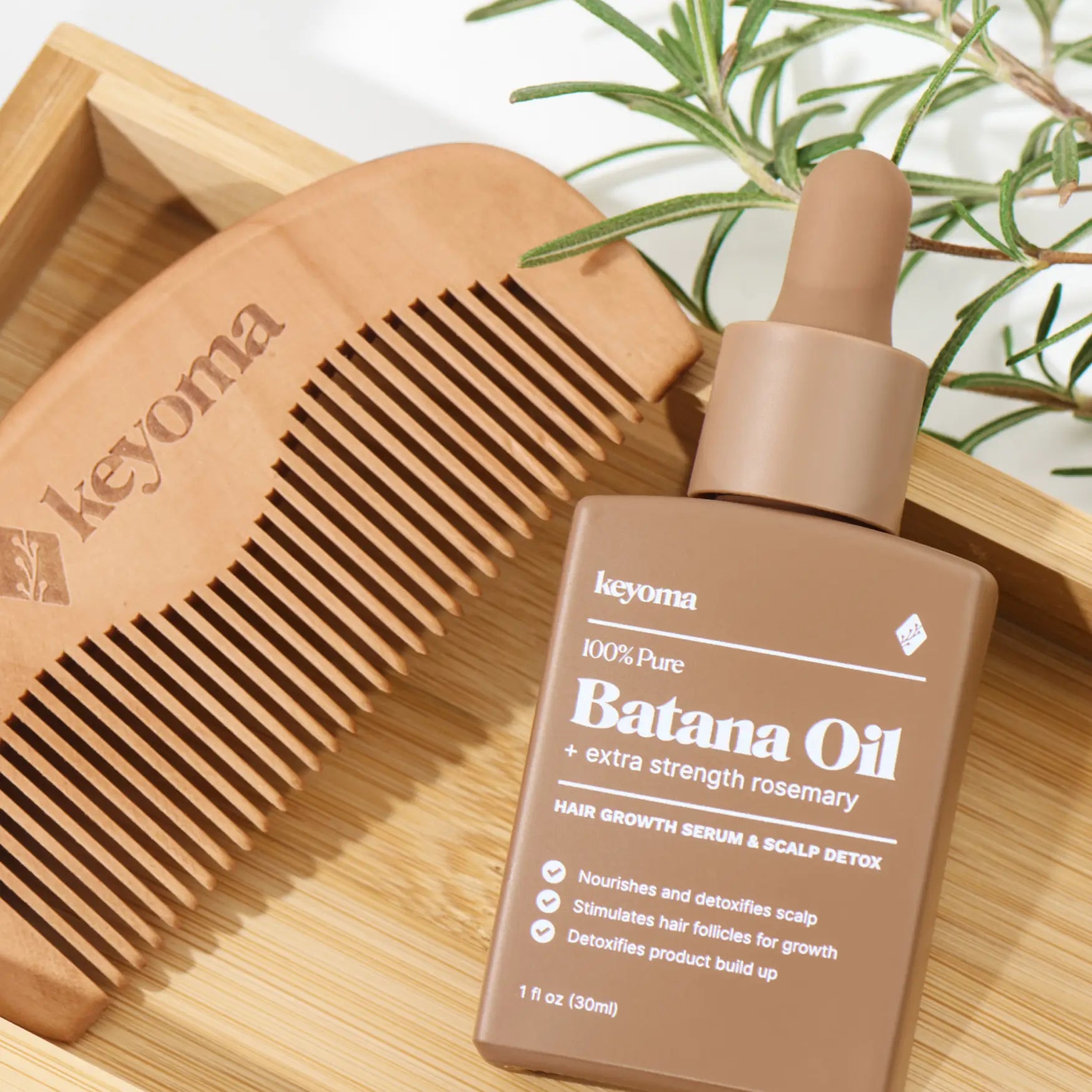
100% Pure Batana Oil + Rosemary


