

In this article
Buying batana oil for the first time can feel confusing because many products use similar claims, similar packaging, and very different formulas. A good batana oil buying checklist helps you slow down and check the details before you spend money.
The goal is not to find the loudest product or the most dramatic promise. It is to check the label, source, texture, scent, color, claims, reviews, and routine fit so you know what you are buying and how it is likely to behave on your hair.
Pure batana oil can be a smart first choice if you want a simple formula and rich pre-wash conditioning. It is not the right fit for every routine, especially if your hair is fine, oily, or easily weighed down.
Key Takeaways
-
Check the ingredient label before trusting any batana oil product.
-
Color, scent, and texture are buying signals, not final proof.
-
Avoid products that promise guaranteed hair regrowth.
-
Pure batana oil works best when it fits your hair type.
What Should You Check Before Buying Batana Oil?

A strong checklist starts with the product label. Formula Botanica identifies batana oil by the INCI name Elaeis Oleifera Kernel Oil, so look for that name or a clear “batana oil” ingredient listing. If the label is vague, crowded with unexplained blends, or missing basic ingredient details, treat that as a reason to pause.
U.S. cosmetic labeling rules also support this approach. The FDA cosmetic labeling guide explains that cosmetic ingredient declarations generally list ingredients in descending order of predominance, with fragrance and flavor allowed to appear as “fragrance” or “flavor.” For a first-time buyer, that makes the ingredient label one of the most useful trust signals.
Use this checklist before you buy:
-
Ingredient label: Look for batana oil or Elaeis Oleifera Kernel Oil.
-
Origin and sourcing: Check whether the seller explains where the oil comes from.
-
Processing details: Look for clear language around raw, unrefined, or processed oil.
-
Sensory expectations: Review color, scent, and texture without treating them as proof.
-
Claims and reviews: Avoid dramatic regrowth promises and read buyer feedback carefully.
If you want to compare broader options before choosing a jar, a dedicated batana oil collection can help you see how pure oil, raw oil, and routine-focused products differ.
Color
Batana oil is often described as brown, deep golden-brown, amber, or warm roasted in tone. Color can help set expectations, but it should never be your only authenticity test. Natural oils can vary by batch, harvest, processing method, temperature, and storage conditions.
Be cautious with products that look unusually pale, watery, or inconsistent with the seller’s own description. At the same time, do not reject a product only because one batch looks slightly different from another. A better approach is to compare color with the label, source details, scent, texture, and reviews.
Texture
Pure batana oil is usually rich and heavy compared with lightweight finishing oils. Some products may feel buttery, waxy, or semi-solid at cooler room temperatures, then soften when warmed between your hands. That heavier texture is one reason many people use it as a pre-wash treatment rather than a daily leave-in.
Texture should match your hair needs. Thick, dry, curly, coily, or chemically treated hair may handle a richer oil better. Fine, straight, oily, or low-density hair may feel greasy faster, especially near the roots. If your hair gets weighed down easily, compare your options with a raw batana oil page and pay attention to usage instructions before buying.
Scent
Batana oil is often described as smoky, nutty, roasted, earthy, or coffee-like. A strong natural scent is not automatically a problem, especially with less refined oils. Still, scent should be treated as one clue, not proof that the oil is real.
Added fragrance is a separate issue. If the product lists “fragrance,” “parfum,” or an essential oil blend, the scent may come partly from added ingredients. That may be fine if you like scented products, but first-time users often benefit from a simpler formula because it removes extra unknowns.
If you are sensitive to fragrance or botanical ingredients, do a patch test before using hair oil more broadly on your scalp or hairline.
Source
Batana oil is closely associated with Central America, especially Honduras and the Miskito people’s traditional use of the oil. Source details do not need to read like a full documentary, but a trustworthy seller should give you more than a vague claim like “premium” or “authentic.”
Look for clear sourcing language, realistic product descriptions, and enough detail to understand what type of oil you are buying. If a product claims to be pure, raw, handmade, traditional, or unrefined, the rest of the page should support that claim with label clarity and consistent usage guidance.
A product page for pure batana oil should make those expectations easy to check before your first use.
Processing Details
Processing affects how batana oil looks, smells, feels, and spreads. Raw or less refined oils may keep a stronger scent and richer texture. More processed formulas may feel smoother or lighter, especially if they include other oils or cosmetic ingredients.
Neither option is automatically better for every person. The problem is unclear processing language. A product that calls itself pure, raw, refined, unrefined, cold-pressed, handmade, or traditional should explain what that means in plain language. If it does not, you may be left guessing about scent, texture, weight, and how much product to use.
Processing also matters for routine fit. If you plan to oil before shampooing, a heavier texture may feel manageable. If you want a light finishing oil after styling, pure batana oil may feel too rich unless you use a very small amount. A usage-focused page on when to oil hair before shampooing can help you decide whether a pre-wash approach fits your routine.
Brand Reviews
Reviews can show patterns that a product page does not. Look for comments about smell, texture, packaging, melting, application, residue, and how easily the oil rinses out. For first-time buyers, these details are often more useful than dramatic before-and-after claims.
Do not rely only on star ratings. A product can have high ratings but still be too heavy, too smoky, or too scented for your hair. Read the lower and middle reviews too because they often reveal practical issues, such as leaking jars, inconsistent texture, or unclear instructions.
Claims deserve special attention. Dermatologist Melanie Palm, MD, told Health that there is not strong scientific proof that batana oil regrows hair, though it may support hydration and hair health. Vogue also cites trichologist Hannah Gaboardi, who says batana oil can nourish the hair shaft and improve appearance, but it does not stimulate follicle growth like clinical treatments.
Is Batana Oil Good For First-Time Users?
Batana oil can be good for first-time users when expectations are realistic. It is best viewed as a rich conditioning oil that may help hair feel softer, look shinier, and reduce the look of dryness or frizz. It should not be treated as a proven hair-loss treatment or a guaranteed regrowth product.
The best first purchase depends on your hair type and how you plan to use it. If your hair is dry, thick, curly, coily, or damaged from styling, pure batana oil may work well as a wash-off mask or pre-shampoo treatment. If your scalp gets oily quickly, use it more carefully on the mid-lengths and ends rather than coating the roots.
A practical first-time routine might look like this: warm a small amount between your fingers, apply it to dry lengths or dry ends, leave it on before washing, then shampoo thoroughly. Start with less than you think you need. I usually find heavy oils easier to judge after the first rinse-out, not during application.
For people who want help choosing a simple routine, a starter kit can reduce decision fatigue because the product choice is tied to a clearer use plan. If you prefer to buy one item first, choose the simplest formula that matches your hair type and comfort level.
Be careful if you have scalp irritation, dandruff, seborrheic dermatitis, palm oil sensitivity, or a history of reactions to botanical oils. Byrdie notes that experts recommend caution for fine hair or oil-prone scalps and suggest a patch test before full use. If you notice burning, itching, redness, flaking, or sudden shedding after using any oil, stop using it and consider professional guidance.
Use Batana Oil Buying Checklist for Fewer Unknowns
A good batana oil buying checklist keeps your decision grounded. Start with the label, then compare source, processing, texture, scent, color, claims, reviews, hair type, and routine fit. None of those signals proves quality by itself, but together they give you a clearer picture.
For first-time users, pure batana oil is most useful when you want a rich, simple conditioning step and understand that it is not a clinical hair-growth treatment. Choose the product that gives you the fewest unknowns before your first use, then test it slowly so your hair and scalp can tell you whether it belongs in your routine.
Featured Product
30% Off + 3 FREE Gifts
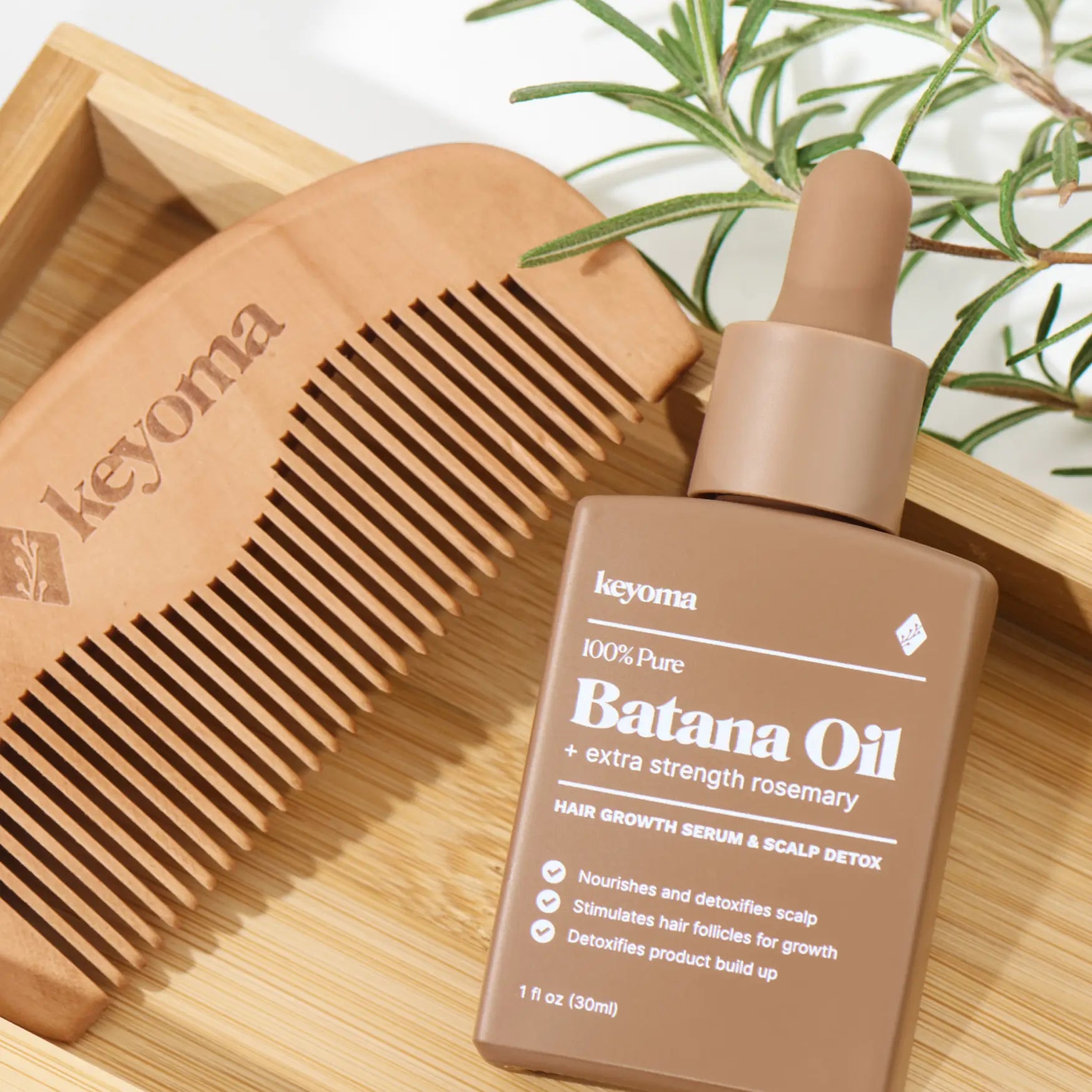
100% Pure Batana Oil + Rosemary


