

In this article
If you use hot tools, a reliable heat protectant is a must. Heat styling can lead to long-term damage, but you still have choices when you want a good heat shield. You may already have one in your pantry (or bathroom cabinet). Many oils you cook with or moisturize with can also work as heat protectants.
Still, you'll get better results when you know what you're using and how it behaves with heat. In the sources I checked, these are common natural options for heat protection.
|
10 DIY Heat Protectants for Hair |
|
|
Batana Oil |
Castor Oil |
|
Argan Oil |
Grapeseed Oil |
|
Coconut Oil |
Sunflower Oil |
|
Shea Butter |
Almond Oil |
|
Avocado Oil |
Olive Oil |
1. Batana Oil

Batana oil (often listed as Elaeis oleifera kernel oil) is naturally high in fatty acids that work as emollients. When you smooth a little onto damp hair, those lipids can leave a thin, slip-friendly layer on the hair shaft.
That layer can help cut down moisture loss while you style and can reduce friction from brushing and hot tools. Current evidence also points to vitamin E compounds (tocopherols and tocotrienols) and carotenoids in batana oil. These antioxidants are often used in hair and skin formulas to support conditioning.
To use batana oil as a DIY heat protectant, try these steps:
-
Patch test first if you react to any new oils or scented products.
-
Begin with clean, damp hair, not soaking wet.
-
Warm a small amount between your palms until it softens and feels silky.
-
Smooth it over mid-lengths and ends only, focusing on your driest areas.
-
Comb through once for even coverage, then heat-style like you usually do.
2. Argan Oil

If you already use argan oil often, you can use a few drops as a DIY heat protectant, too. Argan oil has a thicker feel that often works well for dense or textured hair.
Researchers observed that it contains antioxidants, omega-6 fatty acids, vitamins A and C, and vitamin E, plus linoleic acid. Its smoke point is 420 degrees, so it may be less sturdy than higher-smoke options, but it blends well with avocado oil for a stronger mix.
Here’s how to use argan oil on your hair as a heat protectant:
-
Begin with clean, damp hair.
-
Put a few drops of argan oil into your palms.
-
Rub your hands together to spread the oil evenly.
-
Lightly smooth the oil from mid-lengths to your ends, keeping it fully off your roots.
-
Style your hair with your usual heat tools. The argan oil helps keep your hair safe from excess heat while you style.
3. Coconut Oil

Coconut oil has a lower smoke point of 350 degrees, so it often suits finer hair best. If you use it as your protectant, keep hot tools at a 325-degree temperature.
Coconut oil acts as a conditioning agent and a sealant. For me, a diluted mist felt lighter than rubbing coconut oil straight onto hair. One review notes it can penetrate through the hair shaft instead of only coating the outside like many protectants do. That means it can repair existing damage, smooth hair, and help keep frizz down. Hair can feel softer after styling.
To use coconut oil as a heat protectant, here’s what you can do next:
-
Mix 1 teaspoon of coconut oil with 3/4 cup water to dilute it. Then pour the mixture into a spray bottle and shake well.
-
Mist the mixture evenly on wet hair, focusing on ends and areas that are prone to damage most often with heat.
-
Let the formula sit for about 30 minutes before you style.
-
Style your hair as usual, knowing the coconut oil acts as your shield from heat damage while styling.
4. Shea Butter

Shea butter, or the oil form depending on how you use it, is a skincare staple for many people. You may already know it has hair benefits, but it can also support heat styling.
Early data points to shea butter helping shield hair from the environment and sun, and its thermal conductivity can act like silicones by forming a protective coat.
With a smoke point of 450 degrees, this antioxidant- and fatty acid-rich option often suits thick, coarse, or natural hair that won't feel heavy.
To use shea butter as a DIY heat protectant, try these steps:
-
If you have a nut allergy, patch test first or skip shea butter.
-
If needed, soften or thin your shea butter so it spreads more easily.
-
Mix 1/4 cup shea butter with 1 tablespoon avocado oil until smooth.
-
Apply to clean, damp hair from mid-lengths to ends, avoiding the roots.
-
Style your hair with heat as normal.
5. Avocado Oil

One key benefit of using avocado oil as the base for a DIY heat protectant is that it can help with two kinds of heat, hot tools and sun exposure. Because of that, avocado oil can be a great protectant option for color-treated or graying hair.
A close friend with gray hair liked it before a quick blow-dry on sunny days. It also has an extremely high smoke point of 520 degrees, so it can work for any hair density or texture.
To use avocado oil as a DIY heat protectant, try these steps:
-
Combine 1 tablespoon of avocado oil with at least 1 cup water in a clean spray bottle.
-
Shake the bottle well before every use.
-
Mist the mixture evenly onto wet hair.
-
Let hair air dry a bit so the oil can settle in.
-
Heat-style as you usually do.
6. Castor Oil

Castor oil can work as a natural heat protectant. It’s one of the key ingredients in that natural heat protectant spray because it can nourish, hydrate, and support repair for the hair. It helps protect damaged hair from breakage by easing dryness.
Castor oil can help protect hair against high-heat tools, and it can also keep frizz down by smoothing the cuticle and helping reduce split ends. Castor oil contains ricinoleic acid, which can help balance the pH of the scalp and support damage recovery linked to heat, sun, and harsh chemicals.
To use castor oil as a heat protectant, here’s what to do:
-
Blend castor oil with a lighter carrier oil, like coconut or grapeseed oil, for easier use before you use heat tools.
-
Apply the oil blend to your hair, focusing most on ends and damaged areas.
-
Let the oil sit for an hour before you style.
7. Grapeseed Oil

If you have thick hair and a dry scalp, grapeseed oil can be a strong choice, since its properties may help with dandruff and dermatitis. Grapeseed oil also has a high smoke point of 420 degrees, which can work well for thicker, coarser textures. As a safety step, keep your irons down to 400 degrees while using this oil.
In addition, grapeseed oil can help seal the cuticle to lock in moisture, and it has conditioning properties that leave hair softer and shinier. It's also high in vitamin E and antioxidants, which may support scalp health.
Here’s how you can use grapeseed oil to protect your hair:
-
Put a few drops of grapeseed oil into your palms.
-
Rub your hands together, then gently run them through your hair.
-
Focus on mid-lengths through your ends, where the most heat damage tends to happen for you.
-
Style your hair as you like, knowing it has a light but effective heat shield.
8. Sunflower Oil

Like grapeseed oil, sunflower oil has a high smoke point, making it a strong option for thicker, coarser textures. With a smoke point of 440 degrees, it can handle the heat from most tools without burning.
The thermal conductivity of sunflower oil can work like silicone by coating the outside of the hair shaft. The difference is that sunflower oil also has conditioning properties that can penetrate through the hair's cortex, acting as an emollient and leaving strands very soft.
It's also high in vitamin E, antioxidants, and essential fatty acids, which can help support healthier, stronger hair with continued use.
Use sunflower oil as a DIY heat protectant for your hair with these steps:
-
Dilute 1 teaspoon of sunflower oil with two cups of water. Pour that mixture into a spray bottle for use later.
-
Apply the formula to wet hair for even distribution, paying especially close attention to the ends.
-
Let the mixture settle for a few minutes before you use heat tools.
-
Style your hair as normal.
9. Almond Oil

Almond oil absorbs easily, which can make it a good fit for over-processed hair. It can also work for finer hair, despite its high smoke point of 430 degrees, because it absorbs fast and tends not to weigh strands down.
Almond oil contains vitamins E, D, B1, B2, B6, and vitamin A. Together, these nutrients can help fill gaps in strand structure, making hair stronger, healthier, and more resilient.
One extra caution with almond oil is allergy risk. If you have any nut allergy, it's safest to avoid it to reduce the chance of a reaction.
To use almond oil as a DIY heat protectant, try these steps:
-
If you have a nut allergy, skip almond oil entirely.
-
Pick organic, cold-pressed almond oil if you can.
-
Apply 3 to 5 drops to damp hair, based on your hair density.
-
Comb the oil through your hair to spread it evenly.
-
Heat-style, keeping your tool set at no more than 420 degrees max.
10. Olive Oil

Olive oil, a staple in Mediterranean cuisine, has a long history in hair care. Its vitamins A and E can make it a helpful option when you're trying to limit heat damage.
One of the biggest benefits of olive oil for the hair is that it can help protect your hair from heat damage. It can also nourish strands, helping hair look glossy even when you use hot tools.
Still, remember the smoking point of the olive oil you choose so you don't stress your hair. Keeping your heat tool below these smoking points can help protect strands:
-
Extra-virgin olive oil: 176 to 210 °C
-
Virgin olive oil: 215 to 243°C
-
Refined olive oil: 252 °C
Here’s how to use olive oil as your heat protectant:
-
Warm a small amount of olive oil by setting it in warm water.
-
Apply the warm oil to clean, dry hair, starting at the ends and working upward toward your roots.
-
Set your heat tool to a safe temperature.
-
Let the oil sit for 20 minutes before you style your hair.
Pick DIY Heat Protectants That Match Your Heat Needs
Use pure batana oil as a steady helper for heat styling, not something you swap out every wash day. When you smooth it onto damp hair, its fatty acids can leave a light film that helps reduce friction from brushing and hot tools and may limit moisture loss while you style.
What you're really aiming for is control. You get smoother passes, fewer snags, and hair that feels softer once the tool cools. I noticed fewer snags when I comb once, then leave it alone before heat.
Keep your approach simple and intentional so you don't overapply and end up with dull, heavy strands. When you want a natural option that supports slip and conditioning while you style, choose an oil that's built for that job.
Featured Product
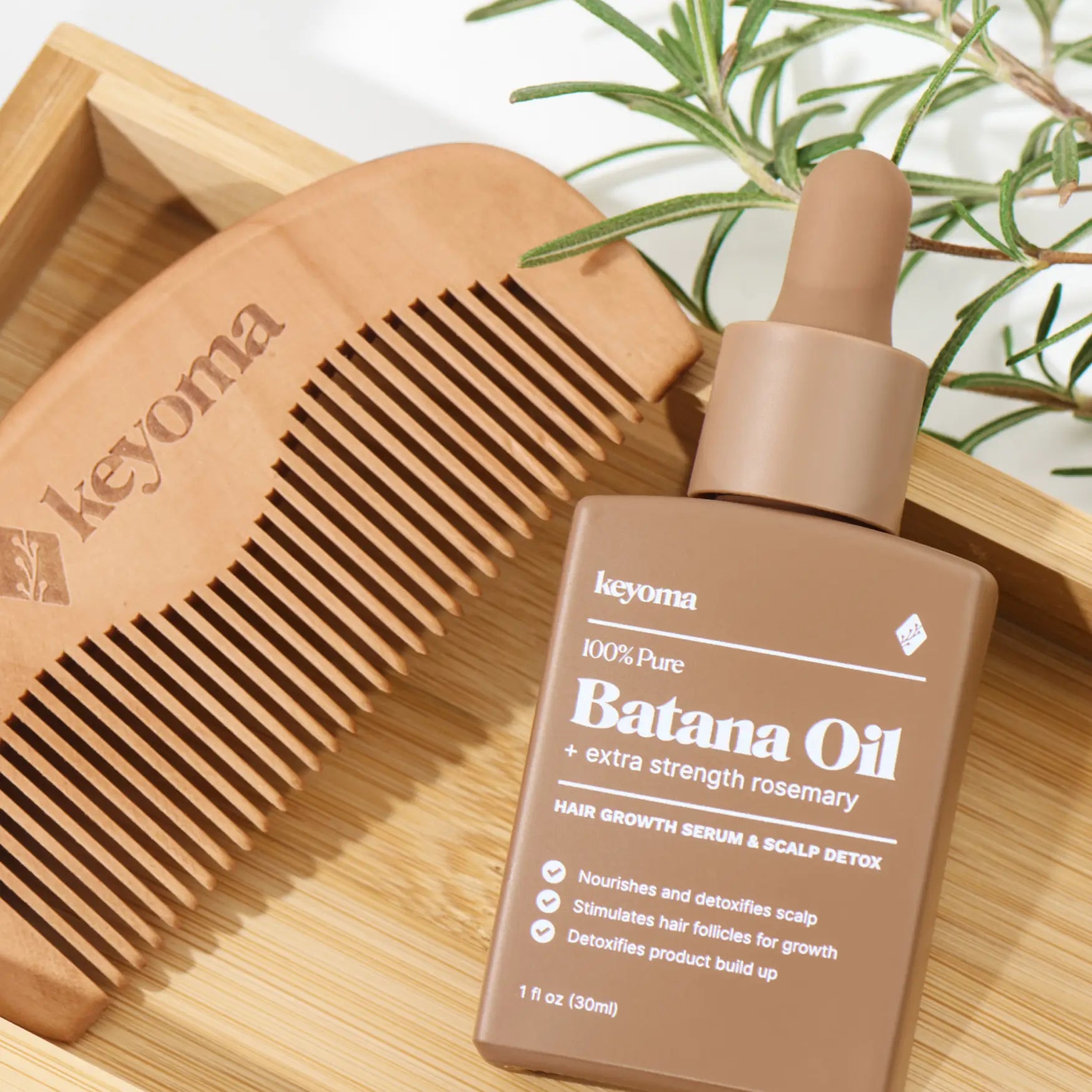
30% Off + 3 FREE Gifts
100% Pure Batana Oil + Rosemary


