

In this article
Castor oil feels sticky on hair because it is naturally thick, dense, and slow to spread. Its fatty acid profile gives it a heavier feel than many common hair oils, so it can cling to strands instead of slipping lightly across them. Chemistry reviews connect castor oil’s structure, especially its hydroxyl group, with higher viscosity, which helps explain why it feels tacky compared with lighter oils.
That sticky feeling does not always mean the oil is bad. It usually means the amount, timing, or removal method does not match your hair type. Castor oil can support shine and moisture, but it needs a smaller dose than most people expect, especially on fine, low-porosity, oily, or already-coated hair.
Key Takeaways
-
Castor oil feels sticky because it is naturally thick and high-viscosity, not because it is spoiled by default.
-
Too much oil turns a thin protective layer into residue that feels tacky, heavy, or hard to rinse.
-
Dilution helps because mixing castor oil with a lighter carrier oil makes it easier to spread and remove.
-
Sticky residue is more likely on fine hair, oily scalps, low-porosity hair, and hair with product buildup.
Why Castor Oil Feels Sticky on Hair So Fast

Castor oil is rich in ricinoleic acid, the fatty acid that gives it much of its heavy, clingy texture. Our castor oil guide also explains castor oil as a plant-based oil from Ricinus communis seeds that is rich in ricinoleic acid.
Most lightweight oils spread into a thin film with less effort. Castor oil resists that. A few extra drops can sit on the hair surface, gather near the roots, and make the hair feel coated instead of conditioned.
It Coats the Strand Instead of Disappearing
Hair does not absorb oil the same way dry skin absorbs a lotion. Oils mainly sit on, around, or between parts of the hair fiber. Castor oil can help reduce a rough, dry feel by coating the strand, but that same coating can become too noticeable when the layer is thick.
A good castor oil application should feel controlled. Your hair may look smoother or shinier, but your fingers should not feel like they are dragging through syrupy residue. If your hair clumps, loses movement, or feels waxy after washing, the oil layer was probably too heavy.
It Grabs Onto Dry Ends and Tangled Areas
Dry, rough, or damaged ends can make castor oil feel stickier because the oil catches on uneven areas. Instead of spreading evenly, it gathers where the cuticle feels raised or where strands already tangle.
That can confuse people. The driest parts of the hair may seem like they “need more,” but more oil is not always the answer. A smaller amount, warmed between the palms and applied only to the ends, often works better than adding another full layer.
It Mixes With Old Product Buildup
Castor oil feels worse when it sits on top of gel, mousse, leave-in conditioner, dry shampoo, edge control, or silicone-heavy styling products. The oil can blend with that residue and create a sticky film that shampoo struggles to remove.
Hair that already feels dull, coated, or stiff before oiling should be washed first. Applying castor oil over buildup usually makes the coating more obvious. Clean, slightly damp hair gives you more control because you can feel where the oil is going.
Sticky, Greasy, Waxy, or Heavy: What Your Hair Is Telling You
A sticky feel is not the same as a greasy feel. Sticky hair usually has drag. Your fingers do not glide through it easily, and strands may cling together. Greasy hair feels oily and slick, often near the scalp. Waxy hair feels coated even after shampooing. Heavy hair loses volume and movement.
These differences matter because they point to different fixes. Sticky hair usually needs less castor oil or better dilution. Greasy roots need less scalp application. Waxy hair may need a stronger cleanse. Heavy lengths may need castor oil only as a pre-shampoo treatment, not as a leave-in.
A simple check helps: rub a small section between your fingers after your hair dries. If it feels smooth but flexible, your oil amount was probably fine. If it feels tacky, stiff, or coated, reduce the amount next time and focus on rinsing better.
How Much Castor Oil Should You Use?
Most people use too much castor oil because they treat it like a lighter hair oil. Castor oil works better by drops, not spoonfuls. The goal is a thin layer, not a visible coating.
Start with less than you think you need:
-
Fine or oily hair: 1 to 3 drops for ends only
-
Medium hair: 3 to 6 drops, focused on dry areas
-
Thick, coarse, curly, or coily hair: 6 to 10 drops, applied in sections
-
Scalp use: a few drops spread across parted areas, not poured directly onto the scalp
Long or dense hair may need more, but only after sectioning. Applying a large amount in one spot causes uneven buildup. A small amount spread through several sections usually feels better than one heavy layer.
How to Make Castor Oil Less Sticky

The easiest fix is dilution. Castor oil becomes more manageable when blended with a lighter oil that improves spread. Castor oil routine recommends diluting with a carrier oil, applying to a damp scalp, leaving it on for 1 to 2 hours, and using it weekly to reduce buildup risk.
You can mix castor oil with lighter options such as jojoba, argan, grapeseed, almond, or coconut oil if those work for your hair. A common starting ratio is one part castor oil to two or three parts lighter oil. Very fine hair may need an even lighter blend.
Warm It in Your Hands First
Warm the oil between your palms before applying it. You do not need to heat the bottle. Rubbing a few drops between your hands helps thin the feel enough for smoother application.
Apply it by smoothing your hands over the hair rather than dropping oil straight onto one area. Direct drops can leave sticky patches that are hard to blend out.
Use It Before Shampooing
Castor oil often works best as a pre-shampoo oil, especially if your hair gets weighed down easily. A short pre-wash treatment lets you get the softening effect without leaving the thick layer on your hair all day.
For most hair types, 30 minutes to 2 hours is enough. Overnight use is not the best starting point because the oil has more time to gather dust, lint, sweat, and shed hairs. Long, tangle-prone hair also deserves extra caution because a PubMed case report linked high-viscosity castor oil and long hair with sudden acute hair felting, a rare but serious matting problem.
Apply to Damp Hair, Not Soaked Hair
Slightly damp hair helps castor oil spread more evenly. Soaked hair can repel the oil and make it sit in uneven patches. Dry hair can work for ends, but dry scalp application often makes the oil harder to move around. Mist the hair lightly or apply after towel-drying. The hair should not be dripping.
How to Rinse Out Sticky Castor Oil
Sticky castor oil usually needs patient cleansing, not rough scrubbing. Warm water helps loosen the oil, but shampoo does the real removal. Apply shampoo to the scalp first, massage gently, then let the lather move through the lengths as you rinse.
If your hair still feels coated, shampoo a second time. A second cleanse is often better than using a harsh amount of shampoo once. Follow with conditioner on the lengths to restore slip and reduce tangling.
The American Academy of Dermatology recommends applying shampoo mainly to the scalp, choosing products based on hair type, conditioning after washing, and being gentle while detangling because wet hair is delicate. These basics matter more when removing a thick oil because aggressive rubbing can make sticky hair tangle faster.
Hair Types Most Likely to Feel Sticky After Castor Oil
Fine hair often feels sticky quickly because each strand has less surface area and less weight to balance the oil. A small amount of castor oil can collapse volume and make roots look oily, even if the ends are dry.
Low-porosity hair can also feel coated because products tend to sit on the surface longer. If water beads on your hair or your hair takes a long time to absorb products, castor oil may need to be heavily diluted or used only before shampooing.
Curly, coily, coarse, or high-density hair may tolerate castor oil better, but “tolerate” does not mean unlimited use. Dense hair can hide too much oil at first, then feel sticky later when the oil transfers to the scalp, pillowcase, bonnet, or styling products.
When Sticky Castor Oil Means Buildup
Castor oil buildup usually shows up as hair that feels coated even after washing. Your roots may look flat, your curls may lose shape, or your ends may feel stiff instead of soft. The scalp may also feel itchy if oil, sweat, and dead skin stay trapped.
Buildup is more likely if you apply castor oil often, leave it on overnight, use it with heavy styling products, or do not shampoo thoroughly. The AAD advises washing based on how dirty or oily the hair gets, and notes that flakes can come from not shampooing often enough or not using the right conditioner, oil, or scalp moisturizer for your hair type.
If your scalp is oily, flaky, acne-prone, or irritated, be careful with direct scalp oiling. Cleveland Clinic notes that castor oil has no solid evidence for promoting hair growth and that pure castor oil can lead to clogged pores, scalp acne, irritation, and rare hair felting.
Mistakes That Make Castor Oil Feel Stickier
Castor oil problems usually come from technique, not just the oil itself. The biggest mistake is applying it like a daily shine serum. It is too heavy for that on many hair types.
Common mistakes include:
-
Using too much at once. Start with drops and add only if your hair still feels dry.
-
Applying it to dirty hair. Old product, sweat, and oil make castor oil feel tackier.
-
Skipping dilution. Pure castor oil is harder to spread and harder to rinse.
-
Leaving it on too long. Long wear time increases the chance of buildup and tangling.
-
Using it on an irritated scalp. Flakes, acne, or itching may get worse with heavy oils.
A better routine starts small. Use castor oil as a targeted treatment, not a full-head coating. Your hair should still move after application.
Should You Stop Using Castor Oil If It Feels Sticky?
You do not always need to stop using castor oil. You may only need to change the way you use it. Try less oil, dilute it, use it before shampooing, and keep it away from roots if your scalp gets oily.
Stop or pause castor oil if your scalp burns, itches, breaks out, flakes more, or feels clogged after each use. Also stop if your hair starts matting, tangling severely, or feeling coated no matter how well you wash it.
Castor oil is not the only option. If you want a lighter feel, try a thinner oil or a blended hair oil instead. The best oil is the one your hair can tolerate without buildup, irritation, or a constant need for extra shampoo.
Switch to Batana Oil If Castor Oil Feels Too Sticky
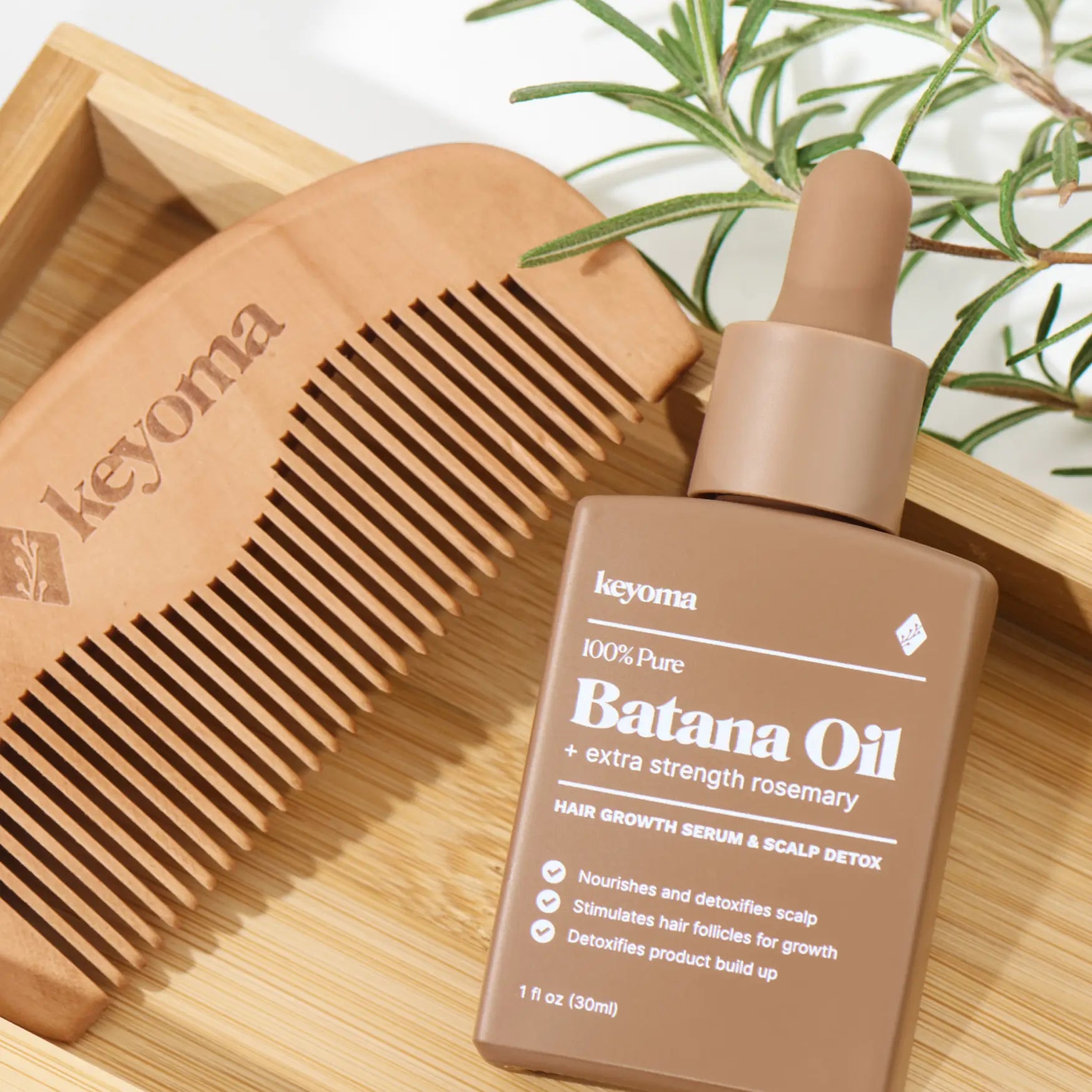
If castor oil keeps leaving your hair tacky, heavy, or hard to rinse, batana oil can be a softer alternative to try. It is still a rich oil, but the angle is different: use it when you want a more manageable oiling step for dry ends, rough texture, frizz, or a scalp-care routine that does not feel as thick as castor oil.
Keyoma’s 100% Pure Batana Oil with Rosemary uses batana oil and rosemary and is sourced from Honduras, which gives it a clear ingredient story for readers who want a simpler oil routine. Keep the claim realistic: batana oil should be presented as a nourishing hair and scalp oil, not as a guaranteed hair-growth fix.
Start small, just as you would with castor oil. Warm a few drops between your palms, smooth it over dry ends or rough areas, and use more only if your hair still feels dry. If your hair gets weighed down easily, use batana oil before shampooing instead of leaving it in.
FAQs
Why does castor oil make my hair feel sticky after washing?
Castor oil can make hair feel sticky after washing when too much oil remains on the strand. A single shampoo may not remove a heavy layer, especially if the oil was applied over buildup or left on for many hours.
Is sticky castor oil bad for your hair?
Sticky castor oil is not automatically bad for your hair, but it can become a problem if it causes buildup, tangles, scalp irritation, or repeated over-washing. Your hair should feel softer after use, not coated or hard to manage.
Can I leave castor oil in my hair overnight?
You can leave castor oil in your hair overnight, but it is not the best choice for everyone. Long, fine, low-porosity, or tangle-prone hair may do better with a shorter 30-minute to 2-hour pre-shampoo treatment.
What can I mix with castor oil to make it less sticky?
You can mix castor oil with a lighter carrier oil such as jojoba, argan, grapeseed, almond, or coconut oil. Start with one part castor oil and two or three parts lighter oil, then adjust based on how your hair feels.
Why does castor oil make my curls clump together?
Castor oil can make curls clump together because its thick texture binds strands into heavier groups. That can help definition in small amounts, but too much can make curls sticky, flat, or hard to separate.
How do I know if I used too much castor oil?
You likely used too much castor oil if your hair feels tacky, looks flat, attracts lint, loses curl shape, or still feels coated after shampooing. Use fewer drops next time and apply only to the driest areas.
Conclusion
Use castor oil as a small, diluted pre-wash treatment if you want the moisture benefits without the sticky finish. The thick feel is normal, but heavy residue is a sign to adjust the amount, placement, timing, or rinse method.
Hair care works better when the product matches your texture and scalp needs. If castor oil keeps leaving your hair tacky, that feedback is useful. Choose a lighter routine, shorten your leave-on time, or focus oil only on dry ends. Keyoma’s hair care blog already covers related oil routines and comparisons, so the next smart step is choosing the oil method your hair can actually handle.
Featured Product
30% Off + 3 FREE Gifts
100% Pure Batana Oil + Rosemary


