

In this article
Your hair type shapes the routine you follow and the products you reach for, but do you actually know which type you have? You may have dense hair that feels hard to control or finer strands that frizz easily. Understanding the care differences between thick hair and thin hair is one of the simplest ways to help your hair look healthier and feel better.
Let's break down the difference between thick hair and thin hair with a focus on care. We together some of the most useful tips and fixes for common issues that affect both hair types.
Key Takeaways
-
Thick hair has larger strands, higher density, and often benefits from richer moisture support.
-
Thin hair has finer strands, lower volume, and usually needs lightweight, gentle products.
-
Strand diameter, density, texture, porosity, and shape can help identify hair type.
-
The best care routine depends on matching products and styling habits to hair thickness.
How to Identify Your Hair Type

The easiest way to check your hair thickness is with the strand test. Take one strand of hair and roll it between your fingers. If it feels substantial and you can clearly notice the texture, you likely have thick hair. If you can barely feel it, you likely have fine hair. If it sits between those two, your hair thickness is probably medium.
Thick Hair Characteristics
Thick hair has strands with a larger diameter. That creates its own set of styling challenges and advantages. This hair type often:
-
Takes longer to dry because each strand is denser
-
Holds styles well once they are set properly
-
Tends to resist chemical treatments more strongly
-
Can look frizzy or feel unruly without enough moisture control
-
Needs stronger hold products for styling to last effectively
Thick hair usually does best with richer, nourishing treatments and products that can work through the strand more effectively. I noticed richer leave-ins usually kept thicker hair calmer through humid days.
Thin Hair Characteristics
Thin hair strands have a smaller diameter and often look more delicate than thicker ones. If you can see more of your scalp through the hair, you likely have thin hair. People with thin hair often notice:
-
Hair that gets oily quickly because oil moves down the strand faster
-
A hard time keeping curls and styles in place for long
-
A tendency to look flat or lack natural body
-
More vulnerability to heat damage and breakage
-
Extra difficulty creating textured or fuller-looking styles
Fine hair needs gentle handling and lightweight products that will not weigh the strands down. The goal is usually to add body and volume without overwhelming the more delicate structure of each strand.
5 Major Differences Between Thick and Thin Hair

The biggest difference between thick hair and thin hair comes down to the individual strand and how much hair is present on the scalp. Five key factors separate them: diameter, density, and texture among them. Here is a closer look at each one.
1. Hair Strands’ Diameter
The diameter of each strand is one of the clearest ways to tell thick hair from thin hair. Thick, coarse hair has a larger strand diameter, which creates a fuller and more voluminous appearance. Thin hair has a smaller strand diameter, so it usually looks more delicate and less full.
2. Hair Density
Hair density is another useful clue when telling thick hair from thin hair. Density refers to how many strands grow per square inch of scalp. Thick hair usually has a higher density, which means more strands are present overall. That added density contributes to the fuller look and heavier appearance of thick hair.
With more strands covering the scalp, thick hair tends to look denser and more abundant. Thin hair has a lower density, with fewer strands across the scalp. That difference in density changes how full the hair appears, even when the strands themselves seem close in thickness.
3. Hair Texture
Hair texture also plays a major role in separating thick hair from thin hair. Thick hair often feels coarser because the strands are wider, which gives it a stronger, more resilient feel and helps it handle styling and manipulation better. Thin hair usually feels smoother because the strands are finer, but that also makes it easier to damage or break. Because of that, thin hair generally needs gentler handling and lighter styling products.
4. Porosity
Porosity refers to how well the hair absorbs and keeps moisture, and this can differ between thick and thin hair. Thick hair often has low to medium porosity because its cuticle layers are more compact and tightly packed. That structure makes moisture harder to get into the strand, but once it gets in, thick hair usually holds onto it well.
Thin hair, on the other hand, is more likely to have medium to high porosity because its structure is finer and it has fewer cuticle layers. That allows moisture to get in more easily, but it can also escape more quickly. Because of that, thin hair may feel dry or brittle if you do not care for it well.
5. Hair Shape
Hair shape is the natural form of the strand, whether straight, wavy, curly, or coily, and it also helps distinguish thick hair from thin hair. Thick hair usually holds its natural shape more strongly, which gives it more structure and more resistance.
Thin hair has a softer structure and less internal strength, which affects how well it keeps its shape. Straight thin hair tends to lie flatter on the scalp, while wavy or curly thin hair may lose definition more easily. Because of that, thin hair often needs specific styling methods or products to hold its shape better.
How to Care for Thick Hair
People with thick hair often have voluminous strands, a grainier texture, and sturdier follicles.
Naturally textured hair or heat-damaged hair may be more likely to tangle and knot. That is why it helps to focus on protecting it from breakage and split ends. If you want to bring more balance to thick hair, look for products like:
-
Nourishing oils to help control frizz
-
Hydrating conditioner to smooth and restore moisture
-
Heat protectant spray to help hold moisture in
With strengthening support on your side, you can feel more confident that thick hair stays shiny, strong, and easier to work with.
How to Care for Thin Hair
When it is cared for well, thin hair can feel soft, look healthy, and give you a flexible base for styling. You can learn to style thin hair in several ways. If you want to bring out the best in fine, healthy hair, keep an eye out for supportive products such as:
-
Silicone-free shampoo to help prevent greasy roots
-
Volumizing conditioner to give extra lift
-
Texture spray for longer-lasting volume
Giving fine hair the care it needs can leave it looking healthier and more polished. I noticed lightweight stylers usually gave thin hair more movement than creamier formulas.
Choose Hair Care That Fits Your Hair Type
Explore Keyoma natural hair care blogs when you want guidance that actually fits your hair type instead of a one-size-fits-all routine. Thick and thin hair can both look healthy, but they usually need different kinds of support to get there.
Thin hair needs gentle handling and lightweight products that do not weigh it down, while thicker hair often benefits from richer care to stay smooth and manageable. That difference matters because the wrong product can make good care feel like the problem.
Once you understand how your strands behave, it becomes much easier to choose care that supports your texture, protects your length, and helps your hair look more balanced each day.
Featured Product
30% Off + 3 FREE Gifts
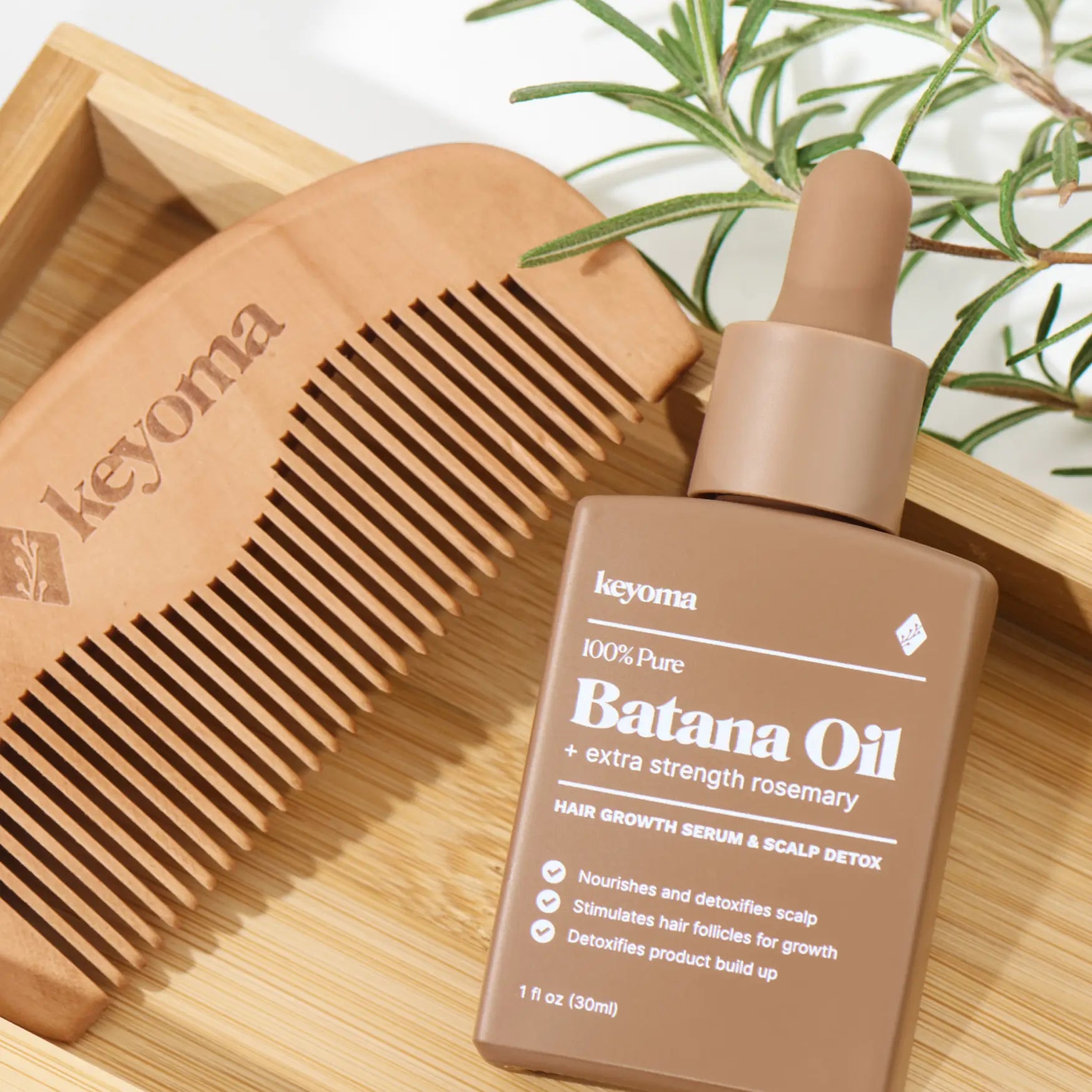
100% Pure Batana Oil + Rosemary


