

In this article
Dryness, frizz, breakage, limpness, and a gummy feel can point in different directions. To decide whether your hair needs oil, protein, or moisture, compare how it feels with what you have done to it recently.
Moisture-focused products help hair feel softer and easier to detangle. Protein-based products can temporarily support weakened, highly processed strands. Oil adds lubrication, shine, and slip, but it does not replace water-based conditioning or repair permanent structural damage.
Your hair may need a reset rather than another treatment. Buildup, repeated masks, bleaching, heat, or several new products can create similar signs.
Key Takeaways
-
Hair often needs a balance rather than one permanent treatment category.
-
Moisture improves softness, while protein offers temporary structural support.
-
Oil reduces friction and adds shine but does not add water.
-
At-home strand tests work best alongside recent product history.
What Does Your Hair Need: Oil, Protein, or Moisture?
Compare what you see and feel with the last few wash days. One sign is rarely enough. Roughness can follow dryness, excess protein, buildup, bleach, or heat. Limp hair may be over-conditioned, while chemical damage can make wet strands weak and stretchy.
|
Likely Need |
Common Signs |
What Else It Might Be |
First Low-Risk Step |
|
Moisture-focused conditioning |
Roughness, tangles, static, dullness, poor slip |
Protein-heavy products, heat damage, harsh cleansing |
Use rinse-out conditioner, then assess clean, dry hair |
|
Temporary protein support |
Weak, gummy, limp, overstretched hair after processing |
Severe damage, over-conditioning, residue |
Try one protein-containing product and pause other changes |
|
A small amount of oil |
Frizz, rough ends, low shine, styling friction |
Buildup, too little conditioner, split ends |
Apply lightly to the lengths or use before washing |
|
A routine reset |
Coated, greasy, flat, stiff, inconsistent hair |
Hard water, scalp oil, too many layered products |
Wash thoroughly and return to basic shampoo and conditioner |
Water-based conditioning should usually come before oil. The American Academy of Dermatology’s leave-in conditioner guidance explains that conditioner coats the hair and improves smoothness and detangling. Oil can follow when the lengths still feel rough or frizzy.
A review of hair conditioning and fiber structure describes damage as a mix of surface wear, chemical change, friction, and water-related swelling.
Check Your Hair’s Recent History First
Ask what changed before the dryness, gummy texture, or breakage. A new mask, heat styling, color, heavier oil, or several product changes may explain more than a strand test.
Compare different areas too. Healthy roots with rough ends often reflect accumulated wear along older lengths. A coated feeling from root to tip points more toward residue. Sudden scalp symptoms or visible density changes fall outside a simple moisture-protein decision.
Heat, Bleach, Color, and Chemical Services
Bleach, dye, relaxers, straightening services, and repeated heat can disturb the cuticle and weaken the fiber. Hair may feel rough when dry but unusually soft or fragile when wet. Those mixed signs often reflect damage rather than a clean shortage of one ingredient.
The American Academy of Dermatology recommends limiting high heat and spacing chemical services because damaged hair becomes fragile and breaks more easily. Its hair-damage prevention recommendations also emphasize conditioner, gentle detangling, and lower heat.
Compare your pattern with the signs of heat-damaged hair before assuming protein alone will solve it. A protein-containing conditioner may make the fiber feel firmer, but no cosmetic product permanently restores a severely split strand.
Heavy Masks, Protein Treatments, and Oil Buildup
Repeated rich masks may leave fine or low-porosity hair flat or coated. Protein-heavy formulas may make some hair stiff, especially when shampoo, conditioner, leave-in, and stylers all contain hydrolyzed keratin, collagen, silk, wheat, rice, or amino acids.
Oil buildup looks different. Hair may feel heavy, separate into greasy sections, lose volume, or take longer to become fully wet. When breakage remains the main concern, follow a broader plan for hair breakage treatments instead of stacking masks.
Use At-Home Tests as Clues, Not Proof
The hair elasticity test involves stretching one damp strand to see whether it snaps, returns, or keeps stretching. It may reveal a pattern, not the cause.
Water content changes hair’s mechanical behavior. Research comparing wet and dry hair testing shows that testing conditions affect tensile results. Strand thickness, damage, humidity, and residue also change what you feel.
The float test has similar limits because surface oil, trapped air, and residue affect sinking. Treat porosity as a description of product behavior, not a diagnosis.
Observe Clean Hair Before Adding More Products
Wash and condition normally, but skip the new mask, oil, or protein treatment. Observe the hair when damp and after it dries. Check the mid-lengths and ends separately from the roots.
-
Rough lengths that become manageable after conditioner support a moisture-focused approach.
-
Weak, gummy hair after chemical processing may support cautious protein use.
-
Soft hair that still catches or lacks shine may benefit from a small oil step.
-
Flat, waxy, or greasy hair may need less product or more thorough cleansing.
Check Stretch, Feel, Shape, and Breakage Together
Stretch is more useful when paired with feel and shape. A strand that snaps quickly but feels coated may reflect residue. Hair that stretches too far after bleaching may be structurally weakened even when a mask makes it feel soft.
Uneven, frayed pieces at different lengths support breakage. Full-length hairs with a small bulb at one end point toward shedding from the root, which oil, protein, and conditioner cannot diagnose.
Change One Part of the Routine at a Time
Keep your base shampoo and conditioner stable while testing one adjustment. Changing a mask, oil, leave-in, styling cream, and cleansing method together makes the result hard to interpret.
Stop the test if hair becomes stiff, gummy, greasy, or irritated. Follow each product’s directions rather than copying a fixed schedule made for another hair type.
Match the Fix to What Your Hair Needs
Choose the smallest change that fits the pattern. More product may turn dryness into buildup or weakness into stiffness.
Add Moisture for Rough, Dry, Tangled Hair
Start with rinse-out conditioner on the lengths, followed by a compatible leave-in when needed. A good response means easier detangling, better flexibility, and less roughness without a coated or limp finish.
Conditioning does not heal split ends, but it reduces friction. If roughness returns after every wash, review heat, chemical processing, cleansing strength, and trimming needs.
Add Protein for Weak, Gummy, Overstretched Hair
Protein-derived ingredients can temporarily improve strength or surface behavior. A dermatology review of shampoos and conditioners notes that protein-derived conditioners can temporarily mend the appearance of damaged areas rather than reconstruct the strand permanently.
Use one protein-containing product according to its label, then reassess. Pause it if the hair becomes harder, rougher, or quicker to snap. Severely bleached hair may need conditioning and temporary protein support, plus less heat and gentler handling.
Add Oil for Slip, Softness, and Reduced Friction
Oil fits best when conditioned hair still needs lubrication, shine, or less friction. Apply a small amount to the mid-lengths and ends, or use it before shampooing when your hair prefers a rinse-out approach.
A systematic review of coconut, castor, and argan oils found different evidence levels for hair quality and little strong support for growth claims across the oils reviewed. A separate study of coconut, sunflower, and mineral oil found reduced protein loss with coconut oil, but that result does not apply automatically to every oil or formula.
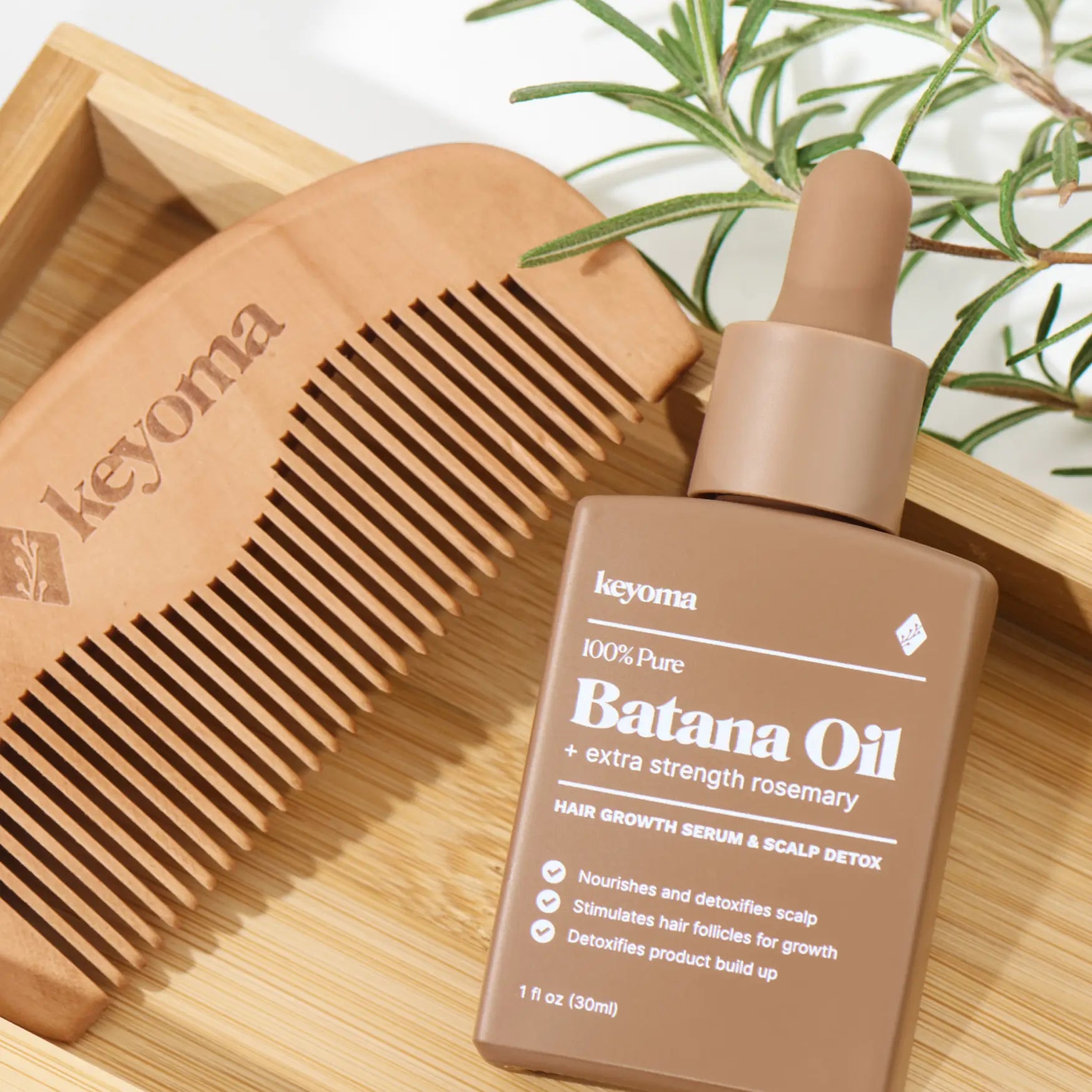
For a batana and rosemary option, Keyoma Pure Batana Oil with Rosemary can fit as a light finishing or pre-wash step when your hair responds well to oil. Keep the goal cosmetic: softer-feeling lengths, added shine, and less friction. It does not replace conditioner, protein support, heat protection, trimming, or medical treatment.
Fine or low-porosity hair often needs less oil. See the notes on using batana oil with low-porosity hair and choose a hair oiling routine that suits your density, texture, scalp, and wash habits.
Protein Overload, Moisture Overload, or Buildup?
“Protein overload” and “moisture overload” are consumer shorthand, not medical diagnoses. Damage, hard water, residue, and excess product can imitate the same signs.
Do not apply the opposite treatment aggressively. Return to a basic wash and conditioning routine, remove the likely trigger, and change one variable at a time.
Stiff, Rough Hair After Protein-Heavy Care
Hair that becomes straw-like, tangled, or quick to snap after several protein products may be receiving more film-forming support than it tolerates. Pause the added protein and use gentle conditioning.
Check every label. Protein may appear in shampoo, conditioner, leave-in, stylers, and bond-focused treatments at the same time.
Gummy, Limp Hair After Repeated Conditioning
Hair that feels overly soft, mushy, or unable to hold its usual shape after repeated masks may be over-conditioned. Reduce the number or weight of conditioning products and return to a lighter base.
Gummy wet hair after bleach needs more caution. Chemical damage can weaken the internal structure, so temporary improvement from protein does not make the strand healthy again.
Coated, Greasy Hair That Resists Water
Buildup becomes more likely when roots flatten quickly, lengths separate into oily sections, or shampoo never seems to rinse clean. Use an appropriate cleansing wash, then reduce the amount or frequency of oils, creams, and masks.
Cleveland Clinic’s dermatologist-led hair-oiling guidance notes that oil may weigh down fine hair and may worsen dandruff-prone scalps in some people. Stop if you develop itching, burning, redness, bumps, or increased flaking.
Review the side effects of over-oiling hair when buildup keeps returning. Persistent breakage, sudden texture changes, thinning, patchy loss, scalp pain, rash, burning, or heavy scaling need evaluation. See when to consult a hair-loss doctor for warning signs.
Decide If Hair Needs Oil, Protein, or Moisture
Choose the next step from the pattern, not the loudest symptom. Rough, tangled hair that improves with conditioner points toward moisture-focused care. Weak, overstretched hair after chemical damage may benefit from cautious protein support. Conditioned hair that still needs slip or shine may respond to a small amount of oil.
When signs overlap, reset first. Use basic shampoo and conditioner, observe hair, and add one treatment at a time. A simpler test gives you a clearer answer.
Featured Product
30% Off + 3 FREE Gifts
100% Pure Batana Oil + Rosemary


