

In this article
Fairy knots sound playful, but if you wear your hair natural, you know they’re anything but. A notch above everyday tangles, fairy knots, also called single-strand knots, can be stubborn and feel almost impossible to work through.
For curls and thicker textures, these tiny knots pop up often. Ready to get a handle on them? Here are seven ways to help smooth your strands and cut down fairy knots for a more manageable mane.
Key Takeaways
-
Single-strand knots form when one hair loops around itself into a small knot.
-
Curly and coily hair can knot more because oval follicles twist strands and shed hairs snag.
Harsh products, heat, rough detangling, and fabric friction can disrupt cuticles and worsen knots. -
A few drops of oil on ends may curb dryness and friction.
What Single-Strand Knots Are
Just like it sounds, a single-strand knot forms when one hair loops and tangles around itself into a small knot. Those small knots can then catch other hairs, building larger tangles. Not fun.
Because they’re so tiny, they’re harder to untangle than a standard knot, even though the knot is small. With fairy knots, breakage can become an issue, especially if you try to remove them the wrong way.
Learn how to easily detangle your hair.
Why Curly Hair Is Prone to Small Tangles
The same structure that gives curls their pattern also makes them prone to fairy knots. Straight hair grows from round follicles, while curly hair grows from oval follicles, which makes the strand twist as it grows. Every bend and curve creates a point where the hair can loop back on itself.
Factor in the 50–100 hairs you shed each day, and those shed strands can wrap around the ones still attached, setting up a perfect knot. With nearly a quarter of global consumers reporting curly hair, it’s a common issue.
Common Causes of Fairy Knots

To stop fairy knots, first figure out what’s leading to them. Knowing how your hair gets tangled helps you create a plan to prevent it. The top drivers are curl pattern, normal shedding, and unhelpful care habits. Here’s a closer look.
How Hair Shedding Can Lead to Knots
Daily shedding, usually 50–100 hairs, also plays a role. When curly strands shed, they can hook onto others and form knots. This happens even more when the cuticle is roughed up. Split ends and damaged hair raise the chance too; as hairs split, they wrap around themselves.
Hair Habits That Can Make Knots Worse
Improper care can make fairy knots worse. Skipping quality products, using sulfates or harsh chemicals, heavy heat styling, rough shampooing or detangling, and friction from clothes or your pillow all disrupt the cuticle. That disruption makes strands catch on each other or on themselves, which leads to, you guessed it, fairy knots.
How Curl Pattern Affects Knotting
Any hair type can tangle, but natural, curly, kinky, and coily textures are especially likely to form fairy knots. These hair types have oval follicles, so the strand exits the scalp in a coiled pattern. That shape naturally winds on itself and encourages tangles. The tighter the texture, the higher the risk of fairy knots along the strand.
How to Prevent Fairy Knots

Now that you know what causes them, it’s time to act. Below are seven ways to help keep single-strand knots to a minimum.
Add Batana With Rosemary Oil to Help Protect Ends
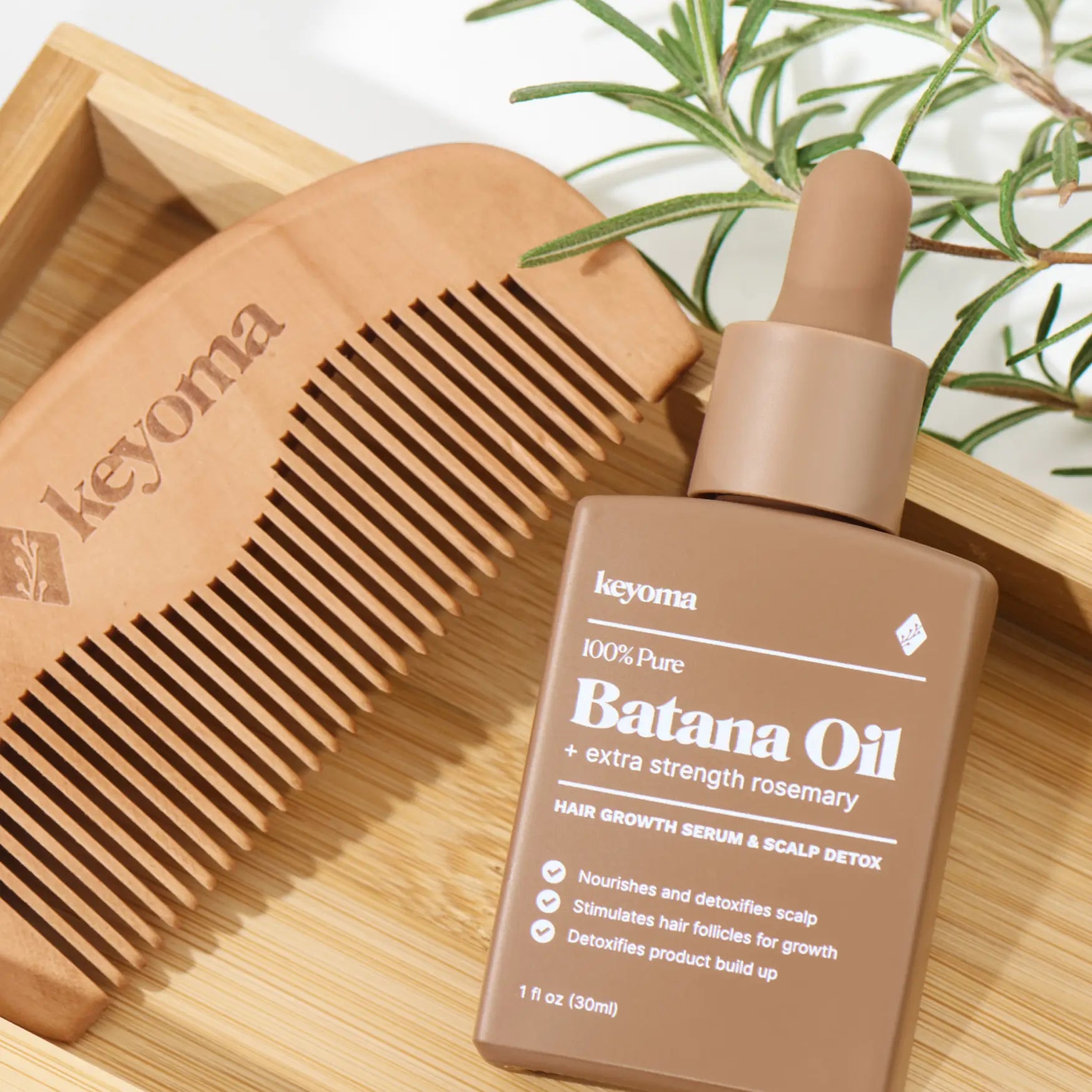
If most knots show up near your ends, add Keyoma batana with rosemary oil as a simple seal-and-shield step. After your leave-in or moisturizer, warm 2–4 drops between your hands and smooth over the last few inches. This may help curb dryness and friction at the ends so hair is less likely to snag and knot.
Seal Your Ends
This tip connects to the last one. When your ends stay moisturized, they’re less likely to form knots. Sealing the ends with a heavier butter or cream adds slight weight and a slick barrier, which helps keep strands from wrapping onto themselves.
Stretch Your Hair After Wash Day
Wash-and-go styles look great, but they can invite fairy knots. When your hair shrinks, coils overlap and cross. Single-strand knots become likely, especially if you’re prone to them. Stretch your hair after washing to keep ends from tangling.
Try twist or braid outs, african threading, bunning, or bantu knots. You have plenty of options.
Try Detangling With Fingers
If you haven’t started already, add finger detangling to your routine. Combs and some tools can make existing damage worse, and that damage feeds fairy knots. Your fingers are gentler and can tease out small tangles before they tighten. It takes more time, but with patience, it’s doable.
Use Protective Styles
When in doubt, don’t wear your hair out. Braid it, twist it, or tuck it into a bun to keep your ends protected. If the ends are tucked, they can’t make knots. Avoid tight styles that strain your edges and nape. And take styles down gently and on schedule so you can condition and cleanse well.
Check out these 10 protective styles you can try.
Schedule Regular Trims
Put trims on your calendar. They remove split ends and other damage, and they also help keep knots down. Dry ends tangle more, and if you’ve skipped appointments, that could be the main reason. Stay ahead and book a trim every six to eight weeks.
Detangle Your Hair the Right Way
There’s a reason to slow down and use the right products when you detangle. Rushing leaves hidden tangles that turn into fairy knots. Using the wrong products can make it worse. Work in sections so you can detangle from roots to ends without missing areas.
For detangling, choose a moisturizing shampoo and conditioner that softens and adds slip. A wide-tooth comb gave me slip without snagging. Then follow with a leave-in or a detangling lotion so your comb or brush glides without catching.
Protect Your Hair While You Sleep
It’s tempting to crash right away, but give your hair a little care first. Wrap it with a silk scarf or bonnet to cut down friction and knots. Keep your style in place and sleep comfortably. Here's how to protect your hair from breakage during your sleep.
Deep Condition Regularly
Deep conditioning should be part of every natural routine. It gives extra nourishment and moisture and also supports strength, which can reduce friction and tangling.
Keep Your Strands Well Hydrated
Moisture matters. Keeping your hair hydrated is key if you want fewer tangles. If you have natural hair, try a hydration-first routine that locks in moisture, limits friction, and supports healthy-looking strands.
Moisturize Your Hair Consistently
First, make moisture a priority for several reasons. With fairy knots, hydrated hair is less likely to tangle overall. Dry, damaged strands are where knots thrive. So build a strong moisture routine to get ahead of them.
Seal Your Ends Using Keyoma Batana With Rosemary Oil
Most people attack fairy knots after they form, but the smartest move happens before bed. If you sleep on cotton, switch to a silk or satin pillowcase tonight—friction drops by half compared to regular fabric. Then stack a second win: on wash day, apply your leave-in while hair is soaking wet, not damp.
Wet strands absorb faster and stay slippery longer, so coils glide past each other instead of looping. If you spot a stubborn knot mid-week, resist the urge to yank it. Instead, saturate that section with a few drops of oil, wait thirty seconds, then gently roll the knot between your fingers until it loosens.
Need an oil that seals ends and cuts friction? Explore batana with rosemary oil on the Keyoma Hair Care blog for application guides and fresh routine tips.
Featured Product
30% Off + 3 FREE Gifts
100% Pure Batana Oil + Rosemary


