

In this article
Anxiety-related hair loss can feel sudden, but it usually follows a delayed pattern. Shedding may start weeks or even months after a stressful period, which is why many people do not connect the two right away.
In many cases, the follicles are still healthy. The hair cycle has been thrown out of balance for a while. Regrowth is often possible, but it depends more on internal recovery and steady care than on any one product.
Batana oil may help support the scalp and protect fragile strands while shedding runs its course. It cannot stop stress-related shedding by itself. A realistic routine starts with knowing what anxiety-related hair loss is and what supportive care can and cannot do.
Key Takeaways
-
Stress and anxiety can trigger telogen effluvium, which is a temporary shedding phase.
-
Hair loss often begins weeks or months after the stressful period ends.
-
Most cases improve once your body starts to recover.
-
Batana oil can support scalp condition and reduce breakage, but it does not address the root cause.
Signs of Anxiety Hair Loss
Stress-related shedding usually looks different from other kinds of hair loss. Instead of obvious bald spots or a sharply changing hairline, the hair often gets thinner across the scalp. The change can be easy to miss at first, then harder to ignore once volume drops.
The pattern matters here. Anxiety-related hair loss often comes after a stressful stretch, not necessarily from an active scalp issue. Knowing how it usually shows up can help you tell the difference between temporary shedding and something more ongoing.
Diffuse Shedding
Hair often sheds more evenly across the scalp instead of from one specific area. Overall density drops, but the scalp may still look fairly normal at first glance.
Many people notice this first when more strands collect in the shower or on the brush. The loss usually feels spread out rather than focused in one spot.
Sudden Increase in Hair Fall
A clear jump in daily shedding is common. Hair may show up on your pillow, clothes, fingers, and bathroom floor in a way that feels very different from your usual pattern.
That change can feel alarming because it seems abrupt. In reality, the trigger often happened earlier, and the shedding shows up later.
Reduced Volume
Hair may feel lighter when you tie it back. A ponytail may wrap one more time, or the hair may look flatter at the roots and less full through the lengths.
This kind of volume loss often builds little by little. Even without obvious shedding all the time, the hair can start to feel less dense overall.
No Visible Scalp Damage or Scarring
The scalp usually does not show scarring, open irritation, or sharply defined bald patches. That matters because it often means the follicles are still active.
A scalp that looks normal does not make the shedding any less real, but it often points to a reversible process instead of permanent damage.
Can Hair Grow Back After Hair Loss From Anxiety?
Hair can grow back in many cases. Anxiety-related shedding usually falls under telogen effluvium, which means more hairs than usual have shifted into a resting phase and then shed together.
The follicles are still there. They are not destroyed. Once the body starts to settle, those follicles can move back into the growth phase.
Regrowth does not always look dramatic at first. Early hair may come in softer, finer, and shorter than the rest. Density usually returns gradually, not all at once.
The timeline varies. Some people notice improvement within a few months after shedding slows, while others need longer depending on stress levels, sleep, nutrition, hormone balance, and overall health. Ongoing stress can keep the cycle unstable for a longer time.
Does Batana Oil Work for Anxiety-Related Hair Loss?
Batana oil can play a supportive part, but it does not fix the internal trigger behind anxiety-related hair loss. Stress shedding starts with a shift in the hair cycle. Surface dryness is not the main cause.
That is why oil should be seen as support, not treatment. Batana oil may help soften the scalp, reduce dryness, and lower friction along the strands. Those effects can make fragile hair easier to manage while shedding is happening and while regrowth begins.
It may be especially helpful when stress shedding comes with rough texture, brittle ends, or hair that tangles more easily than usual. In that case, the goal is not to force regrowth with oil. The goal is to protect the hair you still have and support a healthier scalp environment.
Some people also prefer it because richer oils can make thinning hair feel less dry and less likely to snap during brushing or styling. That may improve how the hair looks during recovery, even though it does not shorten the telogen effluvium phase itself.
How to Use Batana Oil for Stress-Related Hair Loss
A simple routine usually works better than a heavy one. Batana oil tends to help most when it supports scalp comfort and protects the hair without causing buildup.
Step 1: Cleanse and Maintain a Healthy Scalp
Regular cleansing helps clear away sweat, product residue, and extra oil from the scalp. Hair follicles usually do better in a balanced environment than under layers of buildup.
A scalp that feels clean but not stripped is easier to manage over time. Harsh washing can increase dryness, while washing too little can leave the scalp congested.
Step 2: Apply Batana Oil to the Scalp and Massage
Apply a small amount of oil straight to the scalp and spread it with a gentle massage. Light pressure is enough.
The goal is to spread the oil evenly and support scalp comfort. I noticed lighter pressure tended to keep shedding from feeling worse during wash days. Rough rubbing can add extra friction when the hair is already shedding more than usual.
Step 3: Work Oil Through Hair Lengths to Reduce Breakage
A small amount can be worked through the mid-lengths and ends after you apply it to the scalp. Dry, fragile strands often respond better to a light coating than to heavy saturation.
Focus on the sections that feel rough, tangle easily, or break more often. That usually works better than putting a large amount everywhere.
Step 4: Let It Sit or Use as a Pre-Wash Treatment
You can leave the oil on for a while before washing or use it as a pre-wash treatment. Either way may help soften the hair and reduce roughness.
Pre-wash use often works well for people who want the conditioning effect without leaving too much residue behind after styling.
Step 5: Stay Consistent Without Overusing
Using more oil does not mean you will get better results. Too much can leave the scalp feeling heavy and the hair looking limp.
A few uses each week are enough for many people. For me, fewer applications often kept the scalp more balanced than daily layering. Very dry hair may handle more frequent use, while finer hair may do better with less.
Step 6: Monitor Regrowth and Adjust Your Routine
Watch for less shedding, short new hairs, and improving texture. Those are usually better signs of progress than expecting fast visible density.
As your hair changes, your routine should change too. Less dryness may mean you need less oil over time.
Support Anxiety-Related Hair Loss for Stronger Regrowth
Anxiety-related hair loss can feel upsetting, but it is often temporary. Shedding may look dramatic even when the follicles are still capable of regrowth.
Batana oil can support the process by helping the scalp feel more comfortable and by protecting strands that are dry or fragile. It cannot stop stress-related shedding on its own, and it should not be treated as a cure.
Recovery usually comes from a calmer hair cycle, steadier overall health, and a routine that supports the scalp without overloading it. Patience matters. Consistency does too.
Featured Product
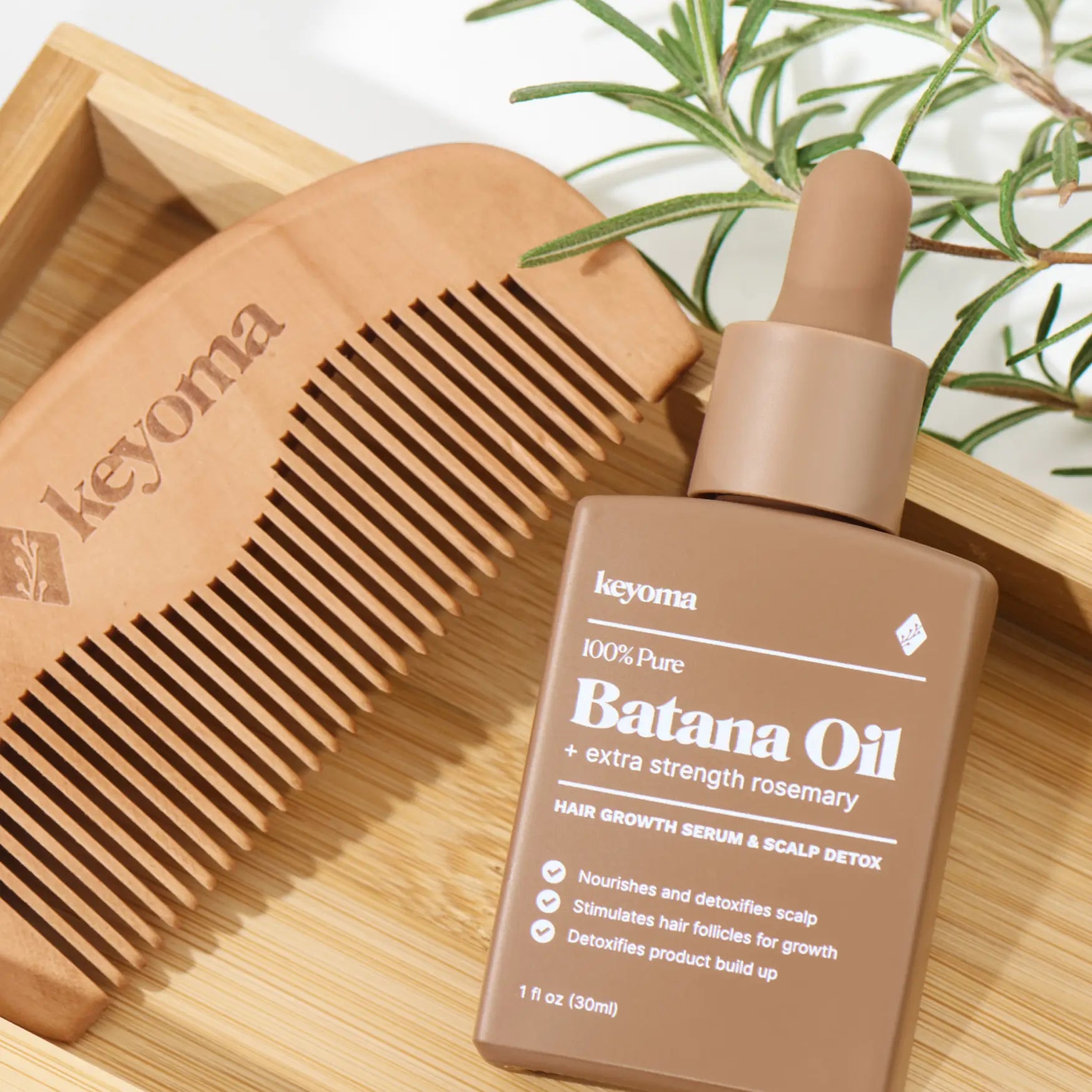
30% Off + 3 FREE Gifts
100% Pure Batana Oil + Rosemary


