

In this article
If you are dealing with thinning hair, extra shedding, or slower growth, you have likely come across both hair growth shampoos and scalp oils. A lot of people do not know which one may help more, or if using both makes more sense. The answer is not that one option always wins. Each one supports your scalp in a different way, and the better choice depends on your scalp condition, your hair concern, and the routine you can keep up with.
Below, you will learn the difference between hair growth shampoos and scalp oils, how each one works, which one fits different hair concerns, and how to choose what makes sense for you. The aim is to help you build a routine that supports scalp health and long-term hair growth instead of depending on only one product.
Key Takeaways
-
Hair growth shampoos wash away buildup and support scalp health during brief contact.
-
Scalp oils stay on longer and may help with moisture, massage, and less breakage.
-
Shedding often calls for a cleaner scalp first, while dryness and breakage may need oils.
-
Using both together can support a more balanced scalp care routine over time.
Do Scalp Oils Work Better Than Hair Growth Shampoos
People often compare scalp oils and hair growth shampoos, but they are not really the same kind of product. One gets rinsed away, while the other stays on. That difference by itself changes how each one affects your scalp and hair.
Hair growth shampoos mainly help by cleansing the scalp, clearing buildup, and improving scalp condition while you wash. Scalp oils are meant to remain on the scalp longer and support moisture, scalp balance, and hair condition between wash days. Because of that, many routines work better with both instead of picking only one.
The main difference is not which one is more powerful, but how long each product stays on your scalp and what issue it is meant to address.
How Hair Growth Shampoos Work
Hair growth shampoos do not directly speed up hair growth on their own. Their main role is to improve scalp conditions so your hair can grow in a healthier environment. That matters because hair grows from the scalp, not from the strands themselves.
Hair growth shampoos usually help by:
-
Washing away oil, sweat, and product buildup that can block hair follicles
-
Helping the scalp stay clean and balanced
-
Easing irritation or dandruff
-
Helping hair look fuller by improving texture
This matters because buildup and scalp irritation may play a role in shedding and weaker hair. A good shampoo helps you keep the scalp clean, and that forms the base of any hair growth routine.
Still, shampoo only stays on your scalp for a short time. Even when it includes helpful ingredients, you rinse it out after a few minutes. That is why shampoo by itself usually is not seen as a full hair growth routine.
How Scalp Oils Work for Hair Growth
Scalp oils work in a different way because they remain on the scalp for hours instead of minutes. That gives them more time to moisturize the scalp, loosen buildup, support scalp massage, and reduce dryness and breakage.
Many scalp oils used in hair growth routines focus on:
-
Helping improve scalp moisture
-
Supporting scalp circulation during massage
-
Reducing dryness and flaking
-
Helping hair stay flexible and less likely to break
-
Supporting overall scalp health
Some oils show up often in thinning hair routines because people massage them into the scalp on a regular basis. The massage itself may help support blood flow to the scalp, which is one reason oils are often part of hair growth routines.
Even so, oils do not take the place of shampoo. If you do not clean the scalp well, oil can combine with buildup and sit on the scalp instead of helping it.
Wash Out vs Leave In Hair Growth Products
One of the most useful ways to choose between shampoo and scalp oil is to understand wash-out products and leave-in products.
Wash-out products (like shampoo):
-
Clean the scalp
-
Lift away buildup and extra oil
-
Remain on the scalp briefly
-
Focus on scalp cleanliness and balance
Leave-in products (like scalp oils):
-
Stay on the scalp for hours
-
Moisturize and shield the scalp
-
Support scalp massage and circulation
-
Help lower dryness and breakage
Because they do separate jobs, comparing them too directly is not always useful. In many routines, shampoo gets the scalp ready, and scalp oil helps maintain it between washes. That is why both often appear in hair thinning routines.
Hair Growth Shampoos vs Scalp Oils for Different Hair Problems

The better pick often depends on the exact hair or scalp issue you are dealing with. Thinning hair, shedding, dry scalp, and slow growth do not all come from the same cause, so the same product will not be the best match for every person.
For Hair Thinning
When you are dealing with thinning hair, scalp health is usually the main concern. Hair thinning often happens little by little and may relate to scalp condition, changes in the hair cycle, stress, or genetics.
Hair growth shampoos may help by keeping the scalp clean and reducing buildup that could affect hair follicles. Scalp oils, by comparison, help maintain moisture and support regular scalp massage.
In real routines, thinning hair often gets addressed with:
-
A gentle hair growth shampoo to keep the scalp clean
-
A scalp oil used a few times each week for massage and moisture
If you can only choose one, scalp oil often gets used more regularly because it stays on the scalp longer. Even so, you still need shampoo to keep the scalp clean.
For Hair Shedding
Hair shedding is not the same as thinning hair. Shedding usually means you are losing more hair than usual over a shorter stretch of time. That may happen because of stress, illness, hormonal shifts, or scalp irritation.
When shedding is the issue, scalp condition matters a lot. If your scalp feels irritated, inflamed, or covered with buildup, shedding may get worse.
Hair growth shampoos are often useful for shedding because they:
-
Clean the scalp
-
Lower irritation and buildup
-
Help support a healthier scalp environment
Scalp oils may still help, especially when shedding links to dryness or scalp tension, but heavy oiling without enough washing can sometimes make scalp issues worse. In shedding routines, scalp cleanliness often matters more than heavy oil use.
For Dry Scalp and Breakage
If you are dealing with a dry scalp, itchiness, flaking, and hair breakage, scalp oils are usually more helpful than hair growth shampoos alone. Shampoo cleans the scalp, but it does not stay there long enough to correct dryness.
Scalp oils help by:
-
Moisturizing the scalp
-
Softening dry skin and flakes
-
Reducing dryness in the hair and lowering breakage
-
Improving flexibility so strands break less easily
Breakage often gets mistaken for hair loss. A lot of people think their hair is not growing, when in reality the strands are snapping before they can get longer. In that situation, scalp oils and hair oils may help lower breakage while shampoo keeps the scalp clean.
For Slow Hair Growth
Slow hair growth is often less about actual growth speed and more about breakage, shedding, or hair staying in the resting phase longer. In that kind of situation, a routine that supports scalp health over time matters more than picking only one product.
For slow hair growth, routines often include:
-
A gentle shampoo to support scalp health
-
Regular scalp massage with oil
-
Steady scalp care over several months
Hair growth usually depends more on consistency and routine than on using only shampoo or only oil.
How to Choose Between a Hair Growth Shampoo and a Scalp Oil
Choosing between a hair growth shampoo and a scalp oil should come down to your scalp condition, the kind of thinning or hair loss you have, and the routine you can realistically follow. Many people choose based on marketing instead of what their scalp actually needs, and that is one reason routines often fall short.
Choose Based on Your Scalp Condition
Your scalp condition is usually the biggest factor. Hair grows from the scalp, so scalp health often matters more than whatever you put only on the strands.
If your scalp is:
-
Oily or covered with buildup → shampoo matters a lot
-
Dry or flaky → scalp oil may be more helpful
-
Itchy or irritated → focus on gentle shampoo and a light oil
-
Tight or tense → scalp massage with oil may help
The goal is to keep your scalp balanced, not overly dry and not overly oily.
Choose Based on Your Hair Loss Type
Different hair concerns usually respond better to different routines.
In general:
-
Thinning hair → shampoo + scalp oil routine
-
Shedding → focus on scalp health and shampoo first
-
Breakage → scalp oil and hair oil matter more
-
Dry scalp → scalp oil matters more
-
Slow growth → a steady routine with both
That is why many routines combine both products instead of trying to rely on only one.
Choose Based on Your Routine
Your routine also matters. Shampoo is easy to keep up with because it fits into your normal wash schedule. Scalp oils usually ask for more consistency because you often apply them several times each week and massage them into the scalp.
If someone:
-
Washes hair often → shampoo plays a bigger part
-
Washes hair less often → scalp oil may matter more
-
Enjoys scalp massage → scalp oils fit well
-
Wants a simpler routine → start with shampoo and add oil later
The best routine is usually the one you can stick with for months. I noticed simpler routines are often easier to keep going.
Can You Use Hair Growth Shampoo and Scalp Oil Together
In many cases, yes. Using a hair growth shampoo and a scalp oil together often works better than using only one because each one helps with a different part of scalp care.
A simple routine often looks like this:
-
Use a gentle hair growth shampoo 2 to 4 times each week
-
Use scalp oil on the scalp 2 to 4 times each week
-
Massage the scalp when you apply the oil
-
Stay consistent with the routine for several months
The shampoo helps keep your scalp clean and balanced. The scalp oil helps keep the scalp moisturized and supports massage and scalp care between washes. For me, spacing oiling away from wash day felt easier to manage. Together, they make the routine more complete.
What matters most is not whether shampoo or oil is better by itself, but whether your overall scalp care routine stays balanced and consistent. Hair growth usually responds to long-term scalp health, not quick fixes.
Choose What Are Best For Your Scalp With Keyoma
Hair growth shampoos and scalp oils often get compared, but they do not directly replace each other. Hair growth shampoos focus on cleaning the scalp and improving scalp condition while you wash, while scalp oils stay on longer and help with moisture, scalp massage, and hair condition.
If someone is dealing with thinning hair, shedding, dry scalp, or slow growth, the better approach is often a routine that uses both a gentle shampoo and a scalp oil instead of choosing just one. Shampoo prepares the scalp, and scalp oil supports it between washes.
In the end, hair growth routines usually depend more on steady scalp care, gentle handling of hair, and long-term routines than on a single.
Featured Product
30% Off + 3 FREE Gifts
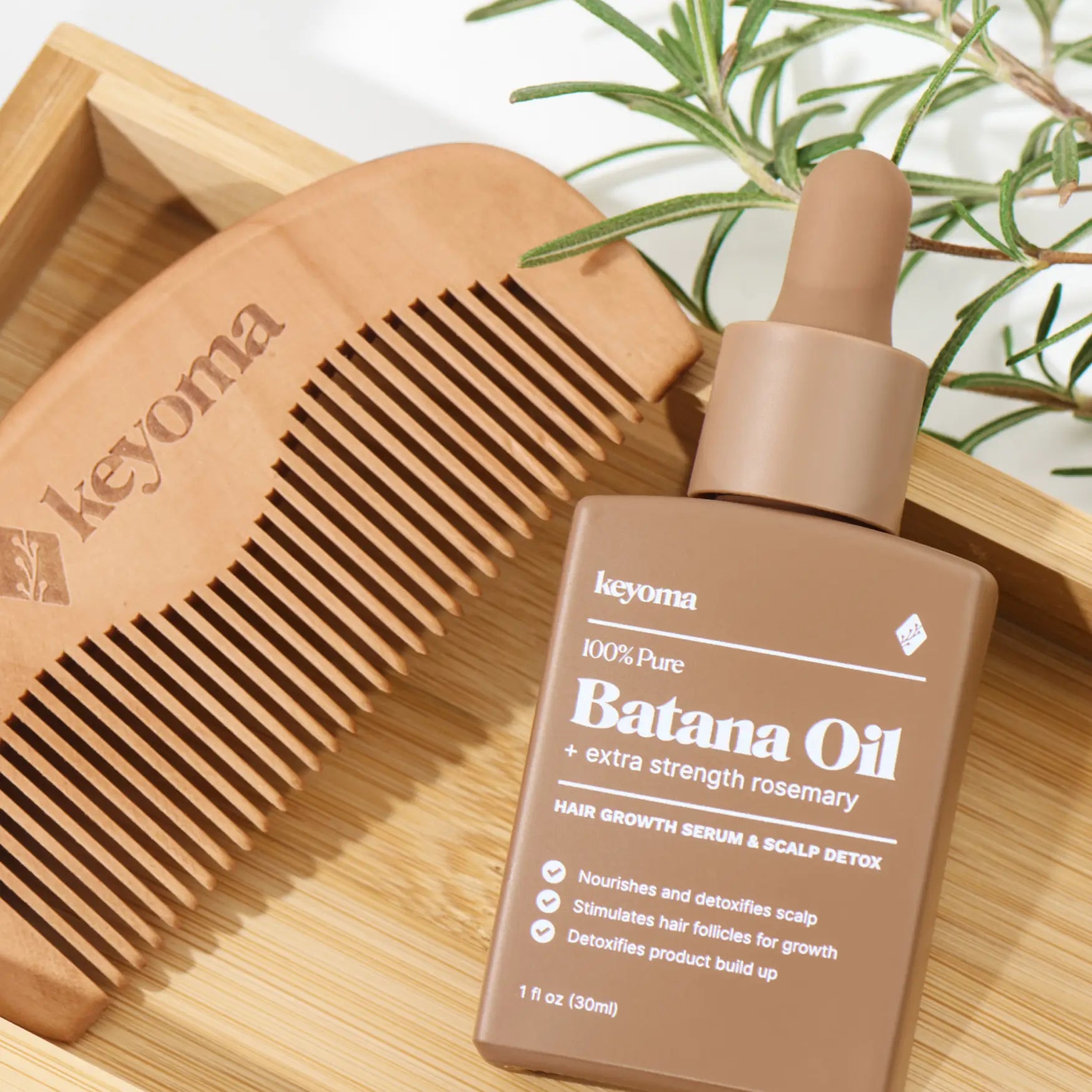
100% Pure Batana Oil + Rosemary


