

In this article
High-density hair does not automatically need a large amount of oil. It needs better distribution. When many strands grow close together, oil can collect on the visible top layer while the inner sections stay dry.
A section-based method gives you more control. Divide the hair, apply a thin layer to one area, check how it feels, and add more only where needed. This approach reaches hidden lengths without soaking the roots.
Batana oil can support softness, shine, slip, and a smoother feel. Those are cosmetic benefits. Oiling does not increase the number of follicles on your scalp or prove that new hair will grow.
Key Takeaways
-
High-density hair needs careful sectioning more than a large amount.
-
Fine dense hair usually needs less oil than coarse dense hair.
-
Apply a thin layer, assess it, then add more where needed.
-
Greasy roots, clumping, or stickiness usually signal excess oil.
Can You Use Batana Oil on High-Density Hair?
Yes. Batana oil can fit high-density hair when you control where it goes and how much you use. Dense hair often has inner layers that receive less conditioning during a quick surface application. Working in sections helps you reach those areas without repeatedly coating the crown.
The best result is lightly conditioned hair that still moves freely. If the strands look wet, separate into oily pieces, or lose their natural volume, the amount was too heavy. Dry, rough, or tangle-prone lengths may tolerate more than smooth, fine strands.
Trichologist Hannah Gaboardi describes batana oil as a rich conditioning oil, which may suit thicker, curly, or coily hair but can weigh down finer strands. Density alone does not decide whether the oil will feel heavy. Strand width and the condition of your lengths matter too.
For broader hair-type context, see how batana oil fits different hair types without treating density as the only factor.
High Density Is Not the Same as Coarse Hair
Hair density describes how many strands grow within an area of your scalp. Fine, medium, and coarse describe the width of each strand. Clinical hair assessments measure density and shaft diameter separately, so a full-looking head of hair can still contain fine strands.
That distinction changes your amount:
-
Fine, high-density hair has many narrow strands and can become flat or greasy quickly.
-
Medium, high-density hair often tolerates a moderate coating when you distribute it evenly.
-
Coarse, high-density hair may need more product across the lengths, especially when the ends feel rough.
Porosity adds another layer. Hair that absorbs product quickly may need a second light pass, while hair that holds oil on the surface may need less. Judge the finish after each section instead of assuming dense hair must take a heavy application.
How Much Batana Oil Should You Use?
There is no reliable universal drop count for every person. Formula thickness, dropper size, hair length, strand width, dryness, porosity, and application goal all change the amount. A scalp-focused serum also follows different directions from a pre-wash treatment spread through long hair.
Use a staged method:
-
Follow the directions for the exact formula.
-
Divide your hair into manageable sections.
-
Apply the smallest useful amount to one section.
-
Spread it fully before adding more.
-
Compare the treated section with an untreated one.
The treated hair should feel smoother and more flexible, not saturated. If your fingers glide through the section and the strands still separate naturally, you have enough. If the oil stays on your hands, the section looks stringy, or the roots shine, stop adding product.
For a deeper breakdown of amount variables, use this guide on how much batana oil to use. Your goal is not to copy one number. It is to find the minimum amount that reaches the intended area.
How to Apply Batana Oil Evenly
Dense hair can hide missed areas. Applying oil over the outside of the hair may make the surface glossy while the nape, inner lengths, or lower layers remain rough. Sectioning solves the access problem before you increase the amount.
Detangle and Divide Hair Into Sections
Detangle gently before oiling so knots do not block distribution. Begin with four sections. If you still cannot see or reach the roots and inner lengths, split each section again.
Use clips to keep untreated hair away from finished areas. Work from the lower sections upward so you do not keep touching and recoating the crown. Readers who need a broader sequence can follow these batana oil application steps.
Apply to the Scalp or Lengths Based on Your Goal
Choose the target before opening the bottle. A scalp-focused treatment belongs along clean part lines. A conditioning treatment belongs mainly on dry mid-lengths and ends. Applying oil everywhere by default increases the chance of buildup without improving the result.
Cleveland Clinic dermatologist Shilpi Khetarpal advises using a small amount and focusing hair oil on the mid-lengths and ends, especially when scalp oiling may worsen dandruff-prone skin. Persistent flakes, redness, tenderness, breakouts, or itching are reasons to avoid heavy scalp saturation.
Spread the Oil Before Adding More
Warm the oil between your palms until they carry a thin, even film. Smooth it over one section, then use your fingers to distribute what is already there. Add more only when the section still feels dry after full spreading.
This is more controlled than placing repeated drops throughout the same area. A general hair-oiling routine can help with detangling and wash-day order, but dense hair still benefits from smaller working sections.
Choose a Routine That Matches Your Goal
Use the result you want to decide placement and amount.
|
Goal |
Best Placement |
Amount Approach |
Stop When |
|
Target a scalp area |
Clean part lines |
Follow the formula directions |
The target feels lightly coated |
|
Condition dry lengths |
Mid-lengths and ends |
Apply section by section |
Hair feels flexible, not soaked |
|
Smooth damp ends |
Ends only |
Use a thin film from your palms |
Roughness softens without clumping |
Scalp-Targeted Treatment
For targeted scalp use, make clean part lines and apply only where intended. Do not flood the surrounding hair to compensate for density. Massage gently with your fingertips, then follow the formula’s wash-out or leave-in directions.
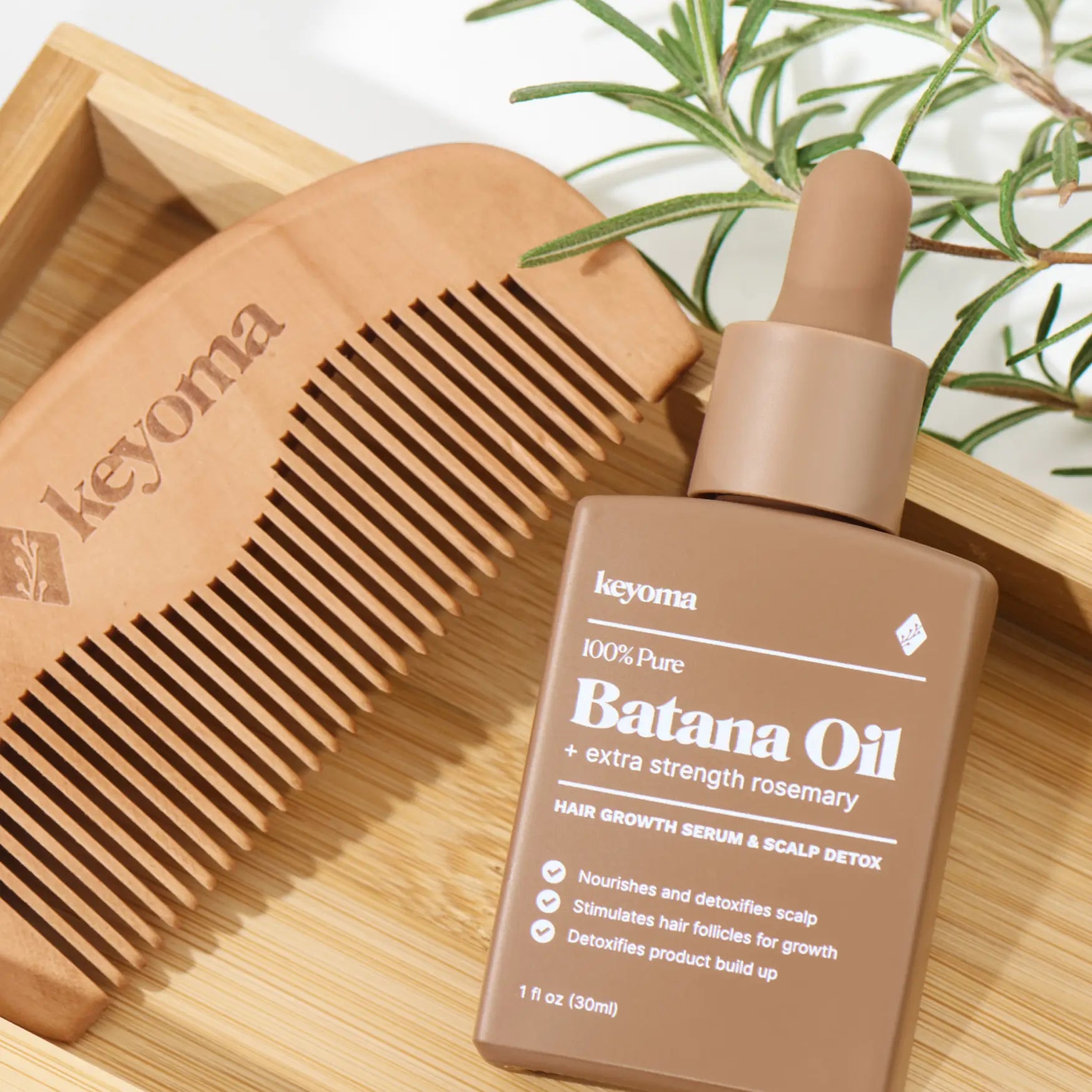
Keyoma Pure Batana Oil with Rosemary offers a formula-specific option for readers who want focused application rather than coating the full head. Use the current product directions as the amount guide, then keep the rest of your dense hair separated so the serum stays near the intended area.
Keep expectations cosmetic and evidence-aware. Reviews of the available batana oil evidence do not show that it has been proven to regrow hair. Its more defensible role is conditioning hair and supporting softness, shine, and easier handling.
Pre-Wash Treatment for the Lengths
A pre-wash treatment suits dense hair with dry, rough, or tangle-prone lengths. Apply to dry or slightly damp hair in sections, concentrating on the oldest parts and ends. Use less near the roots unless your scalp also needs the product and tolerates it well.
Follow the formula’s timing rather than inventing a longer wait. For an extended treatment, check whether you can leave batana oil in your hair based on the product and your scalp response.
Light Application on Damp Ends
For post-wash use, blot excess water first. Put a small amount between your palms, then press or smooth it over the last few inches. Dense hair does not require oil from roots to ends after every wash.
Watch how the ends dry. If they feel softer and remain separated, the amount worked. If they dry in heavy clumps or attract residue quickly, use less next time. Your ideal hair-oiling frequency should follow how long the softness lasts, not a fixed schedule copied from another hair type.
What to Do If Hair Feels Greasy or Coated
Greasy hair after oiling usually points to excess amount, poor placement, too many rich layers, or repeated applications without enough cleansing. Dense hair can hide residue underneath, so the crown may look clean while the inner sections feel sticky.
Reset one variable at a time. Use less oil, increase the number of sections, move the application farther from the roots, or reserve the oil for a pre-wash treatment. Do not add more shampoo, more heat, and more styling products all at once, since you will not know which change helped.
If buildup keeps returning, review the side effects of over-oiling before increasing frequency. Stop using the product if you notice burning, persistent itching, redness, or a rash. The American Academy of Dermatology notes that hair-care products can trigger allergic contact dermatitis.
Use Batana Oil for High Density Hair Without Grease
Treat density as a distribution challenge, not permission to saturate your hair. Divide the hair until you can reach the intended area, apply a thin layer, spread it completely, and judge the result before adding more.
Keep scalp treatments targeted, reserve richer coverage for dry lengths, and use only a light film on damp ends. Hair that feels soft, flexible, and free-moving has enough. Hair that looks stringy, flat, or sticky needs a smaller amount or a different placement.
Featured Product
30% Off + 3 FREE Gifts
100% Pure Batana Oil + Rosemary


