

In this article
Batana oil is not a hair dye, but that does not guarantee every formula will look invisible on pale hair. A colored oil may leave a temporary cast or visible residue on gray, blonde, bleached, or highly porous strands.
The outcome depends on the formula, your starting hair color, the amount applied, contact time, and how evenly your hair absorbs products. Keyoma has not published controlled swatch-test results for staining, so a hidden strand test remains the most reliable way to check how the oil looks on your hair.
Key Takeaways
-
Batana oil is not dye, but colored residue may show on pale hair.
-
Bleached and porous sections may respond differently from healthier, less processed strands.
-
Test each distinct shade or processed section before applying oil throughout your hair.
-
Judge the result only after washing, drying, and checking it under consistent lighting.
What Counts as a Stain on Light Hair?
A strand that looks darker immediately after oiling is not automatically stained. Most oils make hair look deeper in color while the strand is wet or coated. They also change how light reflects from the hair’s surface.
A true concern is a visible color change that remains after you wash the oil out and let the strand dry completely.
Before deciding that an oil stained your hair, separate these possible results:
-
A wet strand appearing temporarily darker
-
A warm, yellow, or brown cast from surface residue
-
Excess oil making several strands clump together
-
Uneven shine making one section appear darker
-
A color change that remains after washing and drying
Inspect the strand in indirect daylight against a white or neutral background. Bathroom lights and warm indoor bulbs can make blonde or gray hair look more yellow than it is.
Taking a clear photo before the test gives you a better comparison than relying on memory.
Why Gray, Blonde, and Porous Hair Need Separate Testing

Light hair makes small changes easier to notice. However, color alone does not tell you exactly how a strand will respond. Two people with similar blonde hair can get different results because of previous coloring, heat exposure, product buildup, and differences across the hair shaft.
Gray, Silver, and White Hair
Gray hair contains less pigment than darker hair, while white hair has little to no visible pigment. This lighter background may make colored residue easier to see.
The absence of pigment does not mean the strand will automatically absorb oil or become stained. The condition of the cuticle, the amount of product, and the washing method still matter.
If you want broader guidance about using Batana oil on gray hair, treat that as a separate question from whether a specific formula leaves a visible cast.
Natural and Color-Treated Blonde Hair
Natural blonde hair has not gone through the same chemical process as highlighted or bleached hair. Its response to an oil may differ from a section that has been lightened, toned, or colored several times.
Blonde hair may also contain several shades. The hair near your roots might be natural, while the middle and ends have been highlighted. Testing only the root section will not show how the processed lengths will react.
Tinted hair products can leave visible residue on pale blonde hair, which is why colorists often recommend trying a new product on a small strand first. This does not prove that every colored oil stains blonde hair. It shows why testing the exact formula matters. (Allure)
Bleached or Highly Porous Hair
Bleaching changes the hair fiber so that treated sections may hold and release products differently from untreated hair. These changes are not always even. The ends may have experienced more processing than the hair closer to the roots.
Highly porous strands may also absorb products quickly or hold surface residue in rough areas. That does not mean every porous strand will retain the oil’s color. It means one test section cannot represent every part of unevenly processed hair.
If you have pale ends, darker roots, and highlighted pieces around your face, test each area separately.
Check the Oil Before It Touches Your Hair
Look at the product itself before testing it. Check the oil inside the dropper or against the side of the bottle rather than judging it through tinted packaging.
Pay attention to:
-
The oil’s visible color
-
Whether its appearance is even throughout the bottle
-
Any unexpected cloudiness, separation, or particles
-
A smell that differs from the product’s normal scent
-
Whether the product is within its recommended use period
Natural oils can vary in appearance, but variation should not be used to dismiss a major or unexplained change. If the bottle looks or smells unusual, contact Keyoma before applying it.
Do not use the apparent darkness of another Batana oil to predict how Keyoma Batana Oil will behave. Different products can contain different ingredients, concentrations, processing methods, and natural batch characteristics.
How to Strand-Test Keyoma Batana Oil

A skin patch test and a hair strand test answer different questions. A skin test helps you watch for sensitivity. A hair strand test helps you evaluate color, weight, residue, and removal.
You may need both, but one does not replace the other.
Choose a Hidden but Representative Strand
Select a narrow section beneath the top layer of your hair or behind one ear. The strand should be easy to find again without sitting in a highly visible area.
Choose a section that represents the hair you plan to oil. If your ends are bleached but your roots are natural, test the bleached section rather than assuming the root result applies everywhere.
For mixed gray hair, include both gray and pigmented strands in the test area. This helps you see whether the oil changes their contrast.
Record the Starting Color
Begin with clean, dry hair without tinted sprays, dry shampoo, styling wax, or other leave-in products. Existing residue can interfere with the result.
Photograph the strand in indirect daylight. Keep the background, camera angle, and lighting as consistent as possible for the after photo.
Do not compare wet hair with dry hair. Wet strands naturally look darker.
Apply a Minimal Amount
Place one small drop between clean fingertips, spread it into a thin film, and lightly coat the test strand. Avoid soaking it.
Starting with a small amount makes the test more relevant to controlled everyday use. Saturating one narrow strand may create a darker, greasy appearance that does not reflect how the product would look when distributed properly.
Keep the oil away from nearby hair so you know which strand you tested.
Match Your Planned Contact Time
Leave the oil on for the same amount of time you plan to use it. If you intend to rinse it after 30 minutes, test that routine first. If you plan to leave it on longer, conduct a separate test rather than assuming the shorter result applies.
Contact time is one of the variables that may affect how much surface residue remains. Keep track of when you applied the oil instead of estimating later.
Wash, Dry, and Compare
Wash the test strand using your normal shampoo and lukewarm water. Rinse thoroughly, then let the section dry completely.
Compare it with the before photo and nearby untreated strands. Look for a yellow, brown, orange, or unusually warm cast, as well as patchy dark areas.
If the result is hard to judge, ask someone else to compare the strands without telling them which one received the oil. This helps reduce expectation bias.
How to Interpret Your Strand-Test Result

The safest next step depends on what remains after the strand is clean and dry.
No Visible Difference
If the tested strand matches the untreated hair, you can begin with a small amount on a wider section. Continue checking your hair during the first few applications, especially if you increase the dose or contact time.
A successful strand test does not guarantee the same result on sections with a different shade or processing history.
Temporary Cast Before Washing
A strand that looks warmer or darker while oily but returns to its starting color after washing is showing a temporary cosmetic effect rather than a lasting stain.
Use less oil if you want to wear it as a leave-in product. A rinse-out application may suit pale hair better when even a light surface cast is noticeable.
Color Remains After Washing
Do not apply the oil throughout your hair if the test strand remains discolored after a thorough wash and complete drying.
Document the result with photos and note the product batch, amount used, contact time, and washing method. Contact Keyoma with those details before trying the product again.
Avoid using bleach, color remover, or an aggressive clarifying treatment on the strand without professional guidance. Trying to correct a small color shift can create more damage than the original problem.
The Result Looks Patchy
Patchiness suggests that different parts of the strand did not respond evenly. Previous highlights, bleaching, heat exposure, and uneven product buildup may contribute.
Do not expand the application to your full head. Test other representative sections first or ask your colorist whether the product fits your current color and aftercare plan.
The Result Is Unclear
Repeat the test using the same amount, contact time, washing method, background, and lighting. Changing several variables at once makes the second result harder to interpret.
If you still cannot tell, avoid applying the oil to pale visible lengths. You can also speak with your stylist, who knows which sections have been lightened or processed most heavily.
Reduce the Chance of a Visible Cast
No application method can guarantee that a colored oil will remain invisible on every light shade. You can still limit unnecessary exposure by controlling how much product reaches the hair.
Start with a thin layer rather than saturating the strand. Spread the oil between your fingertips before touching your hair so it does not collect in one spot.
Focus on these controls:
-
Use the smallest amount that covers the intended area
-
Keep the first application away from visible face-framing pieces
-
Avoid concentrating oil on pale or heavily bleached ends
-
Distribute the product evenly instead of placing full drops on one section
-
Use a rinse-out application if a leave-in test creates a temporary cast
-
Wash before adding more if the hair still looks coated
Batana oil is often described as a rich conditioning oil, and heavier applications can weigh down fine hair or leave a greasy surface. That cosmetic buildup is separate from permanent staining, but it can still change how light hair looks. (Vogue)
When Not to Apply the Oil More Widely
Pause after the strand test if:
-
The strand stays darker, warmer, or yellower after washing
-
Different highlighted sections produce different results
-
The oil remains difficult to remove
-
Your bottle looks or smells unusual
-
You have a color appointment within the next few days
-
Your stylist has given you different aftercare instructions
You should also stop using the product if your scalp develops redness, burning, swelling, or persistent irritation. A clean strand test cannot rule out skin sensitivity.
Frequently Asked Questions
Does Batana oil permanently dye blonde hair?
Batana oil is not formulated as hair dye. However, there is not enough product-specific evidence to promise that every Batana oil formula will leave every blonde shade unchanged.
A strand that appears darker while coated is not necessarily permanently stained. Wash and dry it before judging the result.
Can I use Batana oil on bleached hair?
You can test it on a hidden bleached strand before applying it more widely. Bleached sections may respond differently from natural roots or less processed lengths.
Do not rely on a test performed only on your unbleached hair.
Will Batana oil make gray hair look yellow or brown?
There is no universal answer for every formula, dose, and shade of gray. A colored residue may be more noticeable against silver or white hair, but that does not mean the oil will permanently change it.
Test a hidden section and compare it only after washing and drying.
How long should I leave Batana oil on a test strand?
Match the test to your planned routine. If you plan to rinse the oil out after 30 minutes, use that contact time during the test.
Longer contact requires a separate test because the shorter result may not represent an overnight application.
What should I do if the strand changes color?
Wash the section thoroughly, let it dry, and inspect it in indirect daylight. If the color change remains, do not apply more oil.
Photograph the result and contact Keyoma with the batch information, amount used, contact time, and washing method.
Test Keyoma Batana Oil Before a Full Application
Gray, blonde, bleached, and porous hair do not always respond to products in the same way. Even different sections on one head can produce different results.
A hidden strand test gives you a clearer answer than assumptions based on the color of the oil or someone else’s hair. Start small, control the amount and contact time, then judge the strand only after it is clean and fully dry.
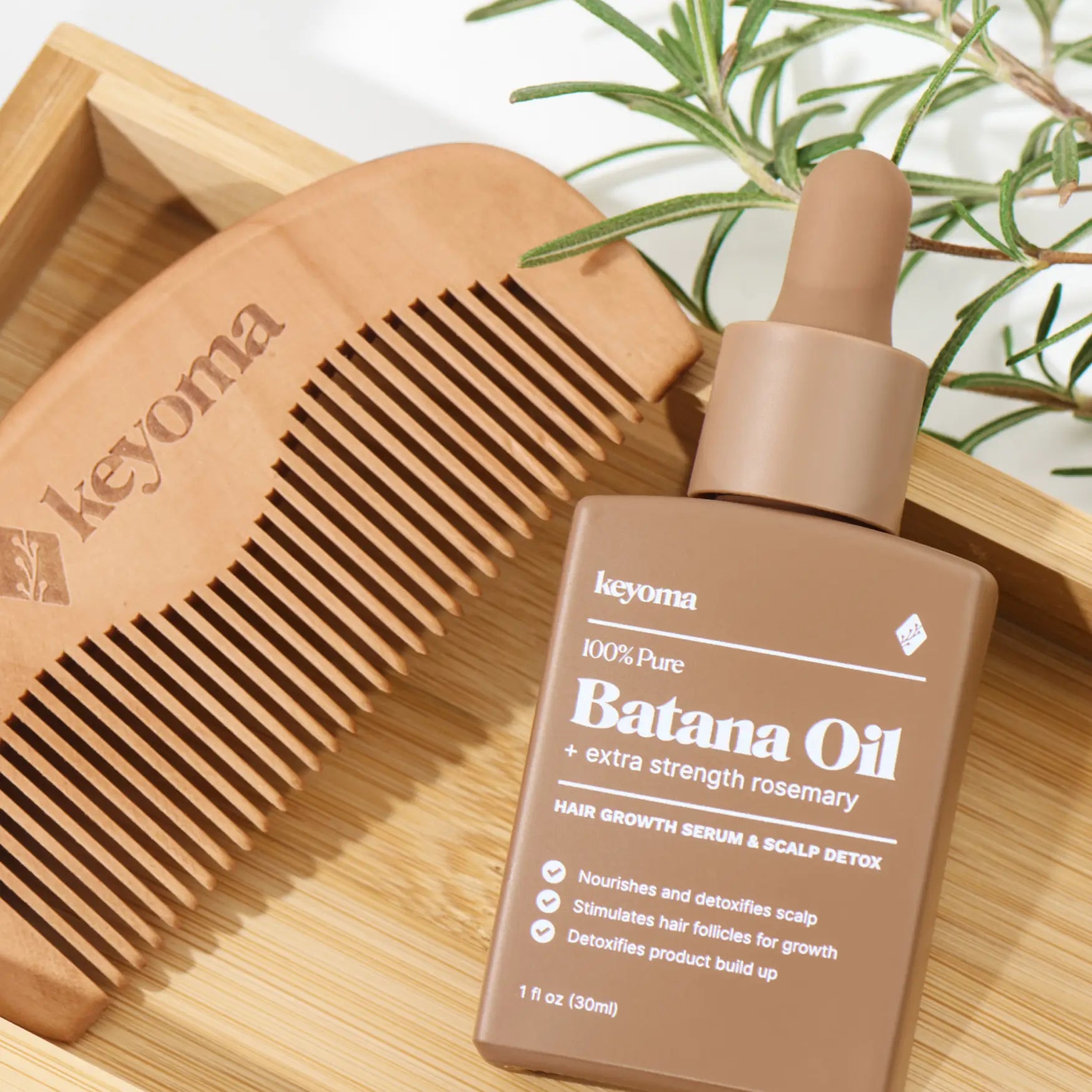
If the result looks even and unchanged, you can introduce Keyoma Pure Batana Oil with Rosemary gradually while continuing to monitor your lightest and most processed sections.
Featured Product
30% Off + 3 FREE Gifts
100% Pure Batana Oil + Rosemary


