

In this article
So you used a product to tame frizz, but now your curls feel hard and crunchy. That does not mean soft definition is out of reach. With the right methods and the right products, you can find the middle ground between puffiness and stiffness so your curls stay defined, soft, and full of bounce.
If you want curl definition that holds, your wash day matters most. Wet hair is smoother and more ready to absorb product, which makes it the best time to set your curls up well. Along with choosing formulas that suit your curl pattern, a few simple techniques can help curls dry with shape, softness, and spring.
Below are some of the most useful ways to get defined curls without ending up with a crunchy finish.
Key Takeaways
-
Crunchy hair often feels stiff, sounds crisp, tangles easily, and may look dull or frizzy.
-
Hard water, frequent washing, strong sulfates, and dryness can leave curls rigid.
-
Putting curl products on soaking wet hair can improve coverage and definition.
-
Scrunching again once hair is dry helps break the cast for softer, springier curls.
What is Crunchy Hair?
Crunchy hair means that your hair feels stiff, hard, or crispy, which is a common concern for people with curls. Strands that feel dry, brittle, rigid, and low in shine can be frustrating to style and even harder to manage day to day. If you have been asking yourself why your hair feels crunchy, the answer can come from several places. A good first step is learning the most common signs.
Typical Signs of Crunchy Hair
Crunchy hair is mostly about feel and sound, but a few other signs usually show up too.
-
Rigid Hair: It may be windy out, yet your hair barely moves, or your strands feel so stiff that getting a comb through them becomes difficult.
-
Crunching Sounds: You may actually hear your hair when you move it or slide your fingers through it.
-
Frizziness: A fuzzy halo, loose flyaways, and an overall unruly look can all show up around your head.
-
Brittle Ends: You may spot dry ends that look split, bent, or sharply thinned out.
-
Loss of Shine: Hair can start to look flat and dull because crunchy strands do not reflect light very well.
-
Tangles and Knots: Your brush may keep catching on stubborn knots and painful tangles no matter what you try.
-
Unmanageable Locks: You may wonder why other people’s curls look so controlled while yours seem impossible to direct.
Potential Causes of Crunchy Hair

Now that you know how crunchy hair tends to show up, it helps to look at what may be causing it. Hard water, too much washing, harsh sulfates, and low moisture are some of the most common reasons.
Before getting into each one, it helps to think about the hair cuticle. The cuticle is the strand’s outer layer, and it is made of small overlapping scales. When those scales become lifted or rough, hair loses flexibility and becomes more likely to feel stiff and crunchy.
Hard Water on Hair
If you keep wondering why your hair feels crunchy after a shower, hard water buildup may be part of it. Hard water contains minerals such as calcium and magnesium that collect on the hair and can make it harder for moisture to get in.
That can leave strands dry, stiff, and easier to break. Early data points to mineral buildup also making hair feel rougher over time. Installing a shower filter can help, and adding a weekly clarifying shampoo can help remove residue too.
Over-washing and Harsh Sulfates
Hard water is not the only cause. Washing too often and using strong sulfates can also push curls toward that crunchy feel. Frequent washing strips away natural oils your strands need, and that can leave hair dry, rough, and more likely to snap.
It can also make your scalp feel tight, irritated, or itchy. Stick with gentle, sulfate-free cleansers and try not to wash more than three times per week. On the days between washes, dry shampoo can help absorb oil and buildup at the roots.
Lack of Moisture and Hydration
When your strands are low on moisture, the whole routine may need an update. Choose gentle, hydrating products that help the cuticle lie flatter and lose less moisture.
Avoid alcohol-heavy formulas because they can dry hair out even more, and deep condition on a regular basis. Most importantly, add a nourishing oil and keep your ends conditioned daily.
How To Get a Crunch-Free Curls

A good product can help control curls, but the way you apply it matters just as much if you want definition without stiffness. The method below is one of the most reliable ways to apply curl products. Start by shampooing and conditioning well, or deep conditioning if needed, then move through these steps while your hair is still dripping wet:
1. Apply Product
If you use a leave-in conditioner, such as a curl milk or smoothie, put that on first. You can also use a small amount of pure batana oil on the mid-lengths and ends if your hair feels especially dry.
Then work your mousse or gel evenly through the lengths of your hair. Wet means really wet here. You may need to lean over the sink or tub so the extra water does not drip everywhere.
2. Comb Through Product
If some areas always seem less defined, uneven product distribution may be the reason. Use a wet brush or a wide-tooth comb to spread the product through each section. This is also a good time to detangle.
3. Upside Down Scrunch
Now comes the first scrunch, one of the easiest ways to encourage your natural curl pattern and add volume.
Scrunching product into very wet hair while your head is flipped over helps work the formula into the strand and encourages curls to spring back after washing and combing. I noticed curls looked less stiff when I scrunched while hair was still soaking wet.
4. Don’t Touch
Letting curls dry takes patience, but it matters. Whether you air-dry or diffuse, keeping your hands off is one of the best ways to avoid frizz. Touching the hair while it dries can disturb the pattern and create flyaways. If you are diffusing, dry each section slowly and gently. Wait until your hair is fully dry before handling it.
5. Scrunch Again
This is the second scrunch, and it is the step that usually solves the crunch. You let your curls dry completely, but now they feel stiff. That often means the styling product did what it was supposed to do.
Many gels and mousses form a layer, or cast, around each curl to help hold shape and reduce frizz. That cast is what gives hair the crunchy feel. The good news is that you can break it without ruining the curl pattern.
Gently scrunch your hair upward in sections toward the roots until the stiffness disappears and your curls feel soft, free, and springy again.
6. Refresh
One of the best parts of healthy-looking, defined curls is being able to go longer between wash days. In between, use a light hydrating mist or spray to wake your curls back up and help any flattened areas bounce again.
You do not have to choose between frizz and crunch. Curly routines usually take some trial and error, but with the right products, a gentle scrunch, and some patience, your curls can stay soft, shiny, and bouncy.
Fix Crunchy Hair for Softer, More Defined Curls
Choose pure batana oil when your curls need softness that lasts beyond styling day. Crunch usually says more about a strand that has lost flexibility than about the curl pattern itself, which is why dryness, buildup, and rough cuticles can all make curls feel hard instead of defined.
Better curl care is not about chasing hold no matter what. It is about keeping movement and definition in the same routine. When strands stay lubricated enough to bend, reflect light, and resist tangling, curls look better without feeling stiff or coated.
Featured Product
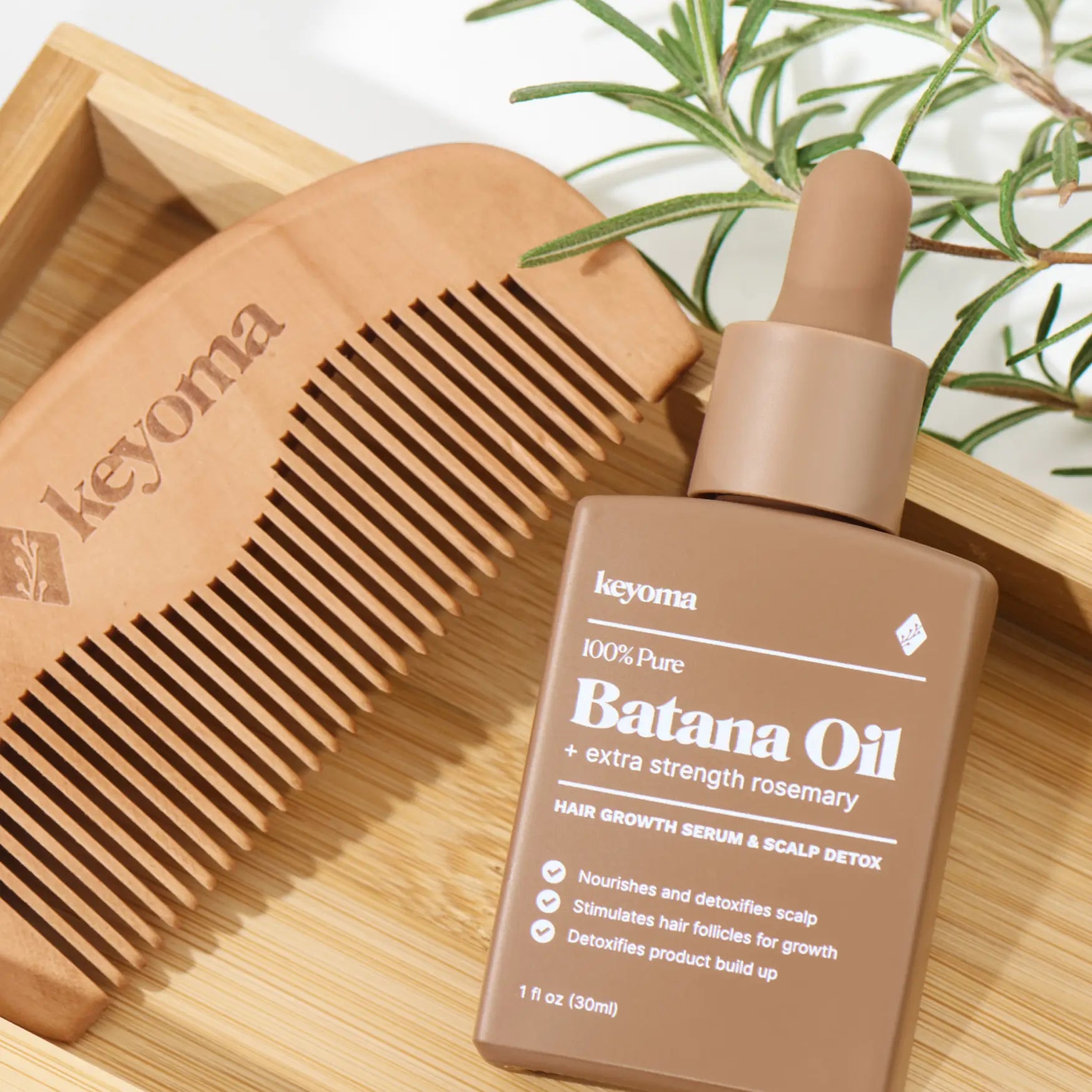
30% Off + 3 FREE Gifts
100% Pure Batana Oil + Rosemary


