

In this article
Dandruff and dry scalp can both mean itch and flakes, but they’re not the same condition. Dandruff often responds to special shampoos and other scalp-care products when you stick with them.
Dry scalp often comes from skin that’s low on moisture at base while dandruff is often tied to more oil on the scalp and an overgrowth of Malassezia yeast.
With dry scalp, the skin can feel tight, get irritated, and shed. With dandruff, extra oil and yeast overgrowth can make skin cells pile up faster, then flake away. Knowing which one you have helps you choose the right fix without guesswork and stop flakes sooner.
Key takeaways
-
Dandruff comes from extra oil and yeast overgrowth, while dry scalp lacks moisture.
-
Dandruff flakes look oily and yellowish; dry scalp flakes usually look dry and white.
-
Mild dandruff may ease with daily use of over-the-counter antifungal shampoos.
-
Dry scalp may improve with gentler washing, moisturizing products, and shampooing less often.
Dandruff

Your scalp, like the rest of your skin, sheds dead cells. Dandruff happens when that shedding speeds up. The flakes you see are those shed cells.
The faster your scalp turns over skin, the more dandruff can show up. Some factors can change the speed of that shedding.
The American Academy of Dermatology notes researchers still don’t fully understand what causes dandruff in every case. Possible causes include:
-
fungal infections on the scalp
-
sensitivity to some ingredients like hair products
These factors can overlap and make dandruff more noticeable in day-to-day life. For example, a fungal scalp issue may flare more when your skin is sensitive or your scalp is very oily.
Many people have a fungus known as Malassezia on their scalp without any trouble. But for people with dandruff, it can irritate the skin and lead to flakes. That irritation may depend on how the fungus interacts with other factors. The reaction can vary.
A 2019 study reported a close relationship between the presence of certain scalp bacteria and dandruff.
Dry Scalp

Dry scalp can occur when scalp doesn’t even have much oil for the skin to feel well lubricated.
Like other kinds of dry skin, this can cause itch, flaking, and irritation. It can also leave hair looking dry at the roots, since scalp oil helps condition the hair.
If you get dry skin easily, you’re more likely to have a dry scalp. That means the things that dry your skin can dry your scalp too, including:
-
skin problems, such as eczema.
Dandruff vs. Dry Scalp: How to Spot the Difference
Not sure which one you have? Part your hair and look closely at your scalp. You can often tell by how the flakes appear:
-
Dandruff flakes are often oily and yellowish. Your scalp may look clumpy or scaly and shed larger, noticeable flakes near the roots.
-
Dry scalp flakes are dry and white. They’re smaller and fall more like dust in your hair or on your shoulders. Dry skin elsewhere can be another clue your scalp needs hydration, too.
Dandruff and Dry Scalp Treatment and Prevention Options
They can look alike, but dandruff and dry scalp usually need different fixes. That’s why it helps to figure out what’s behind the flakes first, not just treat the itch. Once you do, choosing the right treatment and keeping it from coming back gets much easier.
How to Treat and Prevent Dandruff

If it's mild, wash daily with OTC dandruff shampoo. For me, rotating every few washes kept my scalp calm. Look for antifungal and antimicrobial ingredients like selenium sulfide, pyrithione zinc, ketoconazole and batana oil.
If your dandruff is more severe, or if over-the-counter options aren’t helping after several weeks, see your doctor or dermatologist. It’s a good way to rule out other conditions, and they can prescribe stronger topical or oral medications when needed.
More tips for preventing and managing dandruff:
-
Look into vitamin D3 supplements. Current evidence suggests vitamin D may slow rapid skin cell growth in some cases, which may help reduce flaking. As always, check with your doctor before starting any new supplement.
-
Find stress-reducing habits that fit your life. As mentioned earlier, stress can trigger dandruff and make symptoms worse. Lowering stress may help lower inflammation in your body. Exercise, good sleep, outdoor time, and short breathing breaks can all support this. If flare-ups track with busy weeks, a short walk or screen break may help you reset.
-
Watch the moisture and use your blow dryer thoughtfully. We’re all about that dry life, but fungus tends to thrive in damp conditions, so you may need to adjust if your hair takes a long time to dry. Try not to put hair in a ponytail or bun while it’s wet or damp, since it traps moisture against your scalp longer and can stress your hair. You can also blow-dry your roots on a low-heat or no-heat setting for a gentle assist after showers. Keep the nozzle moving and stop once the roots feel mostly dry.
How to Treat and Prevent Dry Scalp

Scalp dryness can come and go, depending on the season, your styling habits, and the products you use, or it can simply be how your scalp naturally tends to run.
Either way, here are simple ways to reduce flakes and restore more moisture:
-
Exfoliate before you shampoo. Help lift buildup and flakes with a gentle scalp massager or scrub.
-
Wash with a gentle, moisturizing shampoo. Since your scalp lacks moisture, stick with gentle, sulfate-free shampoos with hydrating ingredients.
-
Wash less often. An itchy, dry scalp can be a sign you need to ease up on your shampoo schedule. Here’s everything to consider when deciding how often to wash your hair.
-
Apply a natural oil such as pure batana oil to your hair before bed, then wash it out in the morning.
-
Check your styling products for drying ingredients. Simple alcohols can dry out your hair and scalp, so it’s best to avoid them if moisture is your goal. Many products include simple alcohols (like isopropyl alcohol ) in tiny amounts as non-active ingredients, but skip products that list them as a main ingredient, usually within the first five to 10 items on the label. That can be a clue it’s more drying.
-
Try a humidifier. If you live somewhere very dry (here in Minnesota, our winters are intense!), adding one can put moisture back into the air at home, especially with indoor heat running. Keep in mind summer and winter are the driest seasons in many places, so you may need extra moisture during those times of year, too, indoors.
-
Use sun protection. Wear a hat or scarf to shield your scalp from sunburns.
Treat Dandruff and Dry Scalp Based on the Root Cause
Treat flakes based on how they look, not only on the itch alone. Dry, white flakes that fall like dust usually point to a moisture issue, while oily, yellowish flakes that stick to the scalp often suggest dandruff and need a different approach.
That difference matters more than most people think, because using rich, moisture-focused products on dandruff can leave the scalp feeling worse, while strong dandruff products can make a dry scalp feel more irritated.
The better move is to match your routine to the root issue instead of chasing symptoms. Once you know what you’re dealing with, you can stop guessing and start seeing steadier results over time. Check out Keyoma’s natural hair care blogs for more tips.
Featured Product
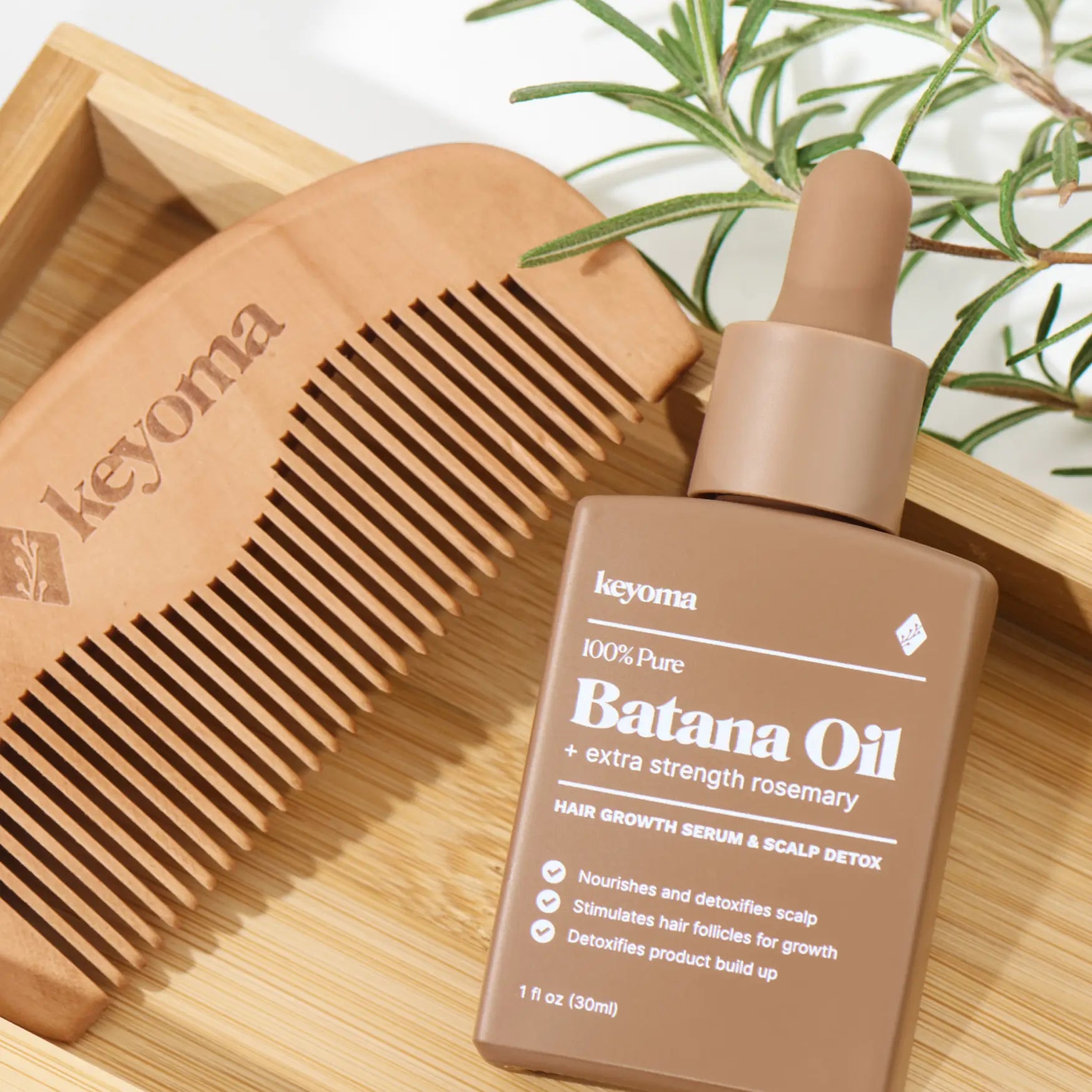
30% Off + 3 FREE Gifts
100% Pure Batana Oil + Rosemary


