

In this article
Finger pads are usually the gentler starting point because you can feel pressure, tenderness, and snagging as they happen. A soft scalp massager can also feel comfortable, especially through dense hair or when your hands tire, but a tool makes it easier to press too hard without noticing.
The best choice depends less on whether you use fingers or silicone bristles and more on how the method moves across your scalp. Gentle massage shifts the scalp skin with light pressure. Rough massage drags hair, scratches skin, or continues after the scalp feels sore.
Use fingers first when your scalp is sensitive, your hair is fragile, or you are unsure how much pressure feels comfortable. Consider a soft, flexible tool when you need better reach, easier shampoo distribution, or less hand strain.
Key Takeaways
-
Finger pads offer the clearest feedback when pressure becomes uncomfortable.
-
Soft scalp massagers can reach dense roots without using fingernails.
-
Pressing and lifting creates less tangling than dragging through hair.
-
Neither method should hurt, scratch, or irritate damaged skin.
Finger Massage Is Usually the Gentler Starting Point
Manual scalp massage gives you direct sensory feedback. Your fingers can detect a tender spot, a small bump, or a tight tangle, so you can reduce pressure immediately.
Use the pads of your fingers, not your nails. Place them on the scalp, apply light pressure, and move the skin in small controlled motions. Your fingertips should stay close to the same section rather than sliding quickly through the hair.
A tool may become the gentler option when long nails, hand pain, reduced grip, or thick hair make finger massage awkward. For a broader method overview, Keyoma’s guide to scalp massage techniques covers both hands and tools.
How the Two Methods Compare
Neither method wins every category. Fingers provide better feedback, while a well-designed tool may offer more consistent contact and reach.
|
Comparison Point |
Finger Massage |
Scalp Massager |
|
Pressure feedback |
Immediate and precise |
Less direct through the handle |
|
Pressure consistency |
Changes with each finger |
More even when held lightly |
|
Tangling risk |
Low when fingers stay planted |
Higher if dragged through lengths |
|
Reach |
Harder through dense hair |
Flexible bristles may reach roots |
|
Shampoo distribution |
Effective but may tire hands |
Useful for spreading lather |
|
Cleaning |
Wash hands before use |
Rinse and dry after use |
|
Best fit |
Sensitive scalp or fragile hair |
Dense hair or hand fatigue |
Pressure Control and Sensory Feedback
Finger pads tell you more about the scalp beneath them. That makes them useful around the hairline, temples, part, or any area that feels different from the rest.
A scalp massager spreads force across several bristles, which can feel soft. The handle also adds leverage, so hold it lightly instead of pushing down from the wrist.
Do not judge effective pressure by tingling or redness. Those sensations do not prove increased hair growth. The National Center for Complementary and Integrative Health says massage is generally low risk, but rare injuries have been associated with vigorous methods. Its massage safety guidance supports choosing comfort over intensity.
Friction, Pulling, and Tangling Risk
Friction rises when fingers or bristles travel through hair instead of working against scalp skin. The risk is higher on wet, fragile, tightly coiled, or tangled hair.
Separate dense hair into sections. Place fingers or the tool on exposed scalp, make a small movement, lift, and reposition. Avoid raking from the hairline to the crown.
The American Academy of Dermatology notes that hair is delicate when wet and recommends applying shampoo mainly to the scalp. Its healthy hair guidance supports gentle handling and scalp-focused cleansing.
Reach, Cleansing, and Hand Comfort
A scalp massager can help when thick hair prevents your fingers from reaching the skin. Flexible bristles may separate roots and distribute shampoo without relying on fingernails.
The tool should assist cleansing, not replace it with aggressive scrubbing. Shampoo and water do the cleaning. Stronger pressure does not automatically remove more buildup.
Choose a comfortable handle, use short passes, then rinse and dry the tool before storage.
Which Method Fits Your Scalp and Hair?
Your scalp condition and hair behavior should guide the decision. A method that feels easy on dense, healthy hair may be too rough for active shedding or irritated skin.
Sensitive, Sore, or Inflamed Scalp
Begin with clean finger pads and minimal pressure if the scalp is mildly sensitive but intact. Stop if you notice burning, sharp pain, increased itching, or tenderness that remains afterward.
Choose neither method over cuts, abrasions, sunburn, bleeding, unexplained lumps, or active inflammation. A medically reviewed overview of scalp massage precautions advises resolving or diagnosing damaged skin, unexplained pain, and inflammation before massage.
Persistent redness, scaling, sores, or pain deserves evaluation rather than harder exfoliation. Keyoma’s guide to healthy scalp signs can help you recognize when routine care is not enough.
Fine, Fragile, or Actively Shedding Hair
Use fingers when strands snap easily, the hairline is delicate, or shedding has increased. Keep each finger planted while moving the skin beneath it. This reduces the chance of catching strands around a tool.
Hair on your fingers does not automatically mean massage caused hair loss. Some strands were already ready to shed. Pause when you see more breakage, widening sparse areas, scalp pain, or ongoing heavy shedding.
Thick, Dense, Curly, or Coily Hair
A soft scalp massager may offer better access through dense roots, but bristles must reach the scalp without trapping curls or forcing harder pressure.
Section the hair, place the tool directly on the scalp, and use short press-and-lift motions. Avoid wide circles that wind strands together. Switch to fingers wherever the tool catches.
How to Keep Either Method Gentle
Technique affects comfort more than the choice of hands or tool. Use the least pressure needed to move the scalp slightly.
Use Finger Pads, Not Fingernails
Flatten your fingertips so the soft pads contact the skin. Do not hook your nails into flakes or buildup. Scratching can create small breaks and increase irritation.
Choose Soft, Flexible, Rounded Bristles
A gentle scalp massager should bend under light pressure and have smooth, rounded tips. Avoid rigid spikes, sharp seams, or narrow points that concentrate force.
Test the tool on your forearm first. It should feel soft with the same pressure you plan to use on your scalp.
Press and Lift Instead of Dragging Through Hair
Place fingers or bristles, make a few controlled movements, lift completely, and move to the next section. Detangle first when needed. Never use the massager to force through knots.
Use Shampoo or Oil Without Overworking the Scalp
During washing, place shampoo on the scalp and use massage only to distribute lather. More foam does not require more pressure.
Oil is optional. It can add slip, but it may weigh down roots or irritate some scalps. Cleveland Clinic’s hair-oiling guidance notes that scalp oiling does not suit everyone, especially people prone to dandruff.
Before adding oil, review whether scalp oiling promotes new hair growth and the possible side effects of over-oiling.
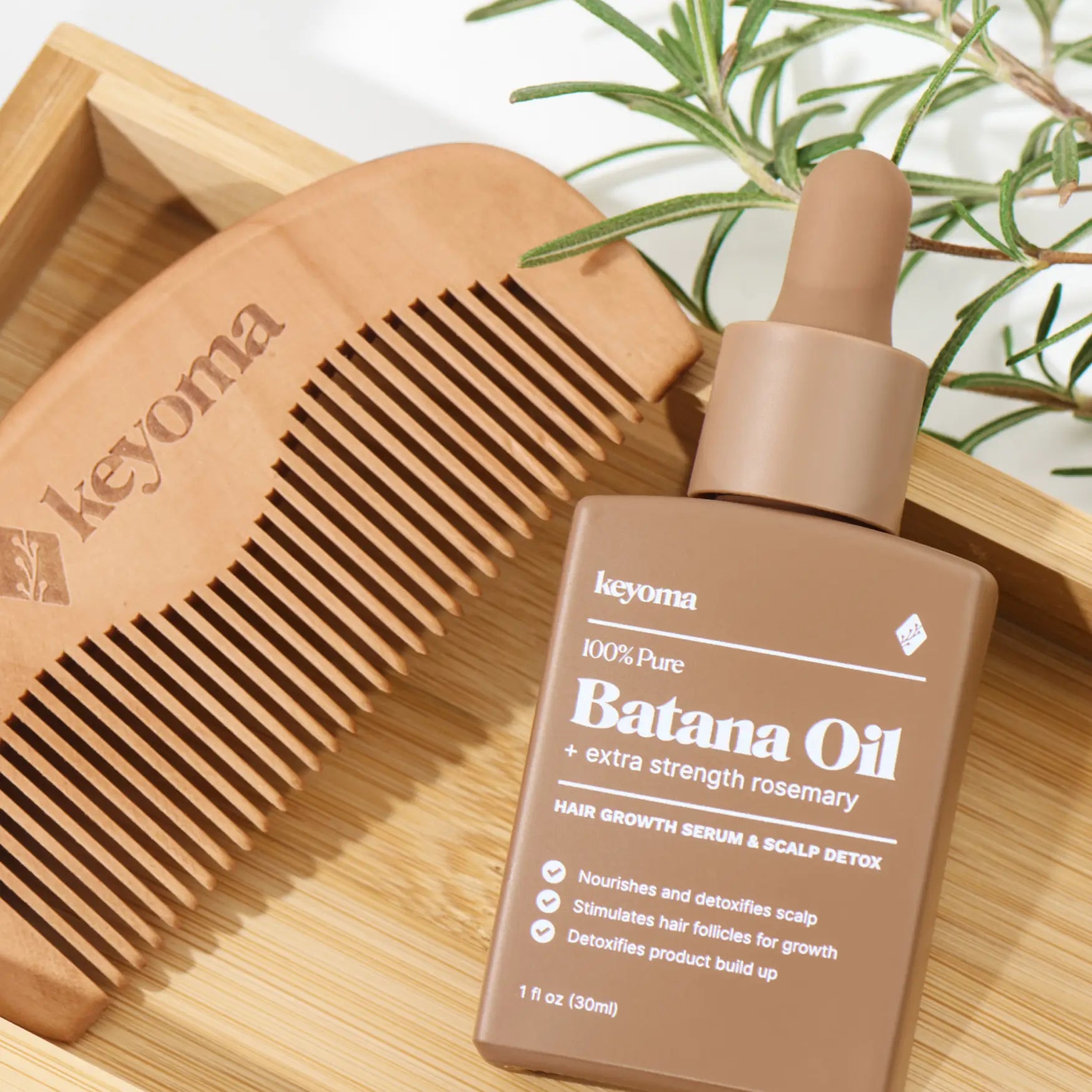
For readers who prefer oil for slip, Keyoma Pure Batana Oil with Rosemary can be used in a small amount during finger massage. Treat it as optional cosmetic care, patch test first, and stop if redness or irritation appears.
Does Either Method Work Better for Hair Growth?
Research has not established that a commercial scalp massager grows more hair than finger massage. Both methods apply mechanical pressure, but technique and tolerance vary.
A small 2016 study involved nine healthy men who used a standardized massage device for four minutes daily over 24 weeks. Researchers reported increased hair thickness, but the study did not compare the device with fingertip massage and did not establish scalp massage as a hair-loss treatment. Read the standardized scalp massage study with those limits in mind.
A warm or tingling scalp also does not prove new follicle growth. Keyoma’s article on scalp circulation and massage gives broader context without replacing medical evaluation.
Use massage for comfort, gentle cleansing, and product distribution. Seek professional guidance when hair loss progresses, the part widens, bald patches appear, or shedding occurs with scalp symptoms.
Choose Massage That Suits Your Needs for Gentler Care
Choose fingers when you need precise feedback, have a sensitive scalp, or want the lowest tangling risk. Choose a soft scalp massager when reach or hand comfort is the bigger problem.
Keep pressure light, work in sections, and lift before repositioning. Add shampoo or oil only when it serves a clear purpose. A comfortable scalp and intact strands are better signs of a suitable method than redness, tingling, or stronger scrubbing.
FAQs
Is a silicone scalp massager gentler than hard plastic?
Soft silicone is usually more forgiving because it flexes under pressure. Rounded tips, light pressure, and a press-and-lift technique still determine comfort.
Can a scalp massager cause hair breakage?
Yes, especially when dragged through wet, tangled, or fragile hair. Section first, place the tool on the scalp, and lift before moving.
Can you alternate fingers and a scalp massager?
Yes. Fingers may suit sensitive areas, while a soft tool may help with dense sections or shampoo distribution. Stop either method if it causes soreness, scratching, or tangling.
Featured Product
30% Off + 3 FREE Gifts
100% Pure Batana Oil + Rosemary


