

In this article
A few drops of hair oil can leave a noticeable dark patch on a pillowcase, towel, shirt collar, or travel bag. Acting quickly gives you the best chance of removing it, but the right response depends on the material and its care instructions.
For washable fabric, start by blotting away excess oil. Pretreat the spot with liquid laundry detergent or a fabric-safe stain remover, then wash the item according to its care label. Inspect the area before placing it in a dryer because heat can make remaining residue harder to remove.
Delicate and dry-clean-only materials require more caution. An aggressive home treatment that lifts the oil may also fade the color, weaken the fibers, or leave a permanent ring.
Key Takeaways
-
Check the care label before applying water, detergent, or stain-removal products.
-
Blot fresh oil gently instead of rubbing it deeper into the fibers.
-
Pretreat washable fabric and inspect the stained area before using the dryer.
-
Take delicate or dry-clean-only materials to an experienced professional cleaner.
Identify the Fabric Before Treating the Stain

It is tempting to start scrubbing as soon as you notice an oil mark. First, check the item’s care label and determine what material you are handling.
A cleaning method that works on a white cotton towel may damage silk, wool, rayon, upholstery, or a color-sensitive garment. Even fabrics that look similar can have different washing and drying restrictions.
Machine-Washable Items
Cotton pillowcases, towels, T-shirts, and many synthetic materials can usually be treated at home if their care labels allow machine washing.
Check the label for:
-
The permitted water temperature
-
Bleach restrictions
-
Drying instructions
-
Special warnings about color or finishes
Follow the care label even when a cleaning product recommends a hotter wash.
Delicate or Color-Sensitive Fabric
Silk, wool, rayon, embellished garments, and loosely woven materials need gentler handling. “Satin” also describes a weave, not one specific fiber. A satin pillowcase may be made from washable polyester or delicate silk, so you still need to read the label.
Before applying a stain remover to any color-sensitive item, test it on a hidden seam. Let the test area dry completely and check it for fading, color transfer, stiffness, or texture changes.
Stop if the fabric reacts poorly.
Dry-Clean-Only Items
Do not saturate a dry-clean-only item or experiment with several household cleaners. Blot excess oil with a clean, white absorbent cloth, then take the item to a professional cleaner.
Tell the cleaner that the stain came from hair oil. Also disclose any water, detergent, powder, or stain remover you already applied. This information can help the cleaner choose an appropriate treatment.
What to Do When the Hair Oil Spill Is Fresh

Fresh oil is easier to manage because more of it remains near the fabric’s surface. Your immediate goal is to collect that excess without spreading it.
Blot or Lift Excess Oil
Place the item on a stable surface. Use a clean, white cloth or plain paper towel to press the affected area gently.
Lift the cloth, move to a clean section, and press again. Do not wipe back and forth. Rubbing can enlarge the mark and push oil farther into the fibers.
If a thick drop remains on the surface, lift it carefully with the edge of a spoon. Avoid scraping delicate material.
Keep the Stain From Spreading
Place a clean absorbent towel behind or beneath the stain when the item’s shape allows it. This helps prevent oil from reaching another layer of fabric.
Work from the outside of the mark toward the center. Do not soak a large surrounding area because that can create a wider ring.
Check the Care Label
Once you have removed the surface oil, pause and read the complete label. Confirm whether the item is washable and which water temperature, products, and drying methods it permits.
There is no single correct water temperature for every hair oil stain. The material’s care requirements come first.
How to Remove Hair Oil From Washable Fabric

The following process is intended for washable fabric. It should not be applied automatically to silk, wool, leather, suede, upholstery, or dry-clean-only items.
Pretreat a Hidden Test Area
Choose a liquid laundry detergent or prewash stain remover that is suitable for the fabric and color.
Apply a small amount to a hidden seam. Follow the product’s instructions, rinse if directed, and allow the area to dry. Check for fading, bleeding dye, stiffness, or damage before treating the visible stain.
A product labeled color-safe can still react differently with a particular dye or fabric finish.
Apply a Fabric-Safe Pretreatment
Place the washable item on a clean surface and apply the selected laundry pretreatment to the stained area. Use only the amount and contact time listed on the product label.
Work the product into durable fabric gently with your fingers or a soft laundry brush if the instructions permit it. Avoid forceful scrubbing.
Do not mix detergents, bleach, ammonia, vinegar, peroxide, or other cleaning products. Combining cleaners does not guarantee better stain removal and may damage the item or create a safety hazard.
Wash According to the Care Label
Wash the item using the warmest water that its care label permits.
The American Cleaning Institute’s oil and grease guidance recommends pretreating light oil stains with a prewash stain remover or liquid laundry detergent, then laundering them in the hottest water safe for the fabric.
That last condition matters. A hotter setting is not better if it can shrink, fade, or weaken the material.
Wash the stained item separately if you are concerned about color transfer or residual oil reaching other clothing.
Inspect Before Drying
Examine the affected area while the item is still damp. Look at it under clear light and compare its color and texture with the surrounding fabric.
If an oily shadow remains, repeat a care-label-safe pretreatment and wash. The American Cleaning Institute advises keeping stained clothing out of the dryer until the stain is removed because dryer heat can make the remaining mark harder to address.
Air-dry the item while evaluating the result. A damp fabric may temporarily hide part of the discoloration, so check it again after it dries.
Adjust the Method for Common Hair Oil Stains
The same basic principles apply across washable materials, but the way oil spreads can change with the item’s thickness, weave, and construction.
Hair Oil on Pillowcases
A pillowcase often develops a broad, faint patch instead of one concentrated drop. This happens when oil transfers gradually from the hair or scalp during sleep.
Treat the entire visible patch rather than one small point. Check both sides because oil may pass through the first layer.
Repeated transfer can create buildup that remains after one wash. If the care label allows it, repeat the same gentle pretreatment instead of immediately using a stronger chemical.
When using hair oil before bed, control the amount you apply and protect bedding with a clean, washable hair covering or pillowcase.
Hair Oil on Towels
Thick towels can draw oil below the visible surface. Blot both sides when possible, then apply a suitable pretreatment to the affected area.
Avoid pouring in excessive detergent. More detergent can become difficult to rinse from dense fibers and may leave the towel feeling stiff or coated.
Laundry stripping is also unnecessary for an isolated oil stain and may be too harsh for dark, delicate, or stretchy materials.
Hair Oil on Collars and Clothing
Oil commonly reaches collars when hair rests against a shirt, robe, jacket, or sleepwear. Check the full neckline under good lighting because the mark may extend beyond its darkest area.
Read the garment’s complete fiber label. A shirt body may be washable while its trim, lining, decoration, or special finish requires different care.
Keep the treatment on the affected fabric rather than spreading it across the entire garment.
Hair Oil Inside a Travel Bag
First, determine whether the lining is removable and machine-washable. Follow the bag manufacturer’s instructions if they are available.
For a fixed washable lining, blot the oil and apply only a small amount of an approved cleaner. Avoid saturating padding, glued seams, zippers, or the outer material.
Leather, suede, coated fabric, and bags without clear cleaning instructions should be handled by a professional. A method meant for clothing can damage a bag’s shape, finish, or adhesive.
What to Do With an Old or Dried Hair Oil Stain
A stain that has already dried, been washed, or passed through a dryer may take more than one treatment. Previous heat can also make the remaining discoloration harder to remove.
Start with the same fabric check you would use for a fresh spill. If the item is washable, apply an approved pretreatment and wash it according to the label. Inspect it after air-drying, then repeat once if the material remains unchanged and the product instructions allow another application.
Avoid escalating automatically to bleach, solvents, abrasive powders, or high heat. These methods can turn a small oil mark into a faded patch, damaged finish, or larger ring.
Some stains will remain visible even after careful treatment. Complete removal depends on the oil, fabric, dye, stain age, and previous cleaning attempts.
When to Stop Treating the Fabric at Home
Repeated treatment is not worthwhile if the fabric begins to deteriorate. Stop and seek professional help when:
-
Color transfers to your cleaning cloth
-
The treated area starts fading
-
A ring forms around the original stain
-
The fabric becomes stiff, rough, thin, or distorted
-
Seams, coatings, prints, or decorations begin to weaken
-
The care label prohibits the treatment you planned to use
-
The stain remains after repeated care-label-safe washing
-
The item is valuable, vintage, delicate, or dry-clean-only
Let a professional know what caused the mark and which products you used. Do not hide previous treatment attempts because certain cleaners can react with residues left on the fabric.
Reduce Hair Oil Transfer During Future Use
A careful application routine can reduce spills without forcing you to stop using hair oil.
Measure a small amount instead of pouring directly from the bottle. Wash or wipe your hands before touching clothing, towels, bedding, or luggage. Give the oil time to settle before dressing or lying down.
If you leave oil on overnight, use a clean, washable hair covering and bedding that can be laundered according to its care label. Replace the covering regularly so oil does not build up and transfer elsewhere.
When traveling, close the bottle firmly, keep it upright, and place it inside a separate leak-resistant pouch. Do not pack the dropper bottle loosely beside clothing.
Keep Your Hair Routine Controlled and Fabric-Conscious
An oil mark does not call for the strongest cleaner you can find. Start with the fabric label, remove excess oil without rubbing, and use one compatible pretreatment at a time. Inspect the item before applying heat and stop if you notice damage.
Controlled application also makes future cleanup less likely. Use only the amount your routine needs, protect nearby fabrics, and store your bottle securely.
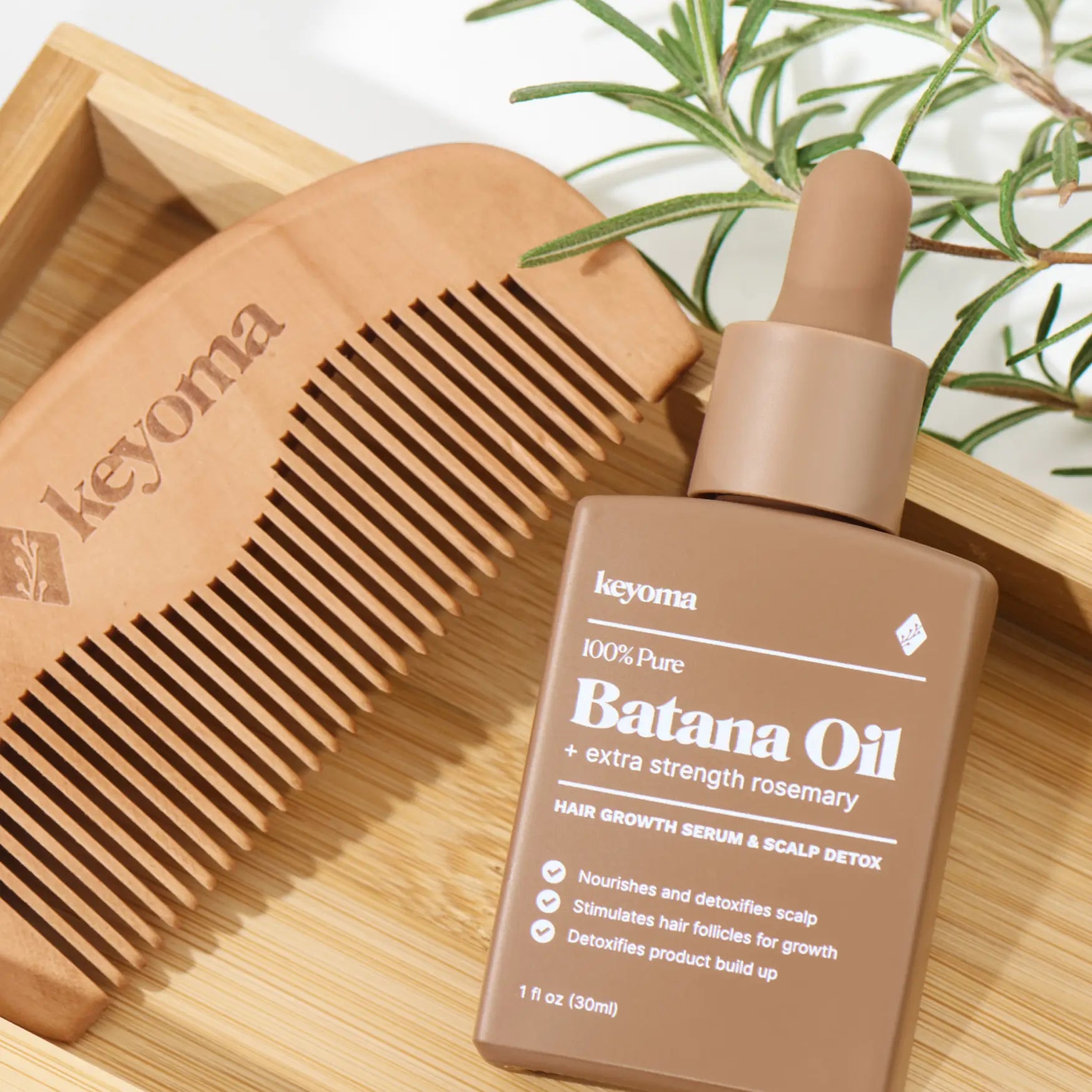
If you use Keyoma Batana Oil, apply it carefully and keep the closed bottle on a stable surface. Keyoma-specific fabric testing is still needed before any cleaning method can be presented as guaranteed for stains from the formula.
Frequently Asked Questions
Can hair oil stains come out of clothes?
Many hair oil stains can be reduced or removed, particularly when you treat them before washing or drying. The result depends on the fabric, dye, oil formula, stain age, and previous exposure to heat. No method can guarantee full removal.
Can I put a stained pillowcase in the dryer?
Inspect the pillowcase before using the dryer. If you still see or feel an oily area, pretreat and rewash it according to the care label. Use air-drying while you evaluate the stain because dryer heat can make remaining residue harder to address.
Can I use dish soap on a hair oil stain?
Dish soap is often recommended for oily marks, but it is not designed or labeled for every textile. It may create excess suds in a washing machine or affect a delicate or color-sensitive material. A fabric-safe laundry detergent or stain remover is the more controlled starting point.
How do I remove a hair serum stain that has already dried?
Check the care label, then apply an appropriate laundry pretreatment if the fabric is washable. Wash it at the warmest temperature permitted and let it air-dry for inspection. Repeat the process if the material remains undamaged. Older or heat-set marks may not disappear completely.
Should I use bleach on an oil stain?
Bleach is not a universal treatment for oil. It can fade colors and damage certain fibers. Use it only when the fabric care label and bleach product instructions both confirm that it is suitable. Never mix bleach with other household cleaners.
Featured Product
30% Off + 3 FREE Gifts
100% Pure Batana Oil + Rosemary


