

In this article
Hard-water hair creates a frustrating contradiction. The ends feel rough and thirsty, yet another layer of oil can make the style look flatter, duller, or waxy. The useful question is not whether oil is good or bad. It is whether your hair needs lubrication or still carries mineral and product residue.
For pre-wash care, coconut oil has the strongest direct evidence for reducing protein loss from the hair fiber. For a lighter finish, argan and jojoba are easier to control. Avocado and batana oil fit drier, thicker, curlier, or more porous lengths that need a richer coating.
Choose by job, not reputation. A rich oil may work well before shampooing and feel heavy as a leave-in. A light oil may polish fine ends after washing but give coarse, friction-prone hair too little slip.
Key Takeaways
-
Oil can soften hard-water-stressed hair, but it cannot remove mineral deposits.
-
Coconut oil suits pre-wash protection, while jojoba and argan give lighter finishing.
-
Avocado and batana oil fit drier, coarser, or more porous lengths.
-
Coated, flat, or waxy hair needs cleansing before another oil layer.
What Hair Oil Can and Cannot Do About Hard Water
Hard water contains dissolved minerals, mainly calcium and magnesium. The U.S. Geological Survey explains how these minerals interfere with soap, while a controlled hard-water hair study found more calcium and magnesium deposition on exposed samples. Oil does not bind and rinse away those minerals like a chelating ingredient.
Oil handles a different problem. It can coat the strand, lower friction, improve slip, and make rough ends feel more flexible. A review of hair cosmetics describes oils and conditioning agents as tools for manageability, not permanent reconstruction.
Check the feel before adding more:
-
Clean but rough: Hair moves freely but catches at the ends. A small amount of oil may help.
-
Coated and resistant: Hair feels waxy, clumps, dries slowly, or stays dull. Cleanse before oiling.
-
Flat roots, rough ends: Treat only the lengths.
Keyoma’s guide to hard water hair damage covers the mineral problem in depth. This article focuses on what to use after you separate roughness from residue.
5 Best Oils for Hair Exposed to Hard Water
Oil weight matters as much as the ingredient. Strand thickness, porosity, density, existing leave-ins, and application amount all change the finish.
|
Oil |
Weight |
Best Fit |
Best Timing |
Main Role |
Buildup Risk |
|
Coconut |
Medium-rich |
Dry or porous lengths |
Pre-wash |
Fiber protection and slip |
Medium |
|
Argan |
Light-medium |
Fine to medium strands |
Post-wash |
Shine and smoothing |
Low-medium |
|
Jojoba |
Light |
Fine or low-porosity hair |
Post-wash |
Lightweight softness |
Low |
|
Avocado |
Medium-rich |
Curly, coarse, porous hair |
Pre-wash or light leave-in |
Richer slip |
Medium |
|
Batana |
Rich |
Coarse, curly, dry lengths |
Pre-wash or targeted ends |
Dense conditioning |
Medium-high |
Coconut Oil for Pre-Wash Protection
Coconut oil has the strongest hair-fiber evidence in this list. A Journal of Cosmetic Science study found reduced protein loss in damaged and undamaged hair when coconut oil was used before and after washing. Its structure helps it penetrate hair more readily than several surface-coating oils.
Use it before shampooing when washing leaves the lengths rough or prone to tangling. If coconut oil makes your hair stiff, stringy, or greasy, shorten the treatment or switch to a lighter finisher. Keyoma’s comparison of coconut and argan oil separates those roles clearly.
Argan Oil for Lightweight Post-Wash Smoothing
Argan oil works best on clean hair when the goal is polish rather than saturation. Spread a trace over your palms, then skim the driest ends and outer flyaways.
Judge it after the hair dries. Softness with free movement signals a good amount. Oily sections or lost volume signal too much. Research found protective effects from argan pretreatment in hair fibers exposed to oxidative damage, but that does not prove it reverses hard-water damage.
Jojoba Oil for Fine or Low-Porosity Hair
Jojoba is a practical first choice when your hair shows oil quickly. It spreads into a thin film, making it easier to limit application to the last few inches.
Low porosity is only one clue. Fine strands, low density, oily roots, and rich styling products also lower oil tolerance. Keyoma’s comparison of batana oil and jojoba oil helps you choose between a light finisher and a richer treatment.
Avocado Oil for Dry, Curly, or Porous Hair
Avocado oil gives more weight and cushion than jojoba or a restrained argan finish. It suits curly, coily, coarse, or porous lengths that lose softness quickly. Use it before shampooing for detangling slip or press a small amount into damp ends.
A study comparing Brazilian oils and butters found that tested oils reduced wet-combing force and increased gloss, while the tested butters performed less favorably for combing. The result supports lubrication from fluid oils, not a universal ranking for every hair type.
Batana Oil for Richer Conditioning on Dry Lengths
Batana oil belongs at the richer end of the scale. It fits clean hair that still catches during detangling or loses softness at the ends. Coarse, curly, dense, and porous hair usually gives it more room to spread without looking coated.
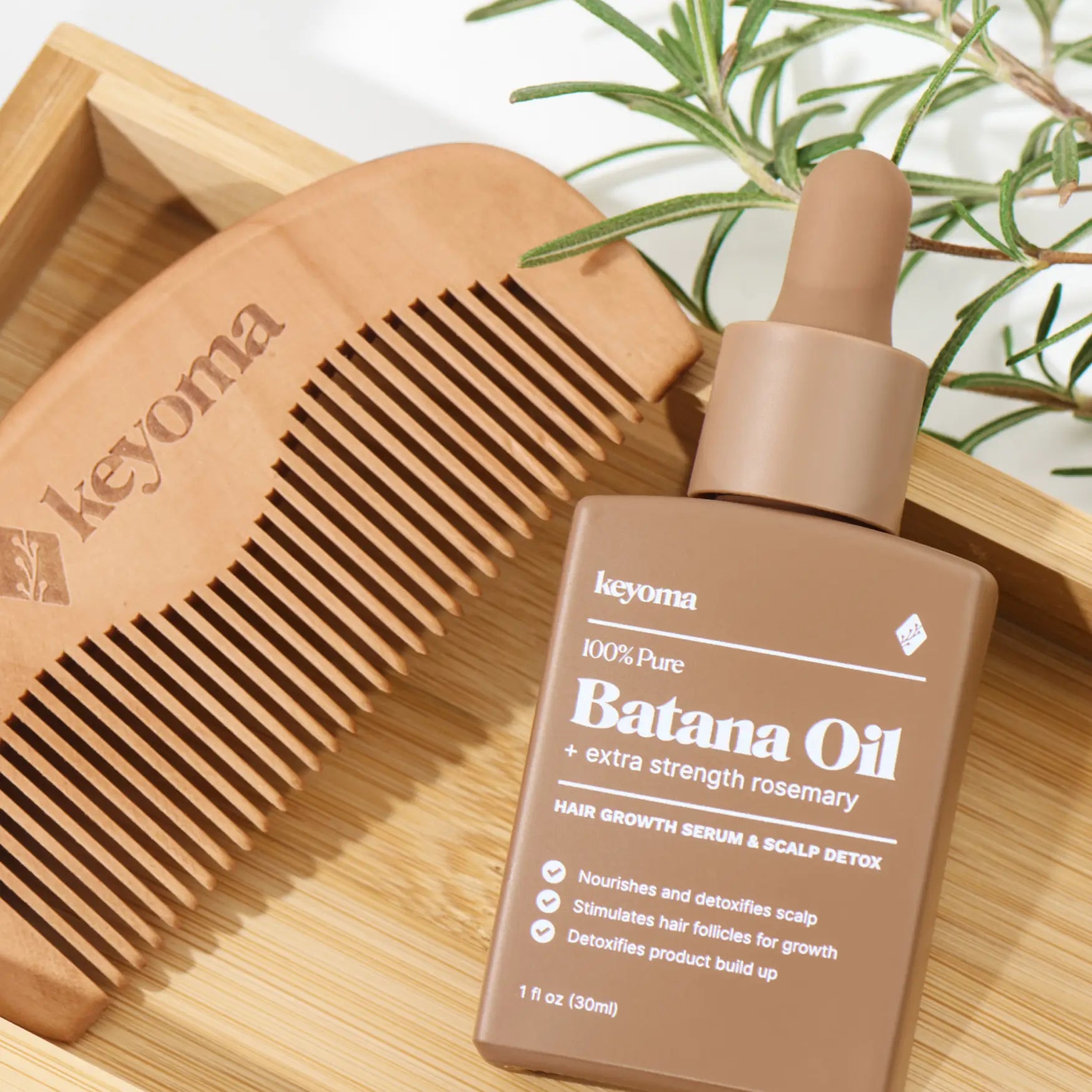
For a concentrated botanical option, Keyoma Batana Oil with Rosemary fits best as a targeted dry-length treatment or controlled pre-wash step. Keep the claim cosmetic. It can add slip and soften the feel of dry lengths, but it does not chelate minerals or prove hair regrowth.
Start at the ends. Batana oil is a poor match for hair that already feels waxy or refuses to rinse clean.
Match the Oil Weight to Your Hair
“Dry hair” does not always need a rich oil. Fine hair can feel rough and still collapse under weight. Coarse hair can look shiny after a light oil yet remain difficult to comb.
Fine, Straight, or Easily Coated Hair
Begin with jojoba or a minimal argan finish. Use the residue left on your palms, touch the ends first, and reassess after drying.
A good result feels soft but mobile. A poor result separates into shiny pieces, loses crown volume, or feels slick before the ends feel flexible. Reduce the dose or move oil to pre-wash use.
Curly, Coily, Coarse, or High-Porosity Hair
Avocado, coconut, and batana oil provide more lubrication. Coconut fits pre-wash protection, avocado offers medium-rich slip, and batana suits the driest, most friction-prone sections.
Apply by section rather than coating the whole head. The nape, outer canopy, and ends may need more support than the roots or less porous areas.
Color-Treated or Chemically Processed Hair
Processed hair may be porous through the lengths and buildup-prone near the roots. Use oil to reduce handling friction, not to replace conditioner, heat protection, or trims for worn ends.
The American Academy of Dermatology recommends gentle washing, conditioning after shampoo, careful handling of wet hair, and lower heat. Those habits protect fragile lengths more reliably than adding larger oil amounts.
How to Use Oil Without Adding More Buildup
Mineral residue, styling products, conditioner, and oil can stack into one heavy film. Clear the residue first so you can judge the oil itself.
Address Mineral Residue Before Adding Oil
Use a cleanser labeled for hard-water minerals or chelation when deposits are the suspected issue, and follow its directions. A general clarifying shampoo may remove styling residue and excess oil without targeting minerals. Keyoma’s explanation of what clarifying shampoo can and cannot remove helps separate those jobs.
Let the hair dry before judging it. Lighter but rough hair may benefit from oil. Hair that remains waxy needs more residue troubleshooting, not another coating.
Choose Pre-Wash or Post-Wash Timing
Choose pre-wash oil for protection during shampooing or extra detangling slip. Coconut, avocado, and batana fit this role. Keyoma’s guide to using batana oil before shampoo keeps a rich oil contained within wash day.
Choose post-wash oil for a smooth finish. Jojoba and argan are easier to control on fine or low-porosity hair. Batana can work after washing only on dry sections that tolerate richer weight.
Apply a Thin Layer to Damp Lengths and Ends
Blot excess water, spread a small amount between your palms, then press it into the mid-lengths and ends. Damp hair aids distribution, but soaking-wet hair can hide how much you added.
Check movement, separation, drying time, and combing feel, not shine alone. Keyoma’s guidance on how much batana oil to use helps scale a richer oil by length and density.
Oils and Habits Most Likely to Feel Heavy
Rich oils are not automatically wrong for hard-water hair. Trouble begins when the oil is heavier than the strand can carry, layered over residue, placed near the roots, or reapplied before the previous layer washes away.
Warning signs include greasy ribbons, lost root lift, slow drying, a waxy finish, or repeated shampooing to remove a normal application. Castor oil, thick olive-oil applications, solid butters, and generous batana layers carry more buildup risk for fine hair. They may still work on coarse or porous lengths as pre-wash treatments.
The mismatch comes from weight, dose, placement, and frequency. If oiling causes greasy roots, itching, odor, or stubborn residue, review the signs you may be over-oiling your hair. Reduce variables first. Use one oil, keep it off the roots, and judge the result after a full wash and dry cycle.
Choose the Best Oils for Hard Water Hair Without Buildup
Use coconut oil for a better-supported pre-wash option. Choose jojoba or argan when fine or low-porosity hair needs a light finish. Reach for avocado or batana when clean, coarse, curly, or porous lengths still need richer slip.
The winning oil solves the remaining problem. Rough, freely moving hair may need lubrication. Waxy, flat, slow-drying hair needs less layering and better residue control. Once you make that distinction, oil becomes a precise tool instead of another coating.
Featured Product
30% Off + 3 FREE Gifts
100% Pure Batana Oil + Rosemary


