

In this article
If color is your main goal, apply henna to clean hair without a heavy layer of oil unless the product says otherwise. Oil can leave a coating that makes direct, even contact between the henna paste and your hair less predictable.
After rinsing, you can use a small amount of oil to soften dry-feeling lengths. The right timing depends on the henna formula and its washing instructions. Some products tell you to delay shampooing or other hair products, while others allow normal aftercare sooner.
This guide helps you decide when oil belongs in the process without replacing the directions provided with your henna.
Key Takeaways
-
Heavy oil before henna may make consistent paste contact harder across your hair.
-
Product directions should guide preparation, rinsing, shampoo timing, and aftercare.
-
Small amounts of oil can soften dry-feeling lengths after the required waiting period.
-
Pure henna and products with added dyes need different safety decisions.
Decide Whether to Oil Before or After Henna
There is no single schedule that works for every henna product. Pure henna powder, plant-based color blends, and boxed dyes labeled as henna may have different preparation and aftercare requirements.
Start by identifying your formula and your main goal.
|
Situation |
Better Starting Point |
Why |
|
You are using pure henna mainly for color |
Avoid heavy oil before application |
Clean hair supports more even contact with the paste |
|
The instructions require freshly washed hair |
Follow those directions |
The manufacturer knows how that formula should be prepared |
|
Your ends feel dry before coloring |
Check whether a minimal ends-only application is allowed |
This avoids coating every strand |
|
Your hair feels rough after rinsing |
Use a small amount of oil after the required waiting period |
Oil can improve slip and softness |
|
You are using compound henna or a boxed blend |
Follow the complete label |
Added dyes or developers change the process |
|
The ingredient list is missing or unclear |
Do not use the product yet |
“Natural” does not confirm a plant-only formula |
Treat oil as a separate hair-care step unless the henna instructions specifically include it. Adding ingredients based on general online advice can change how the paste spreads, rinses, or colors your hair.
What Oil Can Change Before Henna
Applying oil before henna is not automatically wrong. The concern is how much oil you use, where you apply it, and what the henna formula requires.
A few drops left on dry ends are different from an overnight treatment that coats your roots and lengths.
Oil May Affect How Evenly the Paste Contacts Your Hair
Henna paste needs to sit against the hair to leave color. A heavy layer of oil can create a slick surface between the paste and the strand.
This does not prove that every oil will prevent henna from coloring your hair. Direct research comparing different oils and henna color uptake is limited. Hair porosity, starting color, product quality, paste consistency, and processing time also influence the result.
The practical concern is consistency. If some sections have more oil than others, the paste may grip or spread differently across your hair. Starting with evenly prepared hair removes one variable from the process.
Clean Hair Does Not Mean Aggressively Stripped Hair
Clean hair means removing heavy oil, styling wax, silicone buildup, dry shampoo, and other residue that may interfere with the application. It does not mean scrubbing your scalp until it feels tight or using the strongest clarifying shampoo available.
An irritated scalp is not a good surface for hair color. Use the washing method named in the henna instructions. If the manufacturer only asks for clean hair, choose a cleanser that removes buildup without leaving your scalp uncomfortable.
Avoid applying henna over broken, inflamed, or actively irritated skin.
When a Small Amount on the Ends May Be Reasonable
If your ends are highly porous, fragile, or prone to tangling, you may want to protect them before applying henna. Check the product directions first.
When the directions permit other products, use the smallest amount needed and keep it on the ends rather than coating the entire strand. This approach makes more sense when protecting dry ends matters more than producing maximum color intensity in those sections.
Do not expect the oil to guarantee protection from dryness or control the final shade. A strand test is more useful than relying on a general rule.
Test the complete routine on a hidden section of hair, including:
-
Your chosen henna formula
-
Any permitted pre-application product
-
The planned processing time
-
Your rinse method
-
Your first shampoo and aftercare steps
A strand test gives you information about your own hair without risking an uneven full-head result.
What Oil Can Change After Henna
Oil after henna serves a different purpose. At this stage, it works as a conditioning or grooming step rather than part of the color application.
The first question is not which oil to use. It is whether the henna instructions allow you to apply other products yet.
Oil Can Improve How Dry Lengths Feel
Henna-treated hair can feel rough, stiff, or tangled after the paste has been rinsed away. Some of that feeling may come from plant-powder residue still sitting between the strands.
A small amount of oil can add slip, reduce friction, and make the lengths feel softer. Oil does not add water to dry hair, so it should not replace a suitable conditioner when the henna directions allow one.
It also does not repair the strand or reverse damage. Its immediate role is to improve feel and manageability.
Focus on your lengths and ends if your scalp feels comfortable. Applying a large amount across the scalp may create unnecessary buildup and force you to shampoo sooner than planned.
The First Shampoo Depends on the Product Directions
Online henna advice often presents a 24-, 48-, or 72-hour waiting period as a universal rule. Henna products do not all use the same formula, so one fixed schedule is not reliable.
Some instructions recommend rinsing with water and delaying shampoo. Other formulas include additional plants, dyes, or aftercare products with a different schedule.
Follow the timing printed on your package. If the instructions tell you to avoid shampoo or hair products for a set period, that includes your normal oil treatment unless the brand says it is compatible.
Oil is not proven to “lock in” henna color. Using more oil or applying it sooner does not guarantee a darker or longer-lasting result.
Start With Less Oil Than You Normally Use
Once the required waiting period is complete, start with a controlled amount.
-
Check that your scalp has no burning, swelling, blistering, or worsening irritation.
-
Warm one or two drops of oil between your palms.
-
Smooth the oil over dry-feeling lengths and ends.
-
Avoid saturating the hair on the first application.
-
Add another drop only if the hair still feels rough.
Fine or low-density hair may become flat with too much oil. Thick, long, curly, or highly porous hair may need more coverage. Increase the amount based on how your hair responds rather than following a rigid quantity for your hair type.
Check What Kind of Henna You Have First

The word “henna” appears on products with different ingredients. Oil timing becomes harder to judge when you do not know which type you are using.
Read the complete ingredient list before planning your preparation or aftercare.
Pure Henna
Pure henna comes from Lawsonia inermis. Its natural dye molecule, lawsone, produces red-orange to reddish-brown tones depending on the hair’s starting shade and the application conditions.
A single-ingredient label makes the formula easier to understand, but natural origin does not guarantee that your skin will tolerate it. Follow the safety instructions and complete the recommended allergy test before full application.
For more information about plant types, preparation, and precautions, read Keyoma’s complete henna hair guide.
Plant-Based Henna Blends
Some products combine henna with indigo, cassia, amla, or other plant powders. These ingredients serve different purposes and can change the shade, paste behavior, and recommended routine.
A plant blend is not automatically unsafe or inferior. It is simply different from pure henna. Follow the directions written for that exact blend instead of using instructions intended for single-ingredient henna.
Compound Henna and Added Dyes
Compound henna may contain synthetic colorants, metallic salts, or other additives. A boxed product may also include an activator or developer.
These formulas should not be treated like pure plant powder. Oil, shampoo, conditioner, and processing instructions can be specific to the added ingredients.
Watch for vague labels such as “herbal color” or “natural black” without a complete ingredient list. If you cannot confirm what the product contains, do not apply it to your hair or scalp.
Black Henna and PPD
Products marketed as “black henna” may contain para-phenylenediamine, also called PPD, to create a darker result. PPD is linked to allergic contact dermatitis and can cause severe reactions in sensitized individuals.
Pure henna and PPD-containing black henna are not interchangeable. The U.S. Food and Drug Administration warns that additional ingredients may be used to make henna products darker or longer lasting. Medical literature also identifies PPD as a common cause of reactions linked to black henna products. Review the FDA henna safety information and this medical review of PPD reactions before choosing an unclear formula.
Do not depend on the product’s color name alone. Read the ingredient list and follow every allergy-testing instruction on the package.
Build a Henna and Hair Oil Schedule
A flexible schedule is more useful than forcing every henna formula into the same timetable.
Before Application
Read the complete label before washing or oiling your hair. Check whether the formula requires clean, dry, damp, or freshly washed hair.
Remove heavy styling residue when instructed. If your hair already contains a generous oil treatment, wash it out before applying henna when the directions call for product-free hair.
Do not mix oil into the henna paste unless the instructions include it. Oil may change the paste’s texture and make the result harder to predict.
During the Rinse
Keep the henna on your hair only for the recommended processing time. Longer processing does not guarantee a better shade.
Rinse using the water temperature and method named on the package. Work gently through the hair rather than pulling through heavy sections of wet paste.
Do not introduce extra acids, essential oils, conditioners, or other DIY ingredients during the rinse unless the product directions approve them.
After the Rinse
Follow the stated waiting period for shampoo, conditioner, and styling products. If your hair feels coated with plant particles, continue rinsing gently rather than covering the residue with a large amount of oil.
Once normal aftercare is allowed, apply a small amount of oil to the areas that feel dry. You do not need to coat your entire scalp and hair after every henna session.
Pay attention to discomfort. Mild changes in texture are different from burning, swelling, blistering, or a spreading rash.
Use Batana Oil on Henna-Treated Hair With Restraint
You can use batana oil on henna-treated hair after completing the rinse and waiting steps required by your henna product.
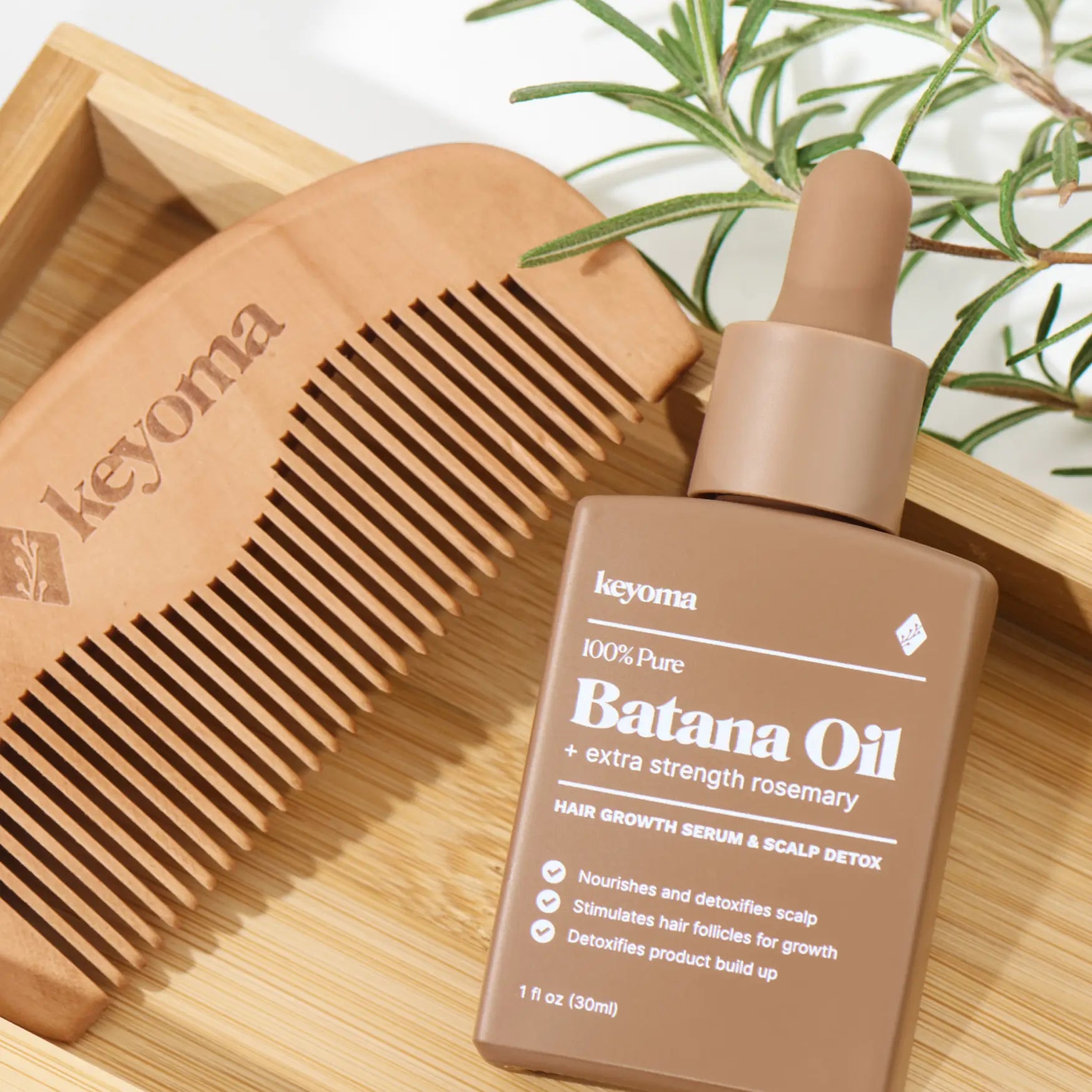
Keyoma Batana Oil with Rosemary works best here as a separate oiling treatment, not as an ingredient in the henna paste. If your lengths feel rough, begin with one or two drops and add more only where needed.
For a deeper pre-wash treatment, return to your regular oiling routine once the henna instructions allow you to shampoo normally. Apply the oil as directed, leave it on for the recommended period, and rinse it out thoroughly.
Do not use the oil to chase a darker henna result. It is not designed to deepen, set, or preserve plant color. Its role in this routine is to support a measured approach to scalp and hair care after the coloring process is complete.
When to Stop and Rinse
Remove the henna according to its safety instructions if you develop strong burning, rapid swelling, blistering, or worsening irritation.
Seek urgent medical help if you experience trouble breathing, facial swelling, faintness, or a fast-spreading reaction. Do not cover an active reaction with hair oil or another cosmetic product.
If mild irritation continues after rinsing, stop using the henna and contact a qualified healthcare professional. Keep the packaging and ingredient list available so they can see what you used.
FAQs
Should I oil my hair the night before applying henna?
Avoid a heavy overnight treatment when your henna directions call for clean, product-free hair. If you oil your hair the night before, you may need to wash it thoroughly before applying the paste.
Can I apply oil immediately after rinsing henna?
Only when the product directions allow it. If there is no required waiting period and your scalp feels comfortable, apply a small amount to the lengths or ends. Avoid saturating the scalp.
Does hair oil make henna color darker?
There is not enough direct evidence to promise that hair oil makes henna darker. The result also depends on the formula, starting shade, hair condition, application, and processing time.
Can I mix hair oil directly into henna?
Only when the manufacturer specifically recommends it. Adding oil can alter the paste’s consistency and make the color result less predictable.
Can I use batana oil on henna-colored hair?
Yes. Use it as a separate hair-care step after completing the henna product’s required rinse and waiting period. Start with a small amount to avoid heaviness.
How long should I wait to shampoo after henna?
Follow the interval printed on your product. There is no universal shampoo waiting period for every pure henna powder, plant blend, or compound formula.
Resume Your Oil Routine With Keyoma
The best time to use hair oil depends on what your henna requires. Before coloring, avoiding a heavy oil layer gives the paste a cleaner and more even surface. After rinsing, a few drops can make dry-feeling lengths easier to manage once the required waiting period has passed.
When you are ready to resume regular oiling, use Keyoma Batana Oil with Rosemary as a separate pre-wash treatment. Keep the henna process and oiling routine distinct so each product can be used according to its own directions.
Featured Product
30% Off + 3 FREE Gifts
100% Pure Batana Oil + Rosemary


