

In this article
Let's be real—you've probably been there. You're scrolling through countless haircare products, wondering if there's a natural solution that truly encourages hair growth. Look no further than hibiscus, the vibrant flower quietly changing hair routines around the world. If you're curious about the benefits of hibiscus flower for your hair, get ready for a treat.
This beautiful bloom isn't just picture-perfect; it's full of nutrients that can turn your hair from dull to dazzling.
Hibiscus has secured its position as one of the most effective natural hair care options. Are you ready to discover the flower from ancient Ayurvedic methods?
Key Takeaways
-
Hibiscus has antioxidants, vitamins, and amino acids to help condition your scalp and hair.
-
It may help with dandruff, itching, and too much oil by helping your scalp stay balanced.
-
Hibiscus might help make roots stronger, boost keratin production, and make hair thicker in some routines.
-
You can use hibiscus in masks, oils, shampoos, or conditioners, but you might get irritated.
What Is Hibiscus
Hibiscus is also known as the “queen of tropical flowers.” It’s a stunning plant that has bright, trumpet-shaped, colorful flowers and lots of medicinal properties. There are hundreds of kinds of hibiscus, from bushes to small trees.
It’s so good for hair because it has lots of antioxidants and vitamins. From drinking it as a refreshing tea to using it in hair products, hibiscus keeps amazing us with its great benefits.
Benefits of Hibiscus for Hair Growth

Hibiscus is a flowering plant often found in hair care products because of its helpful qualities. Here are some possible ways hibiscus can help your hair grow:
Reduce Dandruff and Itchy Scalp
Too much oil can cause problems like dandruff and an itchy scalp. Hibiscus can help with these issues. It works like an astringent to help lower how much oil your glands make.
Also, hibiscus leaves have anti-microbial properties that help lower the amount of dandruff-causing microbes on your scalp. It gets rid of dandruff flakes from your hair follicles and makes dandruff less likely to come back. Using hibiscus leaf extract regularly helps keep your hair's pH balanced and feels nice and cool.
Delay Hair Graying
Hibiscus flower extract has natural pigments, antioxidants, and vitamins, so it can give your gray hair a red tint. Basically, it's like a natural dye that hides your early gray hairs. The vitamins and antioxidants in hibiscus also affect how melanin is made, which gives hair its natural color. It can make your natural hair color look darker and shinier.
Strengthen Hair at the Roots
Hibiscus flowers and leaves have active ingredients like flavonoids and amino acids that feed your scalp and hair roots. Flavonoids help your blood circulate better to your hair follicles, which strengthens your hair from the root. When your hair roots are strong, you're less likely to lose hair or have it get thin.
Support Hair Growth
Amino acids in hibiscus flowers give important nutrients to follicles that aren't active and help new hair grow. Some amino acids also start keratin production in hair follicle cells, which helps hair grow healthily. If you have enough keratin, your hair is also less likely to break. It can also make each strand of hair thicker and easier to manage.
Condition and Soften Hair
Hibiscus not only feeds your hair strands but also keeps your hair's natural moisture in. It's a natural emollient that holds moisture in your hair, so it doesn't get dry and frizzy. Hibiscus leaves and flowers have a lot of mucilage, which is a natural conditioner that brings back elasticity in your hair. It makes your hair soft and smooth and stops split ends.
How to Use Hibiscus for Hair

As you now know, hibiscus can be used in many ways to fix hair problems and keep your hair healthy. But how do you actually use hibiscus flowers on your hair? Both hibiscus flowers and leaves are great for your hair since they both have so many benefits. Let’s look at some easy and effective ways to use them.
Conditioner
The amino acids (Keratin) in hibiscus make it a great conditioner. Hibiscus feeds hair follicles, makes hair softer, and makes it easier to manage. To get the benefits of hibiscus for your hair, try using conditioners that list hibiscus as a main ingredient.
If you want to make your own hibiscus hair conditioner, just mix about eight crushed hibiscus flowers with water to make a paste. Put the paste on your scalp and hair. Keep it on for an hour, then rinse with lukewarm water. This easy hibiscus rinse works as a deep conditioning treatment.
Hair Mask
Hibiscus is a natural way to treat baldness. According to Ayurveda, hair roots can be damaged if your body gets too hot. This can cause hair loss and a patchy scalp.
To treat this, grind 6-8 hibiscus flowers and leaves into a paste. Use it as a hair mask and put it on the areas that are affected and let it sit for 3 hours. Rinse it off and do this twice a week to help hair grow.
Hair Nourishment
Hibiscus oil makes your scalp feel new and helps hair grow. It gives your hair all the benefits of hibiscus that were mentioned above. Use it on your hair three times a week to really feed it and help blood flow better.
Shampoo
Another good way to use hibiscus for hair is with shampoos. Hibiscus leaves and flowers make a good lather, so they can easily be made into shampoos. Unlike other shampoos, natural shampoos made with hibiscus clean your hair without getting rid of the natural oils on your scalp.
Possible Side Effects of Hibiscus for Hair Growth

Hibiscus has been used for hair care for a long time and has recently become popular as a natural way to help hair grow. It's usually safe to put hibiscus on your hair, but some people might have side effects. Here are some possible side effects of using hibiscus for hair growth:
-
Dryness: Hibiscus might dry out your hair, which can make it brittle and damaged.
-
Staining: Hibiscus flowers and leaves can stain clothes, towels, and skin, so be careful when you use them.
-
Interaction with other hair products: Hibiscus might not work well with other hair products like shampoos and conditioners and could make them less effective.
-
Allergic reactions: Some people could be allergic to hibiscus, which can cause redness, itching, and swelling on the scalp.
-
Skin irritation: Putting hibiscus right on your scalp might cause irritation, especially if your skin is already sensitive.
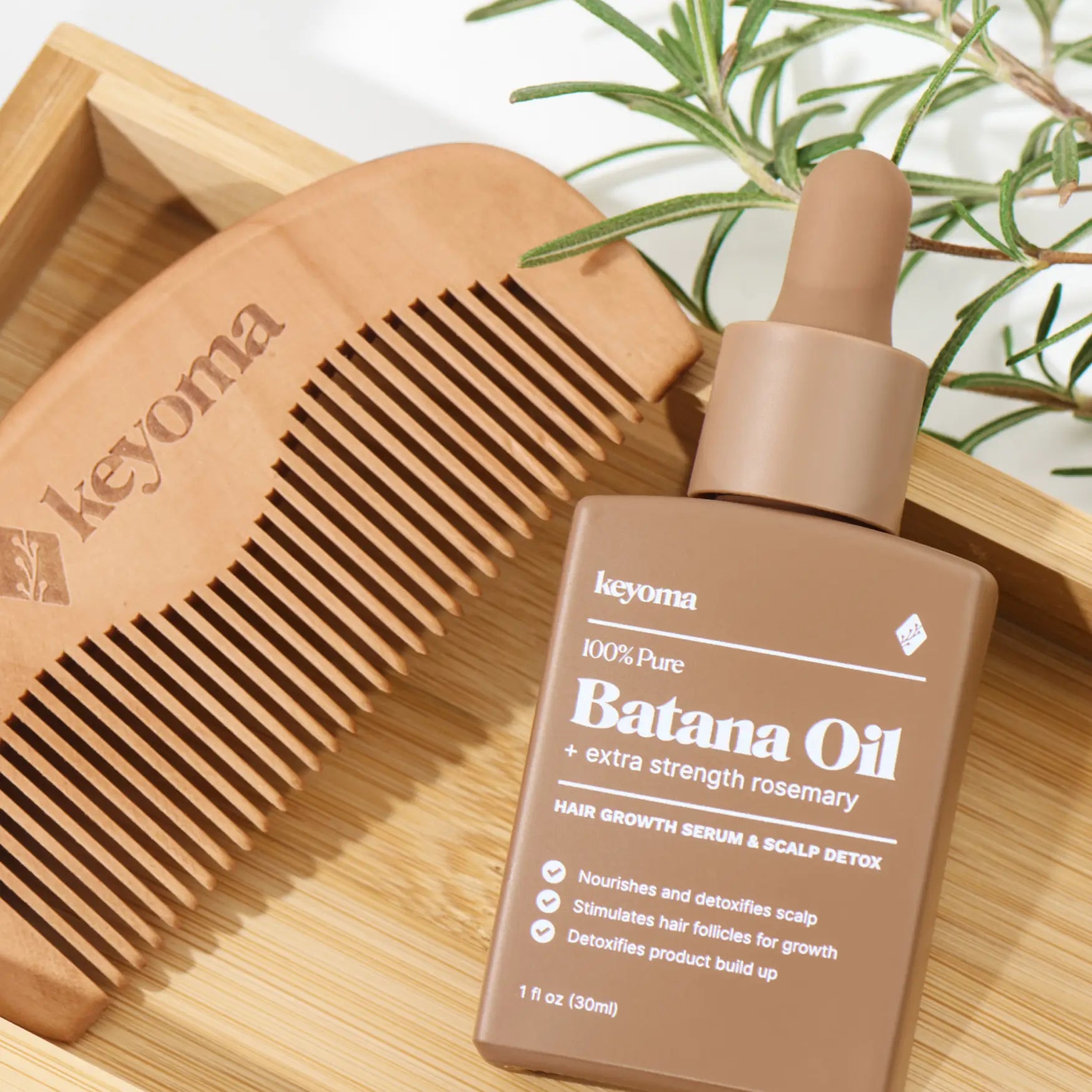
Can You Use Hibiscus With Keyoma Pure Batana Oil With Rosemary
Yes, you can pair them, but the order matters. Hibiscus is usually a water-based step (paste, rinse, or shampoo), so it helps with slip and scalp feel first. Keyoma’s Pure Batana Oil with Rosemary works best after, because oils help seal in moisture and reduce the “dry, tight” feeling hibiscus can cause for some people.
A simple routine is to use hibiscus as a rinse or paste, rinse it out well, then apply a small amount of oil while your hair is towel-damp. Warm a few drops between your palms and smooth it over mid-lengths and ends.
If you deal with dandruff or an oily scalp, keep the oil off your scalp so you do not trap buildup. If your scalp feels dry, use only a tiny amount and focus on dry spots, not an all-over scalp coating.
Do a patch test first. Hibiscus and rosemary can trigger irritation if you are sensitive. Hibiscus can also stain towels and light fabrics, so use a dark towel and rinse thoroughly.
Pair Hibiscus Care With Keyoma Batana Oil With Rosemary
Don't think of hibiscus as a miracle cure, but as a tool. It may help your scalp be healthier and your hair be softer, but what happens depends on how you use it and how your scalp reacts.
Test a small area first, because botanicals can cause irritation. If your scalp is oily or itchy, focus on washing gently and conditioning lightly so you don't trap buildup.
If your hair is dry or frizzy, use hibiscus to add slip and moisture, then lock in that moisture so it lasts. Keep your routine simple for two weeks so you can see what's helping. To find more natural routines and ingredient information, check out the Keyoma Hair Care blog.
Featured Product
30% Off + 3 FREE Gifts
100% Pure Batana Oil + Rosemary


