

In this article
A fresh scalp sunburn needs time and gentle care before you return to hair oil. If the area still feels hot, painful, raw, or sensitive, applying oil can add friction or expose damaged skin to ingredients it may not tolerate.
There is no universal number of days to wait. A mild burn without blisters may settle sooner than a deeper burn, but the calendar alone cannot tell you whether your scalp is ready. The condition of your skin matters more.
Keep hair oil off blistered, broken, weeping, or painful areas. Focus first on appropriate sunburn care. Once your scalp is intact and comfortable during gentle touch and washing, you can consider restarting your usual oil in a small test area.
Key Takeaways
-
Keep cosmetic oils off blistered, broken, hot, painful, or weeping scalp skin.
-
Follow your skin’s recovery instead of relying on a fixed waiting period.
-
Peeling alone does not confirm that your scalp is ready for oil.
-
Restart with a small-area test and stop if irritation or pain returns.
Treat the Sunburn Before Resuming Hair Oil

Sunburn is an injury caused by ultraviolet radiation. Even when the damage appears limited to a narrow part line or thinning area, the affected skin needs appropriate care before cosmetic scalp products return to the routine.
The American Academy of Dermatology recommends getting out of the sun and using cool baths, showers, or damp washcloths to relieve discomfort. Gently pat the skin dry instead of rubbing it.
A moisturizer containing aloe vera or soy may help soothe sunburned skin. The AAD also recommends drinking extra water because sunburn can draw fluid toward the skin’s surface and increase the risk of dehydration.
These steps address the active burn. Hair oil does not.
Even if an oil normally makes your scalp feel softer, it should not replace sunburn care or advice from a healthcare professional. Batana oil, rosemary oil, and other cosmetic oils have not been established as treatments for scalp sunburn.
Keep Oil Off Blistered or Broken Skin
Do not apply hair oil over blisters, cracks, open sores, bleeding, weeping areas, or raw skin exposed by peeling. The skin barrier is already damaged, and unnecessary products can make it harder to monitor changes in the area.
Blistering also points to a more serious burn. The AAD identifies blistering sunburn as a second-degree burn and advises leaving the blisters intact. Blisters protect the skin underneath while it heals, so do not pop, drain, or peel them.
If a blister breaks on its own, keep the area clean and follow medical guidance for protecting it. Do not place a dropper directly against the damaged area or try to apply oil around the edges.
Avoid Rubbing, Scratching, and Scalp Massage
A normal oiling routine may involve massaging the scalp or moving the dropper between sections. Both actions create friction.
Pause scalp massage while the area remains tender. You should also avoid scalp brushes, scrubs, exfoliating acids, strong clarifying products, and vigorous shampooing. These steps can disturb peeling skin or make an already sensitive area sting.
When washing is necessary, use comfortably cool or lukewarm water. Handle the hair gently and avoid using your nails on the scalp.
Use Skin Condition, Not the Calendar, to Decide When to Restart

You may see recommendations to wait a set number of days before using scalp products. That approach is too broad.
Healing time changes with the depth and size of the burn, your skin sensitivity, repeat sun exposure, and whether blisters developed. A scalp that looks less red may still feel painful when touched or exposed to water.
Instead of counting days, check how the skin behaves during ordinary, gentle care.
Signs Your Scalp Is Not Ready
Continue waiting if:
-
The scalp still feels hot, tight, sore, or tender.
-
Cool or lukewarm water causes stinging.
-
Gentle touch causes pain.
-
Blisters, cracks, or open areas remain.
-
The skin is bleeding, weeping, or heavily crusted.
-
Peeling exposes pink, raw, or sensitive skin.
-
Redness, swelling, or pain is getting worse.
-
The area reacts when you use basic hair-care products.
Do not use hair oil to loosen peeling skin. Oil may make flakes look less noticeable, but it does not confirm that the skin underneath has healed.
Pulling or rubbing away the peeling layer can expose tender skin before it is ready. Allow loose skin to separate on its own.
Signs the Scalp May Be Ready
You may consider a careful restart when:
-
The skin surface is fully closed.
-
There are no blisters, open sores, or weeping areas.
-
The scalp no longer feels unusually hot or painful.
-
Gentle touch does not cause discomfort.
-
Washing with lukewarm water no longer stings.
-
Redness and swelling have settled.
-
Peeling has mostly finished without leaving raw skin.
These observations are practical checks, not a medical diagnosis. If the burn was severe, blistered, slow to improve, or difficult to assess through your hair, ask a healthcare professional before returning to scalp products.
Restart Hair Oil With a Small-Area Test

A recovered scalp can still be more reactive than it was before the burn. Returning immediately to a full dose, long massage, or overnight application makes it harder to tell how the skin will respond.
Use a staged restart instead.
Check the Full Formula First
Read the product label and consider every ingredient in the formula. Do not assume that a product is automatically gentle because it contains plant-based or familiar oils.
This matters with rosemary oil and other aromatic ingredients. A product that felt comfortable before the sunburn may feel different on recently recovered skin.
Do not apply undiluted essential oil to a recovering scalp. If your usual product contains rosemary or another essential oil, wait until the skin appears fully recovered and test the finished product cautiously.
Test One Small, Recovered Area
Choose a small section that looks intact and feels comfortable. Avoid any area where peeling, tenderness, or redness remains.
Then follow these steps:
-
Place a minimal amount of oil on the test area.
-
Spread it gently without firm massage or scratching.
-
Keep the first application shorter than your normal routine.
-
Watch for burning, itching, warmth, pain, swelling, or renewed redness.
-
Gently wash the product off if discomfort develops.
A small-area test can reveal an immediate problem before you apply the product more widely. It cannot guarantee that delayed irritation will not occur.
If the test area remains comfortable, you can gradually return to your routine. Start with less product than usual and avoid leaving it on overnight during the first application.
Return to Your Routine Gradually
Resuming oil use does not need to happen all at once. Try a small amount on one part of the scalp before expanding to other areas.
Skip firm massage at first. Use the pads of your fingers with light pressure and avoid dragging the skin. Keep the dropper above the scalp rather than touching it directly to the skin.
Wait to see how your scalp feels after the product is removed. If it remains calm, you can slowly work back toward your usual amount and contact time.
If discomfort returns at any point, pause again. Do not push through burning or stinging because the product was comfortable before the sunburn.
Stop Using Oil If the Scalp Reacts
Remove the oil and stop using it if you notice:
-
Burning or sharp stinging
-
Increasing redness or heat
-
New swelling
-
Rash or hives
-
Renewed tenderness
-
Weeping or crusting
-
New blisters
-
Pain that continues after washing
Do not treat tingling as proof that the oil is working. On recently injured skin, tingling may signal irritation.
Gently wash the product away without scrubbing. If the reaction is severe, spreads beyond the application area, affects your breathing, or includes facial swelling, seek urgent medical help.
Persistent symptoms also deserve medical attention. A healthcare professional can assess whether the reaction relates to the burn, the product, an allergy, or another scalp condition.
Know When a Scalp Sunburn Needs Medical Care
A small, mild sunburn may respond to basic home care. More serious symptoms need professional assessment.
Contact a healthcare professional if you have:
-
Extensive or severe blistering
-
Severe or worsening pain
-
Fever, chills, nausea, or a strong headache
-
Dizziness, confusion, faintness, or unusual weakness
-
Signs of dehydration
-
Increasing swelling
-
Pus, red streaks, or worsening tenderness
-
Eye pain, facial swelling, or vision changes
-
Symptoms that do not improve with basic care
Seek urgent care for confusion, fainting, severe dehydration, breathing problems, or a rapidly worsening reaction.
A clinician should also review the burn if you have a condition or take medication that affects healing or immune function.
Protect a Healing Scalp From More Sun
Recently burned skin needs protection from further ultraviolet exposure. Another dose of sunlight can increase discomfort and extend recovery.
Stay in the shade when practical. A loose, comfortable hat can cover an exposed part or thinning area, but avoid anything that presses against blisters or rubs painful skin.
Once sunscreen is appropriate for the condition of your skin, the AAD recommends a broad-spectrum, water-resistant sunscreen with an SPF of 30 or higher on exposed skin. Follow the product directions and reapply as instructed.
Hair oil is not a replacement for sunscreen. Unless a product is tested, labeled, and regulated for sun protection, do not rely on it to protect your scalp from ultraviolet radiation.
Hair and scalp protection also serve different purposes. Sunscreen and physical coverage protect exposed skin, while your regular hair-care routine focuses on the condition and manageability of your hair. Read more about how sunlight can affect your hair without assuming the same product protects both hair and skin.
Frequently Asked Questions
Can I put hair oil on a peeling scalp after sunburn?
Wait if the peeling area still feels sore, stings during washing, or exposes raw skin. Peeling does not confirm that the scalp underneath has fully recovered. Do not rub or pick away loose skin to make oil application easier.
Is rosemary oil safe on a sunburned scalp?
Rosemary oil should not be used as a sunburn treatment. Avoid applying it to skin that is actively burned, blistered, broken, hot, or painful. After the scalp has recovered, test your finished rosemary-containing product on a small area before wider use.
How long should I wait before oiling my scalp after sunburn?
There is no fixed waiting period that works for every burn. Wait until the skin is intact, free from blisters and raw areas, and comfortable during gentle touch and washing. Ask a healthcare professional if the burn was severe or you are unsure whether it has healed.
Can hair oil replace moisturizer on a scalp sunburn?
No. A cosmetic hair oil should not replace appropriate sunburn care. The AAD recommends measures such as cool bathing and an aloe- or soy-containing moisturizer to help relieve discomfort. Follow medical advice for more serious burns.
Should I wash off hair oil if my recovered scalp starts burning?
Yes. Gently remove the product and stop using it. Do not scrub the area. Seek medical guidance if the burning persists, becomes severe, or appears with swelling, blistering, hives, or other concerning symptoms.
Resume Your Scalp Routine After the Skin Recovers
A scalp sunburn is not the time to maintain your normal oiling schedule. Let the skin recover first, even if that means pausing your routine longer than expected.
Once your scalp is intact, calm, and comfortable during gentle washing, test a small amount of your usual product in one recovered area. Stop if pain, burning, or redness returns.
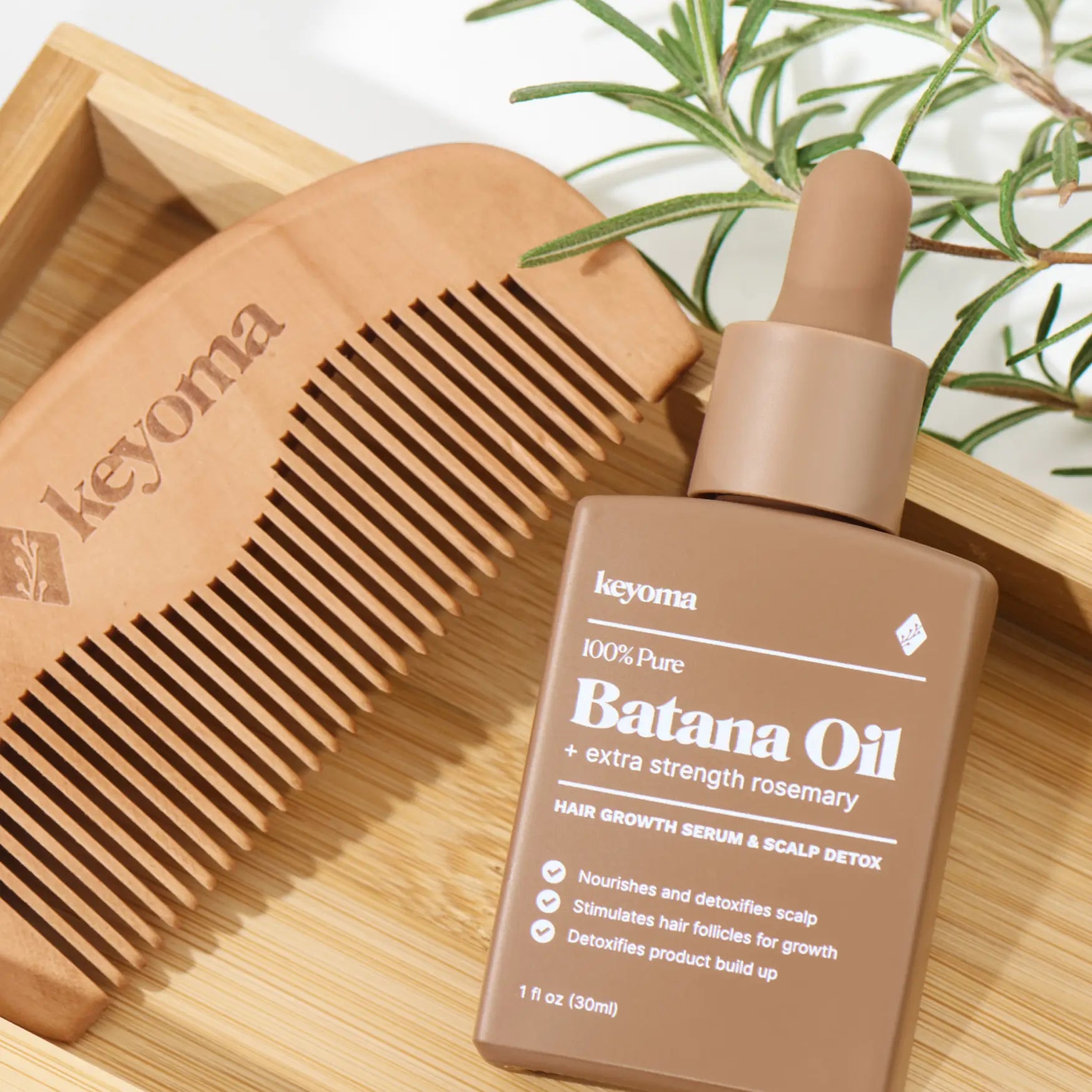
Keyoma Batana Oil with Rosemary belongs in a regular hair-care routine, not active burn care. Wait until your scalp has fully recovered before considering a gradual return.
Featured Product
30% Off + 3 FREE Gifts
100% Pure Batana Oil + Rosemary


