Best Carrier Oil for Rosemary Oil by Hair and Scalp Type
Written by

Published on Jun 23, 2026

In this article
The best carrier oil for rosemary oil depends on where you plan to apply the blend and how your hair responds to oil. Jojoba and grapeseed usually suit people who want a lighter scalp application, while coconut, batana, olive, and castor create richer blends that may work better for coarse, dry, or high-density hair.
Your scalp and your lengths may need different things. An oily scalp can sit beneath dry, frizzy ends, and fine strands can still feel rough or damaged. Choosing one oil for your whole head without considering those differences often leads to greasiness, buildup, or a blend that is difficult to wash out.
The most useful choice is the oil that gives rosemary essential oil enough spread, feels comfortable on your scalp, suits your strand weight, and fits how often you shampoo.
Key Takeaways
-
Choose lighter oils for oily scalps, fine strands, or frequent use.
-
Reserve richer oils for dry lengths, coarse hair, or pre-shampoo treatments.
-
Dilute rosemary essential oil conservatively and stop if irritation develops.
-
Match the oil to the application area rather than using one blend everywhere.
Why Rosemary Oil Needs a Carrier Oil?
Rosemary essential oil is concentrated and should not be treated like an ordinary hair oil. A carrier oil spreads a small amount across a wider area, reduces direct exposure to the concentrated essential oil, and gives the mixture enough slip for controlled application. Cleveland Clinic recommends mixing rosemary essential oil with a carrier such as coconut or jojoba oil to reduce the risk of skin irritation.
Dilution is not a single fixed formula for everyone. The National Association for Holistic Aromatherapy notes that skin condition, application area, age, concentration, and individual sensitivity can all affect how a topical essential-oil blend is tolerated. Damaged, inflamed, or diseased skin may also be more permeable and more reactive. For complete preparation steps rather than a universal ratio, use Keyoma’s guide on how to dilute rosemary oil for hair.
Do not confuse three different products. Rosemary essential oil is a concentrated aromatic extract that requires dilution. Rosemary-infused oil is made by steeping rosemary plant material in a carrier oil and is already less concentrated. A ready-made rosemary hair product may already contain a formulated dilution, so adding more carrier oil is not automatically necessary. Check the ingredient list and directions before changing it.
A small-area test may help reveal an immediate or delayed reaction before broader use, but it cannot guarantee that irritation will never occur. Allergic contact dermatitis can appear hours or days after exposure, with itching, redness, or scaling. DermNet also advises against applying neat, undiluted essential oils directly to skin. Stop using the blend if burning, persistent itching, swelling, marked redness, or worsening flaking develops.
How to Choose a Carrier Oil for Rosemary Oil
Begin with your scalp condition, then consider strand thickness, density, scent tolerance, and the effort required to remove the oil. Online comedogenic scores are only rough references and cannot predict how an oil will behave on every scalp.
Match the Oil to Your Scalp Condition
An oily scalp usually does better with a small amount of a light, fluid oil such as jojoba or grapeseed. Their thinner feel makes it easier to distribute a restrained amount without coating the roots heavily. Oily does not mean insensitive, however. A concentrated blend can still sting or trigger redness, and adding more rosemary essential oil does not make the application more useful.
A dry-feeling scalp may tolerate a richer carrier, but flakes alone do not prove dryness. If the concern is cosmetic tightness without redness, pain, sores, or thick scaling, compare options for a dry scalp before choosing coconut, batana, sweet almond, or olive oil.
Sensitive scalps need fewer variables. Use one plain carrier, a conservative dilution, and a limited application area rather than combining several essential oils. A careful patch test for hair oil may help identify a reaction, but discontinue the product if symptoms appear later.
Separate Scalp Needs From Hair-Length Needs
Scalp oil level does not determine the condition of your ends. Many people have an oily scalp with dry lengths because sebum does not move evenly down the hair shaft, especially on longer, textured, chemically treated, or heat-styled hair. Applying a thick castor or olive blend from roots to ends may overload the scalp even when the ends still feel rough.
A mixed approach is often more comfortable. Apply a light rosemary blend only to the scalp, then use a richer plain oil on the lower lengths or ends. The article on an oily scalp with dry ends explains why these two conditions can exist together. Keeping rosemary essential oil out of the ends-only step also avoids adding concentrated fragrance where it is not needed.
Porosity also changes the feel of oil. More porous hair may absorb it quickly, while lower-porosity hair can feel coated when rich oil remains on the surface. Compare low-porosity and high-porosity hair when residue is a repeated problem.
Consider Strand Thickness, Density, and Desired Finish
Fine hair refers to the diameter of each strand, while low-density hair refers to how many strands grow in an area. They are not the same condition, although both can look flat when coated with too much oil. Jojoba, argan, and grapeseed are usually easier starting points when you want a lightweight carrier oil for hair that does not leave a thick finish.
Medium, coarse, curly, coily, or high-density hair can often handle more body from coconut, batana, olive, or a small amount of castor oil. Even then, use enough to create slip rather than saturation. A heavy coating does not prove that the blend is working, and excess oil may require repeated shampooing that leaves the lengths feeling rough.
For more options suited to delicate strands, compare lightweight hair oils for fine hair. The most suitable finish may be barely noticeable at the roots, while a richer sheen can be reserved for dry ends.
Check Washability, Scent, and Storage
Washability matters because a blend that lingers after shampoo can attract dirt, flatten roots, or encourage repeated cleansing. Grapeseed and jojoba tend to rinse more easily when used sparingly. Olive and castor are more persistent, while coconut and batana can feel waxier if the room or water temperature is cool.
Scent affects whether you will use the blend consistently. Refined oils are often milder, while olive can smell grassy, batana roasted or earthy, and almond lightly nutty. Rosemary adds a sharp herbal note, so avoid a combination you do not enjoy.
Storage is not identical across oils. Keep blends tightly closed, away from sunlight and heat, and avoid introducing water with wet fingers or tools. Jojoba is known for relatively high oxidative stability because it is primarily a liquid wax rather than a typical triglyceride oil. Grapeseed is more oxidation-prone and is better purchased in a modest size that you can use while it still smells fresh.
Best Carrier Oils for Rosemary Oil

The table gives a practical comparison rather than a clinical ranking. Oil weight can vary by processing, temperature, and amount used, so treat the categories as relative. Washability also depends on shampoo strength, strand density, porosity, and how long the blend remains on the hair.
1. Batana Oil: Best for Dry, Coarse, or Textured Hair
Best for: Rich pre-shampoo applications on coarse, curly, coily, high-density, or visibly dry hair.
Why it works in a rosemary blend: Batana gives the mixture body and slip, which can make it easier to spread through dense roots or textured sections without the oil disappearing immediately into the hair. Its richer finish also suits people who view oiling as a wash-out treatment rather than a leave-in step.
Main limitation: Batana can be too substantial for fine strands, oily scalps, or frequent applications. Use a thin layer and focus on sectioned application instead of coating the whole head. It may also soften or firm with temperature, so warm it gently between your palms rather than overheating the oil.
If roots become flat but ends remain rough, limit the rosemary-batana mixture and use a separate ends-focused step. The explanation of whether batana oil is a carrier oil clarifies its role in blends.
2. Jojoba Oil: Best for Oily Scalps and Fine Hair
Best for: A light scalp blend for oily roots, fine strands, lower-density hair, or people who dislike a greasy finish.
Why it works in a rosemary blend: Jojoba spreads easily in a thin layer and has a relatively stable composition. Its fluid texture helps distribute rosemary essential oil without requiring a thick coating. It is often described as sebum-like because its wax esters share structural features with components found in skin surface lipids, but that does not prove it will regulate oil production for every person.
Main limitation: Jojoba may feel too light for brittle, coarse, or highly porous lengths when used alone. Pair a scalp-focused jojoba blend with a separate richer oil on dry ends rather than increasing the amount at the roots.
3. Coconut Oil: Best for Dry, Thick, or Damaged Hair
Best for: Pre-shampoo use on dry, thick, coarse, porous, or damage-prone lengths.
Why it works in a rosemary blend: Coconut oil creates a richer coating and has stronger hair-fiber evidence than many popular oils. A comparative study found that coconut oil reduced protein loss from hair when used before or after washing, which the authors linked to its affinity for hair proteins and ability to penetrate the fiber. That finding supports coconut oil’s role in protecting the feel and condition of the strand, not a claim that it improves rosemary oil’s effect on hair growth.
Main limitation: Coconut oil can feel heavy on fine or buildup-prone hair, and it solidifies at cooler temperatures. Some hair feels stiff or coated after use. Begin with a small amount and stop if repeated use leaves hair rough or difficult to cleanse.
4. Argan Oil: Best for Frizz and Dry Ends
Best for: Fine-to-medium strands that need smoother-looking ends, less surface frizz, and a polished finish without the weight of olive or castor oil.
Why it works in a rosemary blend: Argan has enough slip to help spread a blend while remaining lighter than the richest options. It is especially useful when the rosemary mixture touches the upper lengths as well as the scalp. For dry ends, plain argan oil may be more practical than extending a rosemary essential-oil blend through the full length.
Main limitation: Argan can be expensive, and its cosmetic softness should not be turned into a scalp-treatment or hair-growth claim. A laboratory study found that argan-oil pretreatment helped protect hair against oxidative damage, which supports a strand-focused cosmetic role rather than a claim that it stimulates growth. Readers comparing finish and frizz control can also review oil choices for frizzy hair.
5. Sweet Almond Oil: Best for Balanced Softness
Best for: Normal-to-dry hair that needs a medium-light blend with more cushioning than grapeseed but less heaviness than olive or castor.
Why it works in a rosemary blend: Sweet almond oil spreads smoothly, softens the feel of the mixture, and works well for moderate-density hair that does not sit clearly in the light or heavy category. It is a reasonable middle option when jojoba disappears too quickly but coconut leaves too much residue.
Main limitation: Almond is a tree nut. Allergy UK notes that almond oil can appear in cosmetics and toiletries and may be a problem for people allergic to almonds, with risk affected by how the oil is processed and how much allergenic protein remains. People with a known almond allergy should avoid casual experimentation and seek individualized advice from an allergy professional.
6. Olive Oil: Best for Very Dry or Coarse Hair
Best for: Very dry, coarse, dense, or highly textured lengths used as a limited pre-wash treatment.
Why it works in a rosemary blend: Olive oil is widely available, inexpensive in many regions, and slow-moving enough to give excellent slip during sectioned application. It can keep a rosemary blend from running and may suit people who prefer a substantial oil treatment before shampooing.
Main limitation: Olive oil is heavy, strongly scented, and often difficult to remove from fine or oily hair. A small amount can travel far, so avoid pouring it directly onto the scalp. If you repeatedly need two or three aggressive shampoos to remove it, a lighter carrier will probably fit your routine better.
7. Castor Oil: Best Used in a Lighter Blend
Best for: Adding body to a blend for coarse hair, edges, or a temporarily thicker-looking finish on the strands.
Why it works in a rosemary blend: Castor oil is extremely viscous. A small portion can slow a runny blend, increase grip during scalp application, and coat strands so they look more substantial. It is usually more practical mixed with jojoba, grapeseed, or another lighter carrier than used alone.
Main limitation: Its sticky texture makes even distribution and washing difficult. Castor oil does not have strong evidence as a hair-growth treatment, and it should not be presented as a way to increase rosemary oil’s effectiveness. A dermatology review found weaker evidence for improving hair luster and no strong evidence supporting castor oil for hair growth. If the blend pulls at the hair during application, reduce the castor proportion. Keyoma’s explanation of why castor oil feels sticky on hair covers the texture in more detail.
8. Grapeseed Oil: Best for the Lightest Feel
Best for: Oily scalps, fine strands, frequent washers, or anyone who wants minimal residue from a rosemary blend.
Why it works in a rosemary blend: Grapeseed is thin, quick-spreading, and less likely than castor or olive to leave a dense coating when used sparingly. It is often the easiest option for targeted scalp application because a few drops can cover a section without soaking the surrounding hair.
Main limitation: Its light feel comes with lower storage stability than highly stable oils such as jojoba. Research comparing vegetable oils has found grapeseed oil to be relatively oxidation-sensitive, supporting the practical advice to buy smaller bottles and protect them from heat, light, and repeated air exposure. Discard it if the aroma becomes sharp, stale, paint-like, or noticeably different from when opened.
Common Mistakes When Choosing a Carrier Oil
The most common mistake is choosing by reputation rather than routine. Coconut can frustrate fine hair, grapeseed may feel insufficient on coarse ends, and castor can be difficult to remove. Suitability comes from the full experience, not popularity.
Another mistake is using too much oil because the scalp still looks dry, or increasing rosemary essential oil because the mixture feels weak. A blend does not need to look glossy to cover the scalp. Apply it in sections, use a controlled amount, and allow the fingertips to spread the oil instead of pouring more. Overapplication can contribute to hair oil and scalp buildup, especially when cleansing is infrequent.
Do not treat a patch test as a permanent safety certificate. Reactions can be delayed, and tolerance may change with concentration, repeated exposure, damaged skin, or a different product batch. Avoid rosemary essential oil on broken, inflamed, or painful scalp areas. Persistent redness, burning, pain, heavy scaling, sudden shedding, or patchy hair loss needs medical assessment rather than another carrier-oil experiment.
Overnight use is not automatically better. Fine, oily, sensitive, or buildup-prone hair may suit a shorter pre-shampoo window. Choose duration by comfort and washability, not the assumption that longer contact works better.
Use these steps to narrow the choice without overcomplicating the blend:
-
Identify the application area. For scalp use, start lighter. For dry lengths or ends, consider a richer plain oil separately.
-
Match the weight. Choose grapeseed or jojoba for the lightest feel, argan or almond for medium-light slip, and coconut, batana, olive, or diluted castor for richer treatment.
-
Check washability. If you wash infrequently or have fine hair, avoid oils that require repeated shampooing.
-
Review allergies and sensitivity. Avoid known allergens, keep the formula simple, and discontinue use after irritation.
-
Consider scent, storage, and budget. Buy an amount you can use while fresh and choose an aroma you can tolerate consistently.
When two needs conflict, use two targeted products rather than forcing one blend to do everything. A light rosemary-and-jojoba or rosemary-and-grapeseed mixture can go on an oily scalp, while plain argan, coconut, or batana can be limited to dry ends. That approach controls weight at the roots without neglecting the lengths.
Choose the Best Carrier Oil for Rosemary Oil With Confidence
Choose jojoba or grapeseed when your priority is a light scalp feel and easy washing. Choose argan or sweet almond for moderate slip and softer-looking lengths. Coconut, batana, or olive fit richer pre-shampoo treatments, while castor works best as a small part of a thinner blend.
Keep the formula simple, use less than you think you need, and judge the blend by comfort, residue, and washability. The best option is the carrier that lets you dilute rosemary essential oil safely while fitting your actual scalp, hair, and cleansing routine.
Featured Product
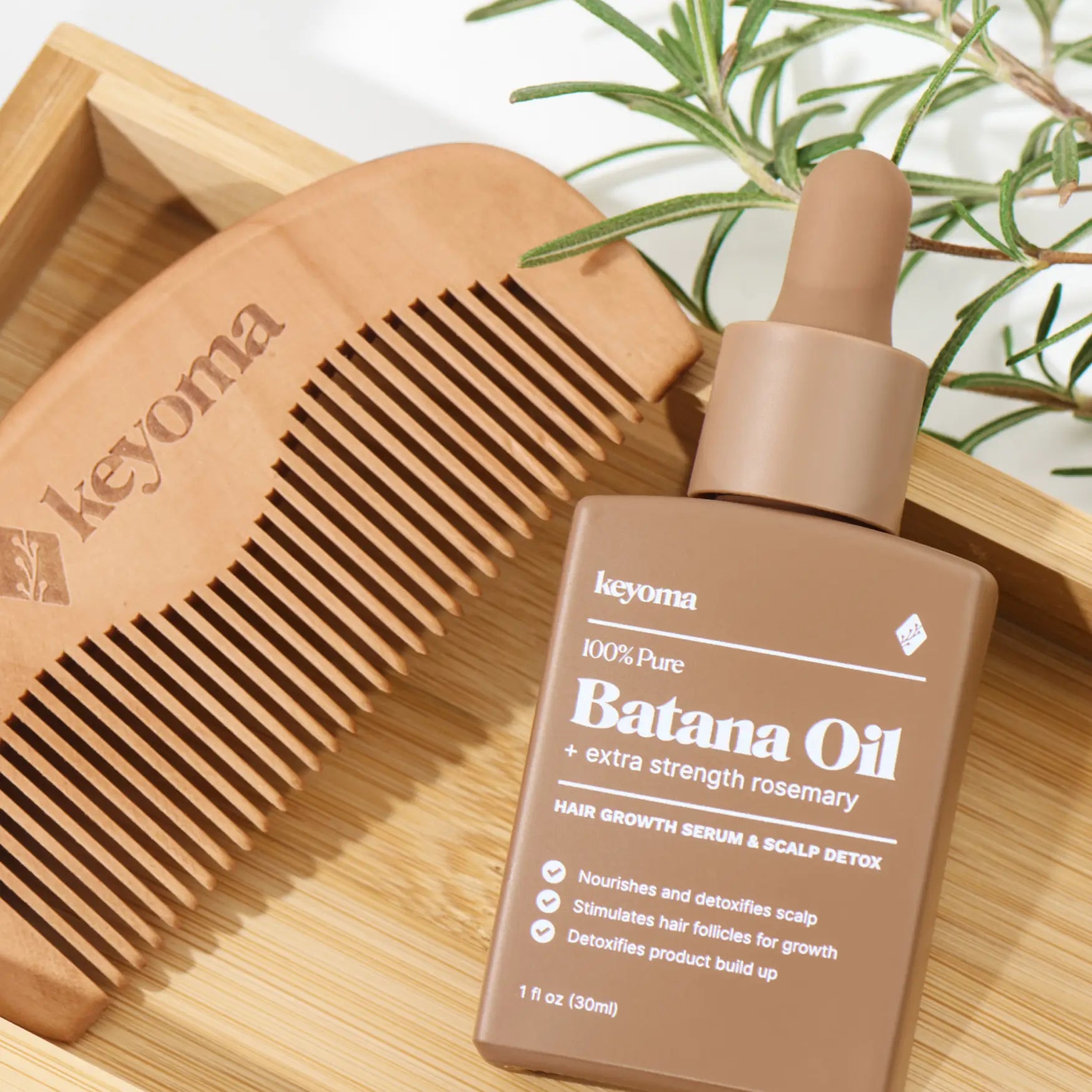
30% Off + 3 FREE Gifts
100% Pure Batana Oil + Rosemary
↓Best Batana Oil to Buy↓

1 Month
Subscribe & Save
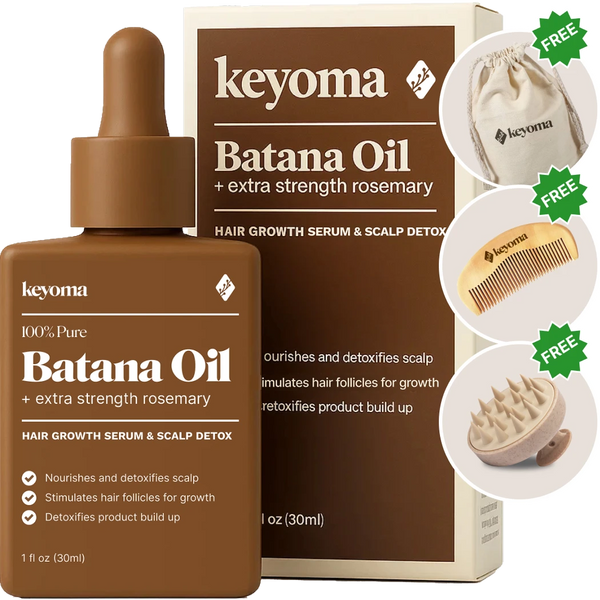


- 30-day supply delivered monthly $35
- 30% off for life $6
- Free haircare essentials kit $33
- Free custom wooden comb $10
- Free scalp massager $15
- Free eco-friendly travel bag $8
- 30-Day Money Back Guarantee
- Free Shipping
- Online portal for easy cancel, skip, or pause.
1 Month One Time Purchase
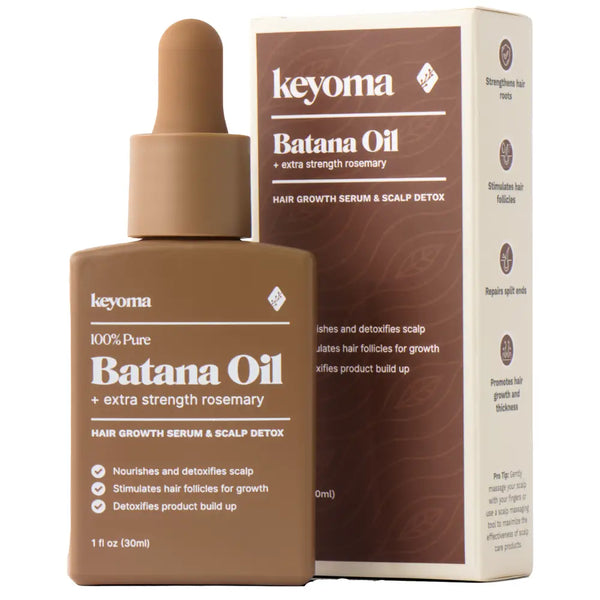
- 30-day supply $50
- 30% off for life $6
- Free haircare essentials kit $33
- Free custom wooden comb $10
- Free scalp massager $15
- Free eco-friendly travel bag $8
