

In this article
A 30 mL bottle of hair oil contains 30 applications when you use 1 mL each time. At one application per day, the bottle should last about 30 days.
That answer changes when you use a partial pipette, apply the oil less often, or cover only selected areas. A smaller application can stretch the same bottle across several months.
The most accurate estimate comes from two numbers: how much oil you use per application and how many times you apply it each week. Counting drops alone is less reliable because droppers do not all release the same volume.
Key Takeaways
-
A 30 mL bottle provides 30 applications when each measured dose equals 1 mL.
-
Using one full pipette daily makes the bottle last about one month.
-
Smaller doses extend supply, but individual drop volume must be verified first.
-
Tracking each application gives a better refill estimate than watching bottle level.
How Many Uses Are in a 30 mL Hair-Oil Bottle?
Divide the total bottle volume by the amount used during one application:
Applications per bottle = 30 mL ÷ milliliters used per application
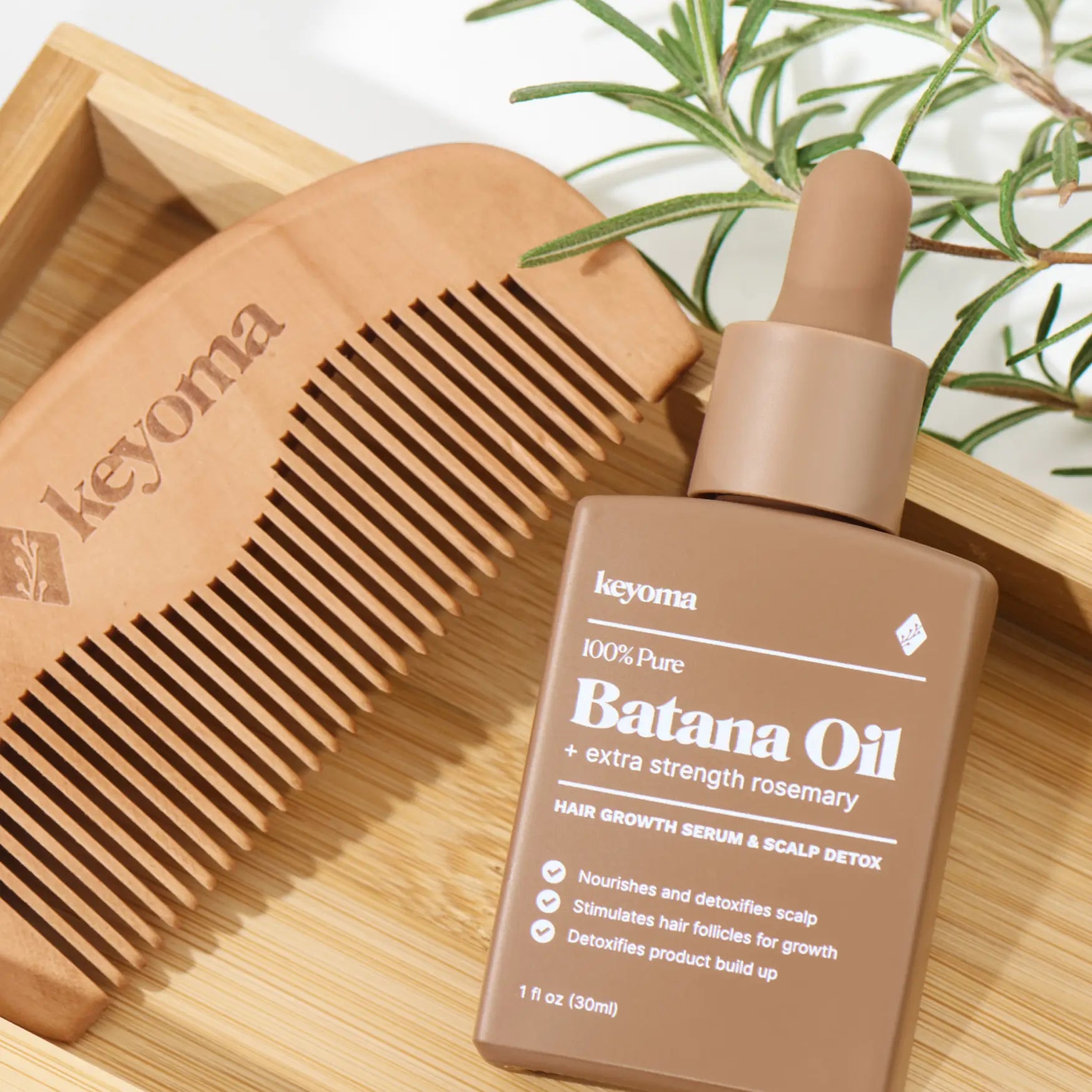
The Keyoma Batana Oil product directions identify one full pipette as 1 mL. Using that measurement, a 30 mL bottle provides 30 full-pipette applications.
Here is how the calculation changes at different measured amounts:
|
Amount per Application |
Applications per 30 mL Bottle |
|
1 mL |
30 |
|
0.5 mL |
60 |
|
0.25 mL |
120 |
The partial-pipette rows are mathematical examples, not universal dosage recommendations. They apply only when you can measure those amounts accurately and the smaller amount fits your product directions and intended application area.
Why a Full Pipette Is Not the Same as a Few Drops
A full pipette gives you a volume that can be measured. A drop does not provide the same certainty.
Drop size can change based on the opening, dispensing angle, oil thickness, temperature, and how firmly you squeeze the bulb. Research comparing liquid dispensers has also found differences in the accuracy and precision of supplied droppers. This is why you should not assume that every milliliter contains a fixed number of drops. (PubMed)
If a product tells you to apply two or three drops, follow those instructions. However, do not convert that dose into an exact number of milliliters unless the current bottle and dropper have been tested together.
This distinction matters when estimating value. A claim such as “600 drops per bottle” may sound precise, but it does not tell you how many applications you will receive unless the drop count and intended dose are both verified.
How Long Does 30 mL of Hair Oil Last at Different Frequencies?
Once you know the amount used per application, frequency determines how many weeks the bottle will cover.
The estimates below use one measured 1 mL application:
|
Application Frequency |
Approximate Monthly Uses |
Estimated Bottle Duration |
|
Once daily |
30 |
30 days |
|
Four times weekly |
16 to 18 |
About 7.5 weeks |
|
Three times weekly |
12 to 14 |
About 10 weeks |
|
Twice weekly |
8 to 9 |
About 15 weeks |
|
Once weekly |
4 to 5 |
About 30 weeks |
These figures are supply calculations, not instructions to change your routine. Follow the current directions for your product and use case.
Applying 1 mL four times per week, for example, produces this estimate:
30 mL ÷ 1 mL per application = 30 applications
30 applications ÷ 4 applications per week = 7.5 weeks
A person applying the same amount daily will empty the bottle much sooner than someone using it once or twice per week. Neither result automatically shows that one person is using the product correctly and the other is not.
Calculate Your Own Bottle Duration
Use this three-step calculation:
-
Divide 30 mL by the amount used during one application.
-
Divide the number of available applications by your weekly frequency.
-
Convert the result into weeks or months.
For example, a measured 0.5 mL application provides 60 uses. At three uses per week, the calculation becomes:
60 applications ÷ 3 applications per week = 20 weeks
This estimate works only when 0.5 mL is a measured and appropriate amount. Filling the pipette halfway by sight may not equal exactly half its stated volume, especially if the pipette has no measurement marks.
Why Your 30 mL Bottle May Run Out Earlier or Later

The printed bottle volume gives you a starting point. Your dispensing habits determine how closely your experience matches the calculation.
You Dispense More Than One Measured Pipette
A pipette may look full while holding less than its maximum volume. This can lead people to squeeze and refill it several times during one application.
Those top-ups add together. If you use 1.5 mL instead of 1 mL, a 30 mL bottle contains about 20 applications rather than 30.
Applying oil directly to several scalp sections can also make it harder to notice how much you have dispensed. Measure the total application rather than treating each part as a separate dose.
The Pipette Does Not Fill Completely
Pressing and releasing the bulb once does not guarantee that the pipette draws its full stated capacity. Air inside the tube, the angle of the bottle, and the remaining oil level can affect the fill.
Use measurement markings when the pipette provides them. Without markings, treat “one squeeze” and “1 mL” as different descriptions until the output has been confirmed.
Some Oil Remains Inside the Bottle
A bottle labeled 30 mL contains that nominal amount when filled, but you may not dispense every milliliter.
Oil can remain on the bottle walls, around the neck, inside the pipette, or along the bottom where the dropper cannot reach it easily. Thicker oil may cling to the packaging more than a thin, water-like serum.
Do not shake, heat, or add another liquid to the bottle to recover the remaining oil. Changing the formula or handling it improperly can affect product integrity.
Your Application Area Changes
Targeting one small scalp area uses less oil than coating the full scalp and lengths. Hair length, density, section size, and the number of treated areas can also change your consumption.
This does not mean that every larger application is excessive. It means that two people can follow different approved use cases and finish the same bottle on different dates.
If you begin by treating selected areas and later expand the application, update your refill estimate rather than assuming the bottle is disappearing unexpectedly.
Spills and Dropper Leaks Reduce the Usable Supply
Oil around the bottle neck, a loose collar, or a pipette that drips during handling can shorten the bottle’s usable life.
Keep the bottle upright when practical and wipe external residue from the neck with a clean, dry cloth. When traveling, use the steps in Keyoma’s guide to preventing hair-oil dropper leaks. Product lost inside a toiletry bag still counts against the bottle’s expected number of uses.
How to Check Whether You Are Using Hair Oil Too Quickly
Looking at the bottle level after one or two applications can be misleading. The shape and color of the container may make small volume changes difficult to judge.
Track one week instead:
-
Write the opening date on a note or calendar.
-
Record each application and the amount used.
-
Add the total amount used at the end of seven days.
-
Divide 30 mL by your weekly consumption.
-
Use the result to estimate your refill date.
If you use 4 mL in one week, the bottle should cover about 7.5 weeks. If you use 7 mL, it should last a little over four weeks.
Track the amount before reducing it. A bottle running out early may come from a larger treatment area, spilled product, or repeated pipette fills rather than deliberate overapplication.
Use the Bottle Consistently Without Overapplying
Making a bottle last longer is not the goal by itself. The useful target is a controlled amount that covers the intended area without leaving unnecessary residue.
Review your application when you notice:
-
Roots that remain greasy or coated
-
Hair that loses movement after oiling
-
Oil transferring easily to your fingers or bedding
-
Several pipette fills used on the same small area
-
Buildup returning soon after washing
These signs do not diagnose a scalp problem. They show that your amount, placement, frequency, or product layering may need attention.
Start by changing one part of the routine. You might measure the application more carefully, stop refilling the pipette automatically, or avoid returning to sections that already feel coated.
If flatness, residue, or frequent buildup continues, review the common signs of hair oil overuse before adding more products. People with easily flattened hair can also use a controlled application for low-density hair to keep oil away from areas that need lift.
Do not use less than the approved amount only to delay your next purchase. Product duration is an outcome of the routine, not a measure of how well the product works.
Plan Your Next Bottle From Measured Use
A 30 mL bottle provides 30 applications when each application measures 1 mL. Used daily, that equals about one month. Less frequent use or a smaller measured amount extends the supply.
Your bottle may finish earlier when you use more than 1 mL, cover a larger area, refill the pipette, or lose oil through spills. It may last longer when your approved routine uses smaller amounts or fewer weekly applications.
For the best estimate, track one full week and calculate from your own measured use. If your routine follows the current 1 mL application directions, one bottle of Keyoma Pure Batana Oil with Rosemary gives you a clear 30-application starting point for planning your next refill.
FAQs
How many applications are in a 30 mL hair-oil bottle?
Divide 30 mL by the amount used per application. A 1 mL dose provides 30 applications. A measured 0.5 mL dose provides 60 applications.
Does a 30 mL hair-oil bottle last one month?
It lasts about one month when you apply 1 mL once daily. Using the oil less often or applying a smaller measured amount extends the duration.
How many drops are in 1 mL of hair oil?
There is no reliable universal number. Drop volume changes based on the pipette, oil thickness, temperature, angle, and dispensing pressure. Use a verified product-specific drop count rather than a general online conversion.
Why did my 30 mL bottle run out before 30 days?
You may be using more than 1 mL per application, treating a larger area, refilling the pipette, or losing oil through drips and spills. Track the amount used for one week to identify the cause.
How can I tell whether I am using too much hair oil?
Hair that stays greasy, coated, flat, or heavy may indicate that the amount or frequency is too high for your routine. Reduce one variable at a time and follow the product directions instead of treating bottle duration as the only guide.
Featured Product
30% Off + 3 FREE Gifts
100% Pure Batana Oil + Rosemary


