

In this article
Batana oil can make twist-out takedown gentler, but the placement matters more than the amount. Instead of dispensing oil directly onto your hair, spread a minimal amount across your palms and fingertips. Use that thin layer to unravel the lengths and protect the ends while keeping the roots mostly untouched.
Think of the oil as a takedown aid, not another styling layer. It should help your fingers move over the hair without leaving the finished twist-out visibly coated.
Before reaching for any oil, confirm that every twist is completely dry. Oil cannot preserve a pattern that has not fully set, and adding more will not correct the frizz caused by unraveling damp hair.
Key Takeaways
-
Use batana oil as a light hand coating during takedown rather than applying it directly to your roots.
-
Make sure the twists are completely dry before unraveling them, including the thicker sections near the scalp.
-
Unravel first and separate second so you can control how much definition you trade for volume.
-
Stop adding oil when your hands still glide easily because excess product can flatten the crown and divide curls into greasy sections.
Use Batana Oil as a Takedown Aid, Not a Root Treatment
The oil has a specific job during twist-out takedown. It creates a light buffer between your fingers and the hair as you handle each twist. This can reduce dry friction, help you work through the ends more patiently, and leave a controlled surface shine.
It does not create the twist pattern. Your definition comes from how evenly the hair was sectioned, how the strands were twisted, which styling product provided hold, and whether the hair dried completely.
This distinction matters because it prevents you from trying to fix every styling problem with more oil. If the twists feel damp inside, wait longer. If the pattern looks loose before you separate it, adding oil will not make it tighter. And if the hair already feels coated from leave-in conditioner, cream, mousse, or gel, another full layer may reduce movement rather than improve the finish.
The roots also do not need to be oiled for this technique. Direct root application can reduce the lift you worked to create, especially around the crown and front sections. Keep the product on your hands and concentrate your contact on the twist lengths and ends.
Decide How Much Batana Oil Your Twist-Out Needs
There is no reliable universal drop count for every twist-out. A person with short, fine strands does not need the same amount as someone with long, dense hair. The products already in the hair also change how much extra slip is useful.
Use the condition of your hands as your starting gauge:
|
Hair or Style Condition |
Starting Approach |
When to Adjust |
|
Short, fine, or easily flattened hair |
Use the smallest amount you can distribute across both hands |
Add no more unless your fingertips begin dragging |
|
Medium-length or medium-density hair |
Create a thin film across your palms and fingertips |
Reapply minimally if the second half feels less smooth |
|
Long, dense, or very dry twists |
Divide the takedown into sections |
Reserve additional oil for the remaining ends |
|
Hair that already feels slick |
Skip the extra oil |
Use clean, dry hands and limit separation |
After rubbing the oil between both hands, examine your palms. They should feel conditioned, but they should not look wet or leave droplets on your fingers. If one palm looks shinier than the other, keep rubbing before touching your hair.
This palm check is more useful than forcing yourself to finish a predetermined amount. Your goal is even distribution across the hands, not complete use of every drop you dispensed.
Take Down a Twist-Out With Batana Oil Step by Step

Confirm Every Twist Is Completely Dry
Touching the ends alone does not tell you whether a twist is ready. Thicker sections can stay damp near the roots or in the middle even after the outside feels dry.
Check several areas, especially the back, crown, and any twists made from larger sections. Gently press each twist between your fingers. If the interior feels cool or noticeably softer than the rest, give it more drying time.
Unraveling damp twists can disturb the pattern before it sets. The strands may swell, contract, or merge with neighboring sections as you separate them. That can look like a takedown problem even when the real issue was timing.
The American Academy of Dermatology’s hair-styling guidance also emphasizes reducing unnecessary pulling and handling. Waiting until the style is ready makes it easier to unravel the hair without repeatedly tugging or reworking each section.
Spread Keyoma Batana Oil Across Your Hands
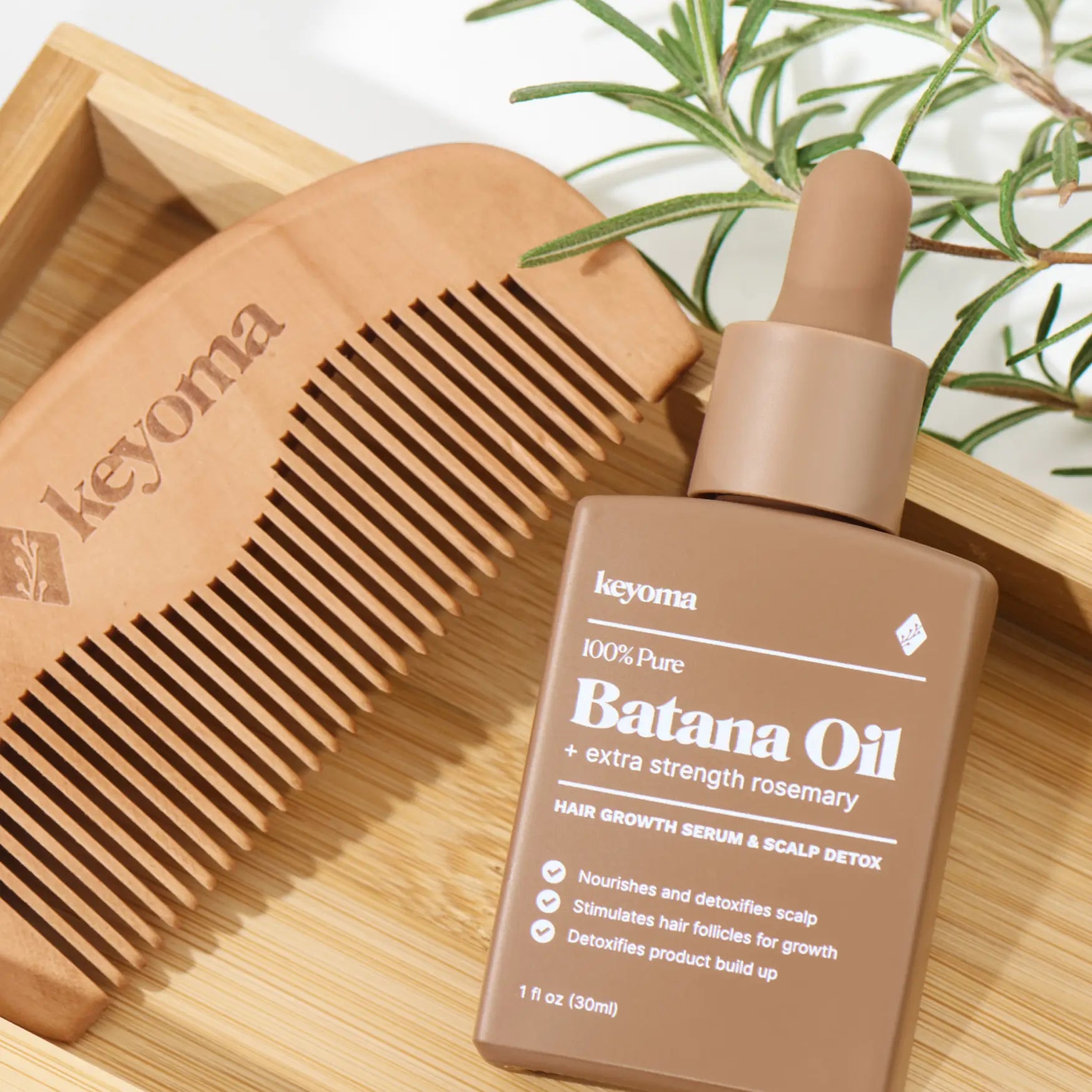
Place a minimal amount of Keyoma Pure Batana Oil and Rosemary Oil in one palm. Rub your hands together until the product forms a thin, even layer. Then run the fingertips of each hand across the opposite palm so the fingers doing the unraveling are lightly coated.
For this particular use, do not follow a scalp-treatment dose. Twist-out takedown requires much less product because you are using the remaining film on your hands rather than saturating the hair.
Start conservatively. You can add another small amount for later sections if your fingers lose their glide, but you cannot easily remove oil once it has transferred to the finished curls.
Unravel From the Ends Without Pulling the Strands Apart
Find the end of one twist and identify the direction in which the two sections were wrapped. Rotate the twist in the opposite direction until the strands begin to release on their own.
Work upward gradually. Do not rake your fingers down the twist or pull both sections sideways from the root. Either motion can disturb the curl pattern and place unnecessary tension on the ends.
If the tip catches, stop instead of pulling through it. Use the residue on your fingertips to roll or unwind the end gently. A resistant end does not automatically require another drop of oil. It may simply need slower handling.
The AAD’s everyday care recommendations for Black hair support gentle hair-care practices and caution against styling that causes pain or excessive tension.
Separate Only Where the Curl Naturally Divides
Unraveling removes the original twist. Separating divides the released section into smaller curls. Treating these as two separate actions gives you more control over the final balance of volume and definition.
After unraveling one twist, observe how the section falls. You may see places where the hair naturally divides into two or three smaller groups. Separate along those lines instead of forcing the section into equal pieces.
If definition is your priority, stop after one or two natural divisions. If you want more volume, continue separating selectively. Each additional division creates fullness, but it also increases handling and the chance of surface frizz.
A small amount of frizz is not necessarily a failed twist-out. It can help the style look fuller and less sculpted. The mistake is continuing to separate after you have already reached the amount of volume you wanted.
Fluff the Roots With Clean Hands or a Hair Pick
Once every twist has been unraveled and separated, remove any remaining oil from your hands before working at the roots. Wipe your fingers clean or wash and dry your hands if they still feel slick.
Slide your fingertips beneath the hair and lift gently at the crown. Avoid smoothing your palms over the outside of the style because that can transfer oil to the most visible areas and press down the definition.
If you use a hair pick, place it near the roots and lift slightly. Do not drag it through the defined lengths. The goal is to loosen the base of the style without combing out the curl pattern.
Adjust the Technique Without Adding More Oil Everywhere
When a twist-out does not look right, identify the location of the problem before adding anything else. Oil can reduce friction and add surface shine, but it cannot correct every source of frizz, dryness, or flatness.
|
What You Notice |
Likely Technique Issue |
What to Change Next Time |
|
Greasy or divided roots |
Oil reached the scalp or crown |
Keep the application below the root area |
|
A flat crown |
Too much oil or downward smoothing |
Stop adding product and lift with clean fingertips |
|
Frizzy ends |
The tips were pulled apart or handled too quickly |
Unwind the ends fully before separating |
|
Frizz throughout the style |
The hair was damp or separated too aggressively |
Allow more drying time and create fewer divisions |
|
One side looks oilier |
The product stayed concentrated on one hand |
Rub both palms and fingertips together more thoroughly |
|
Hair feels coated but still dry |
Oil was layered over hair that needed water-based conditioning |
Adjust the moisturizing stage during the next wash and set |
The last distinction is especially important. Oil can coat the strand and slow moisture loss, but it does not replace water or a water-based conditioning step. If the finished hair feels coated and brittle at the same time, adding another layer is unlikely to create the softness you want.
Keep the Next Twist-Out From Feeling Heavy
A successful takedown starts with understanding what is already in your hair. Leave-in conditioner, cream, gel, mousse, and oil can each serve a purpose, but layering all of them heavily can leave little room for a clean finish.
Notice how your hair responds rather than repeating the same dose automatically. If the twist-out stayed defined but lacked movement, reduce the finishing oil next time. If the roots looked fresh but the ends caught on your fingers, keep the same root placement and reserve a slightly larger share for the tips.
Avoid reapplying oil each time you see a stray strand. Repeated spot applications can build into an uneven coating, especially around the face where you are more likely to touch and reshape the hair.
Persistent waxiness, limp roots, and dull separated strands may point to signs of hair oil overuse. In that case, simplify the next routine rather than trying to balance the residue with another styling product.
Make Batana Oil the Finishing Step, Not the Main Styler
Use batana oil after your twists have dried and when your hands need a little more glide for takedown. Spread it thinly, work from the ends upward, and keep it away from the crown until you know how your hair responds.
The best stopping point is not when you have used a certain number of drops. It is when the twists are released, the ends feel comfortable, and the style still has natural movement.
For a simple finishing option, apply a minimal amount of Keyoma Batana Oil and Rosemary Oil across your hands before unraveling. Keep the application controlled, let the twist pattern provide the definition, and finish the roots with clean fingers for volume without the greasy look.
Featured Product
30% Off + 3 FREE Gifts
100% Pure Batana Oil + Rosemary


