

In this article
Batana oil and kukui nut oil can both soften dry hair, but they do not leave the same kind of finish.
Batana oil is the richer choice. It makes more sense when rough, porous lengths need extra cushioning or a washable pre-shampoo treatment. Kukui nut oil spreads more lightly, making it a better starting point when rich oils flatten your hair, separate your curls, or leave a visible coating.
Neither oil adds water to dry strands. They work best alongside a water-based conditioner, where they can add slip and help the hair retain its conditioned feel. They also cannot permanently repair a raised, weathered, or chemically damaged cuticle.
The useful question is not which oil has the longest list of benefits. It is which one leaves your hair softer without creating another problem at the next wash.
Key Takeaways
-
Batana oil provides a richer finish for rough, porous, dry-feeling lengths.
-
Kukui nut oil spreads lightly when heavy oils reduce movement or volume.
-
Apply either oil after conditioning when moisture retention is the goal.
-
Coating, stiffness, or persistent dryness means the routine needs adjustment.
Batana Oil vs Kukui Nut Oil at a Glance
Oil weight is a practical description of how an ingredient feels on the hair. It is not a standardized laboratory ranking.
Processing, refining, blending, and the amount applied can change the finish. Your strand diameter, density, damage level, and existing product buildup matter as well.
|
Comparison Point |
Batana Oil |
Kukui Nut Oil |
|
Relative feel |
Richer and more substantial |
More fluid and lighter-spreading |
|
Best starting role |
Pre-wash treatment or targeted seal |
Light seal or finishing step |
|
Strongest fit |
Rough, coarse, porous ends |
Dry hair sensitive to excess weight |
|
Main drawback |
May reduce movement or build up |
May not cushion severely rough ends |
|
Best placement |
Mainly mid-lengths and ends |
Mid-lengths, ends, and surface flyaways |
|
What it cannot do |
Permanently repair porosity |
Permanently repair porosity |
If you are unsure whether your hair is porous or simply coated, start by learning how to identify your hair porosity. Porosity can vary across your head, and dryness alone does not prove that every strand is highly porous.
How Batana Oil Behaves on Porous, Dry Hair
Batana oil has a richer sensory profile that gives rough strands a more noticeable coating. That can help coarse, dense, chemically treated, or weathered hair feel softer and easier to handle.
This richer finish is most useful when a light oil adds shine but leaves the ends feeling almost as rough as before. Batana oil can provide more cushioning between strands, which may reduce friction during washing, detangling, or styling.
The tradeoff is weight.
Fine strands or low-density hair may become limp with a quantity that works well on dense, coarse hair. Wavy hair may lose shape, while curls can separate into oily sections instead of forming soft, defined groups.
A controlled pre-wash treatment is often the safest place to begin. Apply a thin, even layer to the roughest mid-lengths and ends, leave it on for a short period, then shampoo normally. Because you plan to wash it away, you can assess its conditioning effect without committing to a heavy leave-in finish.
Batana oil can also be used over damp, conditioned ends. In that role, the amount should be much smaller. The goal is a barely visible film, not saturated strands.
Signs that you have used too much include:
-
Greasy sections that remain visible after drying
-
Limp roots or stretched curls
-
Waxy or sticky-feeling ends
-
Hair that attracts lint more easily
-
A need to shampoo the lengths repeatedly
-
Roughness that returns beneath a shiny coating
These signs do not mean batana oil is inherently unsuitable. They may mean the amount, placement, or application stage needs to change.
How Kukui Nut Oil Behaves on Porous, Dry Hair
Kukui nut oil comes from the seeds of the kukui, or candlenut, tree. Its fluid consistency allows it to spread across the hair with less concentrated weight than many richer oils.
Research examining the composition of kukui nuts and their oil reports a high proportion of unsaturated fatty acids. That composition helps describe the oil, but it does not prove that kukui oil penetrates porous hair deeply or repairs its internal structure.
Its practical value is the finish.
Kukui oil is a sensible starting point when your hair needs surface softness but loses volume under richer products. It can work well on fine, low-density, straight, or wavy hair, as well as curls that become stretched or separated when heavily coated.
Smooth a small amount over damp ends after conditioning, or use it as a dry-hair finisher for flyaways and dull areas. Its easier spread means you may be able to cover a larger section without leaving obvious oily patches.
That lightness also has a limit. Coarse, highly weathered, or chemically treated ends may look shinier after kukui oil yet continue to feel rough. In that case, the oil is polishing the surface without providing enough cushioning for the strand.
Kukui oil’s high level of polyunsaturated fatty acids also makes storage important. Keep it tightly closed and away from direct sunlight, heat, and moisture. A stale, sharp, or paint-like odor can indicate that the oil has oxidized and should no longer be used.
Choose Batana or Kukui Based on Your Hair’s Response

Hair type labels can narrow the choice, but the result after drying tells you more. Look at softness, movement, residue, and how easily the oil washes away.
Choose Batana Oil When Your Ends Stay Rough
Batana oil is the stronger candidate when conditioned hair feels soft while wet but turns coarse or difficult to handle after drying.
It may also be the better fit when:
-
Lightweight oils disappear without improving slip
-
Coarse or dense ends tolerate rich creams and butters
-
Bleached, heat-weathered, or porous sections need more cushioning
-
You want an oil primarily for use before shampooing
-
Your ends lose softness much faster than your roots
Strand width matters here. The best oils for coarse hair are often chosen by weight and application method rather than curl pattern alone.
Choose Kukui Nut Oil When Rich Oils Feel Too Heavy
Try kukui nut oil first when rich oils make your hair look darker, flatter, or separated.
It may suit you when:
-
Your hair needs shine without a dense coating
-
Waves collapse after oiling
-
Curls lose bounce or clump into greasy sections
-
Fine or low-density hair shows residue quickly
-
You want to smooth flyaways after styling
Kukui oil should improve polish without making individual strands stick together. If the ends look glossy but still feel coarse between your fingers, the finish may be too light for that section.
Use Neither as the First Fix When Hair Needs Water or Cleansing
Oil cannot replace shampoo, conditioner, or a water-based leave-in.
If unwashed hair feels dull, sticky, stiff, or coated, adding another oil can trap the problem under a new layer. Cleanse first, then assess the hair after conditioning.
Oil should also not be the first response when:
-
Water beads on top of product-coated hair
-
Conditioner does not spread evenly
-
The ends remain brittle under several product layers
-
Breakage continues despite frequent oiling
-
Split ends catch against neighboring strands
-
Severe chemical damage has changed the hair’s strength and elasticity
Split or severely weathered ends may need trimming. Oil can make them feel smoother temporarily, but it cannot reconnect a divided hair fiber.
Match the Oil to the Application Method

The same oil can feel helpful before shampooing and excessive after styling. Choose the job before judging the ingredient.
For a Pre-Wash Treatment
Batana oil is the stronger starting choice when you want rich conditioning before cleansing.
Divide the hair into workable sections. Spread a conservative amount over the rough mid-lengths and ends, concentrating on areas that tangle or lose softness first. Avoid saturating sections that already feel smooth.
Kukui oil can also be used before shampooing, but its lighter finish may offer more value after conditioning. If your hair resists almost every leave-in oil, testing kukui as a short pre-wash step still lets you assess its softness without carrying residue into your final style.
For Sealing Damp Hair
Oil works best as a sealing step after the hair has received water and conditioner.
Use this order:
-
Cleanse when the hair or scalp needs it.
-
Apply a water-based conditioner or leave-in.
-
Smooth a thin oil layer over the driest sections.
-
Let the hair dry fully before judging the result.
-
Check softness, movement, definition, and residue.
Choose batana for ends that need a richer layer. Choose kukui when preserving movement is more important.
If different areas react differently, adjust oil by porosity zone instead of applying the same quantity from roots to ends.
For Finishing Dry Hair
Kukui nut oil is the more logical first trial for light shine, flyaway control, and surface softness. Spread the oil across your palms before touching your hair, then skim the rough areas instead of squeezing oil directly onto one section.
Reserve batana oil for a tiny amount on ends that remain coarse after styling and tolerate richer products well.
Do not repeatedly add oil every time the hair looks dry. If the first layer disappears but the roughness remains, the hair may need water-based conditioning rather than another coat.
Run a Two-Wash Comparison Before Choosing
A side-by-side test gives you more useful information than an ingredient list alone.
Use the same shampoo, conditioner, styling products, and drying method so the oil remains the main variable.
-
Begin with clean, conditioned hair.
-
Choose two hidden sections with a similar texture and damage level.
-
Apply batana oil to one section and kukui oil to the other.
-
Use the smallest comparable amount you can distribute evenly.
-
Check each section after the hair dries completely.
-
Compare softness, shine, movement, detangling, and visible residue.
-
Reassess both sections after your next shampoo.
The winning section should feel easier to handle without needing harsher cleansing. If batana gives better softness but leaves residue, try it again as a pre-wash treatment. If kukui preserves movement but does not soften the ends, keep it as a finisher rather than your main conditioning oil.
Direct human-hair research comparing batana and kukui oil is lacking. A systematic review of several popular hair oils also shows why claims should remain ingredient-specific. Evidence found for coconut, castor, or argan oil cannot automatically be transferred to batana or kukui oil.
Your own controlled comparison cannot prove structural repair, but it can show which product creates the more manageable cosmetic result.
Can You Use Batana Oil and Kukui Nut Oil Together?
You can use both oils in one routine, but blending them immediately makes the comparison less useful.
Test them separately first. If each solves a different problem, assign each one a distinct job. Batana can serve as an occasional pre-wash treatment for rough lengths, while kukui can remain a light finishing oil.
This approach is easier to control than layering both oils across the entire head. It also helps you trace buildup, stiffness, or lost volume back to the correct product.
If you later blend them, prepare only a small amount and keep the mixture away from heat and direct sunlight. Stop using it if the odor or texture changes.
Choose the Finish Your Porous Hair Can Maintain
Choose batana oil when rough, porous ends need richer conditioning and tolerate added weight. Choose kukui nut oil when softness, shine, and movement matter more than a substantial coating.
If either oil leaves the hair dull, stiff, greasy, or difficult to cleanse, change the amount or move it to a different part of the routine. Persistent dryness under several oil layers is a sign to return to cleansing and water-based conditioning.
For hair that responds well to a richer treatment, Keyoma Pure Batana Oil with Rosemary offers a focused two-ingredient formula. Apply it according to the product directions and keep the comparison honest: the right oil is the one that gives your hair enough softness without taking away its natural movement.
Featured Product
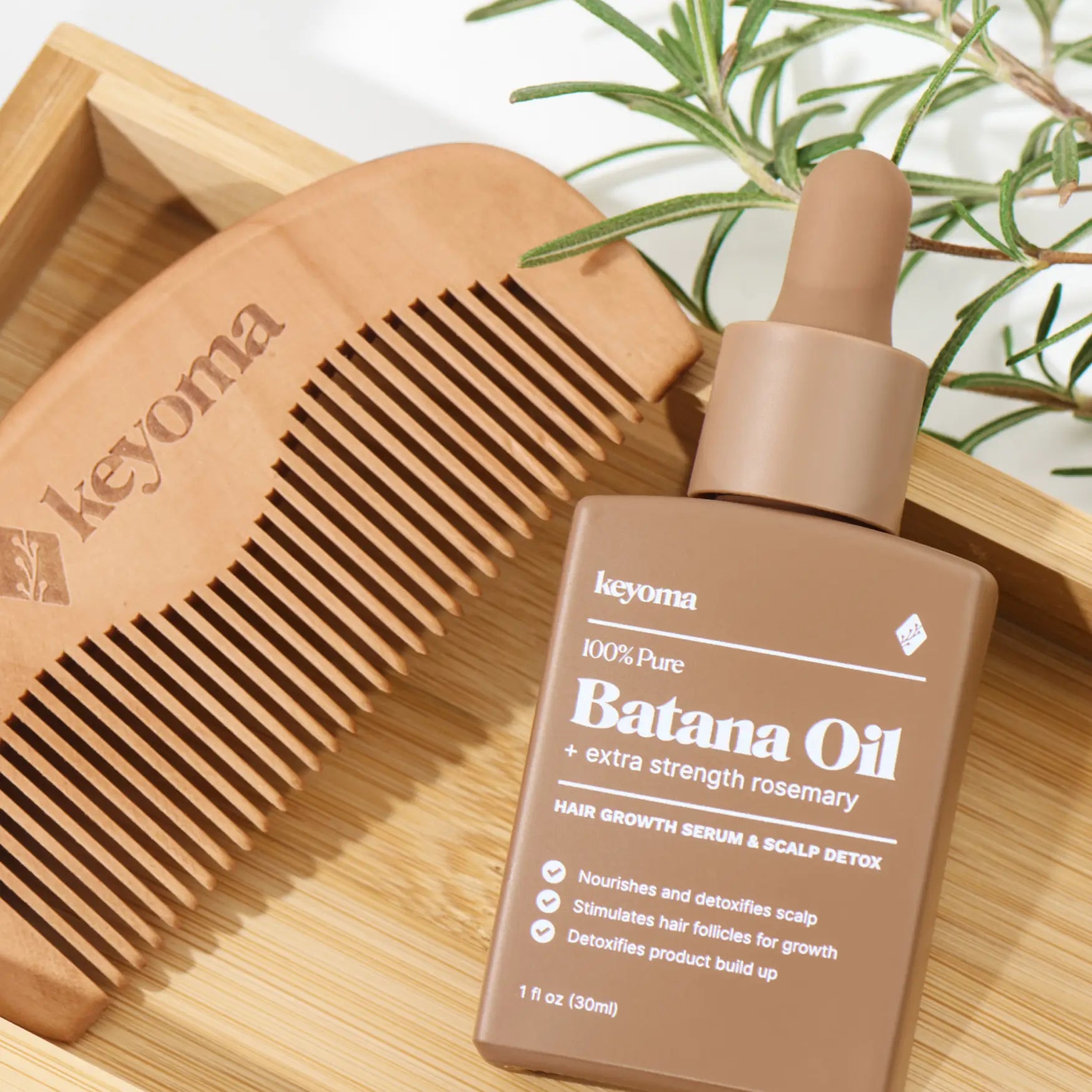
30% Off + 3 FREE Gifts
100% Pure Batana Oil + Rosemary


