

In this article
The best oils for tangled hair depend on how much weight your strands can handle. Argan and jojoba oil usually suit hair that needs light slip, while avocado, coconut, olive, and Batana oil can offer a richer coating for dry, thick, coarse, curly, or coily lengths.
Oil can make strands glide past each other more easily, but it does not add water to dry hair. If your hair feels stiff, rough, or difficult to separate, conditioner or a water-based leave-in should usually come first. Oil works best as a thin layer that reduces friction and helps hold in that moisture.
Choose by the result, not the oil’s popularity. A suitable oil leaves the ends softer while the hair still moves freely. An oil is too heavy when the strands separate into greasy pieces, lose volume, or feel coated without becoming easier to comb.
Which Oils Work Best for Tangled Hair?
The right oil should reduce friction without creating enough residue to attract buildup or flatten your style. The American Academy of Dermatology’s hair-care guidance recommends conditioner for moisturizing and detangling, followed by gentle combing from the ends upward. Oil can support that process, but it should not replace the product providing the main slip.
Laboratory research also supports the broader role of oils in reducing resistance between wet strands. A study of Brazilian plant oils and butters found that oil treatments reduced wet combing force, although the results differed by ingredient and treatment. The practical takeaway is not that every oil works equally well. Texture, amount, placement, and your hair’s condition all affect the result.
|
Oil |
Relative Weight |
Best Hair Fit |
Best Use |
Main Drawback |
|
Argan |
Light |
Fine to medium, straight, or wavy |
Finishing dry ends and light tangles |
Easy to overapply near the roots |
|
Jojoba |
Light |
Fine, low-density, or easily oily |
Sealing moisture into damp ends |
May feel insufficient on coarse dryness |
|
Sweet almond |
Light to medium |
Medium-density or moderately dry |
Softening rough ends before combing |
Not suitable for everyone with nut allergies |
|
Avocado |
Medium to rich |
Thick, curly, porous, or dry |
Damp-hair detangling and pre-wash care |
Can flatten fine hair |
|
Coconut |
Medium to rich |
Dry, porous, or damaged lengths |
Pre-wash protection |
Can leave some hair stiff or coated |
|
Olive |
Rich |
Coarse, dense, or highly textured |
Targeted pre-wash conditioning |
Heavy residue if applied broadly |
|
Batana |
Rich |
Dry, coarse, curly, coily, or dense |
Conditioning rough lengths and ends |
May be too rich for fine hair |
1. Argan Oil for Lightweight Slip
Argan oil works well when your ends catch on each other but heavier oils quickly make your hair flat. Its lighter feel makes it easier to spread across the outer layer without saturating the full section.
Use it as a finishing oil on slightly damp or dry ends. Rub a small amount between your palms, then skim your hands over the areas that feel rough. If your hair stays loose and movable, the amount is likely enough. If it looks stringy, reduce the amount rather than moving the oil farther up the hair.
Readers choosing between two common options can compare coconut oil and argan oil based on weight, timing, and the level of dryness involved.
2. Jojoba Oil for Fine or Low-Density Hair
Jojoba oil is a practical choice for fine hair that tangles but loses volume easily. It works best as a small sealing step after conditioner or leave-in rather than as the main detangling product.
Concentrate it on the final few inches of hair. Fine strands often need less product around the face and crown, where shine and separation become visible first. If your ends remain rough after a light application, add moisture before adding more oil.
The choice between Batana oil and jojoba oil usually comes down to weight. Jojoba favors light finishing, while Batana better suits hair that needs a richer coating.
3. Sweet Almond Oil for Softness Without Too Much Weight
Sweet almond oil sits between very light finishing oils and heavier pre-wash treatments. It can suit medium-density hair that feels dry at the ends but does not respond well to olive or coconut oil.
Apply it over damp, conditioned lengths when you want more softness without a thick finish. Avoid treating the whole head when only the ends are catching. Targeted placement gives you slip where needed while preserving movement near the roots.
People with almond or tree-nut allergies should review the product label and ask a qualified healthcare professional about personal risk before use. Stop using any oil that causes itching, swelling, burning, or a rash.
4. Avocado Oil for Dry, Thick, or Curly Hair
Avocado oil offers more weight than argan, jojoba, or sweet almond oil. That extra coating can help thick or curly strands that remain rough after conditioner and form knots where the lengths rub together.
It is most useful over damp hair or as a short pre-wash treatment. Work section by section and focus on the driest areas. If the roots look oily while the ends still feel rough, the problem is placement rather than a need for more oil.
Fine but highly porous hair may still benefit from avocado oil, although a rinse-out method often works better than leaving it in. Hair density and tolerance for residue matter as much as curl pattern.
5. Coconut Oil for Pre-Wash Protection and Stubborn Tangles
Coconut oil has the strongest direct hair-fiber evidence among the oils on this list. In a Journal of Cosmetic Science study indexed in PubMed, coconut oil reduced protein loss in damaged and undamaged hair when used before or after washing, while mineral and sunflower oils did not produce the same result. That finding supports coconut oil as a protective conditioning option, not as a universal detangler.
Use coconut oil before shampooing when your lengths feel dry, porous, or prone to friction. A pre-wash application allows you to gain some conditioning benefit while removing excess residue afterward.
Coconut oil does not suit everyone. Some hair feels firm, stiff, or coated after use. Stop adding more when the hair loses flexibility. A different oil or a conditioner-led detangling method may give better slip.
6. Olive Oil for Coarse Hair and Targeted Detangling
Olive oil is one of the richer options, so it fits coarse, dense, or highly textured hair better than fine or low-density strands. It can add useful lubrication when dry ends resist separation, but broad application often leaves more residue than needed.
Treat it as a targeted or pre-wash oil. Apply it to the sections where knots develop, then add conditioner before working through them. Avoid pouring oil directly over a compacted knot because the outside may become slippery while the tight center remains difficult to separate.
A rich oil should make handling easier, not require extra shampooing every time. If removal becomes difficult, use less or switch to a lighter option.
7. Batana Oil for Rich Conditioning on Dry Lengths
Batana oil belongs in the richer category. It makes the most sense for dry, coarse, curly, coily, or dense hair that still feels rough after lighter oils. Its role in a detangling routine is cosmetic: adding softness, coating dry lengths, and reducing friction during handling.
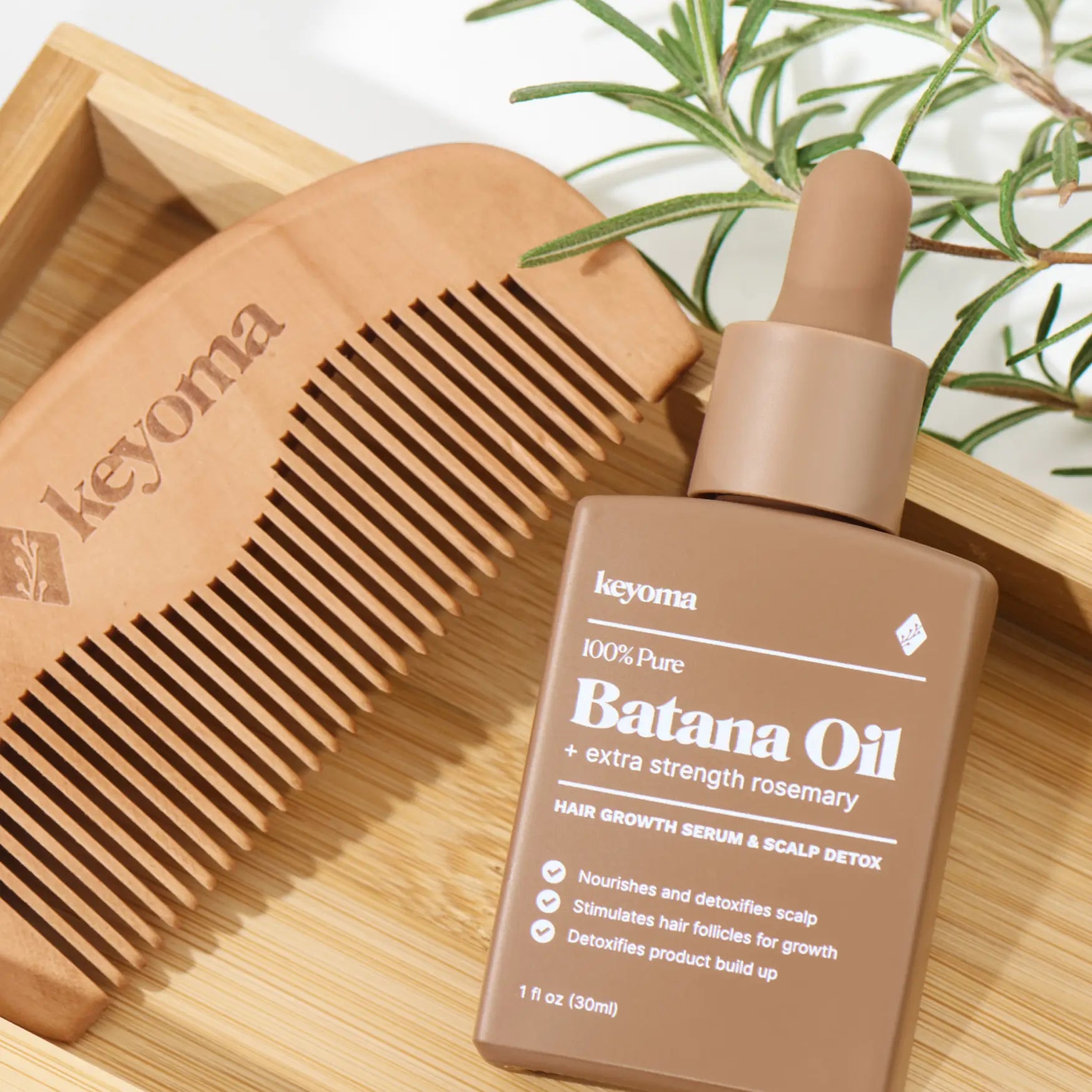
For a ready-made option, Keyoma Pure Batana Oil with Rosemary can be applied sparingly to rough mid-lengths and ends when richer conditioning fits your hair. The goal is better slip and a softer finish, not saturation.
Fine or easily oily hair can still use Batana oil, but timing matters. Try it as a pre-wash treatment instead of a leave-in finisher. Shampooing afterward reduces the chance of limp lengths while allowing the driest areas to receive a richer coating.
How to Choose Between Lightweight and Rich Oils
Hair type labels provide a starting point, but your hair’s response gives the clearest answer. Check how quickly the hair loses volume after oiling and whether roughness remains after conditioner. Hair that becomes flat quickly needs less weight. Hair that stays rough and catches despite conditioning may need a richer oil or more targeted application.
Oil cannot compensate for every source of tangling. Split ends, chemical damage, rough tools, tight styling, and delayed detangling can continue creating snags even when the oil itself is suitable.
Fine or Low-Density Hair
Choose argan or jojoba oil first. Sweet almond oil may also work when the ends need slightly more softness.
Apply oil from the ends upward, stopping well below the roots. Hair that looks smooth but still moves naturally is responding well. Hair that separates into shiny pieces or loses lift at the crown has received too much.
When you have oily roots and dry ends, treat each area differently. Clean the scalp as needed and reserve oil for the dry lengths instead of coating the whole head.
Curly, Coily, Thick, or High-Density Hair
Curly and coily hair often benefits from avocado, coconut, olive, or Batana oil because bends in the strand create more points where neighboring hairs can catch. Density also increases the number of strands interacting within each section.
Apply conditioner first, then divide the hair into manageable sections. Add oil only where the section still feels rough. A rich oil should support the detangling product beneath it rather than become the only source of slip.
Do not assume every curl pattern needs heavy oil. Low-density curls may respond better to jojoba or argan, especially when the roots flatten easily.
Bleached, Porous, or Damaged Ends
Damaged ends often absorb products unevenly and lose softness quickly. A medium or rich oil can temporarily smooth their feel and reduce friction, but it cannot rebuild a split or permanently repair a weakened strand.
Coconut oil may suit pre-wash protection, while avocado or Batana oil can cushion dry ends during handling. If breakage continues despite gentler detangling, look beyond oil and address the wider causes of hair breakage, including heat, chemical overlap, friction, and tight styling.
How to Use Oil for More Slip
Application order usually affects the result more than switching among several similar oils. A broader hair-oiling routine can include scalp or pre-wash care, but active detangling should stay focused on moisture, controlled sections, and gentle handling.
Add Water-Based Moisture or Conditioner First
Do not begin with oil when dry strands feel stiff or compacted. Wet or dampen the hair, then apply a conditioner or leave-in that provides enough slip for the strands to move.
Dermatologists recommend detangling thick or curly hair in the shower before rinsing out conditioner. For detangling between washes, the AAD advises thoroughly wetting curly hair, applying leave-in conditioner, and working in sections with your fingers or a wide-tooth comb.
Oil can follow as a light seal over the conditioned lengths. If the hair becomes easier to separate after conditioner alone, you may not need oil in every section.
Start With a Small Amount on the Lengths
Warm a small amount between your palms so it spreads in a thin film. Press it into the driest ends first, then use what remains on your hands for the mid-lengths.
Avoid adding more before distributing the first application. Rich oils can take only a small excess to turn soft hair into coated hair. Readers using Batana can follow more specific guidance on how much Batana oil to use based on hair length, density, and placement.
Keep oil away from an irritated scalp unless the product is intended for scalp use and you already know your skin tolerates it.
Detangle in Sections From the Ends Up
Divide the hair before introducing a comb. Large sections hide tight knots and encourage you to pull harder than needed.
Use your fingers to separate loose tangles. Hold the section above the knot to limit tension at the roots, then work through the ends with a wide-tooth comb. Move higher only after the lower portion passes through without resistance.
If the tool stops, do not force it. Add more conditioner or water and loosen the knot by hand. Oil can add surface slip, but additional oil will not always soften the center of a compacted tangle.
Common Oil Mistakes That Make Hair Harder to Detangle
Oil should lower resistance. When the hair feels sticky, rigid, stringy, or harder to separate, the routine needs adjustment rather than another layer.
-
Applying oil to dry, compacted knots: Add water and conditioner first. Oil alone may coat the outside without reaching the tightest part.
-
Saturating the roots to treat dry ends: Place oil where the friction occurs. Broad application creates weight without giving the ends more useful slip.
-
Using a rich oil as if it were conditioner: Olive, coconut, avocado, and Batana oil are concentrated. Begin with a thin coating and add more only after checking the result.
-
Pulling through a mat because the surface feels slippery: Dense tangles need slower separation. Follow a safer method for detangling matted hair without unnecessary breakage rather than forcing a comb through the center.
-
Ignoring buildup or irritation: Repeated heaviness, greasy roots, itching, odor, or scalp discomfort can point to side effects of over-oiling. Reduce the amount, cleanse thoroughly, and stop using any product that causes a reaction.
Reduced friction is not the same as permanent repair. Oil can make damaged ends feel smoother and help limit rough handling, but it cannot fuse split ends, reverse advanced damage, or prove that new hair growth will occur.
Choose the Best Oils for Tangled Hair and Reduce Snagging
Choose argan or jojoba when your hair needs light slip and loses volume quickly. Try sweet almond for moderate dryness. Avocado, coconut, olive, and Batana oil better fit strands that stay rough after conditioner or need a richer pre-wash coating.
Use conditioner or leave-in first, then apply the smallest useful amount of oil to the lengths and ends. Detangle in sections from the bottom upward. The best choice is the oil that makes combing easier while leaving your hair soft, flexible, and free from heavy residue.
Featured Product
30% Off + 3 FREE Gifts
100% Pure Batana Oil + Rosemary


