

In this article
Clary sage oil is one of the essential oils that often shows up in natural hair and scalp routines. It is not as popular as rosemary oil or peppermint oil, but people still use it for scalp balance, oily roots, and routines meant to support better hair growth conditions.
Essential oils do not make hair grow by themselves, but some may support scalp health, reduce buildup, balance oil levels, and help create a healthier setting for hair growth. Clary sage oil is usually part of scalp massage blends with carrier oils instead of being put straight on the scalp.
If you are looking into essential oils for hair growth or scalp care, clary sage oil is often included in hair oil routines, especially when the scalp feels oily or out of balance.
Key Takeaways
-
Clary sage oil may help support scalp balance and better conditions for healthy growth.
-
Proof of direct hair growth effects is still limited compared with rosemary oil.
-
People often use clary sage oil for oily, buildup-prone, or unbalanced scalps.
-
Clary sage oil needs dilution because using it directly may irritate the scalp.
What Is Clary Sage Oil?
Clary sage oil is an essential oil made from the Salvia sclarea plant, which is an herb related to common garden sage. Manufacturers usually extract the oil from the plant’s flowers and leaves through steam distillation. It has a slightly sweet, herbal smell and is commonly used in aromatherapy, skin care, hair care, scalp treatments, massage oils, and essential oil blends.
Like other essential oils, clary sage oil should not go on the scalp without dilution. People usually blend it with a carrier oil such as jojoba oil, argan oil, or batana oil before applying it to the scalp.
In hair care, clary sage oil is more often used for scalp balance, oily scalp routines, and massage than as a direct treatment for hair growth.
Benefits of Clary Sage Oil for Hair and Scalp
People usually reach for clary sage oil more for scalp care than for the hair shaft itself. A healthier scalp environment may support stronger hair and may help lower issues that can add to shedding or breakage.
May Help Support Hair Growth
Clary sage oil is sometimes added to hair oil blends because it may help support a healthier scalp environment, and that matters for steady hair growth. Research on clary sage oil itself for hair growth is still limited, so it makes more sense to describe it as a supportive scalp care ingredient than as a proven growth treatment.
Current evidence suggests that a 2015 clinical trial found rosemary oil performed similarly to 2% minoxidil over six months in people with androgenetic alopecia, which is one reason rosemary gets mentioned more often in hair growth routines. Clary sage oil is often combined with rosemary in those routines, but the direct evidence for clary sage is much more limited.
That is why you should not treat essential oils like standalone hair growth oils. What they may do is support scalp health, help distribute oil during massage, and fit into routines that reduce irritation and buildup over time.
Helps Balance Oily Scalp
One of the main reasons people use clary sage oil in hair care is for oily or uneven scalps. While there is not strong hair-specific research proving that clary sage oil lowers scalp oil by itself, it is often used in topical scalp care because it has a balancing and cleansing reputation.
In practical terms, that means it may fit best into routines for greasy roots, buildup-prone scalps, or hair that begins looking heavy too soon after washing. It is usually not selected as a rich oil for everyday moisture. It is used more often in light pre-wash scalp treatments.
Because of that, clary sage oil usually fits oily scalp routines better than routines for very dry or already irritated scalps.
May Help With Breakage
Clary sage oil is not a direct fix for split ends or weak lengths, but it may still help reduce breakage indirectly. When your scalp feels balanced and comfortable, it becomes easier to keep a routine that supports healthier hair overall.
The papers I saw show that better scalp care can support the environment where hair grows, even when an oil is not directly repairing damaged strands. Put simply, clary sage oil matters more at the scalp than at the ends of the hair.
That difference matters because breakage is usually caused by friction, dryness, heat, and direct strand damage. Clary sage oil may support the routine around healthier hair, but it should not be framed as a repair treatment by itself.
Improve Scalp Health
This is the point where clary sage oil makes the most sense. People often use it in scalp routines to support balance, comfort, and a cleaner-feeling scalp when it is properly diluted in a carrier oil.
Researchers observed that essential oil research for hair care usually focuses more on general scalp support than on dramatic growth claims. That is also the better way to think about clary sage oil. It may fit into a routine that supports scalp massage, helps carrier oils spread more evenly, and works alongside ingredients used for buildup or oil control.
Many essential oil routines work best when scalp health comes first and hair growth support comes second, because healthy hair still begins with a healthier scalp.
How to Use Clary Sage Oil for Hair
You should always dilute clary sage oil with a carrier oil before using it. Essential oils are highly concentrated, so direct application can irritate the skin.
Mix With a Carrier Oil
The most common way to use clary sage oil is to blend it with a carrier oil before you put it on the scalp.
Common carrier oils are jojoba oil, argan oil, coconut oil, batana oil, castor oil, and grapeseed oil.
One simple dilution method is to mix a few drops of clary sage oil into one tablespoon of carrier oil, stir it well, apply a light amount to the scalp, massage gently, and wash the hair afterward if you are using it as a pre-wash step.
Use for Scalp Massage
People often use clary sage oil in scalp massage routines, especially before wash day.
A simple massage routine can include blending clary sage oil with a carrier oil, applying a small amount to the scalp, massaging gently with your fingertips, working for around five minutes, leaving it on briefly, and washing the hair afterward. For me, shorter pre-wash timing tended to feel easier to manage.
Add to Shampoo or Conditioner
Some people mix a few drops of clary sage oil into their conditioner or shampoo to support scalp care. Use only a small amount, combine it with the product in your hand, use it once or twice weekly, keep it away from your eyes, and stop if your scalp becomes irritated.
Use in a Weekly Hair Oil Routine
Clary sage oil is usually used as part of a weekly hair oil routine instead of daily use. A simple weekly routine may include occasional scalp exfoliation if buildup is present, blending clary sage oil with a carrier oil, massaging the scalp, leaving the oil on briefly, washing the hair, and repeating the routine weekly or every two weeks.
People often pair clary sage oil with rosemary oil, peppermint oil, lavender oil, and carrier oils such as batana oil or jojoba oil. I noticed lighter blends tended to feel less heavy on the scalp.
Potential Side Effects of Clary Sage Oil
Like any essential oil, clary sage oil may irritate the scalp if you use it the wrong way.
Possible side effects include itching, skin irritation, allergic reaction, redness, burning if it is not diluted, and extra sensitivity on an already irritated scalp.
To use it more safely, always dilute it with a carrier oil, patch test before first use, avoid broken or irritated skin, avoid overuse, stop if irritation shows up, keep it out of your eyes, and speak with a professional if you already have scalp conditions.
Essential oils make more sense as supportive scalp care ingredients, not as medical treatments.
Use Clary Sage Oil for Hair for Scalp Balance
Clary sage oil is an essential oil that people commonly use for scalp care, oily scalp balance, and hair oil routines. It does not directly grow hair by itself, but when you use it correctly, it may help support scalp health, oil balance, and a healthier setting for hair growth.
It works best when diluted with a carrier oil and used through scalp massage or weekly oil treatments instead of heavy daily oiling. Many people pair clary sage oil with rosemary oil or with carrier oils in a simple scalp care routine.
In most routines, the real goal is not just using essential oils. It is keeping the scalp balanced, clean, and healthy, because healthier hair growth starts with a healthier scalp.
Featured Product
30% Off + 3 FREE Gifts
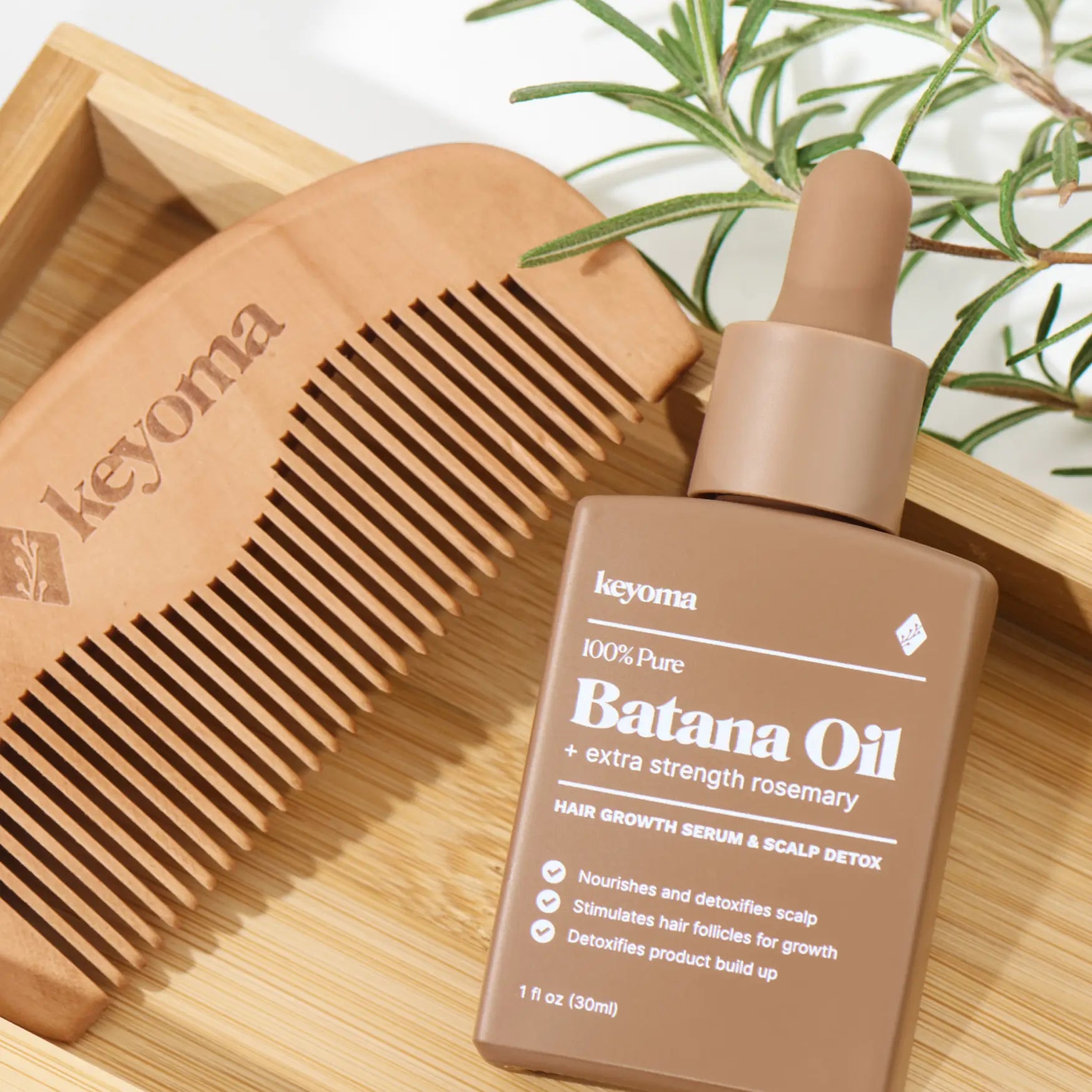
100% Pure Batana Oil + Rosemary


