

In this article
Regular hair oil should not replace a dedicated heat protectant. A pure oil or finishing oil can soften rough ends, add shine, and reduce friction, but those benefits do not prove protection from a blow dryer, flat iron, or curling iron.
The exception is an oil-based serum or finished hair oil specifically formulated and labeled for thermal protection. In that case, the whole formula matters, not the presence of oil. Follow its directions for application order, hair condition, and styling tools.
A safer approach separates three jobs: condition the hair, protect it before heat, and finish the style afterward. This helps prevent buildup without leaving strands unprotected.
Key Takeaways
-
Regular hair oil is not a substitute for tested heat protection.
-
A heat-protectant oil must carry a clear thermal-protection claim.
-
Apply products according to whether hair should be damp or dry.
-
Use finishing oil after styling for softness, shine, and frizz control.
Can Hair Oil Replace Heat Protectant?
For most pure plant oils and finishing oils, the answer is no. The American Academy of Dermatology recommends using a product made to protect hair from heat, limiting hot-tool use, and choosing low or medium heat. An oil that promises only shine, softness, nourishment, or frizz control does not meet that standard.
Do not judge protection by how slick the hair feels. A strand can feel coated while receiving uneven protection. The product must spread consistently and protect the fiber under the conditions named on its label.
|
Product Type |
Main Purpose |
Heat Claim |
Typical Timing |
Best Fit |
|
Regular hair oil |
Softness, shine, slip, and conditioning |
Usually none |
Pre-wash or after styling |
Dry lengths, rough ends, and surface frizz |
|
Heat-protectant oil |
Conditioning plus thermal protection |
Clearly stated |
Damp or dry hair, based on directions |
One product for conditioning and protection |
|
Conventional heat protectant |
Reduce damage during thermal styling |
Clearly stated |
Before the named heat tool |
Blow-drying, flat ironing, or curling |
A cooking oil’s smoke point does not answer the hair-care question. It does not show how evenly oil covers hair, whether it limits keratin damage, or whether it reduces breakage during repeated styling.
Why Hair Oil and Heat Protectant Do Different Jobs
Oil and heat protectant can look similar, especially when both are sold as serums. Their names are less useful than their claims and instructions. Keyoma’s overview of the difference between hair oil and hair serum provides more product context, but the decision before hot tools stays simple: look for a clear heat-protection function.
What Regular Hair Oil Can Do
Regular hair oil mainly conditions and grooms the strand. It can reduce the rough feel of dry ends, add surface shine, improve slip, and make tangles easier to manage. Used before shampooing, it can also cushion dry lengths during washing.
Evidence remains ingredient-specific. A systematic review of coconut, castor, and argan oils found different levels of support for hair-quality claims. It did not establish plain oils as protectants against hot tools. Keep oil in a conditioning role through a balanced hair oiling routine.
What a Tested Heat Protectant Is Designed to Do
A heat protectant is formulated to create a controlled layer over the fiber. Film-forming polymers and other conditioning agents may help reduce surface damage, moisture loss, and combing breakage.
A study of polymer pretreatments before repeated flat ironing found that selected polymers reduced breakage and protected the hair surface and cortex from thermal degradation. The results support formulation-based protection, not the idea that every plant oil works the same way. Protectant lowers risk, but temperature, contact time, repeated passes, and styling frequency still matter.
When a Hair Oil Can Provide Heat Protection
A hair oil can serve as heat protection when the finished product is designed for that purpose. Words such as oil, serum, natural, or nourishing do not settle the question. The label does.
Look for an Explicit Heat-Protection Claim
Check for wording such as heat protection, thermal protection, blow-dry protection, or protection up to a stated temperature. Any temperature claim should belong to the finished formula, not an online list of an ingredient’s smoke point.
Also check which tools the claim covers. A formula intended for blow-drying is not automatically meant for direct contact from a flat iron. Avoid homemade oil-and-water sprays, which may separate and deliver uneven coverage without a suitable emulsifying system.
Check Whether It Is Made for Wet or Dry Hair
Some heat-protectant oils belong on towel-dried hair before blow-drying. Others are designed for fully dry hair before a flat iron or curling iron. Using the right formula at the wrong stage can leave sections undercoated, sticky, or too damp for direct heat.
Water changes how hair responds to thermal styling. Research on water and heat-styling damage supports treating wetness as part of the risk. Before direct contact heat, make sure hair is fully dry and any wet-applied protectant has dried as directed.
How to Use Hair Oil and Heat Protectant Together
Using both products does not require a heavy routine. Give the heat protectant priority, then add regular oil only where it improves the finish. Fine hair may need no extra oil before styling, while coarse or porous ends may tolerate a light layer.
Before Blow-Drying Damp Hair
Blot excess water instead of rubbing. Apply heat protectant according to its label, distribute it through the sections receiving hot airflow, and detangle gently. If the formula is already a heat-protectant oil, another oil underneath may be unnecessary.
Keep the dryer moving rather than concentrating heat on one spot. In a study comparing hair-dryer distances and temperatures, surface damage increased as temperature rose. When using a separate regular oil, keep it light and limit it to dry mid-lengths or ends.
Before Flat Ironing or Curling Dry Hair
Dry the hair completely. Apply only a protectant whose instructions allow use on dry hair, distribute it evenly, and let any dampness settle before the tool touches the section.
Use the lowest effective setting and avoid repeated passes. A study evaluating heat damage in flat-ironed hair found changes in hair protein structure and cuticle damage. Ordinary oil may change the strand’s feel and shine without providing the tested film needed for direct heat.
After Styling for Softness and Shine
Once hair has cooled, regular oil can return to the job it does best. Spread a small amount between your palms and touch the driest mid-lengths and ends first. Use what remains for flyaways rather than adding fresh oil near the roots.
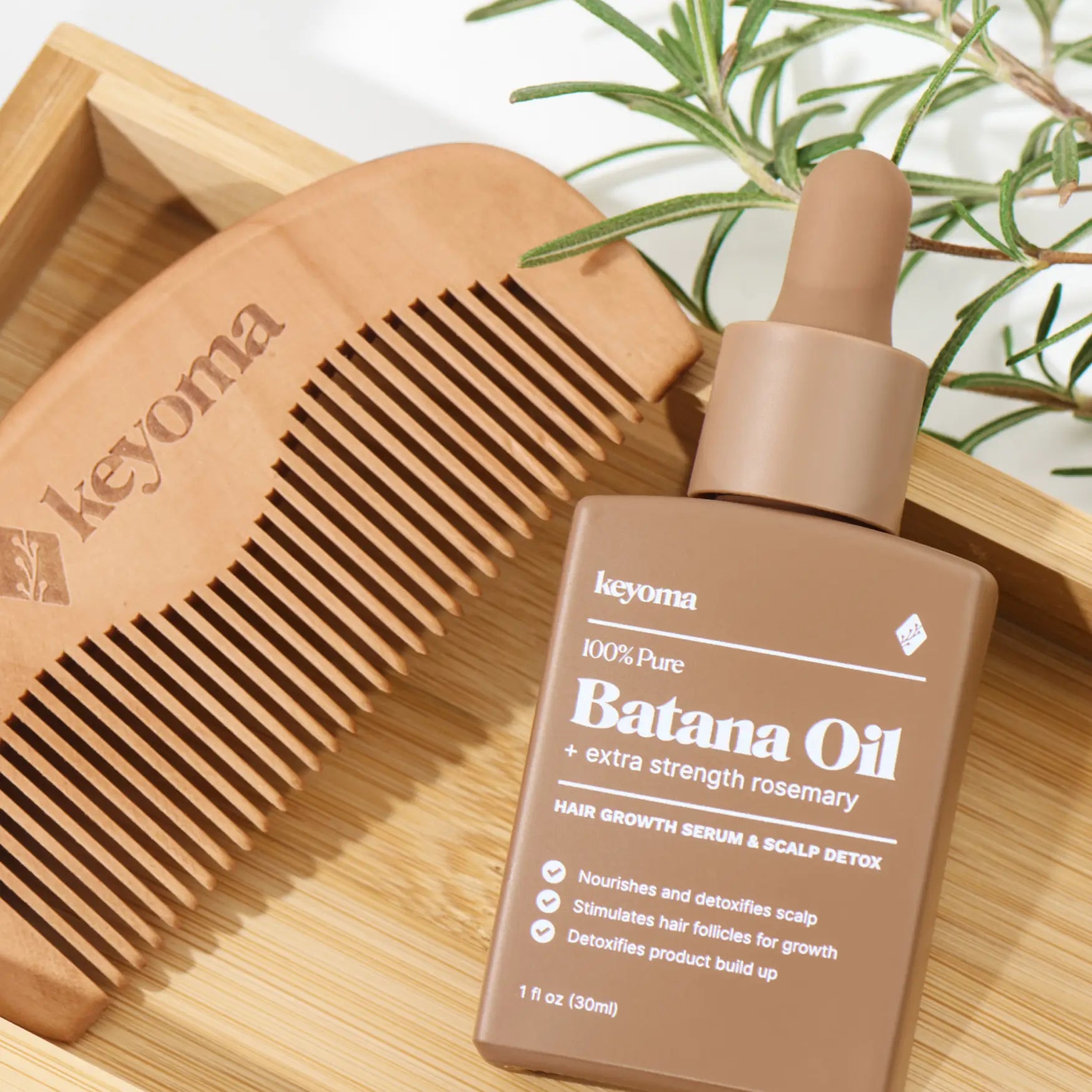
For a richer finishing option, Keyoma Batana Oil can fit after heat styling as a light cosmetic step for softness, shine, and reduced friction. It should not replace the protectant used before hot tools or be given an assumed temperature rating.
Fine hair needs less, while coarse, curly, or porous ends may accept more. Add thin layers and stop before strands separate or lose movement. Keyoma’s tips on how to use batana oil after heat styling explain placement in more detail.
Common Heat-Styling Mistakes to Avoid
Heat damage often builds through repeated exposure, high settings, slow passes, uneven coverage, and styling hair that is still damp. Avoid these common errors:
-
Choosing a regular oil because its smoke point sounds high.
-
Applying protectant only to the visible top layer.
-
Flat ironing hair that still feels cool or damp inside.
-
Raising the temperature because protectant was applied.
-
Layering rich products until the hair feels coated.
Too much oil can create buildup, flat roots, or scalp discomfort without adding protection. Check the side effects of over-oiling hair if greasy residue or irritation keeps returning.
If frequently styled sections begin snapping, shift from polish to prevention. Reduce repeated passes, loosen tension, and use proven ways to reduce heat-related hair breakage.
What to Do If Your Hair Shows Heat Damage
Pause or reduce hot-tool use when hair becomes rougher, tangles faster, loses flexibility, or develops uneven short pieces and split-looking ends. Choose gentler drying, condition consistently, and trim ends that continue to split. Oil can smooth the feel and appearance, but it cannot restore a burned or fractured shaft to its original structure.
Compare the pattern with Keyoma’s overview of the signs and care for heat-damaged hair. That resource covers broader recovery and prevention, while the question here stays focused on whether your oil carries a genuine thermal-protection claim.
Stop styling and seek professional guidance for a scalp burn, blistering, persistent pain, or sudden severe breakage. A dermatologist can also help when apparent breakage comes with patchy loss, widening scalp visibility, inflammation, or shedding from the root.
Answer “Can Hair Oil Replace Heat Protectant?” Safely
Read the label by function rather than trusting texture. If it promises conditioning or shine only, use it as an oil. If the finished formula clearly provides heat protection for your chosen tool and hair condition, follow those directions as your protective step.
Keep the order clear: protect before heat, style with control, then finish lightly. Hair oil can support softness and shine without being asked to perform a job the formula was never tested to do.
Featured Product
30% Off + 3 FREE Gifts
100% Pure Batana Oil + Rosemary


