

In this article
You can apply hair oil over gel or mousse, but timing matters. If you want to soften a firm styling cast, wait until your hair is completely dry. Then spread a trace of oil across your palms and gently scrunch your curls.
Applying oil underneath wet gel or mousse is a different technique. It may work in some routines, but it can also change the hold, volume, drying time, or finish of the styling product.
The decision is not simply whether oil goes first or last. It depends on what your hair feels like, what you want the styler to do, and whether the finished style needs anything added at all.
Key Takeaways
-
Apply oil over gel or mousse only after your hair has dried completely when you want to soften a firm cast.
-
Oil is optional because many gels and mousses already dry with a soft, flexible finish.
-
Applying oil beneath a wet styler is a separate layering method that can change its hold and volume.
-
Start with the lightest possible coating on your palms and keep richer oils away from the roots.
Decide Based on When and Why You Want to Use the Oil
“Applying oil over gel or mousse” usually means using oil as a finishing product after the styler has dried. It does not mean smoothing oil onto hair while the gel or mousse is still wet and setting.
That distinction matters because the two methods have different goals.
Oil applied over a dry cast may add slip to your hands as you scrunch. It can also leave the ends looking shinier and feeling more flexible. Oil applied earlier in a wet-styling routine becomes part of the product layering underneath the hold product.
Use the state of your hair to choose the next step:
|
What You Notice |
What to Do |
Why |
|
Your hair is still wet or damp |
Wait before applying oil |
Handling the hair now can disturb the clumps before the styler sets |
|
Your hair is dry with a firm cast |
Use a trace of oil if desired |
The oil can add slip while you gently soften the cast |
|
Your dry hair already feels soft |
Skip the oil |
More product may reduce volume or leave a coated finish |
|
Your roots become greasy easily |
Keep oil on the lengths and ends |
Root application can make the finished style look flatter |
|
Your hair has little hold |
Do not add oil yet |
The issue may involve the styler amount or application technique |
|
Your hair feels sticky or waxy |
Stop layering products |
The stiffness may come from residue rather than a normal cast |
A cast is the firm outer layer that some gels and mousses create as they dry. It helps hold curl clumps in place during the drying process. Once the hair is fully dry, you can leave the cast intact for stronger hold or soften it for a more touchable finish.
How to Scrunch Out a Gel or Mousse Cast With Oil
Before reaching for oil, confirm that your hair is fully dry. The roots and inner layers often remain damp longer than the visible surface. Scrunching too soon can separate the clumps and create frizz before the styler has finished setting.
Once your hair is dry:
-
Place one small drop or a trace of oil in your palm.
-
Rub your hands together until both palms feel lightly coated rather than wet.
-
Cup the ends of one section without rubbing the strands.
-
Scrunch upward toward the scalp using slow, gentle compressions.
-
Release the section and move to another area.
-
Stop when the cast feels flexible enough for your preferred finish.
-
Lightly fluff the roots with clean fingertips only if you want more volume.
The amount on your hands should be difficult to see. If your palms look glossy or the oil collects between your fingers, you probably have more than you need for the first pass.
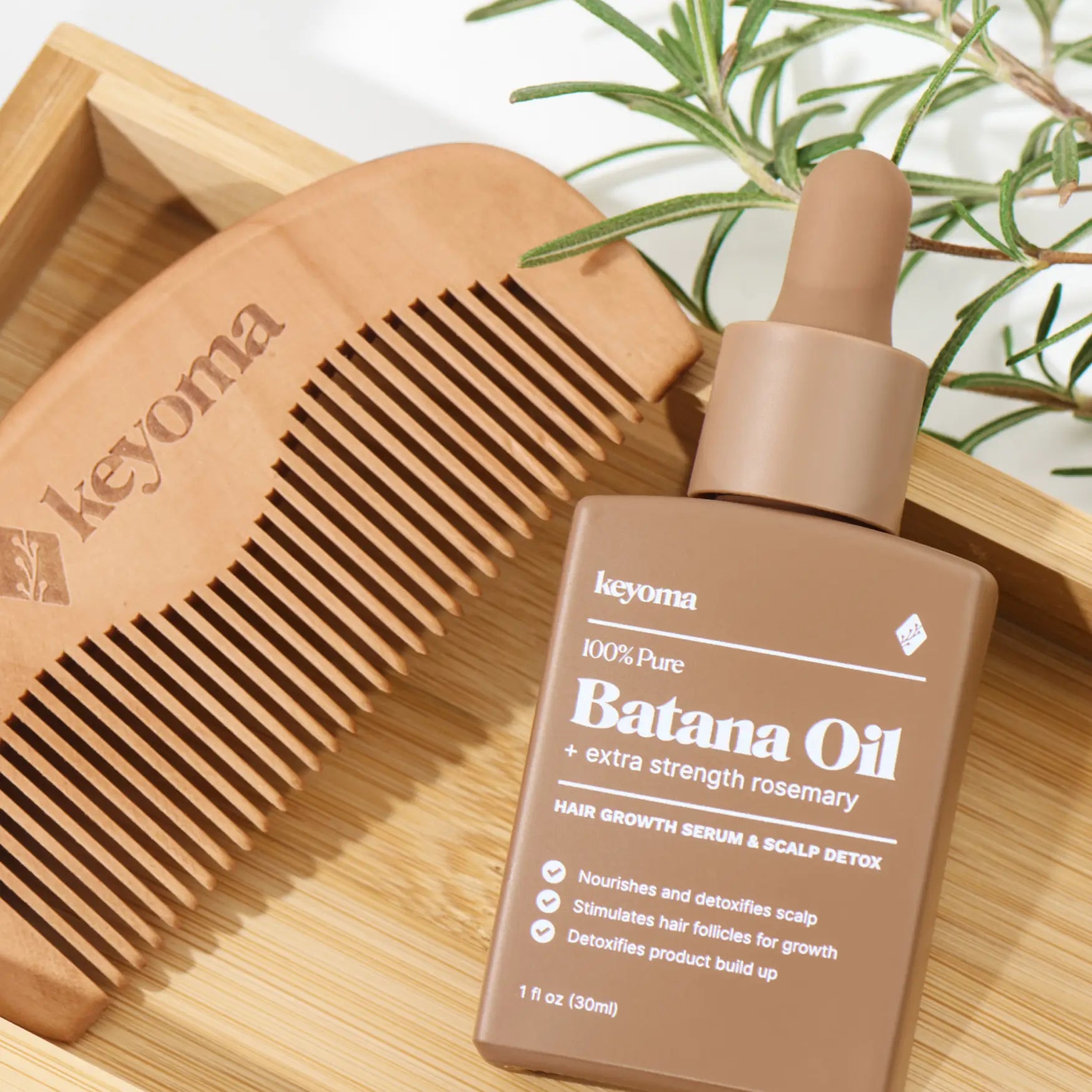
A richer finishing oil requires an especially light hand. You can use a trace of Keyoma Pure Batana Oil with Rosemary Oil on your palms before gently scrunching the lengths and ends. Start with the smallest amount you can spread evenly, then stop before the hair begins to look separated or coated.
Oil is not required to release a cast. Try scrunching one section with clean, dry hands first. If the cast softens without creating friction or frizz, you may not need another product.
Gentle handling also protects more than the finished appearance. The American Academy of Dermatology recommends minimizing unnecessary brushing and warns that combing after applying a long-lasting hold product can contribute to breakage. Once gel or mousse has set, use your hands instead of repeatedly combing through the style. You can find more guidance in the AAD’s recommendations for styling hair without damage.
Applying Oil Beneath Wet Gel or Mousse Is a Different Technique
Using oil before a wet styler is not the same as scrunching out a dry cast.
When oil sits beneath gel or mousse, it becomes part of the foundation of the style. That foundation may affect how easily the styler spreads, how strongly it grips the hair, and how much volume remains after drying.
This does not mean oil always prevents gel or mousse from working. Styling formulas vary. Hair density, oil texture, product quantity, water content, and application method also affect the outcome.
Still, adding a rich oil beneath mousse can make it harder to preserve airy volume, especially on fine or low-density hair. Too much oil beneath gel may also produce softer hold than expected. For someone who wants maximum definition or longevity, that may be the wrong tradeoff.
Test the styler on its own before building a longer layering routine. Once you know how the gel or mousse performs without oil, you can tell whether adding oil improves the result or simply adds weight.
Avoid changing several variables during the same wash day. If you switch the leave-in, add oil, double the gel, and change your drying method, you will not know which adjustment caused the difference.
Choose Between Gel and Mousse Before Adding Oil

Oil should support the finished style rather than compensate for the wrong hold product. Decide whether gel or mousse better matches your goal before considering a finishing step.
Use Gel When You Want Stronger Hold or a More Noticeable Cast
Gel generally works well when you want defined clumps, stronger frizz control, or a style that stays structured for longer. A firm cast is more common with strong-hold gels, although the result varies by formula and amount.
Because gel can create a more noticeable shell around the curl clumps, there may be more stiffness to release after drying. You can soften that cast without removing all its structure. Stop scrunching when your curls feel flexible but still hold their shape.
If you keep crushing, separating, and fluffing the hair after the cast has released, you may trade definition for volume and frizz. That may be intentional, but it should be a choice rather than an accident.
Use Mousse When You Want Lighter Hold or More Volume
Mousse usually suits routines where lift, movement, and a less coated finish matter more than maximum hold. Some mousses form a light cast, while others dry soft enough that no cast-softening step is necessary.
Assess the result before adding oil. If the mousse already leaves your curls flexible, finishing oil may reduce the airy effect you selected the mousse to create.
This is especially relevant for fine or low-density hair. The roots may look full immediately after drying but lose lift once a rich product is smoothed over them. Keep oil on the ends or skip it entirely if preserving volume is the main goal.
Adjust the Amount of Oil to the Finished Style
Hair length alone should not determine how much oil you use. Density, strand thickness, the strength of the cast, and the oil’s texture all matter.
Use these amounts as conservative starting points:
-
Fine, short, or low-density hair: Rub a trace between your palms, then apply only what remains on your hands.
-
Medium-density curls: Begin with one small drop distributed across both palms.
-
Dense or coarse hair: Start with one drop and add another only if the ends still feel rigid after the first pass.
-
Very dry-feeling ends: Press the remaining palm residue onto the ends instead of applying more through the full length.
-
Volume-focused styles: Keep oil away from the roots and crown.
Do not measure success by how soft the hair feels after every pass. A well-set style can retain a little structure. Trying to eliminate every trace of firmness may lead you to add more oil than the hair can carry.
Oil and serum can also create different finishes. If you want surface slip with less richness, understanding the difference between hair oil and serum can help you choose a finishing product that better matches your density and styling goal.
Troubleshoot the Finished Result

A finishing step should make the style easier to wear. If it creates a new problem, use the result as feedback for your next wash day instead of immediately adding another product.
Curls Look Greasy or Flat
Greasy or flat curls usually mean the application was too heavy, too close to the roots, or unnecessary for that particular style.
The problem may be more noticeable when you apply a rich oil to fine hair, use oil over an already soft mousse finish, or add a full new dose instead of using a trace on your palms.
Do not try to correct flatness by adding more mousse to dry, oiled hair. That can create uneven hold or visible residue. Instead, blot obvious excess gently if possible and reduce or skip the oil next time.
If heaviness continues across several styling days, check for other signs you may be using too much hair oil before adding more products to the routine.
Cast Will Not Soften
A cast that remains firm does not always need more oil. Your hair may still be damp underneath, or the styler may simply have a stronger hold than expected.
Wait longer, then try scrunching again with clean hands. If the cast still feels unusually hard, consider whether you applied more gel or mousse than usual.
Sticky, waxy, or uneven stiffness may not be a normal cast. It can point to excess styling product or residue from an earlier wash. Learning why hair can feel stiff after air-drying can help you separate a cast from buildup, dryness, or another routine issue.
Hair Turns Frizzy During Scrunching
Frizz during cast removal often comes from timing or technique rather than too little oil.
Your hair may not be completely dry. You may also be rubbing the strands between your hands, pulling clumps apart, or repeatedly touching the same sections.
Use a cupping motion instead. Place the ends in your palm, lift them toward the scalp, compress gently, and release. Avoid raking your fingers through the curl pattern after it has set.
Styler Pills or Leaves Flakes
Flakes can appear when products do not layer well, too much styler is applied, or the hair is handled before the formula dries. Adding oil after flaking begins usually does not solve the underlying problem.
Before your next wash day, combine a tiny amount of the oil and styler in your palm. If the mixture immediately clumps, rolls, or separates, the products may not layer smoothly. This palm test is only a practical screening tool. It cannot guarantee how the combination will perform once water, leave-in conditioner, and your application technique enter the routine.
The cleaner test is to use the gel or mousse alone, then add oil only after the hair dries.
Run a Controlled One-Wash Comparison
You do not need to rebuild your entire routine to find out whether finishing oil helps. Compare two similar wash days while changing only one step.
On the first wash day, apply your usual leave-in and gel or mousse. Let the hair dry completely, then soften the cast with clean hands. Note the hold, volume, shine, softness, frizz, and next-day feel.
On the next comparable wash day, repeat the same amounts and drying method. This time, use the smallest practical amount of oil when you scrunch the dry cast.
Compare the results:
-
Did the oil make the ends feel more flexible?
-
Did it create useful shine or a greasy coating?
-
Did your roots lose volume?
-
Did the curl clumps stay defined?
-
Did the style hold as well the next day?
-
Did you need oil everywhere, or only on the ends?
This comparison gives you more useful information than following a fixed rule based only on curl type. Two people with similar curl patterns can need different finishing routines because their density, strand thickness, products, and preferred results are different.
Finish the Style Without Undoing It
Hair oil can work over gel or mousse, but it should have a clear job. Use it after your hair dries when you want extra slip while softening a cast, a little shine, or more flexibility at the ends.
Start with less than you think you need. Keep the oil away from the roots when volume matters, and stop as soon as the cast reaches the finish you want.
Most importantly, do not add oil simply because a styling routine says it belongs there. If your gel or mousse already leaves your curls soft, defined, and balanced, the better finishing step may be no additional product at all.
Frequently Asked Questions
Can you put oil on your hair after gel?
You can put oil on your hair after gel once the hair and gel cast are completely dry. Use a very small amount on your palms and scrunch gently to avoid weighing down the finished style.
Can you put hair oil over mousse?
You can put hair oil over mousse after your hair dries, particularly when the mousse creates a firm cast. If the mousse already dries soft and flexible, you may not need oil.
Should you apply oil before or after mousse?
You can apply oil after dry mousse as a finishing step. Applying oil before wet mousse is a separate layering method that may change the mousse’s volume, hold, or finish.
Do you need oil to scrunch out a gel cast?
You do not need oil to scrunch out a gel cast. Clean, dry hands may be enough, while a trace of oil can provide extra slip or shine when the ends feel firm.
Why did oil make my curls look flat?
Oil may make curls look flat when you use too much, apply it near the roots, or choose a texture that is too rich for your hair. Use less, limit it to the ends, or skip it on volume-focused styling days.
Can you add more gel after applying hair oil?
Adding more gel after applying hair oil to dry, styled hair can create patchy hold, flakes, or residue. If your style needs more hold, adjust the gel amount during your next wet-styling routine.
Featured Product
30% Off + 3 FREE Gifts
100% Pure Batana Oil + Rosemary


