

In this article
You can use hair oil and a red light therapy cap within the same hair-care routine. However, this does not mean you should wear the cap while oil is on your scalp.
Some red light and low-level laser therapy devices require clean, dry hair. Others provide different preparation instructions. The manual for your exact cap should determine how you prepare your scalp, complete each session, and clean the device.
When the manual does not address hair oil, the cautious option is to use the cap first and apply your oil afterward. This keeps oil away from the device without suggesting that either step improves the results of the other.
Key Takeaways
-
Check your device manual before combining scalp oil with a light therapy session.
-
Many red light devices require clean, dry hair before each scheduled treatment.
-
Applying oil afterward helps prevent residue from collecting inside the therapy cap.
-
Stop using either product if you develop persistent redness, burning, or discomfort.
Can You Use Hair Oil With a Red Light Therapy Cap?
Using hair oil and a red light therapy cap during the same week may fit your routine. Using them at the same time is a separate decision.
Red light therapy caps, laser caps, and helmets do not all have identical instructions. Manufacturers set specific directions based on the design, power source, treatment schedule, materials, and intended use of each device.
For example, iRESTORE tells users to start with clean, dry hair and avoid using its helmet on wet hair. Instructions for some HairMax devices state that hair may be wet, dry, or damp. These differences show why advice for one product should not be applied to every cap.
Before using scalp oil with your device, check its manual for instructions about:
-
Clean or freshly washed hair
-
Dry, damp, or wet hair
-
Topical scalp products
-
Medicated treatments
-
Treatment frequency
-
Cleaning the inner surface
-
Photosensitivity warnings
-
Scalp irritation or broken skin
If the instructions require clean hair or prohibit topical products, do not wear the device over hair oil. If the manual says nothing about oils, ask the manufacturer for guidance or complete the light session before applying your oil.
This article focuses on routine order and safety. For a wider look at the technology, read about how laser hair-growth caps work.
Why the Device Manual Comes First
A red light therapy cap is not a regular hat or passive hair-care accessory. It delivers light according to a schedule set for that specific model.
One manufacturer may direct users to complete a short session several times per week. Another may require a longer session every other day. More time or more frequent use does not automatically produce better results.
The same model-specific approach applies to scalp preparation. A blog, social post, or instruction for another brand cannot replace the manual included with your device.
You may also see terms such as “FDA-cleared” on certain laser caps. A 510(k) clearance means the FDA found a device substantially equivalent to a legally marketed device for its stated use. It does not mean the FDA has evaluated every oil, serum, or hair product someone might combine with it. The FDA explains that clearance and premarket approval follow different regulatory pathways.
Clearance for a hair-growth device is not clearance for a combination of that device and batana oil, rosemary oil, minoxidil, or another topical product.
If you are comparing light-based devices with other options, review the latest hair-regrowth treatments and discuss suitable choices with a dermatologist.
Should You Apply Scalp Oil Before Red Light Therapy?
Avoid applying scalp oil before your session when the manual calls for clean hair or prohibits topical products.
Even when a manual does not mention oil, a heavy layer can transfer onto the cap’s lining, lasers, LEDs, sensors, or ventilation areas. The residue may collect dust, become harder to remove, or require more frequent cleaning.
This does not prove oil blocks red light. It also does not prove that oil helps light reach the scalp. There is no sound basis for claiming that batana oil, rosemary oil, or another cosmetic oil improves light penetration or device performance.
The practical concern is simpler. The cap should be used and maintained in the condition described by its manufacturer.
When Pre-Session Use Needs Extra Caution
Do not apply oil before using the cap without professional guidance when:
-
Your scalp is red, broken, sunburned, swollen, or painful
-
A previous oil application caused burning, itching, or a rash
-
The formula contains concentrated essential oils
-
You use a medicated topical treatment
-
You take medication linked to photosensitivity
-
A dermatologist has given you a specific treatment order
Natural ingredients still require careful use. Rosemary essential oil, for example, is concentrated and may irritate the scalp when used without proper dilution. Read how to dilute rosemary oil safely before applying a homemade blend.
If an oil causes burning or stinging, wash it off gently. Do not place the cap over the affected area or assume the sensation shows that the product is working.
A Simple Device-First Routine
Separating the light session from your oil application gives each step a clear place in your routine.
-
Read the manual for your exact model. Check scalp preparation, treatment time, frequency, warnings, and cleaning instructions.
-
Prepare your hair and scalp as directed. If the manual requires clean, dry hair, wait until your hair is fully dry before starting.
-
Complete the scheduled session. Wear the cap for the stated time. Do not add minutes or repeat a missed session unless the manufacturer directs you to do so.
-
Check how your scalp feels. Look for unusual redness, burning, itching, tenderness, or lingering warmth.
-
Apply your hair oil afterward. Continue only if your scalp feels normal and the oil does not conflict with your treatment plan.
-
Keep the cap clean and dry. Store it according to the manual after each use.
This sequence does not make the oil part of red light therapy. It keeps the two practices separate while allowing them to fit within the same broader routine.
When to Apply Hair Oil After Red Light Therapy
There is no universal waiting period for applying a cosmetic hair oil after a red light therapy session.
If your scalp feels normal and your device instructions do not require a post-session waiting period, you may treat oiling as the next separate part of your routine. You do not need to rush the application.
Wait longer if your scalp feels warm, itchy, tender, or uncomfortable. Applying oil over irritated skin may make it harder to identify which part of the routine caused the reaction.
Timing also needs more care when you use minoxidil, a prescription topical, or a medicated scalp product. Follow the medication instructions and the schedule given by your dermatologist. Avoid placing cosmetic oil over a medicated treatment unless a qualified professional has confirmed the order.
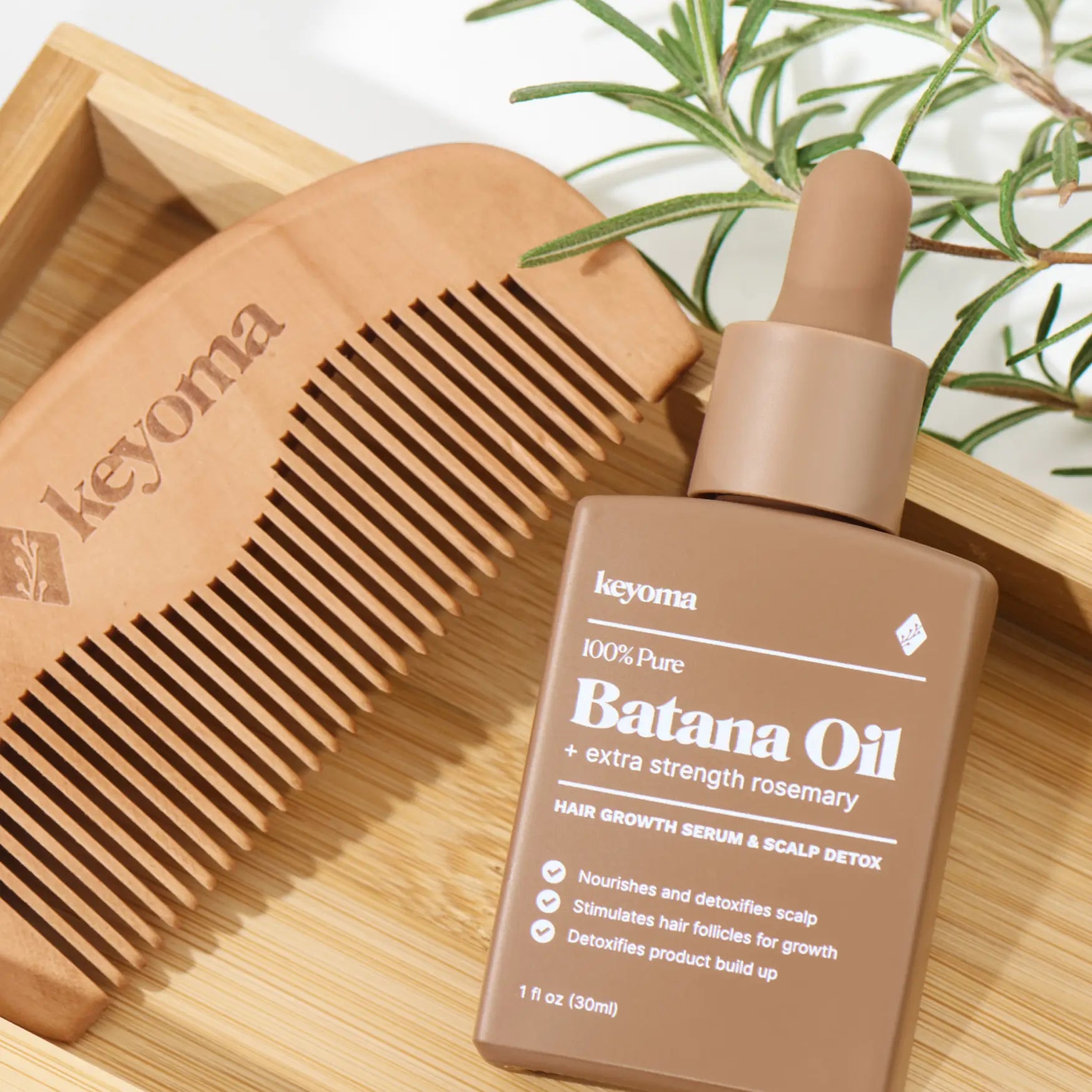
For a simple post-session hair-care step, apply a small amount of Keyoma Batana Oil with Rosemary only after the device session. Massage it gently into the intended areas without saturating the scalp.
Use the oil to condition your hair and support a thoughtful scalp-care routine. Do not expect it to increase the cap’s light output or strengthen its treatment effect.
How to Keep Oil Off the Cap
Oil residue is easier to prevent than remove from small lights, sensors, fabric linings, and ventilation points.
Use these habits to protect your device:
-
Finish the light session before opening your hair oil
-
Apply a measured amount instead of soaking the scalp
-
Wash your hands before handling the cap again
-
Allow the oil to absorb before your next scheduled session
-
Wash your hair before that session when the manual requires clean hair
-
Inspect the cap for residue before putting it on
-
Store the cap away from leaking bottles and damp surfaces
Follow the manufacturer’s directions when cleaning the device. Do not assume alcohol, disinfectant, soap, or a wet cloth is safe for every cap. A cleaning method suitable for one model may damage the material or electrical components of another.
Do not submerge a cap in water or apply oil directly to its inner surface.
When to Ask a Dermatologist or the Manufacturer
Contact the device manufacturer when the manual does not explain whether you can use topical products. Give them the exact model name rather than asking about red light caps in general.
A dermatologist should review your routine when:
-
You use minoxidil or another medicated scalp treatment
-
Your medication or health condition causes sensitivity to light
-
Redness, burning, itching, or discomfort continues after treatment
-
Your scalp has sores, blisters, infection, or broken skin
-
Hair loss begins suddenly or appears in distinct patches
-
You have an inflammatory or scarring scalp condition
-
Your existing treatment plan includes a required application order
Stop the light session if the device causes pain or an unusual skin reaction. Follow the manual’s troubleshooting guidance and seek medical care when symptoms persist.
Frequently Asked Questions
Can rosemary oil be used with a laser cap?
Rosemary oil and a laser cap may have separate places within the same routine. Check the cap’s manual before allowing oil to remain on your scalp during treatment. When the instructions do not address oil, complete the laser-cap session first and apply a properly diluted rosemary product afterward.
Does scalp oil block red light therapy?
There is not enough device-specific evidence to claim that cosmetic scalp oil blocks red light or helps it penetrate. Follow the preparation instructions for your exact device. Keeping oil off the cap also reduces residue inside the unit.
How long should I wait to apply hair serum after red light therapy?
There is no standard waiting period for every cosmetic serum. If your scalp feels normal and the product does not conflict with the device manual, treat the serum as a separate post-session step. Follow medical guidance for minoxidil and other medicated topicals.
Should I wash my hair before using an LLLT cap?
Wash your hair first when the manual requires clean or freshly washed hair. Dry it to the condition stated in the instructions. Some devices require dry hair, while others give different directions.
Can I use minoxidil and hair oil with a red light therapy cap?
These treatments may require a specific order and enough time between applications. Follow the minoxidil label, device manual, and dermatologist’s plan. Do not create a schedule based only on advice for cosmetic hair oils.
Build Your Routine Around Safe Device Use
Hair oil and a red light therapy cap do not need to compete for space in your routine. The key is to treat them as separate steps.
Use your cap exactly as its manual directs. When the instructions are silent about oil, complete the device session on a clean scalp and save your oil for afterward. This approach keeps residue away from the cap and avoids turning an untested combination into a treatment claim.
Once your session is complete and your scalp feels normal, add a measured amount of Keyoma Batana Oil with Rosemary to support your regular hair-care routine.
Featured Product
30% Off + 3 FREE Gifts
100% Pure Batana Oil + Rosemary


