

In this article
Whether you're aiming for rugged stubble or a full Viking beard, understanding the stages of beard growth can help you set realistic expectations and appreciate the process. Growing a beard is a marathon, not a sprint.
We’ll too look into teenage beard growth and what young men can expect during their early facial hair years. In this guide, we’ll break down the stages of beard growth, highlight the timeline for each phase, and provide some tips to make the most of your beard growth journey overall.
Key Takeaways
-
Many men grow a full beard in two to six months, but timing varies widely.
-
Beard hair grows through anagen, catagen, telogen, and terminal phases over time.
-
Genetics, age, hormones, lifestyle, and skin health influence beard density and growth rate.
-
Batana oil can soften hair and reduce itch, but doesn't change genetics.
Beard Growth Facts
I must admit, I didn’t know some of these and I found them pretty incredible! overall. Let’s begin with some fast-fire facts about the wonderful world of male facial hair!
-
On average, your beard will grow around ½ an inch per month.
-
For most men, beard growth reaches terminal growth after 6 years.
-
If left undisturbed and un-shaved, most men can grow a beard up to 3ft long.
-
On average, it will take two to six months to grow a full beard.
But this can vary a lot from person to person. for instance, my facial hair grows especially fast and I can grow a full beard in less than two months. So, to answer the original question of how long does a beard take to grow, on average we can get an impressive, luscious crop of facial hair in half a year overall.
I’ve never tried this, but it’s tempting now just to see how long mine will eventually reach! overall. It’s interesting that, who would have thought that most men are capable of growing beards to rival Gandalf and Santa Clause at 3ft long?
The takeaway is that there is still hope for everyone and we males have a powerful ability to grow epic beards!
What Is a Beard?
The dictionary defines a beard as “the hair that grows on a man’s face, often excluding the mustache.” It too defines it as a “hairy or bristly appendage or tuft.” Fair enough.
Still, like a lot of things, what’s considered a beard may include the many dozens of styles men rock today. For this article, still, we’re talking about growing a full beard and how long that takes.
What we’re talking about, still, is a beard that fully covers the cheeks, jaw, lip, and chin. The neckline is another matter, and keeping your neckline trimmed as you grow a full beard is key to keep it from looking like you have a neckbeard.
To reiterate, when we address the question of how long it takes to grow a beard, we mean how long it takes to grow a full beard, over time.
How Long Does It Take to Grow a Full Beard?
The simple answer is two to six months, for most men. Genetics, as we’ll see, play an key role in the growth process, as do many other factors, but the majority of men will sport a full beard after six months of growth, and many a lot sooner than that.
Your beard grows in several stages; the first week’s growth generally consists of stubble while the beard steadily (sometimes fast, sometimes slowly) fills in as long as you don’t trim it.
Trimming and shaping it will delay the process and skew the timeframe by which you can grow a full face of whiskers. It's up to you whether slow, steady, and well-maintained is your speed, or if you're simply going for length.
Indeed, the simple act of putting down your razor, and doing your best to keep your hands off of it, ensures that your beard will reach its full-growth stage in the proper amount of time.
Typical Beard Growth Stages and the Process

This doesn’t just apply to facial hair, but all androgenic hair (hair grown after puberty) overall. Before we delve into beard-growing tips, it’s key to understand how your facial hair grows. Each follicle of facial hair goes through a growth cycle including several stages overall.
Stage 1: Anagen Phase
Here, your facial hair follicles are working like crazy to produce actual hair fibres. Within this phase there are the proanagen and metanagen phases. Your facial hair life starts with the anagen phase and this is known as the growth phase.
During the anagen phase, you can expect your facial hair to grow on average half an inch per month, but this varies depending on lifestyle choices and genetics overall.
Essentially, during the anagen phase, the follicle forms its spherical onion shape under your skin, and hair shafts appear on your skin and begin to grow. This phase can actually last for up to two years overall.
Stage 2: Catagen Phase
Here, it’s not uncommon for your hair follicles to lose around one-sixth of their diameter which can give the appearance of your beard thinning overall. Once the anagen phase is completed, your facial hair goes into a stage of semi-regression during the Catagen phase overall.
Depending on your genetics or lifestyle choices, the Catagen phase can be pronounced and you can lose a little of your facial hair. During this stage, the hair strands are separated from the follicle and stop receiving a blood supply. Instead, they are attached to your skin.
Stage 3: Telogen Phase
This means that they are dormant and not experiencing any growth. Depending on a range of factors including hair location, the Telogen phase could last for up to a year. Did you know that at any one time, around 15% of all hairs on your body are in the Telogen or resting phase?
Stage 4: The Terminal Phase
But the main point is, is that your beard doesn't grow indefinitely – there is always an end point. Your hair eventually reaches a terminal growth phase where your beard will not grow any longer. This varies from person to person due to extraneous factors and genetics.
This is why when you comb your beard or wash it, you may notice hairs falling out overall. As per the hair growth cycle, your beard hair follicles will go through the process repeatedly though, always beginning with the Anagen phase and ending with the Telogen Phase.
At anyone time you could have hundreds of hairs at different phases of the hair growth cycle so where old ones are falling out, new strands are already growing in the follicles to replace them overall.
What Factors Shape Beard Growth?

A mix of genetics, age, hormones, lifestyle, and skincare influences growth patterns. Not all beards grow the same way, and there’s a good reason for that.
Genetics
Genetics are the biggest player here , they determine how dense, thick, or patchy sections of your beard, like your goatee and cheeks, will be.
Age
As you get older, your beard often grows thicker and fuller, often hitting its peak in your late 20s or early 30s. Age is another factor overall.
Hormones
Then, there are hormones, like testosterone and.DHT (dihydrotestosterone)., which can make a big difference. Higher levels often mean faster and thicker growth.
Lifestyle
Eating right, staying active, and getting enough sleep can all support your beard growth rate by keeping your body running smoothly and delivering the nutrients your hair follicles need overall. It’s not all biology, though , your lifestyle matters, too.
Skincare
Finally, healthy, exfoliated, and moisturized skin creates the perfect environment for your beard to grow without obstacles like dryness or clogged pores holding it back overall.
Tips to Speed Up Beard Growth Now

To give you a head start, I will discuss some simple tips below! Although facial hair growth is largely genetic in the same way your head hair is, you can influence the growth rates and speed up the process of getting that epic beard you always wanted.
Refrain From Shaving
There is no scientific evidence to support this theory. You’ll hear many fables and legends surrounding beard growth and one of the most irritating is that shaving frequently makes your beard grow quicker. I want to stamp out this nonsense!.
All it does, is put you back to square one and mean you have to begin growing those same hairs again! so, the simplest thing you can do to grow your beard fast is to let human physiology take its course and allow your facial hair to grow uninterrupted! Shaving doesn’t accelerate hair growth or influence your hair follicles.
Try Batana Oil
It will not change your genetics, but it may help your beard look healthier by reducing breakage and rough texture. Batana oil can help soften beard hair and keep the skin underneath from getting dry and itchy.
Apply 2 to 4 drops before you shower. Rub it in your hands, massage it into the skin under your beard, and spread the rest through the hair. For me, a slower massage step made it feel less patchy later. Let it sit for 10 to 20 minutes, then wash with a gentle beard shampoo. This can help prevent dryness as you wash. If you notice buildup or irritation, use less or stop.
Maintain a Balanced Diet
So, if your diet is less than ideal and you rely heavily on processed food or have an excess of sweets and bad things, you could be prohibiting your beard growth. Just like our bodies and organs, our facial hair needs the right balance of nutrients, vitamins, and minerals to stay healthy and grow overall.
-
Vitamin A: This vitamin helps produce sebum which is vital for the moisture and oils that keep our facial hair looking fantastic and healthy. Fish, cheese, and eggs are great sources of Vitamin A.
-
Vitamin B: Within the Vitamin B category, we have Biotin which is the most key sub vitamin for facial hair growth. This is since Biotin strengthens the keratin in our bodies which is a protein that forms our hair, skin, and nails. Higher Biotin levels mean healthier facial hair that grows faster overall. Meat, fish, eggs, some vegetables, and seeds all naturally contain Biotin overall.
-
Vitamin C: This vitamin helps with iron absorption and the production of collagen which are vital facets for keeping your skin healthy overall. This has the knock-on impact of affecting your beard health and growth. If your skin is poor quality and try, your hair follicles and hair strands will likely be poor quality too and your beard could look thin and wilted overall.
-
Vitamin D: People with a Vitamin D deficiency can experience facial hair loss so it’s key to keep this up. Luckily, this is one we can take in naturally via sunlight! overall. still, fishes like tuna and salmon are too rich in Vitamin D.
Try to Lower Stress Levels
Indeed, high stress levels is known to cause hair loss in the form of Telogen Effluvium. This is where during the Telogen phase we explored above, your hair sheds excessively and you lose more than the average hairs we typically lose per day. Stress is the antithesis of hair growth.
Your beard growth will suffer, but stress too has wider potential health impacts and can lead to other complications. One of the main factors is stress, but it can too be caused be hormone imbalances and medication. so, if you have a particularly stressful lifestyle, it could be time to try and change it.
Maybe you could make changes to reduce stress and improve your wellbeing. Take a look at your world including your work and personal life.
Get Plenty of Sleep
Sleep is vital for your mental and physical wellbeing, but too for your facial hair health! I get that it’s tempting to try and make the most of every hour of the day, and you may feel like you can operate on little sleep, but it’s a vital function all humans need overall.
Our cells repair damage, our muscles relax, and we essentially top up our bodies with life and vitality. A close friend found it easier to keep grooming consistent after sleeping more. It’s no coincidence why you wake up and feel refreshed!.
On average, adults need between 7-9 hours of sleep per day – aim for this and you'll help your beard growth and keep your hair healthy and revitalised.
Practice Smart Beard Hygiene
There is a basic link between beard health and growth – basically, a healthy beard will grow faster since it has the nutrients and minerals it needs for the hair follicles to do their work.
This helps with hydration and moisture, but you should too use specially formulated beard shampoo that protects it and replenished the vital oils and nutrients. You can enhance this with your diet, but too with excellent beard hygiene. Whenever you shower, make sure that you was your beard overall.
Consider beard oil, too. It can form a protective layer and help lock in the good stuff, plus it can smell great. I noticed a lighter coat felt better than piling on oil daily.
Support Beard Growth Using Pure Batana Oil
Keep your expectations realistic and keep your hands off the razor while you support beard comfort and shine with pure batana oil. Beard growth is slow for most men, averaging about.half an inch per month., so the real advantage is reducing the itch, dryness, and roughness that make you quit early overall.
The non-obvious win is that a softer, less brittle beard often looks fuller since fewer hairs snap and fewer ends fray. Apply a small amount before your shower to protect against dryness, then wash gently so you don't trade softness for buildup.
Stick with the long game and let consistency do the heavy lifting overall. Support beard growth using pure batana oil overall.
Featured Product
30% Off + 3 FREE Gifts
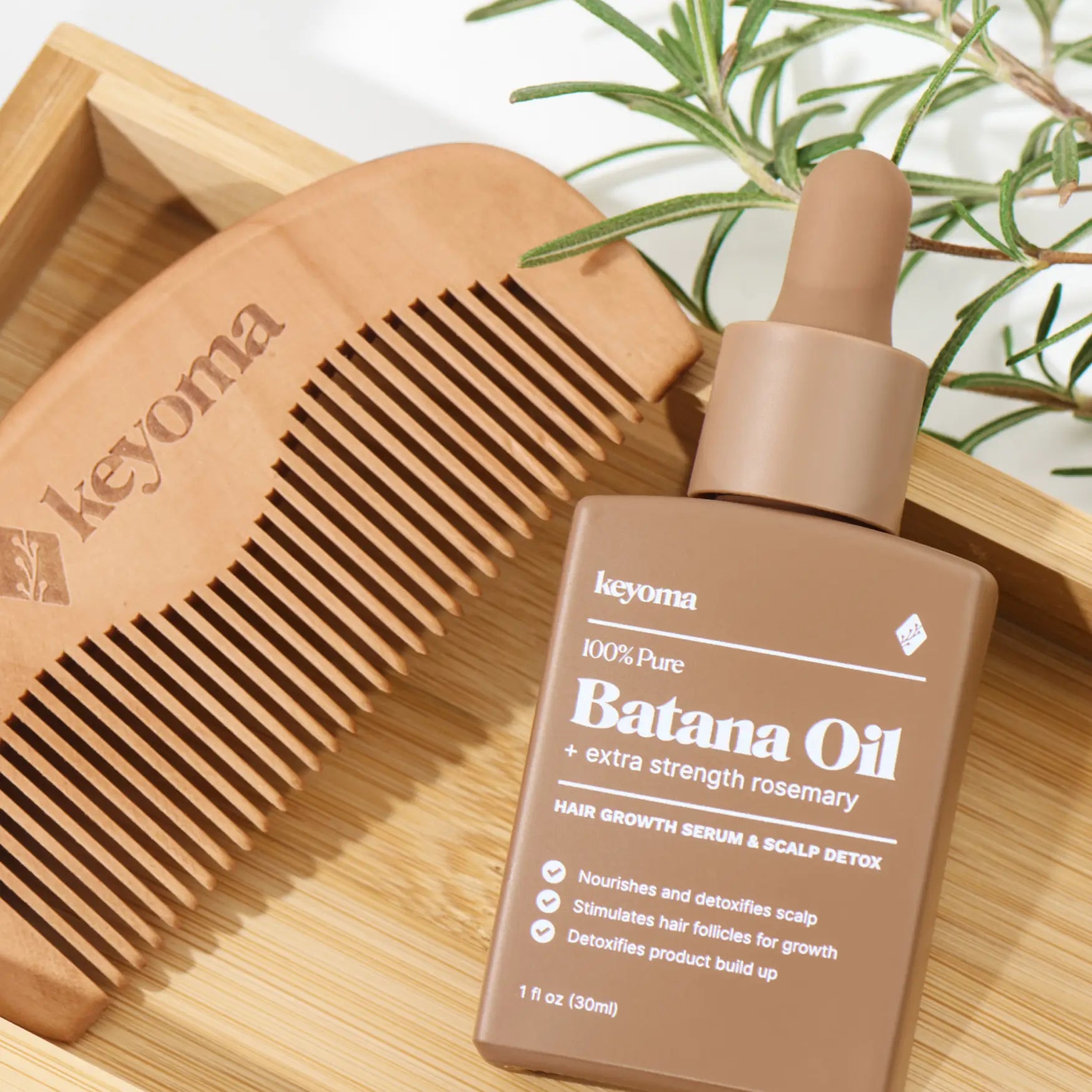
100% Pure Batana Oil + Rosemary


