

In this article
If you have looked into supplements for thicker, healthier, stronger hair, you may have come across liquid biotin for hair growth. So what should you know about it?
Biotin, also called vitamin B7, supports normal hair health and growth. In supplement form, it may help promote new growth in people who actually have a biotin deficiency.
But it is still unclear whether biotin supplements do much for hair loss if you are not deficient. That uncertainty applies to liquid biotin just as much as capsules, gummies, or any other version of the supplement.
Below, we take a closer look at liquid biotin, the research behind it, how to use it, and what to consider taking alongside it, or instead of it, to support hair growth and address hair loss.
Key Takeaways
-
Liquid biotin may help support hair growth mostly when a biotin deficiency is involved.
-
Most people already get enough biotin from food, so supplements may add little benefit.
-
Biotin does not block DHT-related male pattern hair loss or reverse shrinking follicles.
-
High-dose biotin can affect lab testing, including thyroid panels and heart-related blood work.
What Is Liquid Biotin?
Liquid biotin is a biotin supplement sold in liquid form instead of as a gummy, capsule, or pill. It is often packaged in small glass bottles and measured with a dropper. Some people choose liquid supplements because they do not like swallowing pills or simply prefer liquid formulas.
Liquid biotin may be sold on its own or combined with other ingredients such as collagen, keratin, and additional vitamins.
Biotin, also known as vitamin B7 or vitamin H, is a water-soluble vitamin that supports several functions in the body. It helps turn food into energy, supports fat and amino acid metabolism, and plays a role in the development of hair, skin, and nails.
Biotin is naturally found in foods such as egg yolks, fish, seeds, nuts, and sweet potatoes (NIH, 2021). Most people get enough biotin through their diet and do not need a supplement.
What Does Biotin Do?
Biotin is a B vitamin your body needs for general health and normal body function. It helps break down substances like fats and carbohydrates and supports several important internal processes.
Biotin is also involved in amino acid function, cell signaling, and gene regulation.
Like other essential vitamins, biotin deficiency can make those processes work less efficiently.
If you are low in biotin, you may develop:
-
Thinning hair
-
Brittle nails
-
Irritated skin
-
Hair loss across the body, in severe deficiency cases
That helps explain why a biotin supplement may support stronger nails, healthier skin, and fuller hair when deficiency is part of the problem.
Does Liquid Biotin Help Hair Growth?
If you are thinking about taking biotin to address hair loss or speed up growth, it is important to know that biotin has not been proven to be an effective treatment for male pattern baldness. Despite the marketing and the constant claims on supplement labels, one review notes there is limited evidence that biotin does much for thinning hair.
In men, thinning hair is usually caused by male pattern baldness, also called androgenic alopecia, which happens when hair follicles react to DHT, a byproduct of testosterone. DHT causes follicles to shrink and, in some people, eventually stop making hair. Vitamins and minerals such as biotin cannot stop that process.
In most situations, taking biotin probably will not harm you. Small human trials report it is difficult to take enough biotin to cause direct toxicity or overdose (Bistas, 2020). Still, taking too much can create secondary issues, which we cover below.
Like other water-soluble vitamins, extra biotin is passed out through urine.
Potential Liquid Biotin Side Effects
More is not always better. With supplements, overdoing it can be a waste of money at best and a health problem at worst.
Some biotin products contain hundreds of times more than the daily adequate intake, including 5,000 mcg, 10,000 mcg, and even more. The daily adequate intake is only 30 mcg. And if you already take a multivitamin, it may also contain biotin, which increases your total intake.
Even if too much biotin may not directly harm you, it can still affect health in other ways. In 2017, the FDA warned that high biotin intake can interfere with blood test results. Most importantly, it may lead to inaccurate thyroid test results and inaccurate troponin measurements, which are used to diagnose heart attacks and other heart-related conditions.
Other Ways to Stop Hair Loss and Stimulate Hair Growth

Liquid biotin may offer hair growth support, especially when thinning is tied to a nutritional deficiency.
But biotin is not the only way to address hair loss or improve growth, and it is not always the most effective option on its own.
If you are starting to notice thinning hair, better results usually come from combining supplements like biotin with natural hair treatments and practical lifestyle changes.
Here are a few things to think about.
Batana Oil with Rosemary
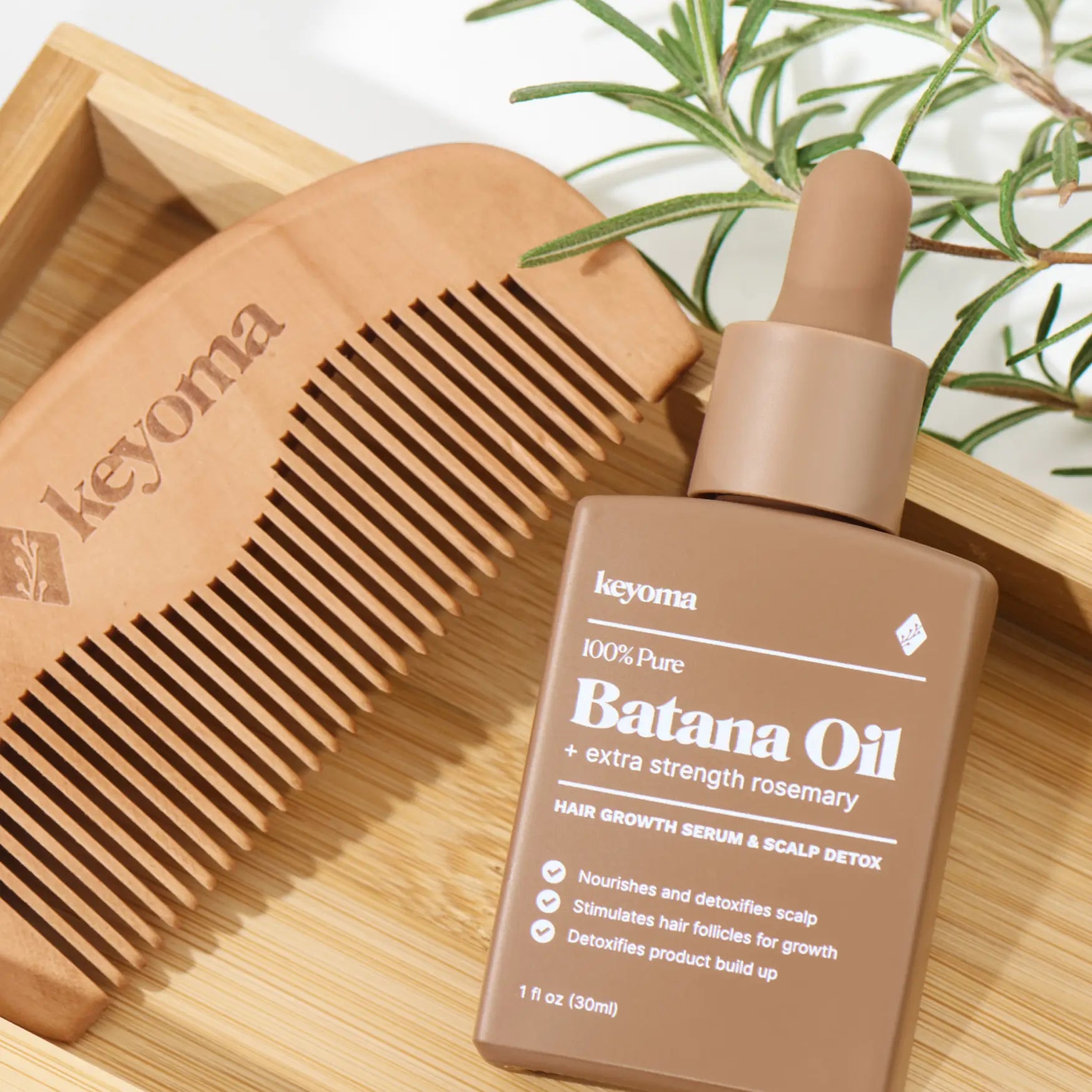
Another option for reducing shedding and supporting healthier growth is using batana oil with rosemary as part of a regular hair routine.
Batana oil is a nutrient-rich oil traditionally used in Central America and is known for deeply moisturizing the scalp, supporting hair strength, and helping hair look fuller and thicker. It contains natural fatty acids and antioxidants that help protect the hair shaft and maintain scalp health.
Rosemary oil is commonly included because it may support scalp circulation and the hair growth cycle. Some research suggests rosemary oil may improve hair density and regrowth, which is why it is widely used in natural hair formulas.
Together, batana oil and rosemary support more than one part of a thinning-hair routine. Batana oil helps restore moisture and lower breakage, while rosemary oil focuses more on scalp stimulation and follicle support.
You can use batana oil with rosemary as:
-
a scalp massage oil to support circulation
-
a pre-wash treatment for dry or damaged hair
-
a leave-in treatment on the ends to help limit breakage
For best results, apply a small amount to the scalp and hair a few times each week and massage gently so the oil spreads evenly. I noticed richer oils worked better when I kept the amount small and consistent.
Used along with healthy habits, batana oil with rosemary can be a simple natural addition to a growth-focused routine.
Hair Loss Shampoos
Another way to address hair loss and strengthen strands is by using a women’s hair loss shampoo and conditioner to manage shedding and clear away excess sebum that may affect follicles.
Creating a hair kit that has Keyoma Batana Oil with Rosemary, biotin, shampoo, and conditioner will make it mucheasier to target hair loss from several angles at once.
Lifestyle Changes for Hair Health
Beyond medications and hair products, everyday habits can support healthy growth and help your hair stay smooth, strong, and thick.
Try to:
-
Eat a balanced, healthy diet to help prevent deficiencies
-
Lower stress as much as you can
-
Be gentle when styling, coloring, or brushing to avoid hair breakage
-
Wear looser hairstyles and avoid pulling or tugging on your hair too often
Pair Liquid Biotin for Hair Growth With Batana Oil
Treat liquid biotin like a tool for deficiency, not an automatic answer for thinning hair. Many products contain 5,000 to 10,000 mcg even though the daily adequate intake is only 30 mcg, and that gap says more about supplement marketing than it does about what most people truly need.
Hair routines usually improve when you focus less on megadoses and more on what actually supports scalp health, retention, and strand quality over time. That is the real shift. Instead of chasing numbers on a label, build a routine that holds up in everyday use.
For a more practical view of what deserves a place in a growth routine, explore more hair care blogs.
Featured Product
30% Off + 3 FREE Gifts
100% Pure Batana Oil + Rosemary


