

In this article
There is no universal day when hair oil becomes safe after a hair transplant. Use it only after your transplant surgeon or clinic clears the exact formula, application area, and technique.
Online advice often gives a waiting period of 10 days, two weeks, or one month. These dates do not account for differences in transplant method, healing progress, clinic protocol, product ingredients, or where you plan to apply the oil.
Your donor area, recipient area, and existing hair may also receive different instructions. Approval to condition your hair lengths does not mean the oil can touch the healing scalp.
Key Takeaways
-
Your transplant clinic should decide when hair oil can touch your healing scalp.
-
Donor and recipient areas may receive different instructions during early recovery.
-
Rosemary blends require formula approval because essential oils may irritate sensitive skin.
-
Hair oil cannot improve graft survival, healing speed, density, or transplant results.
Why There Is No Universal Waiting Period
A hair transplant moves healthy follicles from a donor area to sections with thinning hair. According to the American Academy of Dermatology, your scalp is bandaged after the procedure, and your medical team provides instructions for caring for it at home.
Those instructions should control when you wash, touch, or apply products to each area.
The correct timing for hair oil can depend on:
-
Whether you received FUE or FUT surgery
-
How the donor area was closed
-
Whether scabs, sutures, tenderness, or open skin remain
-
How quickly each area is healing
-
Which ingredients appear in the oil
-
Whether the product requires rubbing or massage
-
How much contact is needed to wash the oil out
The NHS hair transplant guidance notes that transplanted grafts require special care during the first two weeks. It also tells patients to follow their surgeon’s instructions for graft care.
This does not mean oil becomes safe once two weeks pass. That period shows why early recovery requires caution. Your clinic still needs to decide when your scalp is ready for a cosmetic oil.
Recipient and Donor Areas Are Not Interchangeable
The recipient area is where the surgeon placed the transplanted follicles. The donor area is where those follicles were removed.
These areas have different injuries and healing demands. A clinic may allow a moisturizing product on the donor area while restricting all cosmetic products from the recipient area. Another clinic may provide a specific spray or lotion and ask you to avoid oils completely during early recovery.
Ask about each area by name. Do not treat approval for one part of the scalp as permission to oil the entire head.
Application technique matters too. A product may be acceptable for your existing hair lengths but unsuitable for the scalp because it requires direct contact, massage, or vigorous washing.
“The Scabs Are Gone” Is Not Automatic Clearance
The scalp may look calm before it is ready for your normal routine. The absence of visible scabs does not confirm that the skin can tolerate fragrance, essential oils, pressure, or heavy residue.
The International Society of Hair Restoration Surgery advises returning to normal shampoos and styling aids after healing is complete. It also stresses that the surgeon should provide guidance based on the procedure and recovery. Follow that individualized advice instead of judging readiness from appearance alone.
Ask Your Transplant Clinic These Questions First
A simple question such as “Can I use hair oil?” may not give your clinic enough information. Bring the product or send a photograph of its complete ingredient list.
Ask:
-
On what date may I begin using this product?
-
Can it touch the recipient area?
-
Can it touch the donor area?
-
Can I apply it only to the existing hair lengths?
-
Does the formula contain any ingredients I should avoid?
-
Is rosemary essential oil allowed at this stage?
-
May I touch or massage the treated area?
-
How much oil should I use?
-
How long may I leave it on?
-
How should I wash it out?
-
Should I continue my prescribed spray, shampoo, or medication?
-
What symptoms mean I should stop using it?
Write down the response or ask for instructions through the clinic’s patient portal. Clear directions help prevent confusion between what is approved for the hair and what is approved for the scalp.
Never replace a prescribed spray, shampoo, medication, or wound-care product with hair oil. Even if an oil feels soothing, it does not serve the same purpose as medical aftercare.
Check the Formula, Not Only the Oil Name
“Hair oil” is a broad product category. One formula may contain a single carrier oil. Another may combine carrier oils, essential oils, fragrance, preservatives, plant extracts, silicones, or other active ingredients.
That means approval for one oil does not apply to every product with a similar name.
A thick oil may also require more shampooing to remove. An aromatic blend may be more irritating than an unscented formula. A product intended for massage may be inappropriate when the clinic has not cleared pressure or rubbing.
Rosemary Oil Needs Extra Caution
Rosemary essential oil is concentrated. It is commonly diluted into carrier oils or prepared formulas, but dilution does not create automatic post-surgical approval.
Recently treated skin may respond differently from intact skin. An ingredient you tolerated before surgery may sting or irritate a healing area. Avoid applying homemade rosemary mixtures to donor or recipient sites because their concentration and cleanliness are difficult to control.
A patch test on your arm may help identify a general sensitivity, but it cannot prove that your healing scalp is ready. The transplant clinic still needs to review the formula.
Rosemary oil should also not be presented as a way to protect transplanted grafts or improve surgical results. Research on rosemary oil for general hair loss does not establish that it improves graft survival, healing, or post-transplant density.
Batana Oil Still Requires Clinic Approval
Batana oil is a rich plant oil commonly used to condition dry hair. Its natural origin does not make it an automatic match for healing skin.
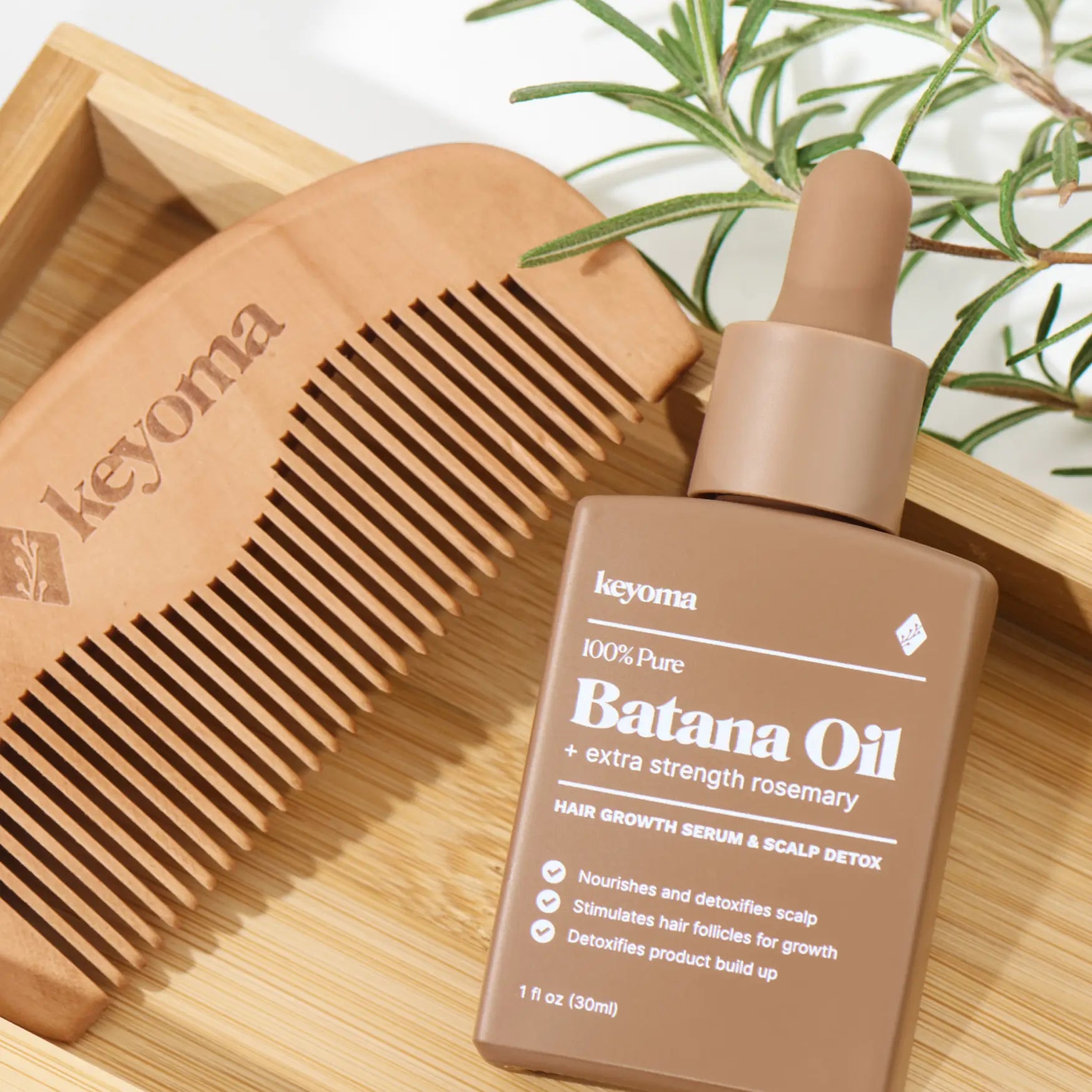
Keyoma’s formula combines batana oil with rosemary. If you want to use it after surgery, show the clinic the complete formula and ask where it can be applied.
The product’s regular directions include scalp application and massage. Those instructions are intended for a normal hair-care routine, not a newly treated scalp. Do not follow the standard massage, frequency, or overnight directions until your clinic says they are appropriate for your recovery stage.
You can also review the possible reactions to batana oil before discussing the formula with your medical team.
How to Use Hair Oil After Your Clinic Clears It

Once the clinic gives permission, follow its directions over any general hair-oiling method. Post-transplant use should begin as a controlled reintroduction, not an immediate return to your old routine.
Confirm the Approved Area
Clarify whether the oil is approved for:
-
The recipient area
-
The donor area
-
Existing hair strands
-
The mid-lengths and ends only
-
The entire scalp
These are separate forms of approval. If the clinic says you may use oil on the lengths, keep it away from the scalp unless they also approve direct skin contact.
For longer hair, apply below ear level and keep the hair away from treated areas. This lets you condition dry ends without spreading oil onto healing skin.
Start With the Smallest Approved Amount
Use the amount and frequency provided by your clinic. If they do not specify an amount, ask before proceeding.
Keep your hands and any applicator clean. Do not use your fingernails, scratch at flakes, or force oil beneath scabs. Avoid massage until the clinic confirms that pressure and movement are safe.
Apply the oil in a thin layer rather than saturating the area. More oil creates more residue and requires more contact during removal.
Also avoid introducing several new products at once. If redness or itching develops, a simple routine makes it easier for your clinic to identify the likely trigger.
Do not leave the oil overnight unless your clinic specifically approves the formula and contact time.
Follow the Clinic’s Washout Method
Removing oil can place more stress on the scalp than applying it. A rich layer may require extra shampoo, repeated rinsing, or more fingertip contact.
Before using oil, confirm:
-
Which shampoo to use
-
When normal water pressure is allowed
-
Whether fingertips can touch the area
-
Whether repeat shampooing is permitted
-
How soon the product should be removed
-
Whether the area should air-dry
Do not use a clarifying shampoo, exfoliating treatment, scalp brush, scrub, or aggressive double cleanse unless the clinic recommends it.
If you realize that the oil will be difficult to remove under your current washing restrictions, wait until the clinic approves a more normal cleansing routine.
When to Stop and Contact the Transplant Clinic
Stop using the product and contact your clinic if you develop:
-
Increasing pain or tenderness
-
Spreading redness
-
New or worsening swelling
-
Bleeding
-
Pus or unusual drainage
-
Blisters or open sores
-
Strong burning or itching
-
Fever or a general feeling of illness
-
A reaction that continues after removing the product
These signs do not confirm a specific complication. Redness, swelling, itching, or tenderness can have several causes, and photographs alone may not provide enough information.
Do not try to calm a worsening reaction by adding another oil or home remedy. Follow the clinic’s instructions for removing the product and let the medical team assess what happened.
What Hair Oil Cannot Do for a Transplant
Hair oil may condition healed hair or fit into a later scalp-care routine. It should not be credited with the results of surgery.
Hair oil has not been established as a way to:
-
Secure newly transplanted grafts
-
Improve graft survival
-
Accelerate wound healing
-
Prevent normal post-transplant shedding
-
Increase transplant density
-
Correct surgical placement
-
Replace prescribed medication
-
Guarantee faster transplanted growth
Hair shedding can occur after transplantation as part of the expected process. The AAD reports that transplanted hairs commonly shed between two and eight weeks after surgery, while visible results often take six to nine months or longer.
Do not respond to expected shedding by increasing oil use. If you are concerned about the amount or timing of shedding, contact your clinic and review a broader post-transplant growth timeline.
Frequently Asked Questions
Can I use hair oil two weeks after a hair transplant?
Two weeks is not a universal clearance date. Some graft-care restrictions may change around this time, but your clinic still needs to approve the formula, application area, and technique.
Can I use rosemary oil after an FUE transplant?
Use rosemary oil only after your clinic reviews the complete formula and clears the intended area. A diluted rosemary blend may still irritate sensitive or healing skin.
Can I apply oil only to the transplanted hair?
Transplanted hairs sit close to the healing recipient sites, so it may be difficult to coat the strands without touching the scalp. Ask your clinic before applying oil near them.
Can oil help transplanted hair grow faster?
There is no established evidence that hair oil speeds post-transplant growth or improves graft survival. Follow the treatment and recovery plan provided by your surgeon.
Can I use batana oil after a hair transplant?
You may be able to use batana oil later in recovery, but your clinic must approve the full formula, timing, location, amount, and application method first.
Let Your Transplant Clinic Set the Start Date
Your scalp does not need a complicated routine while it heals. It needs a routine that matches the procedure and your clinic’s instructions.
Ask your medical team to review the complete product formula. Confirm whether it can touch the donor area, recipient area, or hair lengths. Then ask how to apply and remove it without interfering with your prescribed care.
Once your clinic clears normal oiling, Keyoma Batana Oil with Rosemary may fit into your longer-term routine. Until then, treat it as a cosmetic hair oil, not a transplant-recovery treatment.
Your surgeon remains the best source for deciding when that routine can safely begin.
Featured Product
30% Off + 3 FREE Gifts
100% Pure Batana Oil + Rosemary


