

In this article
Batana oil is widely used on dry, brittle, or damaged hair, but it will not affect every person in the same way. Most people handle it well, especially when the oil is pure and used the right way. Problems usually show up when the oil is used too heavily, poorly formulated, or applied to a sensitive scalp.
Knowing the real risks makes them easier to avoid. Most side effects are mild and preventable. In many cases, the sourcing, formulation, and application matter more than the oil alone. Clear instructions help you get the benefits without ending up with irritation, buildup, or imbalance.
Key Takeaways
-
Batana oil is usually safe, but some people may still notice irritation or sensitivity
-
Using too much can cause buildup, greasy hair, and clogged scalp pores
-
Patch testing can lower the chance of allergic reactions
-
The quality of the product can affect how well your scalp tolerates it
Is Batana Oil Safe for Hair and Scalp?
Batana oil is generally considered safe for most hair types when you use it in moderate amounts. It is a natural carrier oil, which means it mainly coats the hair and helps reduce moisture loss rather than changing the scalp’s chemistry.
Sensitivity still differs from one person to another. Some scalps react more easily to heavier oils, especially when dryness, dandruff, or inflammation is already present. The same thickness that makes batana oil helpful for dry hair can also make it harder for some scalps to handle when too much is applied.
Product quality matters too. Pure, single-ingredient batana oil is less likely to irritate the scalp than diluted or blended versions with filler oils or added fragrance. Cleaner formulas reduce the number of things that may trigger a reaction.
Common Side Effects of Batana Oil

Side effects usually come from the way the oil is used or from what is in the formula. Most problems are mild and tend to improve once the routine changes.
Scalp Irritation and Sensitivity
Some people notice itching, redness, or mild discomfort after putting batana oil on the scalp. Reactions are more likely on sensitive skin or when the oil stays on for a long time. Heavy oils can stay on the scalp surface instead of fully absorbing. That layer may trap sweat or heat, which can make the scalp feel more irritated over time.
Allergic Reactions and Skin Response
Allergic reactions are less common, but they can still happen. Signs may include redness, itching, or small bumps in the areas where the oil was used. Even natural oils can cause a reaction, especially if your skin is already reactive. A patch test helps you spot sensitivity before applying the oil more broadly.
Product Buildup and Greasy Hair
Batana oil has a naturally thick texture. When you use too much or apply it too often, it can build up on both the scalp and the hair. Hair may start feeling heavy, greasy, or harder to style. Buildup can also block moisture from getting into the hair, which can leave dryness feeling worse instead of better.
Clogged Pores and Scalp Issues
Too much oil on the scalp can block pores. When that happens, the scalp may start to feel uncomfortable or congested. This can sometimes lead to small bumps or flaking, especially when cleansing does not happen often enough to clear away the residue.
Why Batana Side Effects Happen

Side effects are not usually caused by the oil alone. Most problems come from how often it is used, how it is applied, and the quality of the product itself.
Overuse and Heavy Application
Using too much oil is one of the most common mistakes. A thick layer may seem nourishing at first, but it can quickly turn into buildup. Hair and scalp usually respond better to controlled amounts. Smaller applications are easier to spread and less likely to throw things out of balance.
Low-Quality or Mixed Products
Not every batana oil product is the same. Some formulas are diluted with lighter oils or include added fragrance to cover the natural smell. Those additions may raise the chance of irritation.
Mixed formulas also change how the oil behaves on the scalp and hair, which makes the results less predictable. Pure batana oil usually comes with fewer variables. A simpler formula may lower the chance of an unwanted reaction.
Sensitive or Pre-Existing Scalp Conditions
Scalps that are already sensitive may react more strongly to heavier oils. Conditions such as dandruff, dermatitis, or general irritation can make the skin more reactive.
Applying oil without first addressing the underlying issue may make symptoms stand out more. In these cases, changing the routine or focusing on scalp care first often works better.
How to Use Batana Oil Safely

Most side effects can be avoided with a few small changes to how the oil fits into your routine and how it is applied.
Start With a Patch Test
Testing a small amount on your skin can help catch a reaction early. Put a drop behind the ear or on the inner arm, then wait 24 hours. A patch test adds an easy layer of protection before you use the oil on your scalp or hair.
Use the Right Amount for Your Hair Type
Hair does not need a large amount of oil to benefit. Fine or thin hair usually needs less, while thicker or coarser hair can often handle a bit more. Starting with a small amount makes adjustment easier and helps prevent overloading the hair. For me, using less first made buildup much easier to avoid.
Apply Based on Scalp Condition
Dry hair does not always mean the scalp itself is dry. Putting oil straight on the scalp works best when there is real dryness or tightness there. If the scalp already feels balanced, applying the oil only to the mid-lengths and ends can reduce the chance of buildup.
Wash Properly to Avoid Buildup
Regular washing helps clear away extra oil before it starts to collect. A gentle shampoo is usually enough to remove residue without stripping the hair. Spacing out oil treatments and sticking with a consistent wash routine helps keep the scalp more balanced.
How Keyoma’s Formula Minimizes Common Risks

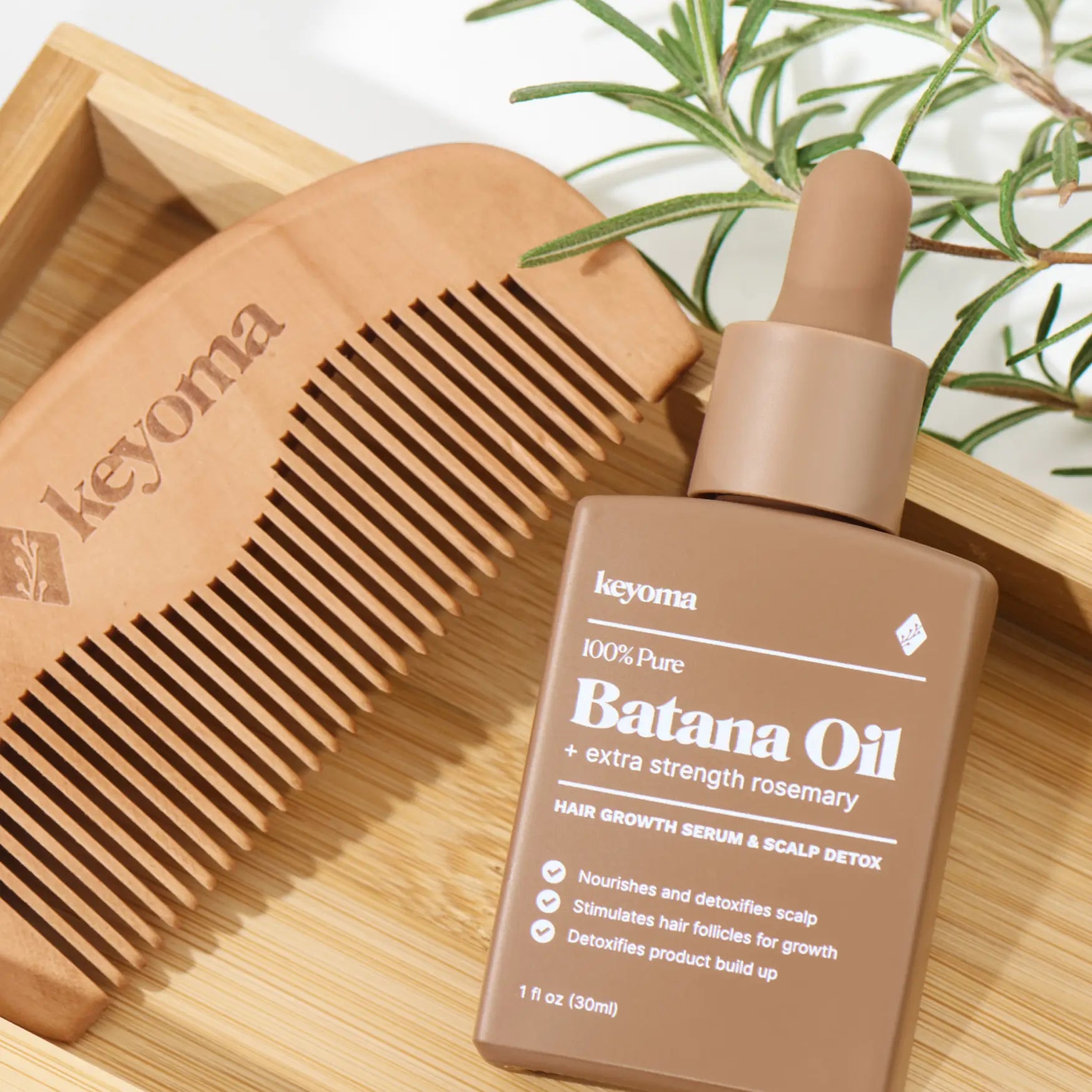
Product quality and formula design can noticeably affect how batana oil performs. Keyoma frames its formula around tighter ingredient control, source transparency, and simplicity, which makes the safety discussion more specific than a generic clean-oil claim.
Balanced Formulation
Keyoma presents its batana formula as a two-ingredient blend centered on batana oil and rosemary instead of a longer ingredient list filled with fragrance, fillers, or synthetic extras. A shorter formula like that can reduce the number of variables that may trigger irritation, especially for people who already know their scalp reacts easily.
Current evidence suggests cleaner formulas may be easier to tolerate because added fragrance and extra preservatives are common triggers in cosmetic-related contact dermatitis. A stripped-down formula does not promise zero reaction, but it may lower the risk of irritation from unnecessary additions.
Quality Sourcing and Ingredient Control
Keyoma also places more emphasis on sourcing than many generic batana products. Its collection and product pages describe the oil as Honduran-sourced, pure, and unrefined, which matters because both origin and processing can affect consistency and trust.
That kind of ingredient control reduces some of the uncertainty that comes with mixed or poorly labeled oils. A product that clearly says what it contains and where it comes from is usually easier to judge before it ever touches your scalp.
Designed for Consistent and Safe Use
The formula is also presented as something made for repeat use, not a heavy treatment that needs to be overloaded to feel effective. Keyoma describes it as a simple rosemary and batana serum, which points to a more controlled way of applying it than thicker, less defined oil blends.
A formula that spreads more evenly and is easier to measure may reduce the chance of buildup from using too much. It does not remove the need for patch testing or proper cleansing, but it can make regular use easier to manage.
Use Keyoma’s Pure Batana Oil With More Confidence
Batana oil is generally safe, but it is not completely free of risk. Most side effects come from using too much, choosing poor-quality products, or applying the oil in ways that do not suit the scalp’s condition.
Small changes often make a big difference. Using less oil, applying it more selectively, and choosing a cleaner formula such as Keyoma’s 100% pure batana oil with rosemary can make the routine easier to tolerate and easier to keep up with over time.
Better results usually come from balance rather than excess. A routine built on proper use, steady cleansing, and a well-controlled formula can lower side effects while keeping the hair manageable and protected.
Featured Product
30% Off + 3 FREE Gifts
100% Pure Batana Oil + Rosemary


