

In this article
Using a scalp scrub does not automatically mean oil should come next. The safest order depends on the type of exfoliation, the product directions, and how your scalp feels afterward.
Mechanical scrubs, chemical exfoliants, and professional treatments affect the scalp differently. A routine that works after a gentle scrub may be inappropriate after salicylic acid or an in-office treatment.
As a cautious starting point, use the exfoliant as directed, rinse or cleanse when required, and assess your scalp before applying anything else. If you notice burning, redness, rawness, or tenderness, skip the scalp oil. You can still apply oil to your mid-lengths and ends without placing it on sensitive skin.
Key Takeaways
-
The correct order depends on the type of scalp exfoliation you use.
-
Product directions take priority over a general oil-and-scrub routine.
-
Freshly exfoliated skin may react differently to oils and concentrated ingredients.
-
Skip scalp oil when exfoliation leaves burning, redness, tenderness, or broken skin.
Decide by the Type of Scalp Exfoliation

The word “scrub” often gets used for any product that removes flakes or buildup. That creates confusion because scalp exfoliators do not all work the same way.
Some rely on friction. Others use active ingredients that loosen dead skin. Professional treatments may create controlled changes that require specific aftercare.
Before deciding where oil belongs, identify which type you are using.
Mechanical Scalp Scrubs and Brushes
Mechanical exfoliation uses friction to lift loose skin, oil, and product residue. The friction may come from sugar, salt, charcoal particles, a textured formula, or a handheld scalp brush.
Check whether the product should be applied to a dry, damp, or fully wet scalp. Some scrubs replace shampoo, while others are designed to be rinsed out before cleansing. Follow those directions instead of adding steps based on a general routine you saw online.
Applying a separate layer of oil before a mechanical scrub is not always helpful. The oil may make the scalp and hair more coated, which can make residue harder to assess or rinse away. Scrubbing harder to remove that coating defeats the point of a gentle routine.
Do not make the treatment more aggressive by mixing loose salt, sugar, coffee grounds, or other abrasive ingredients into hair oil. Particle size, pressure, and massage time are difficult to control in homemade mixtures. Too much friction may leave small scratches or tender areas.
After rinsing, check how your scalp feels. If it feels normal and intact, you may use a small amount of an oil you already tolerate later in the routine. Using it during a separate oiling session is an even simpler option.
If the scalp feels scraped, tight, hot, tender, or raw, do not massage oil into it.
Chemical Scalp Exfoliants
Chemical exfoliants use active ingredients such as salicylic acid, glycolic acid, lactic acid, or enzymes. These ingredients loosen dead skin without relying only on friction.
The name “chemical exfoliant” covers many products. One formula may be a rinse-off shampoo, while another may be a pre-wash serum or leave-on treatment. Their concentrations and contact times also vary. This is why the label matters more than a universal step-by-step order.
Salicylic acid is a keratolytic, which means it softens keratin and helps loosen dry, scaly skin. It can also remove the upper layer of skin and affect how products applied afterward reach the treated area. DermNet advises using salicylic acid exactly as directed and avoiding irritated, infected, or reddened skin.
Do not automatically follow a chemical exfoliant with a fragranced oil, essential-oil blend, medicated serum, or another active treatment. Separating the exfoliant and scalp oil into different sessions gives you a clearer view of how your skin responds to each product.
This separation also makes it easier to identify a trigger if burning, itching, redness, or bumps appear. When several treatments are layered together, the order, concentration, and combined exposure can make the reaction harder to assess.
Oil does not neutralize an acid or repair irritation from over-exfoliation. If a chemical treatment leaves your scalp uncomfortable, adding another product is not the appropriate way to finish the routine.
Professional Scalp Treatments
Professional exfoliation needs its own rules. This category includes salon scalp peels, dermatologist-directed treatments, microneedling, laser procedures, and other treatments that intentionally affect the scalp surface.
Your provider’s aftercare instructions should replace any general advice about oiling. Do not assume the scalp is ready for oil because it looks calm or no longer feels sore.
Some professional treatments temporarily increase sensitivity or create small openings in the skin. Applying oil too early may expose the treated area to ingredients it is not ready to tolerate.
Do not follow a fixed waiting period found online. The appropriate timing depends on the procedure, its intensity, your skin response, and your provider’s instructions. Wait until the professional who performed or prescribed the treatment clears you to resume scalp oil.
Use This Quick Oil-and-Exfoliation Decision Guide
The safest decision is based on what touched your scalp and how the skin responded.
|
Situation |
Recommended Decision |
|
You used a mechanical scrub as directed, and the scalp feels calm |
Rinse and cleanse as directed. Consider oil later or on another wash day. |
|
You used a chemical exfoliant |
Follow its label. Do not automatically layer scalp oil over the treated area. |
|
You had a professional scalp treatment |
Wait for clearance from the professional managing your aftercare. |
|
The scrub caused burning, redness, rawness, or tenderness |
Skip oil and other scalp treatments while monitoring the reaction. |
|
Only your hair lengths need oil |
Apply it to the mid-lengths and ends, away from the scalp. |
|
The oil or exfoliant is new |
Test and introduce each product separately rather than combining them immediately. |
This does not mean every brief tingle signals an injury. It means discomfort should not be ignored or covered with another treatment.
When Hair Oil Can Fit Into the Routine
Hair oil does not need to disappear from your routine because you exfoliate. It needs its own appropriate place.
One option is to use scalp oil as a pre-wash treatment on a non-exfoliation day. This prevents two intensive scalp steps from competing during the same wash. It also lets you judge whether the oil causes itching, redness, heaviness, or buildup on its own.
Another option is to apply a small amount only to your mid-lengths and ends. Your hair lengths may need help with dryness or friction even when your scalp needs rest.
When returning oil to the scalp, start with the smallest amount recommended by the product. Do not saturate the skin or combine the oil with a new exfoliant, mask, essential oil, or medicated treatment during the same session.
If the oil is new to you, patch test the hair oil separately before wider use. A consumer patch test may reveal an obvious sensitivity, but it does not guarantee that freshly exfoliated scalp skin will tolerate the same formula.
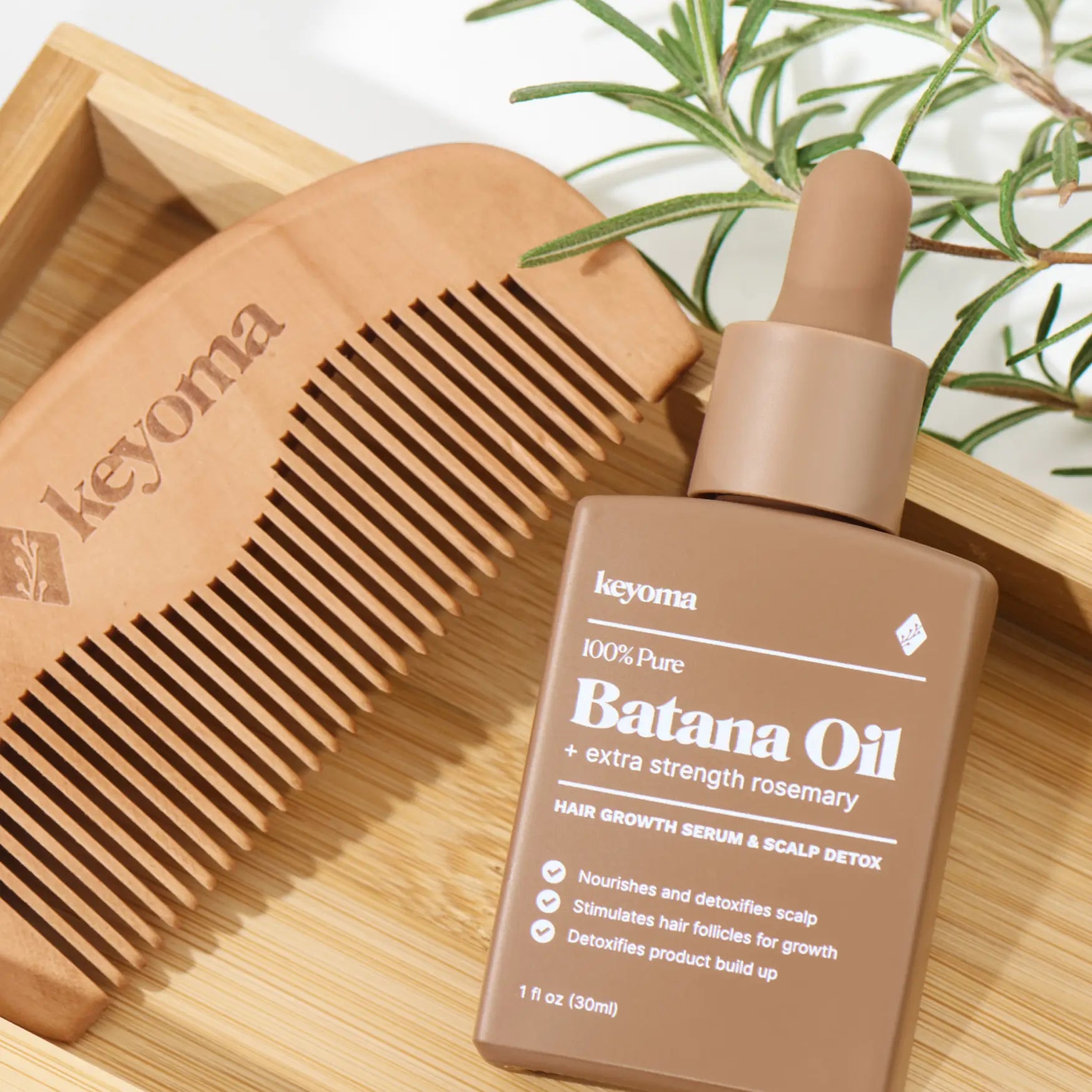
If your scalp is intact, comfortable, and already tolerates the formula, Keyoma Batana Oil with Rosemary can be used according to its directions during a separate oiling session. It should not be used to calm a reaction or pushed into a same-day routine after chemical exfoliation.
Signs to Skip Oil After a Scalp Scrub
Do not apply scalp oil when you notice:
-
Burning or persistent stinging
-
New or increasing redness
-
Raw, scratched, or bleeding areas
-
Tenderness or pain
-
Swelling
-
Blisters, sores, or drainage
-
A rash spreading beyond the treated area
These signs do not tell you whether you have irritation, an allergy, an infection, or another scalp problem. They tell you that the skin should not receive another cosmetic treatment.
If discomfort begins during exfoliation, stop the treatment and rinse according to the product directions. Avoid scrubbing again to remove every trace. More friction can make already-sensitive skin feel worse.
Pause oils, exfoliants, fragrances, unfamiliar serums, and heat styling directed at the area. If an oil later causes discomfort, follow Keyoma’s guide on what to do when hair oil burns.
Seek prompt medical care for severe pain, blistering, rapidly spreading swelling, open skin, pus, fever, or eye involvement. Swelling of the face, lips, tongue, or throat or trouble breathing or swallowing requires emergency care.
Build a Lower-Risk Scalp Routine
A good scalp routine does not need every available treatment during one wash. Fewer overlapping products make the routine easier to follow and easier to adjust.
Use this sequence:
-
Identify the exfoliant. Check whether it uses particles, a brush, an acid, an enzyme, or a professional procedure.
-
Read the complete directions. Confirm whether the product belongs on dry or wet hair, how long it stays on, and whether it replaces shampoo.
-
Avoid introducing a new oil in the same session. Give each product its own trial so you can track your scalp’s response.
-
Rinse or cleanse as directed. Do not add extra rounds of scrubbing because your scalp does not feel “squeaky clean.”
-
Check your scalp before the next step. Burning, unusual redness, warmth, rawness, and tenderness are reasons to stop.
-
Keep oil on the hair lengths when needed. This gives dry strands some slip without exposing recently exfoliated skin.
-
Reintroduce scalp products one at a time. Wait until the scalp feels normal and intact rather than relying on a fixed number of hours.
Gentle does not mean ineffective. The goal is to remove unwanted buildup without turning a routine reset into another source of irritation.
FAQs
Can I apply oil immediately after a scalp scrub?
Do not treat oil as an automatic final step. Check the scrub’s directions and assess your scalp after rinsing.
If you used a gentle mechanical scrub and your scalp feels normal, an oil you already tolerate may fit later. If you used a chemical exfoliant, have sensitive skin, or notice discomfort, separate the treatments.
Should I oil my scalp before using a scrub?
Only if the scrub’s instructions specifically support that order. Adding oil before a scrub can create extra coating and may encourage harder or longer scrubbing during removal.
Do not create an improvised scrub by mixing hair oil with loose salt, sugar, coffee grounds, or concentrated essential oils.
Can I use hair oil after a salicylic acid scalp treatment?
Follow the salicylic acid product’s label. MedlinePlus advises against applying topical salicylic acid to broken, red, swollen, irritated, or infected skin. It also warns that adding certain abrasive, medicated, or drying products may increase irritation.
The cautious option is to use the exfoliant and scalp oil during separate sessions. Do not apply oil if the scalp is stinging, red, tender, or raw.
Can I oil my hair without oiling my scalp?
Yes. Place a small amount on the mid-lengths and ends while keeping it away from recently exfoliated or sensitive scalp skin.
This approach is useful when your strands feel dry but your scalp needs fewer products.
How do I know when my scalp is ready for oil again?
Your scalp should feel normal and intact. There should be no burning, tenderness, unusual redness, swelling, sores, or active irritation.
There is no universal recovery time. Persistent or worsening symptoms need professional assessment rather than another product trial.
Choose a Safer Scalp Oil Routine
The best order is not always scrub, shampoo, and oil. Mechanical exfoliation, chemical exfoliation, and professional treatments each require a different decision.
Follow the exfoliant directions first. Then let the condition of your scalp decide whether oil belongs later, on another wash day, or only on your hair lengths.
Once your scalp is calm and intact, review the directions and ingredients for Keyoma Batana Oil with Rosemary. A separate, measured oiling session gives the formula room in your routine without placing it over freshly treated skin.
Featured Product
30% Off + 3 FREE Gifts
100% Pure Batana Oil + Rosemary


