

In this article
Roses often mark love, celebrations, or thoughtful gifts, but this plant offers more than a pretty arrangement.
The benefits reach into your beauty routine, too. Rose water, made from rose petals, has been used as a beauty staple for centuries.
From Cleopatra’s time to today, it brings a range of uses, and your hair care can benefit as well.
Key Takeaways
-
Rose water is a steam-distilled hydrosol that carries plant compounds in water.
-
It can help balance scalp pH, which may reduce excess oil or dryness.
-
Benefits focus on scalp comfort; evidence for direct hair growth remains limited.
-
Use as leave-on spray or rinse after washing, then seal with light oil.
What Is Rose Water
Rosewater is a hydrosol produced by steam distilling rose petals, a technique refined in ancient Persia over 1,000 years ago and still used in high-end perfumery.
Unlike rose oil, it’s water-based and naturally carries flavonoids, phenolic acids, vitamins, and aromatic terpenes that support the scalp, skin, and hair.
Where Does Rose Water Comes From
It takes about four fresh roses to produce one liter of floral water. Distillation does the work: steam passes through the petals, disrupts plant cells, and releases active compounds. You get two valuable outputs, essential oil and floral water. Choosing organic floral water matters, because the process doesn’t remove pesticides.
While many rose varieties can create floral water, one stands out in reputation: Damascus rose water. It delivers strong yields and is now grown widely from Morocco to Turkey.
Benefits of Rose Water for Hair

Benefits are most tied to scalp care, according to dermatologists, and there’s limited evidence that rose water directly drives hair growth. Instead, rely on rose water to:
Control an Oily Scalp
An oily scalp can throw off your wash schedule. Grease traps dirt and buildup, which may lead to several hair concerns.
A key benefit of rose water is helping manage excess oil. If the sebaceous glands ramp up, rose water’s pH can temper oil production and help keep your scalp and hair clean and balanced.
Improve the Look of Damaged Hair
Heat tools can give you smooth, styled hair, but they also raise the risk of damage. Hair can feel dry and lose shine, and quick fixes don’t last. A light scalp massage with rose water may boost blood flow and refresh follicles. You can also use it as a post-shampoo rinse. Many people notice softer, lighter-feeling hair after the first try.
Hydrate Hair
Moisture makes hair look lush and glossy, while lack of it shows up as frizz and brittle ends. Oil massages are common for hydration, but too much oil can look greasy and worsen oily scalp issues.
Using rose water can add moisture at the scalp and help buffer heat and pollution. Rehydrated strands are easier to manage and less likely to feel parched.
Provides Scalp-Nourishment
Rose water contains vitamins A, B3, C, and E that support scalp health and set the stage for hair to reach its full potential.
Moisturize the Scalp
The scalp can get damaged or irritated just like hair. Rose water can help calm irritation and is often used to address inflammation. A healthier scalp can reduce shedding. This hydrosol may also support blood flow, which helps strengthen hair follicles. You can use it as a mask, and we’ll share a simple at-home idea later.
Reduce Dandruff
Floral water can help with dandruff. Triggers vary, but scalp irritation is a common one. Rose water helps ease irritation and inflammation, which may lower flake production. It also supports oxygenation around the bulb and circulation in scalp vessels.
Since it’s moisturizing for scalp and hair, you can blend it with plant oils like argan or sweet almond for added benefits.
Limit Shedding
By soothing scalp irritation, floral water can also play a role in reducing shedding. It’s a natural option to help curb hair loss, especially paired with other products. Rock water is particularly rich in vitamin C, which supports immune function and collagen production.
Collagen is essential for skin health and hair growth. With that in mind, rose hydrosol can be used to encourage growth alongside other natural, effective choices.
Protect Hair Across Seasons
Rose water also helps activate sebum from the sebaceous glands. That sebum forms a protective layer against outside stressors, which are often higher in summer.
Sun, saltwater, pool chlorine, and heat tools can all stress hair, as can pollution or frequent blow-drying and straightening. Layering nourishing treatments can strengthen and soften hair so it looks more radiant. Rose hydrosols rank among the go-to options.
Adds Shine and a Fresh Feel
If your hair looks dull or flat, rosewater can offer a quick pick-me-up. It adds soft shine and leaves a light floral scent. Keep a small spray bottle in your bag to mist over hair for a touch of hydration and freshness during the day.
Soothe an Itchy, Irritated Scalp
Rosewater has mild anti-inflammatory and antimicrobial properties that can ease scalp itch, flaking, and irritation. That makes it useful if you’re dealing with dandruff, scalp eczema, or general sensitivity. Apply it to the scalp with a spray bottle or a cotton pad, then rinse after 15 to 20 minutes.
Balance Scalp pH
Your scalp, like facial skin, has a natural pH that harsh shampoos, buildup, or environmental stress can disrupt. Rosewater’s slightly acidic pH can help restore balance, which supports a healthier scalp and may reduce both excess oil and dryness.
How to Use Rose Water on Your Hair

Rose water is most often used as a leave-on rinse or spray because it’s gentle and water-based. It’s made by steeping rose petals in water and straining, so you can apply it directly to your scalp and hair.
Step 1: Use It as a Rinse or Spray
After shampoo and conditioner, apply rose water to clean, damp hair and your scalp. Massage for 30 to 60 seconds. Don’t rinse. Let it stay so it can sit on the scalp and strands longer.
Step 2: Apply With a Cotton Swab for Targeted Scalp Care
If dandruff or itch is the issue, dab rose water onto the scalp with a cotton swab and target the irritated areas. Massage gently. Then follow with shampoo and conditioner.
Step 3: Mix It Into Shampoo or Conditioner (Optional)
For the simplest method, mix a little rose water into your shampoo or conditioner in your palm before you apply. Think of this as a light boost rather than a true leave-in effect.
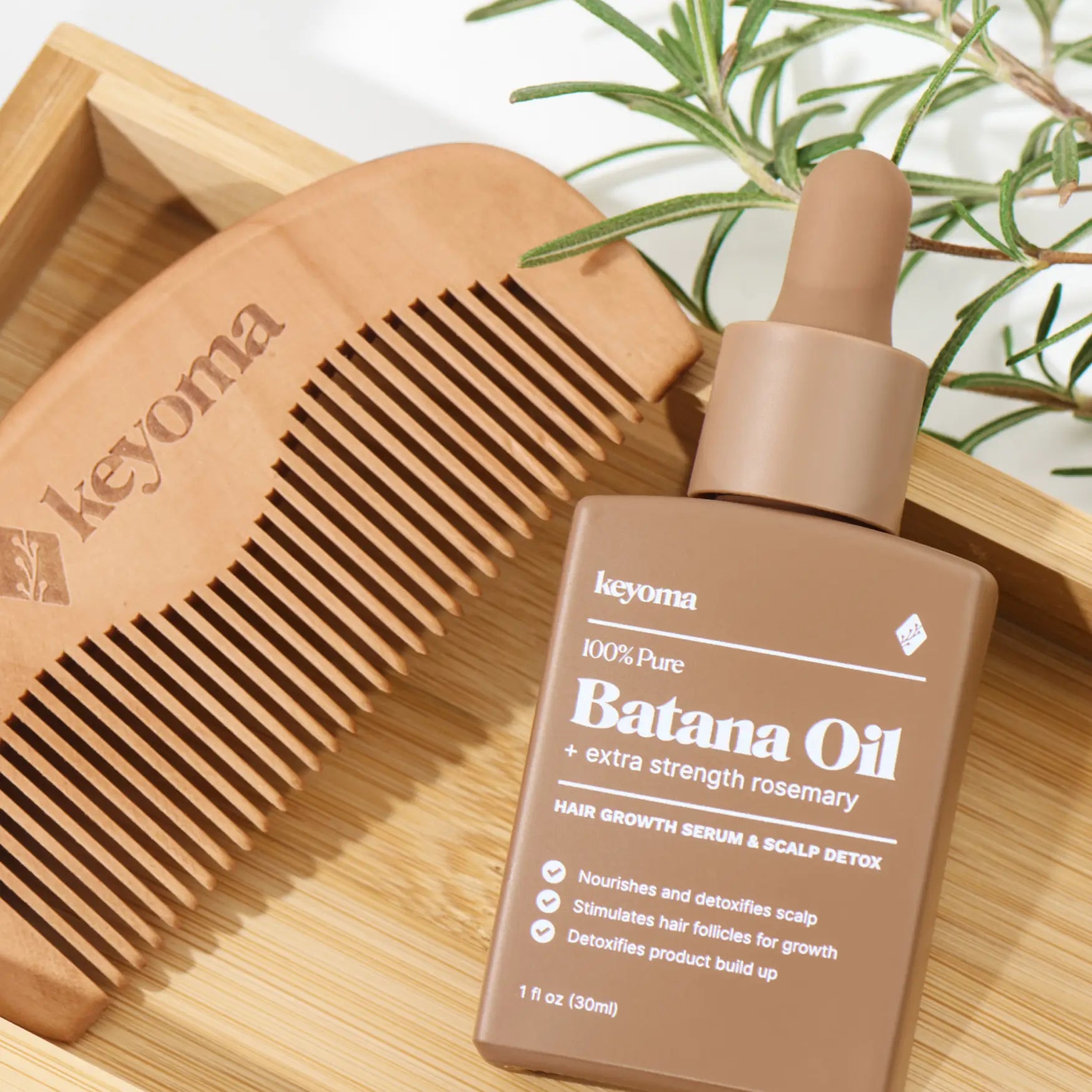
Step 4: Seal It In With Batana Oil With Rosemary
Once you’ve applied rose water and hair is still slightly damp, warm 2 to 4 drops of batana oil with rosemary between your palms and smooth from mid-lengths to ends. If your scalp feels dry, use 1 drop and lightly press it into the scalp. This helps lock in moisture, control frizz, and maintain softness as your hair dries.
Next Wash, Seal Rose Water With Keyoma Batana Oil
Seal rose water in, or you may only get a short-lived “fresh” feel. Rose water is water-based, so it hydrates fast, but it can also evaporate fast, especially with heat, sun, or dry indoor air. If your hair feels softer for an hour then turns frizzy, that is usually a sealing problem, not a rose water problem.
While hair is still damp, smooth a light layer over the lengths so moisture stays where you want it and your ends do not rough up later. Keep it minimal if you get oily fast, since too much product can dull shine.
Ready to make rose water results last longer? Buy Keyoma Batana Oil with Rosemary direct from Keyoma.
Explore more hair care tips from Keyoma's blog.
Featured Product
30% Off + 3 FREE Gifts
100% Pure Batana Oil + Rosemary


