

In this article
Rosehip oil is gaining popularity in natural hair care, recognized for its nourishing and revitalizing qualities.
Rosehip seed oil is rich in vitamins, vital fatty acids, and antioxidants, making it a flexible addition to your hair care.
But could it be the perfect fix for all hair types? In this article, we'll examine the good and bad of using rosehip oil on your hair, to help you decide if it’s a fit. If you want to fight dryness, help hair grow, or ease scalp issues, learning about this strong oil is key for reaching your hair goals.
Key Takeaways
-
Rosehip oil provides fatty acids, antioxidants, and vitamins that help condition hair and scalp.
-
Its light texture can hydrate fine hair, smooth flyaways, and reduce the look of split ends.
-
Its anti-inflammatory properties might soothe dandruff, dryness, and scalp itch.
-
A patch test can lower the chance of irritation; don’t use oils on broken skin.
What Is Rosehip Oil
Rosehip oil, also called rosehip seed oil, is a natural oil that comes from the rosa canina plant. It’s taken from the plant’s seeds and fruits, known as rose hips. Usually, it’s made using cold-extraction, so the oil keeps all its helpful nutrients.
Rosehip oil has been used for centuries in both hair and skin care. It started with native Chilean cultures, who first found it, and continued into ancient Egypt, where Cleopatra used the oil in her beauty routine for its moisturizing and anti-aging benefits. Over time, it spread across cultures, and now it's a well-loved part of hair and skin routines everywhere.
Benefits of Rosehip Oil for Hair

Rosehip oil might not be as famous as other oils, like almond or jojoba, but it has been shown to have several benefits.
Vitamins Support
Vitamin C may help to lessen damage from free radicals, and rosehip oil is thought to have more vitamin C than a lemon or orange.
Rosehip oil also has vitamins A and E. Vitamin A can help rebuild collagen in skin, which reduces wrinkles and fine lines. Vitamin E, a known antioxidant, may help to reduce inflammation.
The vitamin mix in rosehip oil suggests that it could help with inflammatory scalp problems. This is key for hair loss, because hair tends to grow stronger and longer when your scalp is healthy.
Adds Moisture
Rosehip oil might be a good moisturizer whether you have dry, long hair or a scalp that gets eczema and itchy skin.
Rosehip oil’s light texture works even on fine hair. It’s rich in nourishing omega-3 fats like linoleic acid, which doesn’t leave a greasy feel, unlike the heavier oleic oil. If you have fine, bleached hair and want to repair it, non-greasy rosehip oil will help to smooth split ends and tame frizz.
Rosehip oil can help with scalp issues like dandruff, dryness, and itch. Cold-pressed rosehip oil's essential fatty acids (gamma-linolenic acid) can also help keep your skin healthy. Studies indicate that a strong skin barrier often keeps the scalp flake-free.
Antioxidants
Rosehips offer a good source of lycopene, an antioxidant known to help protect skin from harsh pollutants and free radicals. More recently, lycopene has been found to protect skin from the sun, which helps if you're fair and your scalp tends to get sun damage.
Stress can also hurt the hair and scalp; it can stop new hair follicles from growing and make hair weak. The antioxidants in rosehip oil can fight these effects by helping to lower the effects of stress.
Strengthen Damaged Hair
Daily stress from heat styling, pollution, and sun can weaken hair, causing breakage and split ends. Rosehip oil has many essential fatty acids that can help to restore and strengthen hair's natural barrier, which reduces damage and keeps strands strong.
May Support Scalp Health
A healthy scalp leads to strong, beautiful hair. Rosehip oil is thought to help soothe irritation, reduce dandruff, and support scalp health because of its antioxidant and anti-inflammatory qualities. It also has lycopene, which helps to fight oxidative stress that can lead to early hair thinning.
Boost Shine and Softness
Do you have dull, dry hair? Rosehip oil is a natural shine booster. Regular use can smooth the hair cuticle, improve how light reflects, and leave hair silky and bright.
Supports Hair Growth
Rosehip oil is believed to help encourage healthy hair growth by improving scalp circulation and giving vital nutrients to hair follicles. Its high amount of vitamin C also helps collagen production, which is important for strong, healthy hair.
How to Use Rosehip Oil on Hair

It’s easy to use rosehip oil on your hair, and you can adjust it to fit what you need. Here’s how to add it to your routine:
Scalp Treatment
Warm a small amount of rosehip oil (about a teaspoon) in your hands, and gently rub it into your scalp using circles. This helps blood flow and makes sure the oil gets deep into the hair roots. Then, wash it out using a gentle shampoo.
Hair Mask
For a deep treatment, mix rosehip oil with nourishing oils like coconut or argan. Apply the mix evenly to your hair, focusing on the ends, and let it sit for 30–60 minutes before washing out with shampoo.
Tame Frizz and Add Shine
For daily use, put a few drops of pure rosehip seed oil on the ends of your hair to calm frizz and add shine. Be careful not to use too much, or it could make your hair look greasy.
Add It to Your Conditioner
Add a few drops of rosehip oil to your regular conditioner for more hydration and nutrients. Use the conditioner as usual, and rinse well.
Use It as a Pre-Shampoo Treatment
Before shampooing, put rosehip oil on dry hair to keep it from losing natural oils when you wash it. Focus on areas that are dry or damaged for the best results. I’ve noticed that applying it before shampooing really helps with the dryness.
By using rosehip oil in one or more of these ways regularly, you can get the most benefit for healthier, shinier, and more nourished hair.
Rosehip Oil Plus Keyoma Batana Oil With Rosemary
You can mix the two oils for a richer pre-shampoo treatment if your hair feels very dry or rough. Mix a bit of rosehip oil with a smaller bit of Keyoma Batana Oil with Rosemary in your hands, then put it on dry mid-lengths and ends (only use a very small amount on the scalp if it feels dry). Keep it on for 30–60 minutes, then shampoo and condition.
By using rosehip oil consistently in one or more of these ways, you can maximize its benefits for healthier, shinier, and more nourished hair.
Potential Side Effects and Safety Tips
Many essential oils have to be mixed with a carrier oil to prevent irritation, but rosehip extract doesn't need this. Rosehip oil can sometimes act as a carrier oil. But, you should always do a patch test when trying new essential oils on your skin. Simply put rosehip oil on your inner elbow, wait a day, and watch for allergic reaction signs, like:
-
Redness
-
Irritation or itchiness
-
Rashes
-
Crusting on the skin
Never put rosehip oil on broken or irritated skin, and keep it away from your eyes. The oil should only be used on the skin, so don't swallow it. It's always wise to talk to a doctor before using new natural oils.
Add Rosehip Oil, Then Seal With Keyoma Batana Oil
Before adding rosehip oil to your routine, do these quick tests. First, see how your hair feels when it dries. If it stays rough or frizzy, you need to seal in more moisture, not add more style. Next, check your scalp. If it feels tight or itchy, lightly massaging a small amount of oil into your scalp may help.
Finally, watch for a greasy feel. Rosehip is lighter, but too much can still weigh hair down. Put a few drops on damp mid-lengths and ends, then check again after using it consistently for a week. Explore the Keyoma Hair Care blog for more natural oil routines and ingredient advice.
Featured Product
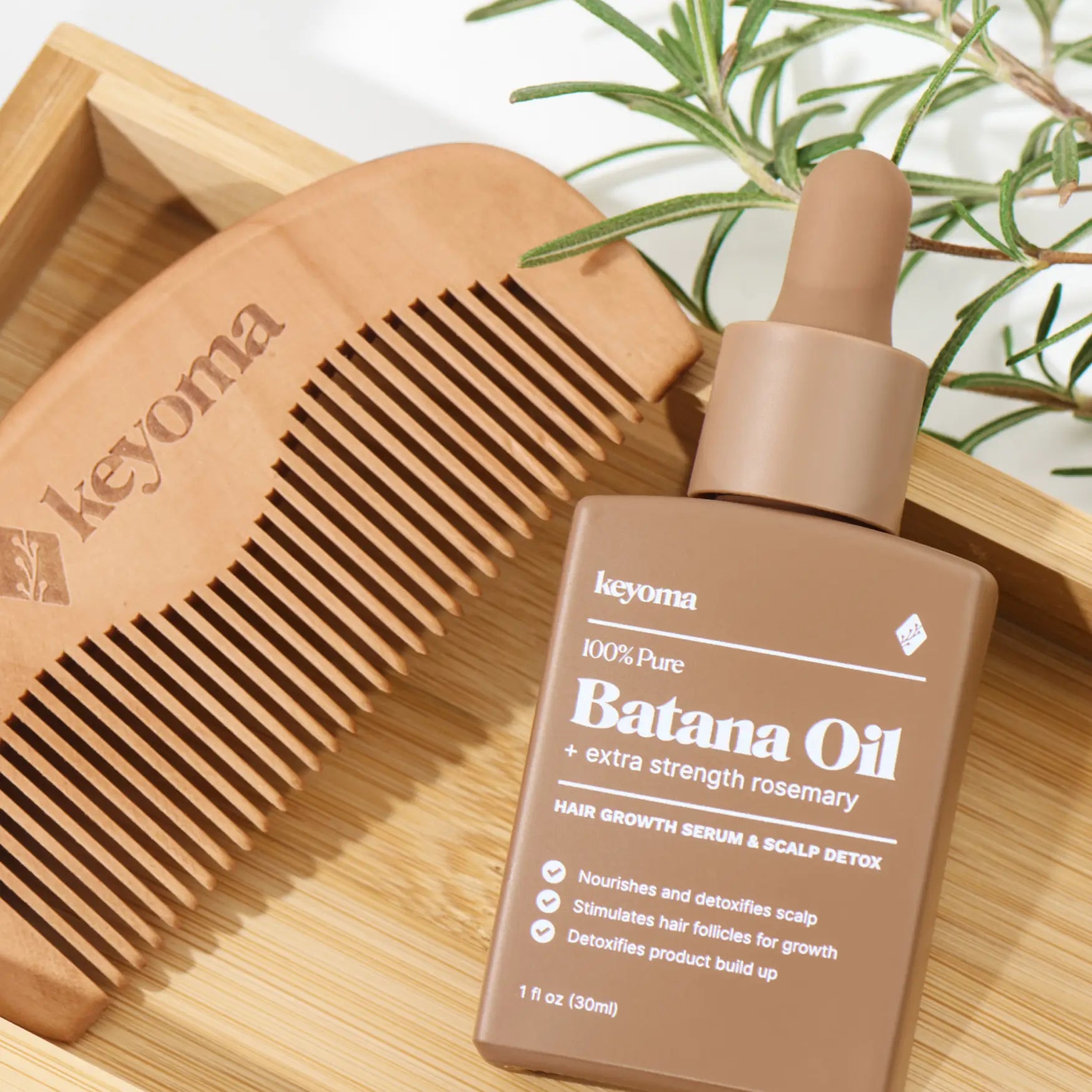
30% Off + 3 FREE Gifts
100% Pure Batana Oil + Rosemary


