

In this article
A fresh protective style may feel secure, but it should not leave your scalp in lasting pain. Soreness, stinging, a headache, or visible pulling can mean the style is placing too much tension on your hair and scalp.
Do not assume you need to wait several days for tight braids, cornrows, twists, extensions, or a weave to loosen. Pain is feedback. Releasing the tension early is more important than preserving a newly installed style, especially if your hairline or individual attachment points feel tender.
The first step is not oiling, massaging, or covering the discomfort. It is finding where the pulling comes from and loosening or removing the style before the stress progresses to breakage or hair loss.
Key Takeaways
-
A protective style should not cause lasting pain, stinging, crusting, or visible scalp pulling.
-
Loosen the affected sections promptly, or remove the style if the discomfort is widespread or continues.
-
Oil cannot make an overly tight hairstyle safe because it does not remove mechanical tension.
-
Seek medical care for worsening pain, broken skin, drainage, swelling, fever, or signs of hair loss.
What Should You Do When a Protective Style Hurts?
Start by removing anything that adds more pressure. Take the style out of a high ponytail or bun, loosen tight scarves, and avoid clips or headbands that press against tender areas.
Next, identify whether the discomfort comes from one section or the entire installation. A single braid may have caught too much hair at the root, while a full head of extensions may be too tight or heavy overall.
If only a few sections hurt, ask the stylist to loosen or redo them as soon as possible. If you cannot return to the stylist, carefully remove the painful sections without tugging at the roots. Do not pull on the braid to test whether it has become looser.
The American Academy of Dermatology advises changing a hairstyle immediately if it causes pain, stinging, crusting, or tenting of the scalp. Tenting happens when tightly pulled hair lifts the skin into small peaks around the style.
Remove the installation rather than adjusting it when:
-
Pain affects several areas of your scalp
-
The discomfort returns after loosening the style
-
You cannot sleep comfortably
-
The style causes a persistent headache
-
You see bumps, crusts, broken hairs, or lifted skin
-
Your edges or roots feel as if they are constantly being pulled
A style does not become protective simply because it keeps your hair tucked away. If it puts continuous stress on your roots, keeping it installed may do more harm than taking it down.
How to Tell What Your Sore Scalp May Be Reacting To
Scalp soreness after a protective style can have more than one possible cause. The way it feels and where the symptoms appear can help you choose a safer next step, but it cannot confirm a diagnosis.
Pulling or Pressure at the Roots
Tenderness along your parts, edges, nape, or individual attachment points often points toward mechanical tension. The discomfort may become more noticeable when you move the braids or pull them into another style.
Release the tension first. Oil, mousse, warm water, or pain relievers may change how the area feels temporarily, but they do not reduce the force being placed on the roots.
Repeated pulling can contribute to traction alopecia. If you already notice thinning, short broken hairs, or changes around your edges, learn more about the early steps in traction alopecia recovery.
Burning, Itching, or a Widespread Rash
Burning or itching that extends beyond the tightest areas may involve more than tension. Your scalp could be reacting to a styling product, adhesive, synthetic extension material, or another substance used during installation.
Stop applying new products while your scalp is reacting. Adding oils, fragranced sprays, or DIY mixtures can make it harder to identify what triggered the symptoms. Remove the suspected source when possible and seek professional guidance if the reaction is severe, spreading, or persistent.
Tightness With Fine, Dry Flaking
Dryness may occur while you wear a protective style, but it should not be used to explain away pain. Small, dry flakes with mild tightness feel different from sharp pulling at the roots or soreness that worsens when the hair moves.
Address the hairstyle’s tension before treating possible dryness. Once the pulling is gone and the skin feels comfortable, you can consider a simple moisture routine. Keyoma’s guide to distinguishing dry scalp from other scalp concerns provides more focused guidance.
Bumps, Pus, Warmth, or Spreading Swelling
Painful bumps, drainage, warmth, or swelling should not be treated as ordinary post-braid soreness. These signs can require medical assessment, particularly if they worsen or occur with fever or a general feeling of being unwell.
Avoid squeezing bumps or coating the area with heavy oils. Contact a dermatologist or another qualified healthcare professional for guidance.
Should You Loosen the Style or Take It Down?
Loosening may be reasonable when the pain clearly comes from one or two sections and stops after those sections are adjusted. The area should feel comfortable without continued pulling, burning, or tenderness.
Take the style down when the discomfort is widespread, intensifies, or does not improve after adjustment. You should also remove it if you see crusting, broken skin, scalp tenting, thinning, or clusters of painful bumps.
The removal method depends on the style:
-
Braids and twists: Undo the painful sections slowly, supporting the hair near the root so you do not add more pulling.
-
Extensions: Remove excess weight and tension rather than trying to stretch or soften the installation.
-
Weaves: Ask a stylist to safely release tight tracks or braids underneath the weave.
-
Wigs over cornrows: Remove the wig and check whether the underlying cornrows, clips, combs, or adhesive are creating pressure.
-
Heavy loc styles: Let the locs down and remove pins, added hair, or styling positions that pull at the roots.
Do not rush the takedown. Cutting too close to your natural hair or aggressively combing through shed strands can turn a tension problem into avoidable breakage.
What to Do After the Tension Is Removed
Keep your routine simple while the scalp settles. Wear your hair loose or in a low-tension arrangement. Avoid tight hats, edge control, adhesives, heat, scratching, and vigorous scalp massage.
If sweat or styling residue has collected, cleanse gently with lukewarm water and a mild shampoo. Use the pads of your fingers instead of your nails, and do not scrape crusts or rub tender areas.
For now, avoid essential oils, strong antiseptics, fragranced treatments, and heavy layers of product. Do not apply oil to skin that is broken, burning, swollen, draining, or visibly inflamed.
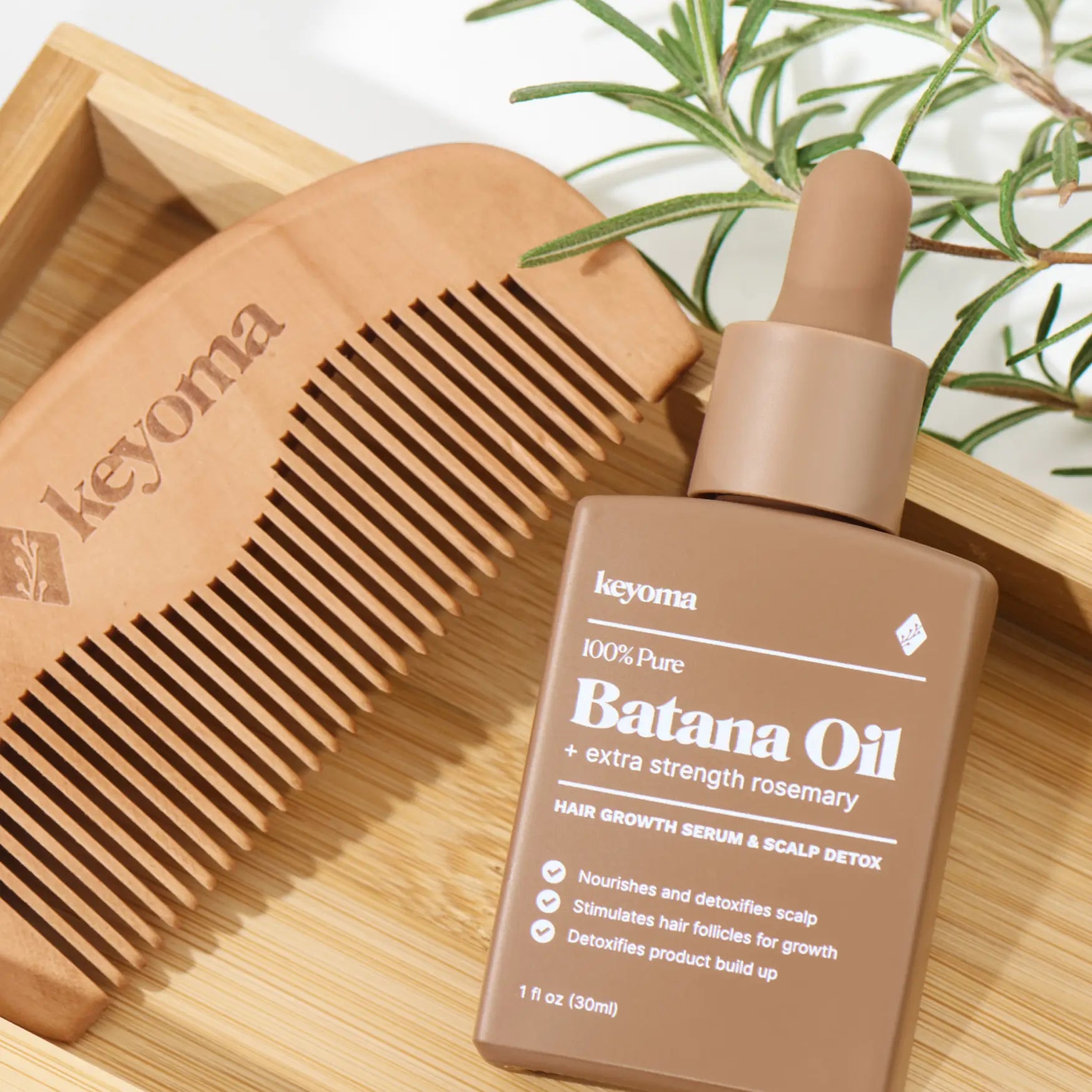
Once your scalp feels normal again and the skin is intact, a small amount of Keyoma Pure Batana Oil with Rosemary Oil can fit into a simple moisture routine. Warm a minimal amount between your palms and smooth it over dry hair or the lengths that were tucked into the style. If your scalp is comfortable and you already tolerate the product, you may use a light application rather than saturating the roots.
Batana oil can help condition dry hair, but it does not release tension, treat an infection, or reverse follicle damage. If the style still hurts, remove the source of the pulling before reaching for any oil.
Monitor your scalp over the next several days. Look for continued tenderness, crusting, broken hairs, widening parts, thinning edges, or areas that appear smoother or shinier than before.
Wait until your scalp feels fully comfortable before installing another tension-based style.
When Does Scalp Pain Need Medical Attention?
Pain should improve after the pulling stops. Contact a dermatologist or another qualified healthcare professional if it continues after you loosen or remove the style, especially when it is getting worse.
Medical evaluation is also appropriate for:
-
Broken skin, bleeding, sores, blisters, or crusts
-
Painful bumps, pus, or other drainage
-
Warmth or spreading swelling
-
Fever or feeling generally unwell
-
Persistent burning or itching
-
Broken hairs or thinning around the hairline
-
Patches of hair loss
-
Smooth or shiny areas where hair previously grew
-
Soreness that returns with each protective style
Redness can be less visible on brown or Black skin. Pay attention to changes from your normal skin tone as well as warmth, swelling, drainage, and tenderness.
Prompt care matters because repeated or prolonged tension can eventually damage follicles. The AAD notes that early changes may be reversible, but continuing to wear tight styles can lead to permanent hair loss.
How to Prevent Scalp Pain With Your Next Protective Style
Prevention begins during installation, not after the style is complete. Tell your stylist as soon as a section hurts. Do not accept the idea that a painful installation needs several days to “settle.”
Ask for less tension around the temples, hairline, and nape. These areas often have finer hairs that are more vulnerable to pulling. You can also choose thicker braids, shorter extensions, or less added hair to reduce the number of attachment points and overall weight.
The AAD recommends speaking up when a weave or extension installation causes pain or a headache because this usually means the style is too tight.
After installation:
-
Keep fresh braids or twists down instead of immediately pulling them into a bun.
-
Avoid repeatedly styling the hair in the same direction.
-
Rotate your parts and attachment points.
-
Give your scalp periods without added hair or continuous tension.
-
Check your edges and parts for tenderness, bumps, or broken hairs.
-
Remove the style if it begins to hurt rather than trying to cover the pain.
A protective style should reduce daily manipulation without replacing it with constant root stress.
Protect Your Scalp Before Preserving the Style
When your scalp hurts after braids or another protective style, the priority is releasing the tension. A soothing product may make the surface feel more comfortable, but it cannot make a tight installation safe.
Loosen a clearly affected section when the problem is limited. Take the style down when pain is widespread, persistent, or accompanied by visible scalp changes. Once the scalp is calm and intact, you can return to gentle cleansing and light conditioning with products such as batana oil.
The cost or time spent on a style can make removal frustrating. Still, protecting your scalp and follicles is more valuable than trying to save an installation that continues to hurt.
Frequently Asked Questions
Is it normal for your scalp to hurt after braids?
Lasting scalp pain after braids should not be treated as normal. If the style causes pulling, stinging, crusting, a headache, or visible scalp lifting, loosen or remove it.
How long should scalp pain last after a protective style?
Do not wait several days for a painful protective style to loosen naturally. Reduce the tension when the pain begins and monitor whether the discomfort improves after the style is adjusted or removed.
Can tight braids cause hair loss?
Yes. Repeated or prolonged pulling from tight braids can contribute to traction alopecia. Early action may prevent further damage, while continued tension can eventually cause permanent hair loss.
Should I oil my scalp when my braids hurt?
Oil does not remove the mechanical tension causing pain. Loosen or remove the painful sections first, and do not apply oil to broken, burning, swollen, or visibly inflamed skin.
Should I remove braids if I see bumps?
Loosen or remove braids around the affected area. Seek medical care if the bumps are painful, draining, spreading, warm, swollen, or accompanied by fever.
Featured Product
30% Off + 3 FREE Gifts
100% Pure Batana Oil + Rosemary


