

In this article
From old herbal teas to modern scalp oils, nettle for hair is often promoted as a natural way to reduce shedding and support regrowth. But does stinging nettle really help with hair loss?
The short answer is no. Nettle does have a few promising qualities, but there is very little evidence that it helps with hair loss.
Below, you will see the possible benefits and side effects for hair health. We also cover a few other options used for hair regrowth.
Key Takeaways
-
Nettle provides vitamins, minerals, and antioxidants that may support scalp condition and overall hair health.
-
Current evidence does not clearly show that stinging nettle slows, stops, or reverses hair loss.
-
Its anti-inflammatory and antimicrobial properties may help soothe dandruff, itching, and scalp irritation.
-
Nettle may cause burning, redness, or allergic reactions, so patch testing is important.
What Is Nettle?
Also called stinging nettle (Urtica dioica), this leafy green plant is a common home remedy for many health concerns.
It contains vitamins A, C, K, and several B vitamins, along with minerals such as iron, magnesium, calcium, and silica, all of which may support healthy hair and your general health as well.
Nettle also appears to have antioxidant and anti-inflammatory activity.
Benefits of Nettle For Hair

Nettle gets attention in hair care for a few different reasons, but most of its potential value comes from scalp support and overall hair health, not proven regrowth. Its nutrients and plant compounds may help in indirect ways, which is why it helps to look at each claimed benefit on its own instead of treating nettle as a cure for hair loss.
May Help Reduce DHT
In the studies I reviewed, nettle root may block 5-alpha-reductase, the enzyme that turns testosterone into dihydrotestosterone (DHT). The important word here is may.
DHT is the main hormone linked to androgenetic alopecia, also called male pattern baldness or male pattern hair loss. Because of that, the idea is simple: if DHT goes down, shedding may go down too.
Beyond hair loss, DHT is also involved in benign prostatic hyperplasia (BPH), which is a condition that causes the prostate gland to enlarge.
While some research suggests nettle extract could help with BPH, there is less evidence showing that nettle truly slows or reverses hair loss.
So the idea is interesting, but it is not proven.
Nutrient Boost for Hair Health
Some nutritional deficiencies can lead to hair loss. For most people, eating a balanced and varied diet is enough to cover basic nutritional needs.
Still, if your hair is thinning because of nutrient deficiencies, supplements may be needed to help fill those gaps.
Nettle contains several nutrients linked to hair health, including:
-
Iron, which helps carry oxygen to follicles
-
Magnesium, which supports protein synthesis
-
Silica, which has been linked to hair strength
-
Vitamin A
-
B vitamins
-
Vitamin C
Antioxidant and Anti-Inflammatory Properties
As noted above, nettle may offer antioxidant and anti-inflammatory effects.
Here is why that may matter for your scalp:
-
Anti-inflammatory compounds may help reduce inflammation around the scalp and hair follicles. Chronic scalp inflammation, which can happen with scalp problems such as dandruff, may disrupt the hair growth cycle.
-
Antioxidants help counter oxidative stress, which can weaken hair follicles over time and may speed up hair fall.
Because of that, nettle may help soothe an inflamed or itchy scalp, especially when you use it topically in a nettle shampoo or scalp rinse.
Can Improve Dandruff
Current evidence suggests nettle has antimicrobial and antibacterial properties, and those may help improve issues such as dandruff. Research has shown that the many active compounds in this plant may display stronger antibacterial activity than synthetic antimicrobials.
Potential to Improve Blood Flow
Some herbalists believe nettle may stimulate scalp circulation, which could help bring more nutrients and oxygen to hair follicles.
But there is no real evidence showing that nettle improves blood flow in the scalp. So it makes sense to treat that claim very cautiously.
Are There Any Side Effects of Using Nettle for Hair?
We have gone over the possible benefits of nettle leaf for hair. Now it is worth looking at some side effects and a few tips for using nettle for hair regrowth more safely:
-
Nettle leaf may trigger allergic reactions that cause stinging or burning. It may also lead to redness and rashes. Because of that, do a patch test before using nettle products on a larger area of skin or scalp.
-
It is best to speak with a doctor before using it. They may guide you on proper use if you have sensitive skin or take medication, which may help you use nettle leaf extract for hair with less risk.
How to Use Nettle for Hair Health?
You can work stinging nettle into your daily hair routine in several ways.
-
You can take nettle as a supplement. Many health stores and herbal shops sell nettle leaf supplements. They may come as capsules, tablets, or powders. I noticed capsule forms tended to feel simpler for routine use. It is often suggested that 500mg - 1000mg of stinging nettle daily may give the most benefit.
-
You can drink nettle tea. By steeping dried nettle leaves in boiling water, you can make a nutrient-rich tea. Mix 4 cups of hot water with 4 - 6 teaspoons of freshly chopped nettle. Let it steep for 20 minutes, then strain the liquid through a fine-mesh strainer. You can drink it hot or cold.
-
You can infuse nettle into an oil. This is often seen as one of the more effective ways to use nettle because oil may move into the scalp’s pores and help nourish damaged follicles. You can add it to shampoos or conditioners, or use it as an overnight scalp treatment. Some products made for hair loss already include stinging nettle extract, so it is worth checking the ingredient list first.
-
You can use nettle as a hair rinse. To make one, brew the tea as described above, let it cool, and add a few drops of your favorite essential oils. For me, cooler rinses tended to feel more comfortable on the scalp. To use it, pour a few ounces of the chilled mixture over wet hair before shampooing. Massage it into the scalp for 60 seconds and comb it through with a wide-toothed comb. Repeat once a week for hair that looks shinier and feels stronger.
Try Stinging Nettle for Hair for Scalp Comfort
The most useful part of a hair routine is not always the ingredient with the loudest reputation. Sometimes it is the ingredient you understand well enough to use with realistic expectations. Nettle falls into that group. It may support scalp comfort, dandruff control, and general hair health, but that is not the same as proven regrowth.
That difference matters because false hope can keep you focused on the wrong solution while the real cause of shedding stays untreated. A better way to judge an ingredient is to ask whether it helps your scalp in a useful way, not whether it comes with big claims.
Read Keyoma’s hair care blog for more clear guidance on what natural hair ingredients can and cannot really do.
Featured Product
30% Off + 3 FREE Gifts
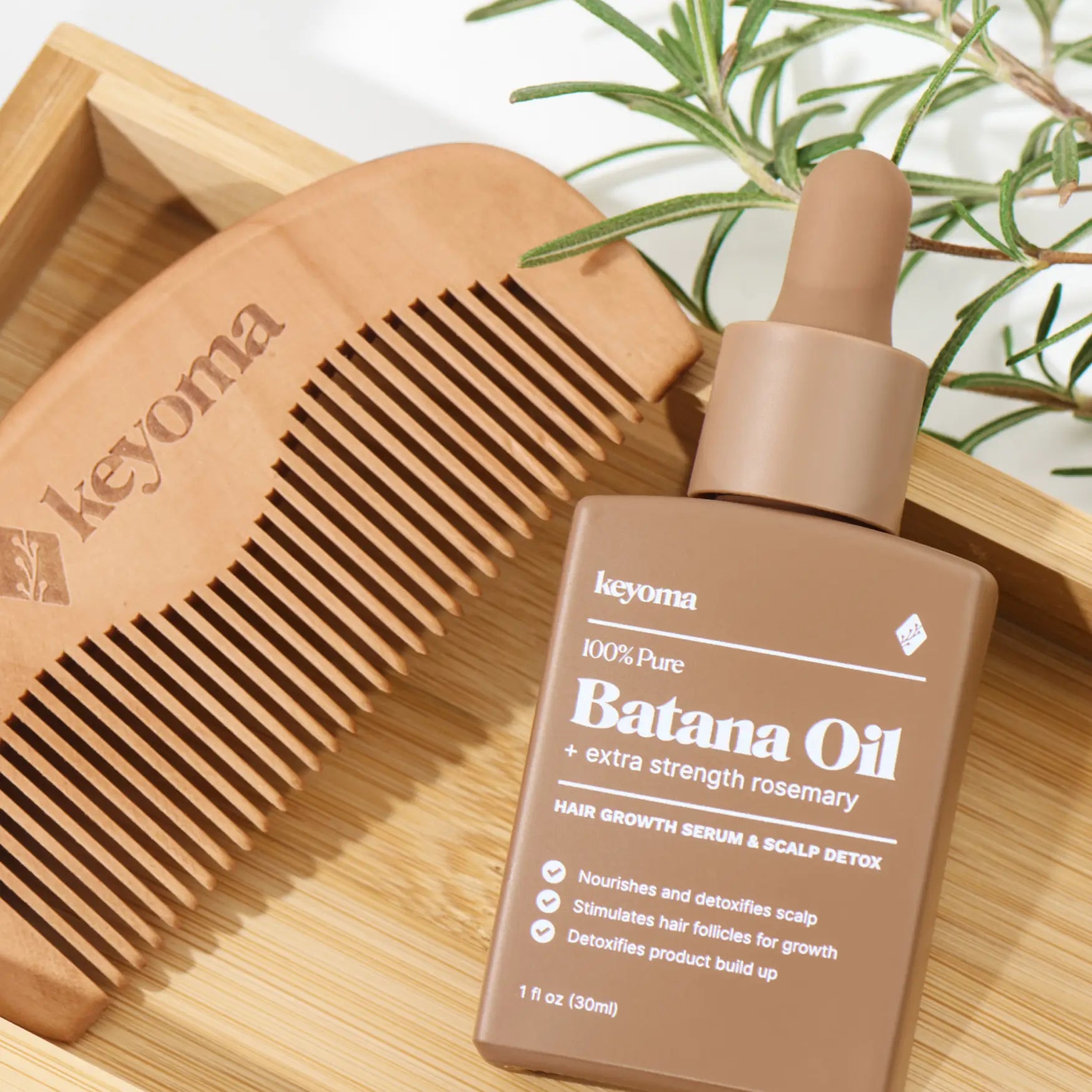
100% Pure Batana Oil + Rosemary


