

In this article
A tender scalp and hair loss can happen together, but soreness alone cannot reveal the cause. Pain may come from styling tension, irritation, infection, an inflammatory scalp condition, or a sensory symptom called trichodynia. Some types of hair loss cause no discomfort.
Look at the pattern around the pain. Is the shedding diffuse or patchy? Does the scalp look normal, or can you see redness, scale, bumps, crusting, or open areas? Is the discomfort along a tight hairline, or is crown thinning slowly expanding?
Those differences help you choose between observation and a dermatology visit. A normal-looking scalp with diffuse shedding calls for a different response than a painful, shiny patch or a tender crown that keeps losing density.
Key Takeaways
-
Scalp soreness can accompany hair loss without proving permanent follicle damage.
-
Redness, scale, crusting, or pus needs more caution than tenderness alone.
-
Pain from a tight style is a sign to loosen or remove it.
-
Progressive crown tenderness or sudden patchy loss needs dermatology care.
Does a Tender Scalp Mean Hair Loss Is Getting Worse?
Not necessarily. Soreness does not reliably show how much hair is being lost or whether follicles are permanently damaged. A scalp can feel sore while looking normal, and noticeable thinning can develop without pain. Compare the tenderness with the location, appearance, and progression of the hair change.
The American Academy of Dermatology notes that burning or stinging may occur before some forms of sudden hair loss. It also warns that intense itching, burning, and tenderness with hair loss may occur with infection, especially when scale, swelling, sores, or pus are present. Its overview of hair loss signs and symptoms shows why the surrounding signs matter more than pain alone.
Check whether you see full-length shed hairs, short broken pieces, or a change in density. Hair shedding and hair loss can look similar in a brush, but they raise different questions. Full-length hairs from across the scalp fit diffuse shedding more closely. Uneven short hairs point toward breakage. A widening part, receding edge, or expanding sparse area suggests a density change.
Photograph the area in the same lighting, with the same part and dry hair. Wet roots, overhead light, oil, and a shifted crown whorl can make the scalp look more exposed. Comparable photos reveal progression more clearly than repeated mirror checks from changing angles.
Match the Soreness to Your Hair Loss Pattern
Scalp pain is not a diagnosis. Visible signs create a safer decision path. The possibilities below should guide observation, not self-diagnosis.
|
What you notice |
What it may fit |
Safest next step |
|
Diffuse shedding with no redness or scale |
Trichodynia, telogen shedding, or another diffuse pattern |
Track changes and seek care if density drops |
|
Smooth round or oval patch |
Alopecia areata is one possibility |
Arrange a dermatology assessment |
|
Scale, crusts, bumps, sores, or pus |
Infection or inflammatory scalp disease |
Get prompt medical evaluation |
|
Pain where hair is tightly pulled |
Styling tension or traction alopecia risk |
Loosen or remove the style |
|
Tender crown with progressive thinning or shiny skin |
A scarring process may need exclusion |
See a dermatologist promptly |
Diffuse Shedding With a Normal-Looking Scalp
Diffuse shedding affects many areas rather than one clear patch. The scalp may look unchanged while washing releases more full-length hairs. Some people also report burning, aching, or the feeling that their hair roots hurt.
A normal-looking scalp lowers concern for an obvious infection, but it does not identify the cause. Telogen effluvium, pattern hair loss, and other conditions can overlap. Keyoma’s overview of telogen effluvium explains diffuse shedding without treating scalp pain as proof of that condition.
Track part width and overall density in consistent photos rather than counting every strand. Continued soreness, persistent shedding, or visible density loss deserves an examination.
Patchy Loss With Scale, Redness, or Bumps
Patchy loss needs caution because several conditions can look similar. A smooth round or oval patch with little surface change may fit alopecia areata. The AAD notes that itching, tingling, or burning can occur near the affected area even when a patch looks smooth. Its alopecia areata symptom guide shows the pattern clinicians assess.
Scale, crusting, open sores, pus, swelling, or painful bumps point away from simple dryness. Those signs may occur with infection or inflammatory conditions. Do not scrub the patch, pick at crusts, or cover it with a heavy oil layer.
Keyoma’s explanation of alopecia areata symptoms adds context for smooth patchy loss, but only an exam can separate it from other causes.
Hairline Pain After Tight Hairstyles
Pain from braids, ponytails, buns, extensions, locs, wigs, or head coverings means the scalp is under too much tension. Repeated pulling can contribute to traction alopecia, often beginning around the hairline.
The AAD advises changing a style when it causes pain, stinging, crusting, or visible pulling. Its guidance on traction alopecia and tight hairstyles also states that a painful hairstyle is too tight.
Loosen or remove the style rather than trying to cover the discomfort with oil or massage. Check for broken hairs, thinning patches, or smooth skin. Persistent loss after removing the tension needs professional evaluation.
Crown Tenderness With Progressive Thinning
A tender crown deserves attention when thinning expands or the scalp feels bumpy, scaly, crusty, burning, or stinging. Pattern thinning can affect the crown, but pain and surface changes raise the need to rule out an inflammatory or scarring condition.
Central centrifugal cicatricial alopecia, or CCCA, often begins at the crown and primarily affects Black women. The AAD lists tenderness, pain, burning, scale, bumps, crusting, and smooth or shiny skin among possible signs. Its CCCA signs and symptoms explain why early evaluation matters when scarring hair loss is possible.
Not every widening crown is CCCA. Androgenetic alopecia can also cause gradual crown or part-line thinning. The scalp surface, symptoms, progression, and clinical exam help separate these patterns.
What Is Trichodynia?
Trichodynia describes pain, burning, stinging, aching, or tenderness of the scalp reported by some people who also complain of hair loss. The scalp may look normal, which can make the sensation hard to interpret.
A review of trichodynia research describes it as a painful scalp sensation reported with diffuse or localized hair loss. Researchers have not established one cause, and the symptom is not limited to one hair-loss diagnosis.
A later clinical review of trichodynia reports the symptom with telogen effluvium and androgenetic alopecia, among other presentations. Scalp pain therefore does not prove active follicle inflammation or identify a specific shedding disorder.
Trichodynia names the sensation, not its cause. A clinician may need to exclude visible scalp disease, styling tension, infection, migraine-related sensitivity, nerve pain, or a hair-loss disorder.
What You Can Do While the Cause Is Unclear
Keep the scalp routine simple while you observe the pattern. Remove avoidable irritation without masking changes that a clinician may need to see.
Seek prompt care for sudden patchy loss, severe or worsening pain, spreading redness, swelling, pus, open or oozing sores, fever, smooth shiny areas, disappearing follicle openings, or crown tenderness with progressive thinning. Dermatologists may review onset, examine the scalp and nails, test the hair, and order blood work or a biopsy when needed. The AAD’s hair loss diagnosis process explains why finding the cause comes before choosing treatment.
Keyoma’s overview of when to see a doctor for hair loss can help you prepare your symptom history and questions.
Remove Tension and Pause Irritating Products
Undo tight styles and avoid replacing them with another style that pulls on the same area. Skip aggressive brushing, firm scalp massage, bonding adhesives, and high heat over the sore spot.
Pause any new dye, essential-oil blend, fragrance-heavy product, dry shampoo, adhesive, or styling product that preceded burning or redness. Testing several remedies at once makes the trigger harder to identify.
If discomfort followed an oil application, review the possible side effects of hair oiling, including irritation, buildup, flaking, and hairline breakouts. Stop applying the suspected product to the sore area.
Cleanse Gently Without Scratching
Wash often enough to remove sweat, residue, and loose scale, but avoid using your nails or a rough scalp tool. Apply shampoo with your finger pads, rinse thoroughly, and pat rather than rub the area dry. Scratching can break the skin and make inflammation harder to assess.
Flakes do not always mean the scalp needs more oil. Oily or sticky scale with itch may fit dandruff or seborrheic dermatitis more closely than dryness. Keyoma explains when hair oil can worsen dandruff by adding residue to an already oily or flaky scalp.
Avoid choosing medicated or prescription products from a photo alone. Treatment depends on the cause.
Reconsider Scalp Oiling During a Flare
Do not apply oil directly to a scalp that is painful, broken, oozing, infected, or visibly inflamed. Oil can reduce friction on dry strands, but it does not diagnose or treat trichodynia, infection, inflammatory alopecia, or unexplained hair loss.
Cleveland Clinic’s hair-oiling guidance notes that scalp oiling does not suit everyone and may worsen seborrheic dermatitis in dandruff-prone people. It suggests using a small amount on dry hair and focusing on the ends.
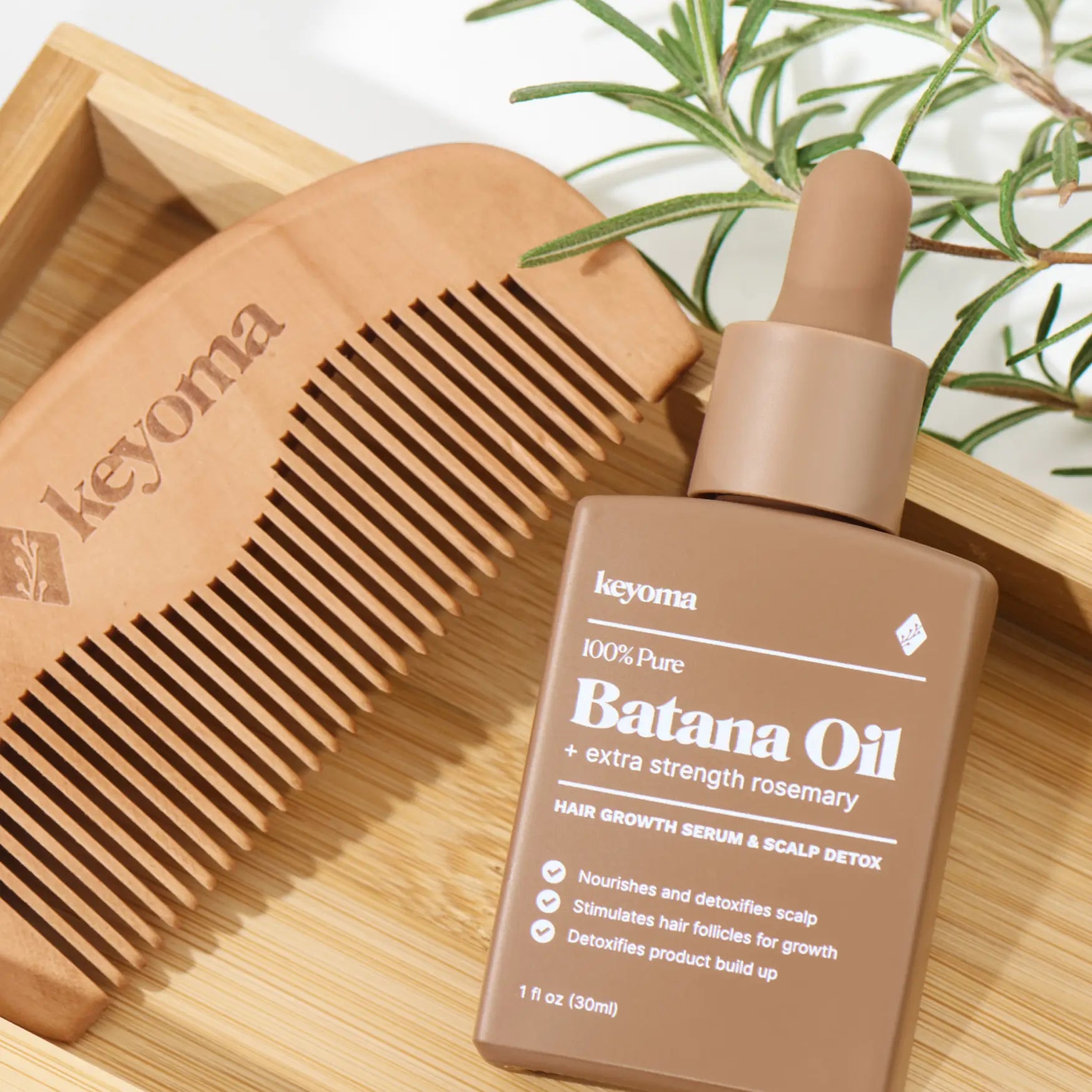
After active irritation settles, Keyoma Batana Oil with Rosemary can serve as a light cosmetic conditioning step for dry mid-lengths and ends. Keep it off areas that still burn, sting, crust, or feel tender. Its role is softness, shine, and reduced friction, not treatment for hair loss.
Track Tender Scalp and Hair Loss for Clearer Next Steps
Let the pattern guide your response. A normal-looking scalp with diffuse shedding can be tracked with consistent photos while you arrange care if it persists. A painful style should be loosened immediately. Patchy loss, visible inflammation, infection signs, or progressive crown tenderness needs medical attention.
Record when soreness began, where it occurs, whether hairs are full length or broken, and which products or styles came before it. Bring those details to a dermatologist. They provide a stronger starting point than matching one symptom to one diagnosis at home.
Featured Product
30% Off + 3 FREE Gifts
100% Pure Batana Oil + Rosemary


