

In this article
A hair-oil bottle can look securely closed and still leave a greasy patch inside your luggage. Oil around the threads, a misaligned dropper, temperature changes, and pressure against the cap can all expose a weak seal.
Before traveling, inspect the bottle, clean its neck, close the dropper securely, and place it upright inside its own sealed bag. Cushioning the bottle adds another layer of protection.
These steps reduce the chance of a hair oil bottle leaking, but no packing method can guarantee that every dropper will remain sealed. Secondary containment matters because it protects the rest of your luggage if the primary closure fails.
Key Takeaways
-
Clean bottle threads help the closure sit evenly before entering your bag.
-
A sealed secondary bag contains spills but does not strengthen the primary closure.
-
Upright, cushioned packing reduces stress without guaranteeing protection from every leak.
-
Inspect damaged or leaking packaging before applying any oil after arrival.
Why Hair-Oil Dropper Bottles Can Leak in Transit

A dropper bottle depends on clean threads, proper alignment, and firm contact between the bottle and its closure. A small problem in any of these areas can create a path for oil to escape.
This is also why a bottle described as travel-sized is not automatically leak-resistant. “Travel-sized” usually refers to volume, not packaging performance.
Oil Around the Threads Can Weaken the Closure
Hair oil often collects around the bottle neck after dispensing. If you replace the dropper while oil remains on the threads, the collar may not sit as evenly as it would on a clean, dry surface.
The residue can also spread across the outside of the bottle. Later, you may find an oily bottle and assume the closure leaked during the trip, even though some of that oil was already present before packing.
Wipe the outside of the dropper collar, bottle neck, and threads with a clean, dry cloth. Keep water away from the opening and do not rinse the dropper immediately before packing.
Pressure and Temperature Changes Can Test the Seal
Air inside a bottle responds to pressure changes more than the liquid does. During a flight, that difference can put added pressure on the closure. The University of Illinois Physics Van notes that the amount of air inside a bottle can affect how much liquid escapes while the pressure equalizes.
However, this does not support one universal fill-level rule for every hair-oil bottle. The outcome also depends on the bottle material, closure design, seal condition, oil viscosity, and how firmly the dropper is seated.
Avoid topping up or partially emptying a bottle based on a generic travel tip. Unless the manufacturer has tested that exact bottle and closure, focus on correct closure and containment instead.
Temperature also matters. A bottle can become warm inside a car, near a sunny window, or inside luggage left outdoors. The FDA explains that temperature changes, sunlight, air, and moisture can affect cosmetics.
Luggage Movement Can Loosen or Damage the Dropper
A well-packed bottle may still be tipped, shaken, compressed, or struck by another item. Shoes, hard toiletry cases, electronics, and packed containers can press against the rubber bulb or dropper collar.
Glass also needs protection from direct impact. Keeping the bottle upright helps, but placement matters more than orientation alone. A bottle standing upright beneath a heavy object is not packed safely.
How to Pack a Hair-Oil Dropper Step by Step

Use this process whether you are flying, driving, or placing the bottle in an overnight bag.
1. Inspect the Bottle and Dropper
Start while the bottle is clean enough to examine closely. Look for:
-
Cracks, chips, or deep scratches in the bottle
-
A loose, split, or deformed rubber bulb
-
A collar that sits at an angle
-
Threads that appear damaged or misaligned
-
Oil trapped around the neck or closure
-
A damaged internal seal, if the packaging includes one
Do not travel with a visibly damaged bottle. Moving it into another container at the last minute can introduce a different set of problems, including poor material compatibility, an unreliable cap, or lost product information.
If you must transfer the oil, use a clean container designed for cosmetic oils. Label it clearly and test it before the trip.
2. Clean and Dry the Bottle Neck
Remove the dropper carefully and check the bottle neck. Use a clean, dry cloth to wipe away oil from the threads and outside edge.
Do not let the dropper touch your scalp, hair, sink, counter, or wet hands. The FDA recommends keeping cosmetic containers and applicators clean because repeated contact and moisture can affect product integrity.
Do not rinse the bottle opening with water. Hair oil and water do not combine evenly, and water introduced during handling creates an avoidable contamination concern.
3. Seat the Dropper and Tighten It Securely
Return the dropper directly to the bottle. Keep the collar level as you begin turning it. If it catches at an angle, loosen it and start again instead of forcing it.
Tighten the closure until it feels secure. Do not keep twisting after it has seated firmly. Overtightening may strain the collar, threads, bulb, or internal parts of the closure.
Avoid relying on a click, exact number of turns, or specific tightening force unless the manufacturer provides that instruction for the current production bottle.
4. Add a Removable Closure-Securing Layer
A fitted silicone toiletry sleeve or another removable external cover can help keep a closure from rubbing against nearby items. It may also contain a small amount of oil around the cap.
Make sure the material fits without pulling the dropper sideways, compressing the rubber bulb, or damaging the label.
Plastic wrap under a cap is often recommended as a general travel trick, but it may stop a dropper collar from seating as designed. Do not place material between the bottle opening and closure unless the bottle manufacturer has tested and approved that method.
5. Place the Bottle in Its Own Sealed Bag
Put the closed bottle inside a small resealable bag. This is secondary containment, which means it contains escaped oil instead of preventing the original seal from failing.
For easier leak detection, wrap a clean, dry absorbent pad or piece of cloth around the outside of the bottle before sealing the bag. Keep the material outside the bottle and away from the dispensing opening.
Use a separate bag rather than placing the uncovered bottle beside shampoo, skin care, or other liquids. If one product leaks, you will not need to determine which container caused the mess.
6. Cushion and Position the Bottle
Keep the sealed bag upright in a structured toiletry case when practical. Place soft items around it so the glass cannot strike a hard container.
Avoid packing it:
-
Beneath shoes or heavy clothing cubes
-
Beside sharp grooming tools
-
Against a laptop, charger, or other electronic device
-
Where the rubber bulb will remain compressed
-
Inside a hot vehicle for an extended period
Upright positioning reduces the time oil spends against the closure. It does not replace the sealed bag or protect the bottle from impact.
7. Follow Carry-On Liquid Rules
Hair oil counts as a liquid during airport screening. The US Transportation Security Administration allows liquids in carry-on bags when each container holds no more than 3.4 ounces or 100 milliliters and the containers fit inside one quart-sized liquids bag. Check the current TSA liquids rule before departure.
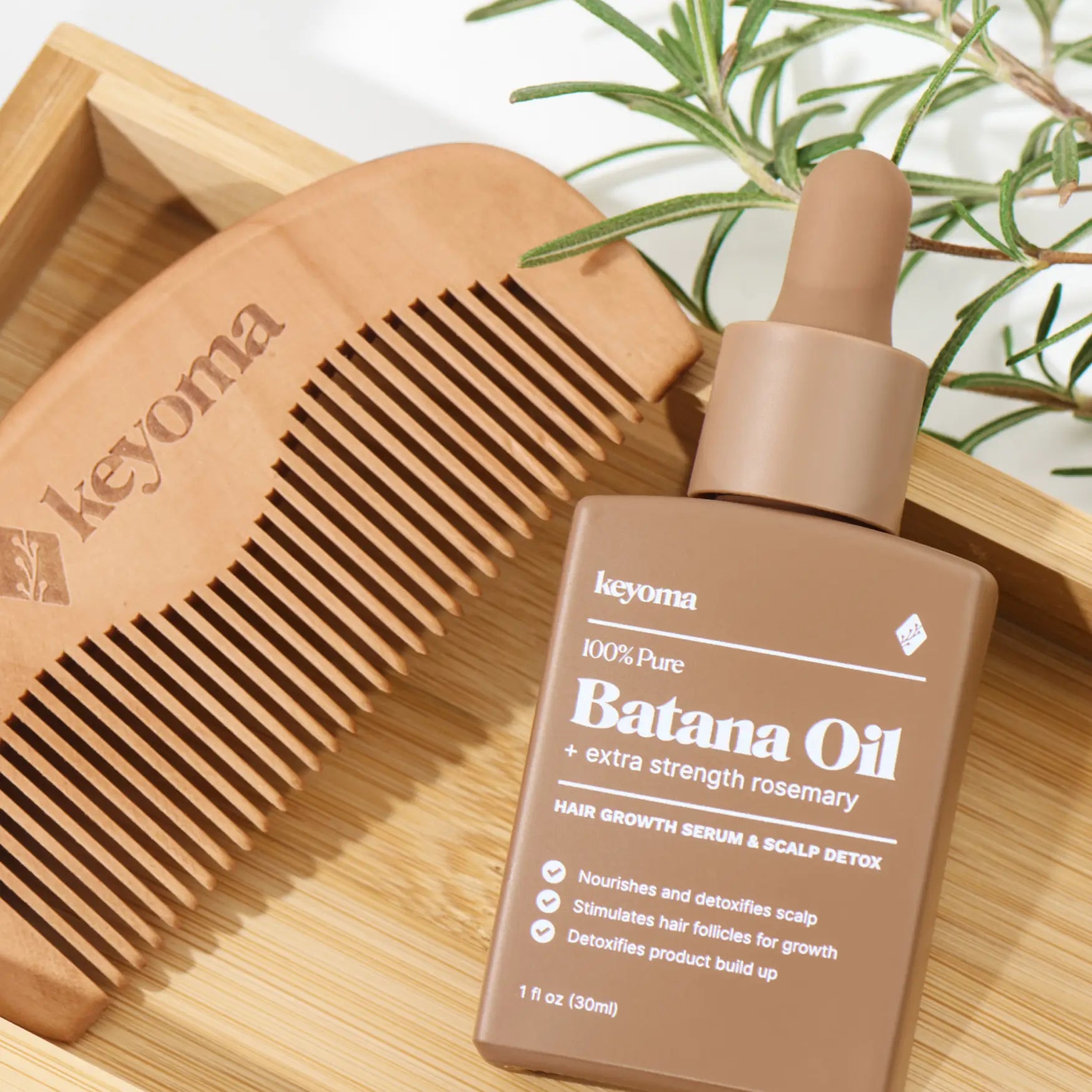
The original 30 ml bottle of Keyoma Batana Oil with Rosemary is below the TSA container-size limit. It still needs to fit inside your permitted liquids bag with your other carry-on products.
Airport and destination rules can vary. Check the requirements for every airport on your itinerary, especially during international travel.
If you need advice about the rest of your routine, Keyoma’s guide to keeping hair healthy while traveling covers travel-sized essentials, washing, styling, and environmental exposure.
What to Do When You Arrive
Do not pull the bottle from its sealed bag and immediately set it on clothing or furniture. A quick inspection can prevent a small leak from spreading.
Open the Sealed Bag Before Handling the Bottle
Place the bag on an easy-to-clean surface. Check the inside for visible oil and inspect the absorbent material if you used one.
If the bag is clean, remove the bottle and confirm that the collar remains secure. If oil is present, keep the bottle isolated until you identify where it came from.
Check the Dropper, Bottle Neck, and Oil
Look for a loose collar, damaged bulb, cracked bottle, chipped rim, or oil running from the threads. Check whether moisture, lint, or another product reached the opening.
Then examine the oil itself. A temperature change may make some botanical oils look cloudier or thicker without meaning they have spoiled. Let the sealed bottle return to its recommended room-temperature storage conditions before reassessing it.
A sour or stale odor, unexplained debris, persistent moisture, packaging damage, and several unexpected changes together deserve more caution. Keyoma’s guide to checking hair oil for rancidity explains how to compare smell, texture, appearance, packaging, and storage history.
Decide Whether to Clean, Monitor, or Discard It
Use the packaging condition to guide your next step.
-
Use normally: The bottle and dropper remain intact, the bag is clean, and the oil behaves as expected.
-
Clean and monitor: A small amount of oil is present around the outside of an intact closure, but nothing foreign appears to have entered the bottle.
-
Do not use: The glass is cracked, the rim is chipped, the dropper is damaged, the closure opened, or the oil was exposed to an unknown substance.
Never pour leaked oil back into the bottle. If you cannot tell whether the product remained protected, replacing it is safer than applying questionable oil to your scalp.
Pack Keyoma Batana Oil With a Backup Layer
Traveling with the original bottle keeps the label, product identity, and handling information with the oil. That is often more useful than transferring it into an unfamiliar container shortly before departure.
Before packing Keyoma Pure Batana Oil, clean the threads, close the dropper securely, and protect the bottle inside its own sealed bag. Keep it cushioned and away from objects that can press against the bulb or glass.
The goal is not to trust one closure with everything in your suitcase. A careful packing sequence gives the bottle several layers of protection and gives you a clean way to inspect it when you arrive.
FAQs
Can I bring hair oil in my carry-on?
Yes, if it meets the applicable airport-security rules. For US screening, liquid containers in a carry-on generally must hold no more than 3.4 ounces or 100 milliliters and fit inside the permitted quart-sized liquids bag. Check current rules before every trip.
Should I transfer hair oil into a travel bottle?
Not automatically. A smaller bottle may save space, but an untested container can have a weak closure or incompatible material. Transferring also increases handling and contamination opportunities. Use the original bottle when it meets travel rules and remains in good condition.
Does putting plastic wrap under a dropper stop leaks?
It may interfere with the way the dropper collar contacts the bottle. Do not place plastic wrap between the opening and closure unless the manufacturer has tested that method with the exact packaging. A sealed outer bag provides containment without changing the primary closure.
Should a hair-oil bottle be completely full before flying?
There is no reliable fill-level rule for every bottle. The result depends on the closure, bottle material, internal air space, oil, temperature, and pressure. Follow product-specific instructions when available and use secondary containment regardless of the fill level.
What should I do if hair oil leaks inside the bag?
Keep the bottle isolated and inspect the glass, dropper, threads, and product. Clean external residue with a dry cloth. Do not return spilled oil to the bottle. Discard the product if the packaging broke, the closure opened, or foreign material may have entered.
Featured Product
30% Off + 3 FREE Gifts
100% Pure Batana Oil + Rosemary


