

In this article
Your wash-and-go does not always need water and more styling product on day two. If the curl clumps still hold their shape, a small amount of hair oil can smooth surface frizz, add shine, and soften rough ends without taking the style apart.
The key is to treat oil as a targeted finishing step. Applying it across the entire head, raking it through the curls, or repeatedly scrunching can separate the clumps you want to preserve.
Start with less than one drop when possible. Spread it across both hands, press it onto the areas that need attention, and stop before your curls look uniformly coated.
Key Takeaways
-
Oil works best when curl clumps and most of the cast remain intact.
-
Start with less than one drop and add more only where needed.
-
Pressing and glazing disturb curl clumps less than raking or repeated scrunching.
-
Oil cannot restore curls that need water or renewed styling support.
Check Whether Oil Alone Can Refresh Your Wash-and-Go
Oil is not a complete curl refresher. It does not add water or rebuild hold after the curl pattern has collapsed. What it can do is reduce friction, smooth rough-looking areas, and add a light finish to curls that still have usable structure.
Before reaching for the dropper, let your hair down and look at the shape of the style. Do not judge it while the curls are still compressed from a bonnet, scarf, or pineapple.
Use Oil When the Curl Shape Is Still Intact
An oil-only refresh makes the most sense when the curls still look like curls. The outer layer may appear fuzzy, and the ends may look dull, but the clumps should remain recognizable.
Oil may be enough when:
-
Most curl clumps still hold their original shape
-
Frizz sits mainly across the outer surface
-
The ends feel rough or look less shiny
-
The remaining cast feels firm without visible flakes
-
The roots still have acceptable lift
-
The hair does not already feel coated
In this condition, your job is not to recreate the wash-and-go. You are refining the surface while leaving the structure underneath alone.
Skip an Oil-Only Refresh When the Style Has Collapsed
Some wash-and-go styles need more than surface smoothing.
Oil alone is unlikely to help when large sections have flattened, stretched, tangled, or lost their curl pattern. It is also the wrong first step when the hair feels dry throughout rather than rough in a few areas.
Skip the oil-only method if:
-
Large sections no longer form recognizable curls
-
The hair needs detangling
-
Your existing styler is visibly flaking
-
The roots or lengths already feel greasy
-
The curls need water before they regain their shape
Oil can make dehydrated hair look shinier for a short time, but shine does not mean the hair has gained water. If the curls need rehydration or renewed hold, adding more oil may leave them coated without improving their shape.
Choose the Smallest Useful Amount of Hair Oil
The right amount depends on your hair density, strand thickness, length, and the oil’s consistency. It also depends on how much gel, mousse, cream, or leave-in is already on your hair.
There is no single drop count that works for every wash-and-go. Use these ranges as starting points:
-
Fine, low-density, or wavy hair: Touch the coated dropper to one fingertip instead of releasing a full drop.
-
Medium-density curls: Begin with one small drop spread across both hands.
-
Dense, coarse, or coily hair: Start with one drop, apply it by section, and reassess before adding more.
-
Short hair: Use the residue left on lightly coated fingertips.
-
Long or dense hair: Divide the first amount across several sections instead of immediately dispensing more.
Rub the oil between your palms and across your fingers. Your hands should have a faint, even sheen. If you can see a bead of oil or feel liquid pooling in your palm, it is more than you need for the first pass.
Using a small amount also follows a broader principle from the American Academy of Dermatology. Its guidance on leave-in products recommends starting with the smallest amount that does the job and applying product only where the hair needs it. That principle is useful when refreshing a styled wash-and-go because the roots, middle layers, and ends rarely need the same amount.
Refresh the Wash-and-Go Without Breaking the Cast

A gel cast is not an unbreakable shell. Some parts may soften as you sleep or move. The goal on day two is to avoid unnecessarily breaking apart the curl clumps that still provide definition.
1. Let the Hair Settle Before Touching It
Remove your bonnet, scarf, or hair tie slowly. Avoid dragging fabric across the outer curls.
Let the hair fall for a few minutes. If the roots look compressed, place your fingertips beneath them and shake lightly without pulling through the lengths.
Inspect the style before applying anything. Separate the areas that need oil from the areas that already look defined. Leaving a good curl alone is part of the technique.
2. Warm a Minimal Amount Between Both Hands
Place your starting amount in one palm, then rub both hands together until the oil is spread evenly.
Coat the fingers as well as the palms. This prevents one curl from receiving a concentrated spot of oil.
Do not hold the dropper over your styled hair. A direct drop is difficult to distribute without raking or repeated handling, and it can leave one section noticeably heavier than the rest.
3. Press the Outer Layer Instead of Raking Through It
Place your open palms lightly around a frizzy section, as if you were sandwiching the curls between your hands. Press with minimal pressure, then move downward along the surface.
This method transfers a thin film of oil without pulling your fingers through the curl clumps.
Avoid running your hands from the roots to the ends in one firm pass. That motion may stretch the style, disturb the cast, and carry oil toward the scalp.
The American Academy of Dermatology’s curly-hair guidance notes that curly and coily hair is prone to dryness, frizz, and breakage. It also recommends avoiding dry brushing and handling tangles gently. A day-two oil refresh should follow the same low-friction approach.
4. Glaze Dry Ends With Coated Fingertips
After smoothing the outer layer, use the residue left on your fingertips for the ends.
Lightly pinch or glide over the final few inches of curls that look rough. Do not coat every end automatically. Some clumps may already have enough product from wash day.
If your ends need more attention than the rest of your hair, concentrate the entire second pass there rather than spreading more oil across the surface.
5. Protect the Cast While Restoring Shape
A flattened curl may need light cupping, but it does not need forceful scrunching.
Place the curl in your palm and gently lift it toward the scalp. Release it without squeezing several times. This can help the clump return to its position without breaking it into smaller, frizzier pieces.
Do not aim to remove every trace of crunch. A small amount of remaining cast may help the style keep its shape for another day.
Repeated scrunching also spreads oil farther than intended. What begins as a targeted refresh can quickly become a full-head application.
6. Stop and Reassess Before Adding More
Wait two to five minutes after the first pass. Oil may look more noticeable immediately after application and then settle as it spreads across the hair.
Check three areas separately:
-
Do the roots still have lift?
-
Does the outer layer look smoother?
-
Do the ends feel less rough without looking wet?
Add another trace only to a section that still needs it. Stop if the curls begin sticking together in broad, shiny groups or the roots start losing volume.
Adjust the Technique Based on the Result

A refresh that goes wrong often reveals whether the issue was dosage, placement, or hand movement. Use the finished result to adjust the next application instead of trying to correct it with more oil.
Curls Look Greasy or Lose Volume
You may have used too much oil, placed it too close to the roots, or coated sections that were already smooth.
Do not keep handling the hair in an attempt to spread the excess. That can create more frizz while moving the oil into a larger area.
For your next refresh, use fingertip residue and limit it to the outer canopy or dry ends. Fine and low-density hair may not need a full drop at all.
Cast Breaks and the Curls Turn Frizzy
Raking, pulling, and forceful scrunching are common causes. Applying oil does not require you to separate every curl.
Next time, flatten your hands and press the surface. Reduce the number of passes and avoid inserting your fingers into the interior of the style.
If you want guidance on product compatibility during the original styling process, read how to apply hair oil over gel or mousse. That decision belongs on wash day and should not be repeated during every refresh.
Hair Still Feels Dry After Oil
A dry feeling that remains after oil often means the hair needs water or conditioning, not another coating.
Oil can improve slip and surface softness, but it cannot supply moisture on its own. Adding several more drops may create shine while leaving the underlying dryness unchanged.
The AAD recommends conditioning curly hair and using products suited to its greater moisture needs as part of healthy curly-hair care. Save that deeper reset for a suitable refresh or wash routine instead of forcing oil to perform every job.
Existing Styler Starts Flaking
Stop adding oil and reduce manipulation. Flaking may come from existing product residue, an incompatible product combination, or the cast breaking into visible particles.
Oil does not universally prevent or cause flaking. The result depends on the formulas already present and how much product has accumulated.
If flaking continues across refresh days, cleansing the hair may give you a cleaner result than adding another layer.
Use Batana Oil as a Targeted Finishing Step
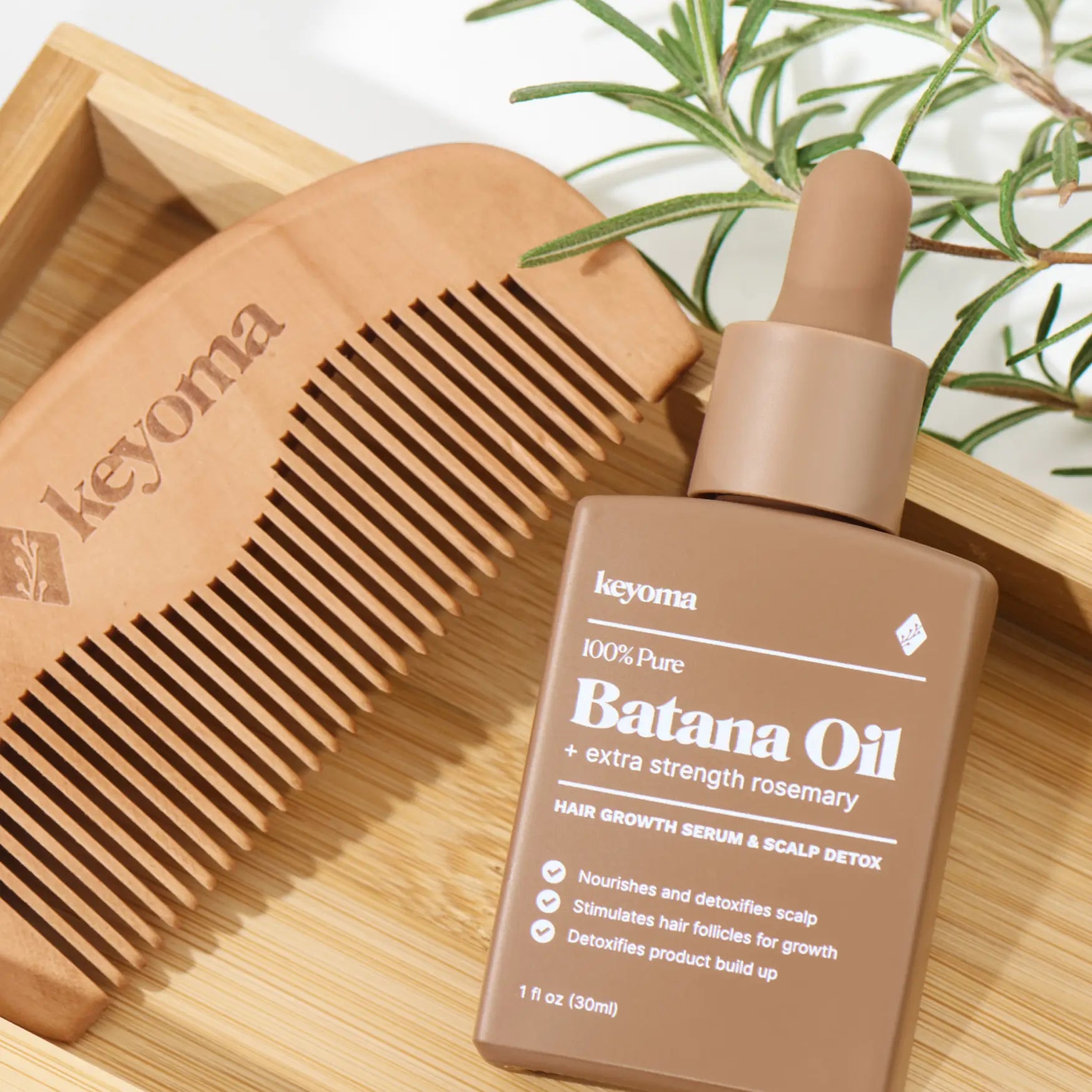
Keyoma Pure Batana Oil with Rosemary can serve as a targeted finishing oil when your wash-and-go still has definition but needs smoother ends or less visible surface frizz.
For this use, the amount should be far smaller than what you would apply during a pre-wash or scalp-oiling routine. Begin with fingertip residue or one small drop spread across both hands. Focus on the lengths and ends rather than dispensing it directly onto the scalp.
Keyoma’s formula contains batana and rosemary oils. Since it is an oil blend rather than a gel, mousse, or curl activator, it will not recreate hold after a clump has collapsed. Its role in this routine is limited and specific: add a light surface finish where the existing wash-and-go needs it.
If your usual routine involves several layers of moisture and styling products, review your wash-day product layering before assuming that every day-two curl needs more oil. Repeated layering can weigh down curls and make buildup more noticeable.
Refresh Your Curls With Less Friction and Less Oil
A successful day-two refresh should leave most of your wash-and-go untouched.
Inspect the curls first, spread the smallest useful amount of oil across your hands, and press only the areas showing surface frizz or roughness. Avoid raking through the style or coating the roots.
When your curls need a targeted finishing step, try Keyoma Pure Batana Oil with Rosemary in a controlled amount. A lighter application protects your definition, preserves your volume, and gives you room to add more only where your hair needs it.
Featured Product
30% Off + 3 FREE Gifts
100% Pure Batana Oil + Rosemary


