

In this article
A lot of people feel like their hair stops once it reaches a certain point. Maybe it never gets past the shoulders, mid-back, or waist no matter what you try. That can make it seem like growth suddenly shuts off.
But in most cases, your hair is not actually stopping. What usually happens is that it breaks as fast as it grows, so your overall length does not change. Your hair may still be growing, but the ends keep splitting or snapping before you notice extra length.
To make sense of that, it helps to look at how hair growth works, what sets your maximum length, and what keeps hair from getting longer.
Key Takeaways
-
Hair usually continues growing, but breakage can keep the total length unchanged.
-
Terminal length depends on genetics and how long hair remains in growth phase.
-
Split ends, dryness, and heat damage often reduce your ability to keep length.
-
Healthier scalp care and less breakage may help hair get longer with time.
Does Hair Actually Stop Growing at a Certain Length
Hair does not keep growing forever. Every strand follows a life cycle. When that cycle finishes, the strand sheds and a new one begins growing from the follicle.
That means your hair length is limited by how long each strand remains in its growth stage. People often call that maximum possible length terminal length.
So hair does not suddenly quit growing. Instead, it reaches a point where:
-
The hair cycle finishes
-
The strand sheds
-
A new strand grows in its place
-
Or the ends snap before the strand gets longer
Most people who believe their hair stopped growing are really dealing with breakage, damage, or a slower growth cycle, not a true growth ceiling.
What Determines How Long Your Hair Can Grow

Several things affect how long your hair can get before it sheds or breaks. The biggest ones are the hair growth cycle, terminal length, genetics, and the way you care for your hair.
Hair Growth Cycle and the Anagen Phase
Hair grows in cycles. Each strand moves through three main stages:
-
Anagen phase – growth phase
-
Catagen phase – transition phase
-
Telogen phase – resting phase before the strand sheds
The anagen phase matters most for length. That is the stage when hair is actively growing. The longer your hair stays there, the longer it can become.
For some people, the anagen phase lasts:
-
2–3 years
-
5–7 years
-
Sometimes even longer
Hair grows about 0.5 inch per month on average. If your anagen phase lasts 5 years, one strand could reach about 30 inches before it falls out.
When your anagen phase is shorter, your hair will not grow as long.
Terminal Hair Length Explained
Terminal length is the longest your hair can naturally reach before it sheds. Genetics and the length of your hair growth cycle mostly determine that limit.
For example:
-
Some people naturally grow hair to their waist
-
Some only grow hair to their chest
-
Some find it hard to grow hair past their shoulders
That does not mean the hair suddenly stopped. It means the strand reached its natural cycle limit, or it broke before it got that far.
Most people never reach their real terminal length because damage and breakage shorten the hair before it ever gets there.
Genetics vs Hair Care Habits
Genetics affects how quickly your hair grows, how thick it is, how long it stays in the growth stage, and how much length it can reach over time.
-
Hair growth speed
-
Hair thickness
-
Hair growth cycle length
-
Maximum hair length
Still, genetics is only one part of it. Your habits decide whether you actually keep the length once your hair grows.
-
Heat styling
-
Chemical treatments
-
Brushing habits
-
Scalp health
-
Nutrition
-
Hair oiling and moisture care
That is why two people with similar genetics can still end up with very different lengths. In many cases, better care leads to better length retention.
Why Your Hair Won’t Grow Past a Certain Length

If your hair always seems to stop at the same point, there is usually a reason. Most often, the issue is not slow growth. It is breakage.
Breakage Making Hair Look Like It Stopped Growing
Hair grows from the scalp, not from the ends. So when your roots keep producing hair but the ends keep snapping off, your overall length stays the same.
For example:
-
Hair grows 1 cm
-
Ends break 1 cm
-
Hair length stays the same
That makes it look like your hair stopped growing even though it is still coming in from the roots.
Breakage is the main reason hair does not get longer.
Split Ends and Damage
Split ends usually begin when the protective outer layer of the strand gets worn away. Once that happens, the tip starts to fray, separate, and weaken. Over time, that damage can travel upward, which makes the strand more likely to snap before you notice more length.
-
Dry hair
-
Heat styling
-
Bleaching
-
Hair dye
-
Rough brushing
-
Towel rubbing
-
Not trimming damaged ends
The issue is not only the split itself. A frayed end catches on other strands more easily, tangles faster, and becomes harder to protect while you wash, brush, or style. That is why untreated split ends often lead to more breakage and make it seem like growth has stopped.
Dry Scalp and Poor Hair Health
A healthy scalp matters for hair growth. When the scalp is dry, irritated, or covered with buildup, growth may slow and the hair can become weaker.
Scalp issues that can affect hair length:
-
Dry scalp
-
Dandruff
-
Product buildup
-
Poor circulation
-
Lack of scalp oiling
-
Tight hairstyles
When scalp health improves, hair growth and thickness often improve over time too.
Heat Styling and Chemical Damage
Heat tools and chemical treatments can slowly weaken the hair shaft. They strip moisture, wear down the outer layer, and leave strands less flexible. Once hair becomes dry and brittle, it cannot handle everyday washing, brushing, tying, and styling as well as healthier hair can.
-
Flat irons
-
Curling irons
-
Blow dryers
-
Bleach
-
Relaxers
-
Perms
-
Hair dye
You often see the damage first on the oldest part of the strand, which is usually the ends. That is why many people feel stuck at shoulder length. The roots keep growing, but the ends are too worn down to keep that new length.
Poor Diet and Hair Growth Issues
Hair needs enough protein, calories, and key nutrients to build strong strands and support normal growth. When your diet stays low for too long, hair may grow more slowly, shed more than usual, or become weaker through the mid-lengths and ends.
-
Slower hair growth
-
Weak hair strands
-
Hair shedding
-
Thin hair
-
Breakage
-
Less resilience over time
Important nutrients for hair health include protein, iron, zinc, vitamin D, and healthy fats. Biotin matters too, but it is usually more relevant when someone actually has a deficiency, not as a general answer for everyone.
-
Protein
-
Iron
-
Zinc
-
Biotin
-
Vitamin D
-
Omega fatty acids
Diet alone will not make hair grow faster overnight, but it does affect how well your hair holds up while it grows. When your intake is poor, the problem is often not only slower growth. It is weaker hair that breaks sooner and makes length harder to keep.
Signs Your Hair Is Breaking Instead of Growing
If your hair seems stuck at one length, the real issue may be length retention, not growth itself. In many cases, your roots are still producing new strands, but the older parts of the hair are wearing down and snapping before you see real progress.
-
Lots of split ends
-
Hair feels dry and rough at the ends
-
Hair gets thinner toward the bottom
-
Small broken hairs on your clothes, sink, or brush
-
Tangling at the ends
-
Uneven length
-
Ends look thin or see through
-
Noticeable root growth while the overall length stays the same
When several of these signs appear together, they usually point to breakage. That means the goal is not only to grow hair from the scalp, but also to protect the length you already have so it stays on your head longer.
How to Help Your Hair Grow Longer

If you want longer hair, the goal is not only faster growth. The real goal is keeping more of what you already grow. Most people do not need a miracle product. They need better length retention through less breakage, a healthier scalp, and habits that protect older strands.
Reduce Breakage and Split Ends
Length retention starts with how you handle your hair every day. Hair is most vulnerable when it is wet, tangled, dry, or already damaged at the ends. For me, gentler detangling usually made the ends feel less rough after wash day. Small habits repeated daily can either protect the shaft or wear it down faster than you notice.
-
Use a wide tooth comb to detangle with less pulling
-
Do not brush wet hair aggressively
-
Avoid tight hairstyles that create stress on the strands
-
Sleep on a silk or satin pillowcase to reduce friction
-
Avoid rubbing hair hard with a towel
-
Use conditioner regularly to improve slip and softness
-
Trim split ends before they travel upward
The point is not to treat your hair like it will break from everything. It is to reduce the repeated stress that turns normal wear into real damage. When the ends stay smoother and stronger, your hair has a better chance of showing more length over time.
Improve Scalp Health
Healthy hair begins with a healthy scalp because that is where every strand grows from. A scalp that feels irritated, dry, or coated in buildup can make it harder to maintain a good setting for steady growth. Scalp care does not need to be complicated, but it does need to stay consistent.
-
Massage the scalp gently to loosen buildup and support circulation
-
Shampoo gently but thoroughly so oil, sweat, and product do not sit too long
-
Remove product buildup that can leave the scalp feeling heavy or itchy
-
Keep the scalp moisturized if it tends to feel dry or tight
-
Use hair oils in a way that supports the scalp instead of coating it too heavily
-
Avoid very tight hairstyles that pull on the roots
A healthier scalp will not guarantee dramatic growth, but it can support stronger new hair from the beginning. That matters because stronger new strands are easier to keep as they grow longer.
Use Oils to Protect Hair Length
Hair oils can support length retention by reducing dryness, friction, and rough texture along the shaft. They do not make hair grow instantly, but they can help it hold up better between wash days and during styling. I noticed lighter amounts tended to protect the ends better without making them feel heavy. This matters most for older ends, which have gone through the most brushing, heat, and weather.
-
Reduce friction between strands
-
Add softness and help seal in moisture
-
Protect the ends from feeling brittle
-
Support scalp comfort in some routines
-
Reduce breakage from dryness
-
Make hair more flexible and easier to manage
Common oils used for hair care include:
-
Coconut oil
-
Argan oil
-
Rosemary oil, usually diluted
-
Castor oil
-
Jojoba oil
The best oil routine is the one your hair handles well and that you can keep doing. For some people, that means using a small amount on the ends. For others, it means a light scalp oil before wash day. What matters most is using oils to support healthier habits, not expecting instant growth from oil alone.
Trim Hair the Right Way
Trimming can feel frustrating when you are trying to grow your hair, but damaged ends do not repair themselves. Once the ends split and fray, that damage usually moves upward and causes more breakage higher along the strand.
-
Trim visible split ends before they spread
-
Focus on removing damage, not cutting off healthy length
-
Keep trims small when your ends are in decent shape
-
Trim based on condition, not a rigid schedule
-
Pay more attention to dryness, tangling, and thin ends than to the calendar
A trim does not speed up growth from the scalp. What it does is help you keep more usable length by stopping weak ends from turning into a bigger problem later.
Be Patient With the Hair Growth Cycle
Hair grows slowly enough that progress is easy to miss from week to week. Even healthy hair gains only a limited amount each month, so longer lengths take time. That is one reason people often think nothing is happening when the real issue is that their expectations are moving faster than the hair cycle.
-
About 0.5 inch per month on average
-
About 6 inches per year
-
Growth can look slower when shrinkage, texture, or breakage hides progress
-
Major length changes usually take months, not weeks
Patience matters because hair length is built through steady care, not quick fixes. When you support the scalp, protect the mid-lengths and ends, and give the process enough time, you are more likely to see real progress and keep it.
Continue Growing Your Hair With Keyoma
Long hair is often less about making hair grow and more about helping it stay. The sharper point is that your ends decide how much progress you ever get to see, because growth means very little when older strands keep wearing away before that progress shows up as length. That matters even more when hair grows only about half an inch per month on average.
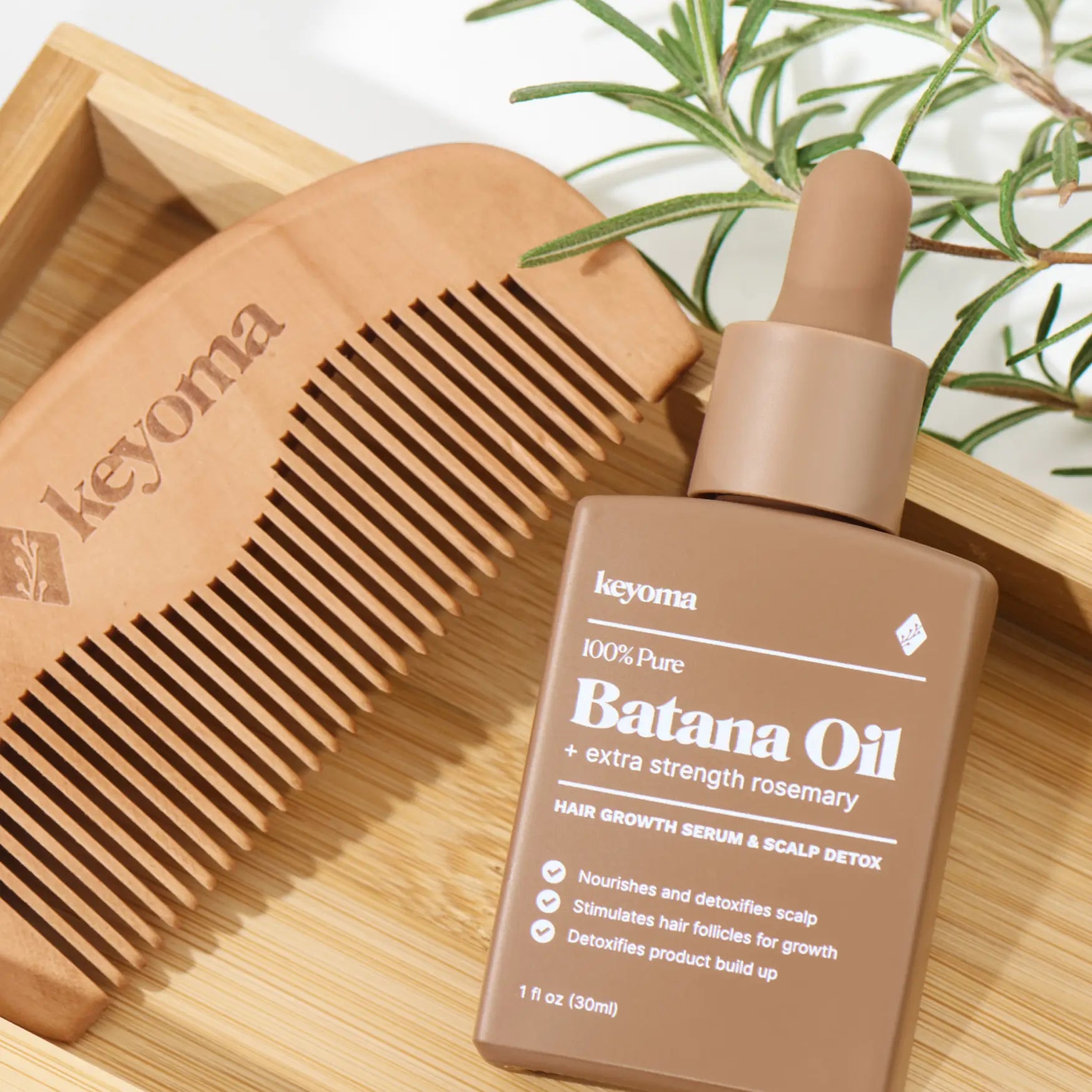
At that speed, small daily damage can wipe out weeks of progress without looking dramatic at first. Real length comes from protecting the part of your hair that has already survived the most friction, dryness, and stress. Choose a pure batana oil that helps your ends hold onto the length your scalp is already producing.
Featured Product
30% Off + 3 FREE Gifts
100% Pure Batana Oil + Rosemary


