

In this article
Batana oil can suit coarse hair that feels rough, loses softness quickly, or needs more slip than a lightweight oil provides. The wider strands may tolerate its rich texture well, especially when you apply it to dry mid-lengths and ends.
Coarse hair does not automatically need a large amount of oil, though. Strand diameter is only one part of the decision. Your hair length, density, porosity, scalp condition, and application goal also affect how much you need.
A controlled routine works better than saturating the entire head. Divide your hair into sections, apply a thin layer where it feels rough, and check the result before adding more. This makes the oil easier to distribute and much easier to wash out.
Key Takeaways
-
Coarse strands may tolerate rich oil, but density still affects the amount needed.
-
Sectioning distributes batana oil more evenly than increasing the total amount.
-
Pre-wash use is easier to control than a heavy leave-in application.
-
Soft, separated strands signal enough oil, while clumping often indicates excess.
Is Batana Oil a Good Match for Coarse Hair?
Batana oil can be a useful conditioning option for coarse hair. Hair oils coat the shaft and improve lubrication between strands, which can support slip, shine, easier detangling, and a smoother feel. Research reviews on how hair oils interact with the hair shaft describe lubrication as one of their main cosmetic benefits.
That coating can be helpful when wider strands feel wiry or rough soon after conditioning. Batana oil may also suit coarse ends that experience frequent friction from clothing, protective styles, brushing, or heat styling.
However, coarse hair only describes strand diameter. It does not tell you how many strands grow on your scalp or how easily your hair collects residue.
You can have:
-
Coarse, low-density hair that loses volume under rich products
-
Coarse, high-density hair that needs smaller sections for even coverage
-
Coarse, low-porosity hair that develops surface buildup easily
-
Coarse, weathered ends that tolerate more oil than the roots
-
Coarse straight hair that displays excess oil faster than coily hair
The wider strand does not give you permission to apply a heavy layer everywhere. If the hair already feels smooth or products tend to remain on its surface, batana oil may work better as an occasional pre-wash treatment than as a daily finisher.
It is also important to separate conditioning from hydration. Oil can form a lubricating layer and help the hair retain a smoother feel, but it does not add water. Your complete coarse hair routine still needs appropriate cleansing and a water-based conditioner.
How Much Batana Oil Should You Use on Coarse Hair?
There is no universal drop count for coarse hair. Two people can have strands with a similar diameter and still need different amounts.
Your total amount depends on:
-
Hair length
-
Hair density
-
Current dryness
-
Porosity
-
Formula thickness
-
Dropper size
-
Scalp or length application
-
Pre-wash or leave-in use
Coarse, high-density hair may require more total product because there are more strands to reach. Coarse, low-density hair may need far less, even when the individual strands feel wide and rough.
A rigid teaspoon recommendation ignores those differences. Your goal is to find the minimum amount that makes the intended section feel smoother without leaving it wet, sticky, or difficult to cleanse.
Start With One Section, Not the Whole Head
Instead of deciding on a full-head amount before you begin, use one section as a test area.
-
Divide your hair into manageable sections.
-
Choose one section near the nape or another rough area.
-
Spread a small amount of oil between your palms or fingertips.
-
Smooth it through the mid-lengths and ends.
-
Compare the treated section with an untreated section.
-
Add more only if the treated hair still feels rough after full distribution.
This method helps you separate an amount problem from a distribution problem. If the surface becomes oily while the inner strands remain dry, adding more oil over the entire section will increase residue without improving coverage.
Split that section into smaller pieces instead. Readers with many strands can use the separate guide to batana oil for high-density hair for more help reaching hidden layers.
Use the Finished Feel as Your Amount Guide
Your hands and the movement of your hair provide better feedback than a fixed measurement.
You likely have enough when:
-
The section feels smoother and more flexible
-
Individual strands still separate naturally
-
Your fingers move through the section with less drag
-
The hair has a light sheen instead of a wet appearance
-
Little oil remains on your hands after spreading
Reduce the amount when:
-
The hair separates into greasy pieces
-
The curl or wave pattern becomes stretched
-
The roots lose movement
-
The ends feel sticky instead of soft
-
Oil transfers heavily onto your hands, clothing, or pillow
-
The treated areas remain coated after shampooing
Do not assess only by how the hair feels immediately after application. A rich oil can appear well distributed while the hair is damp and then become more visible after drying. Check the final texture before repeating the same amount.
Section Coarse Hair for More Even Coverage

Sectioning is not only for high-density or tightly coiled hair. It helps you see where coarse hair needs oil and where it already has enough.
Without sections, the palms often pass repeatedly over the crown and outer layers. Those areas receive multiple coatings while the nape and inner ends remain untouched.
Choose the Number of Sections by Access
Begin with four sections. This provides a practical starting point without making the routine unnecessarily complicated.
Test whether you can comfortably reach the inner lengths and ends of each section. If you keep touching only the outside layer, divide that area again.
Your section count should depend on access:
-
Use fewer sections when the hair is short or low density.
-
Use more sections when the hair is long, dense, tangled, or layered.
-
Create a separate section for unusually rough or chemically treated areas.
-
Keep easily weighed-down areas apart from sections that need richer coverage.
More sections do not mean more oil. They help you distribute the same amount more precisely.
Apply From the Lower Sections Upward
Detangle your hair gently before oiling. Knots interrupt distribution and encourage you to add product when the problem is poor access.
Secure untreated hair with clips, then begin near the nape. Work through the lower sections before moving toward the crown. This reduces the chance of repeatedly touching and recoating the most visible areas.
Apply oil to the roughest lengths first. When the ends feel dry but the upper lengths remain smooth, press the product into the last few inches instead of dragging it from the roots downward.
Smooth the oil across one section until your hands no longer carry a noticeable film. Only then should you decide whether the section needs more.
Keep Scalp and Length Applications Separate
Scalp oiling and conditioning the lengths are different routines.
A scalp-focused product belongs along clean part lines and should follow its specific directions. Coarse strands do not mean the scalp needs a heavier dose. Your scalp may still be oily, sensitive, flaky, or prone to buildup.
A conditioning application belongs mainly on the mid-lengths and ends. These are the areas that experience repeated washing, brushing, friction, heat, and environmental exposure.
Do not apply oil from scalp to ends by default. Choose the target before opening the bottle.
If oiling causes redness, burning, persistent itching, swelling, or a rash, stop using the product. Do not continue applying it in an attempt to make the scalp adjust.
Choose a Batana Oil Routine for Your Goal
The best placement depends on what you want the oil to do.
|
Goal |
Placement |
Amount Approach |
Best Timing |
|
Soften rough lengths |
Mid-lengths and ends |
Thin section-by-section coating |
Before shampoo |
|
Support dry ends |
Last few inches |
Light film from the palms |
Damp or dry hair |
|
Target the scalp |
Clean part lines |
Follow formula directions |
According to the label |
|
Reduce surface frizz |
Outer lengths and ends |
Minimal finishing layer |
After styling |
Pre-Wash Routine for Rough Lengths
A pre-wash treatment is the most forgiving starting point for coarse hair. You can test a richer application without committing to a visible leave-in finish.
Use this sequence:
-
Detangle dry or slightly damp hair.
-
Divide it into four or more accessible sections.
-
Spread a small amount of oil between your hands.
-
Smooth it over the roughest mid-lengths and ends.
-
Stop when the hair feels lightly coated, not saturated.
-
Follow the treatment time for the exact formula.
-
Shampoo thoroughly and condition as normal.
Concentrate on areas that remain rough after regular conditioning. Do not cover sections that already feel soft merely to make the application uniform.
The wider surface of coarse strands may handle a richer coating, but the washout still matters. If the oil survives your normal shampoo, reduce the amount during the next treatment.
Light Application for Dry Ends
A leave-in application requires a lighter hand because the oil will remain visible after drying.
Blot excess water after washing, then apply your water-based conditioner or leave-in. Spread a minimal amount of oil across your palms. Press or smooth it over the last few inches of hair.
Do not pour or drop the oil directly onto one end section. Direct application creates concentrated spots that are harder to spread.
Let the hair dry completely before judging the result. Soft ends that remain separated suggest the amount worked. Waxy, stringy, or heavy ends need less product next time.
For readers comparing different weights and finishes, the guide to the best oils for coarse hair explains when batana oil fits better than lighter or heavier alternatives.
How to Wash Batana Oil Out of Coarse Hair

A good washout begins during application. Thin, even coverage is easier to remove than pools of oil placed on a few sections.
Avoid waiting until your hair feels saturated before stopping. Coarse strands can hold a visible coating even when they still feel substantial and strong in your hands.
Shampoo the Scalp and Oiled Areas Methodically
Fully wet your hair before adding shampoo. Water needs to reach the inner layers, especially if the hair is dense.
Return to the same sections you used during application. This helps you cleanse the areas that received the most oil without aggressively washing every strand.
Apply shampoo mainly to the scalp and any oily areas near the roots. Massage gently with your fingertips. Let the lather move through the lengths, then work it lightly into sections that received a richer pre-wash coating.
Rinse each section thoroughly. Pay attention to the nape, behind the ears, the inner crown, and the underside of long hair. These areas can hold residue even when the outer layer feels clean.
Condition the mid-lengths and ends afterward. Removing oil does not mean coarse hair must be left bare or stripped.
Do Not Compensate With Harsh Cleansing
When oil remains after washing, the first response is often to add more shampoo, scrub harder, or wash the lengths repeatedly. That can leave coarse hair rougher than it felt before the treatment.
If your regular shampoo cannot remove the oil comfortably, the application was likely too heavy for that routine.
Reduce the oil at your next wash day. You can also create smaller sections, move the application farther from the roots, or reserve the oil for the driest ends.
Change one variable at a time. If you change the amount, shampoo, treatment time, and frequency together, you will not know which adjustment improved the result.
Check for Hidden Residue
Do not judge cleanliness while the hair is still soaking wet. Residue becomes easier to detect as the hair dries.
Check the roots, nape, inner layers, and ends for:
-
Waxy or sticky patches
-
Strands separating into oily pieces
-
Flat roots after washing
-
Dullness beneath a visible coating
-
Sections that take much longer to dry
-
Faster collection of lint or styling residue
A coated result does not mean batana oil cannot suit your hair. It means the last amount, placement, or frequency needs adjustment.
Adjust the Next Application Based on the Washout
Your wash-day result should guide the next routine.
|
Result |
Adjustment |
|
Hair feels soft and moves freely |
Repeat the same amount and placement |
|
Inner sections remain rough |
Create smaller sections before adding more oil |
|
Roots feel greasy |
Move the application farther down the lengths |
|
Ends still feel dry |
Add a light second pass only to the ends |
|
Oil survives shampooing |
Reduce the amount or use it only before washing |
|
Hair feels coated after several uses |
Pause oiling and cleanse according to hair needs |
Track the result across two or three wash cycles. Coarse hair may need different placement as the ends become softer or styling habits change.
If only one area improves, keep the oil there. There is no benefit in expanding the application to the whole head when the rest of your hair does not need it.
Build a More Controlled Batana Oil Routine
Coarse hair may respond well to a rich oil, but the best result comes from control, not saturation. Begin with a washable pre-shampoo treatment, divide the hair until every section is accessible, and apply oil only where the strands feel rough.
Use softness, movement, and washout as your measuring tools. If the hair remains separated and cleanses comfortably, the amount is close. If it becomes sticky, flat, or coated, use less or change the placement.
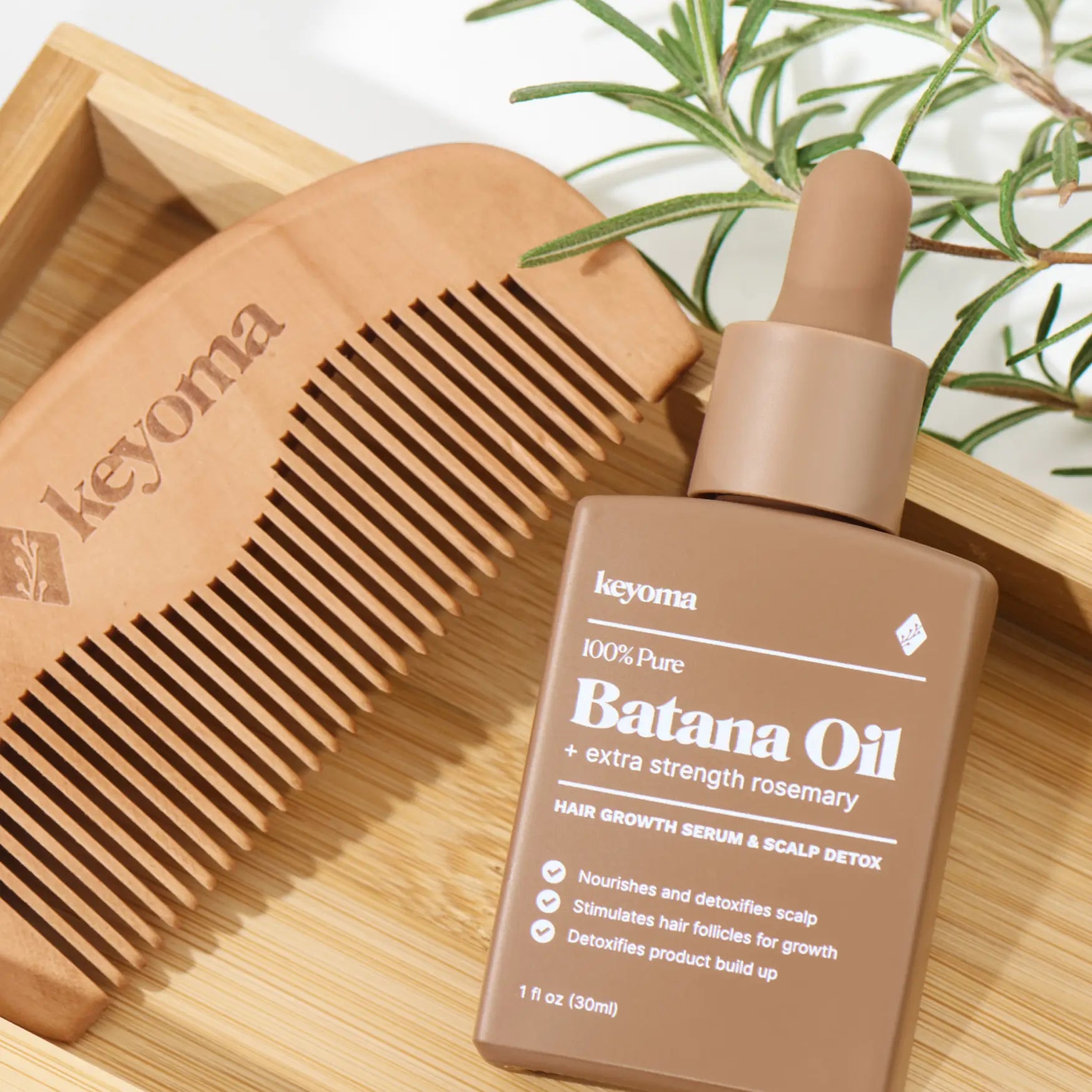
Keyoma Pure Batana Oil with Rosemary provides a simple two-ingredient option for targeted scalp use. Follow the current product directions for scalp application. When using oil through coarse lengths, keep the layer thin, focus on the driest sections, and let the final feel determine your next application.
Featured Product
30% Off + 3 FREE Gifts
100% Pure Batana Oil + Rosemary


