

In this article
Fine curly hair can use batana oil, but the amount matters. A generous application may leave fine strands looking flat, oily, or grouped into stringy sections instead of soft, defined curls.
Micro-dosing gives you more control. You start with the smallest amount you can dispense, apply it to one curl zone, and check the result before touching the rest of your hair. This helps you find out whether batana oil suits your curls without coating every strand.
The goal is not complete coverage. It is to use enough oil to soften or polish the areas that need it while preserving curl movement, separation, and root lift.
Key Takeaways
-
Start with the smallest amount your dropper or fingertip can dispense.
-
Apply to dry ends before spreading any residue farther up your hair.
-
Judge the dose by curl movement, separation, and root lift before adding more.
-
Change only one variable when adjusting your next application for clearer results.
Why Fine Curls Need a Smaller Starting Dose
Fine and curly describe two different parts of your hair.
Fine refers to the diameter of each strand. Curly refers to the shape the strand follows. You can have fine hair with loose waves, defined spirals, or tight curls. You can also have many fine strands, so fine hair is not always low-density hair.
The curved shape can make it harder for natural scalp oils to travel evenly through the lengths. Your ends may feel rough or look frizzy even when your roots become oily quickly.
However, fine strands have less surface area than coarse strands. They can look coated sooner when you apply a rich oil. Too much product may join several strands into heavy curl groups, reduce bounce, or make the roots appear flatter.
This does not mean batana oil is automatically too heavy for fine curls. It means you need a more controlled starting point. Cleveland Clinic recommends using a small amount of oil on dry ends and notes that oils can weigh down some fine hair types. Hair type, styling history, natural oil levels, and other individual factors can all affect the result. Cleveland Clinic
Oil can add lubrication, softness, and surface shine, but it does not supply water. If your curls feel dry because they need better conditioning, adding more oil may leave them coated without solving the rough feeling.
How to Micro-Dose Batana Oil on Fine Curls

A micro-dose is not a fixed number of drops. Droppers release different amounts, and two people with fine curls may have different lengths, densities, and levels of dryness.
Treat micro-dosing as a testing process. Begin with less than you think you need, observe the result, and increase the amount only when a specific section still needs attention.
Start With Dry, Fully Styled Hair
For your first finishing test, wait until your curls are completely dry.
Dry hair makes changes in shine, curl separation, and volume easier to see. Damp hair can temporarily look darker and more grouped together, making it harder to tell whether the oil or the water changed the result.
Finish your normal routine and let any curl cream, mousse, or gel dry before introducing the oil. Avoid testing a new oil alongside several other new products. If the result is heavy or uneven, you will not know which product caused it.
You can explore applying oil to damp or dry hair after you understand how your curls respond. For the first test, dry hair provides the clearest visual comparison.
Dispense the Smallest Controllable Amount
Use the smallest amount your container allows. This may be one tiny drop or a light touch of oil on a clean fingertip.
Rub the oil across both palms and all your fingers until it is almost invisible. Your hands should feel lightly conditioned, not wet or glossy.
If you can see a thick layer across your palms, do not place all of it on one curl section. Remove some or spread it more thoroughly before touching your hair.
This step matters because the area that receives the first contact gets the highest concentration. Poorly distributed oil may create one slick patch even when the total amount seems small.
Treat One Curl Zone First
Choose one area near the ends that looks dry, rough, or frizzy. Do not begin at the roots or apply the oil across your entire head.
Lightly glaze your hands over the selected section. You can also scrunch the ends once or twice if that suits your curl pattern. Avoid pulling your fingers repeatedly through the curl because too much handling can separate or stretch its shape.
Leave the surrounding curls untreated. This gives you a direct comparison between the oiled section and the rest of your hair.
The treated curl should look slightly smoother while keeping its original shape. It should not appear wet, unusually dark, or joined to several neighboring curls.
Wait Before Adding More
Give the oil a few minutes to settle before deciding whether you need more.
Check the treated section in natural light when possible. Move your head gently and watch how the curl responds. A suitable micro-dose should allow the curl to move naturally instead of hanging as one heavy piece.
Look for four signs:
-
The curl still springs back after being moved
-
Neighboring curls remain visibly separate
-
The surface looks polished rather than wet
-
The roots retain their original lift
If the section still feels rough, spread another trace amount across your hands and touch only that area. Do not increase the amount everywhere based on one dry curl.
Choose the Right Micro-Dose Method
The right placement depends on what you want the oil to do. A finishing dose and a pre-wash dose serve different purposes, so they should not use the same amount or timing.
|
Goal |
Starting Placement |
Timing |
Stop When |
|
Smooth dry ends |
Last few inches |
After curls are fully dry |
Ends look polished and remain separate |
|
Soften a gel cast |
Residue across palms |
After the cast forms and hair dries |
Curls soften without losing definition |
|
Control isolated frizz |
Individual outer curls |
On dry hair |
Flyaways settle without a glossy coating |
|
Test a richer treatment |
Mid-lengths and ends |
Before shampooing |
Target sections feel lightly coated |
|
Refresh next-day curls |
Only visibly dry sections |
After your regular refresher dries |
Shape improves without flattening |
Oil should not replace water, conditioner, leave-in products, or curl stylers. If your curls lack moisture or hold, adding more oil may create shine without improving their shape.
Smoothing Dry Ends
Dry ends provide the safest starting area because they are farther from the scalp and often need more surface lubrication than newer growth.
Press the remaining oil into the last few inches. Avoid repeatedly scrunching the entire length because this can carry the product upward.
Softening a Gel Cast
Some curl gels leave a firm shell as they dry. Once your hair is fully dry, a trace of oil across your palms can reduce the rigid feel while you gently scrunch the curls.
Use the residue already spread across your hands instead of placing a fresh drop on each section. Stop when the curls feel softer. Continued handling can loosen definition even if you do not add more oil.
Controlling Isolated Frizz
Treat individual outer curls instead of smoothing oil across the entire surface of your hair. Pinch or glaze the frizzy section lightly, then leave it alone.
Not every flyaway needs to be pressed into the main curl pattern. Trying to remove all visible frizz can lead to more oil and more handling than fine curls tolerate.
Refreshing Next-Day Curls
Oil alone will not restore a curl that lost its shape overnight. Complete your usual water-based refresh first and let the hair dry. Then apply a trace amount only if certain ends still look rough.
Do not add a full new dose each morning. Oil left from earlier applications can accumulate even when the curls no longer look shiny.
Signs Your Micro-Dose Is Still Too Large
A micro-dose can still be too much for a particular section. The best amount is the smallest one that creates a useful change without reducing movement.
Watch for these signs:
-
Curl groups look wider, stringier, or darker than usual
-
The ends remain defined but hang with less spring
-
Your roots lose lift after repeated scrunching
-
The hair feels slick after you distribute the oil
-
Residue transfers easily to your fingers
-
Your next wash requires more cleansing than normal
Oil can also travel upward through handling. You may apply it below the midpoint, then move it closer to the roots while scrunching, fluffing, separating curls, or adjusting your hair throughout the day.
Do not judge the dose by shine alone. A glossy finish may look appealing under bright light while the curls feel heavy in normal movement. Check both appearance and behavior.
If several of these signs appear together, review the complete guide to recognizing when hair oil is too heavy.
How to Adjust the Next Application

When the result is not right, change one part of your routine at a time. Changing the amount, timing, placement, and styling products together makes it harder to identify the problem.
Curls Look Flat
Reduce the amount first. Keep the oil on the last few inches and avoid touching the root area after application.
You may not need to replace the oil if a smaller dose preserves more lift.
Roots Look Oily
Check your hand placement. Product can move upward when you scrunch the lengths repeatedly or run your hands under the roots to add volume.
Apply lower next time and wash your hands before fluffing the root area.
Shine Looks Uneven
Spread the oil more completely across your hands. Concentrated product on two or three fingertips can leave dark or glossy marks on the first curls you touch.
Treat smaller zones and use lighter contact.
Ends Look Stringy
Stringy ends often mean too many fine strands have been grouped by the oil. Use less product, apply it to fewer curls, or reserve the oil for a pre-wash treatment.
Do not keep separating the curls with oily fingers. This may distribute the excess into surrounding sections.
Hair Still Feels Dry
Do not assume that a larger dose is the next step. Your curls may need water and conditioning support rather than another surface layer.
Review your shampoo, conditioner, leave-in product, and drying method before increasing the oil.
Residue Builds Up
Reduce how often you apply oil and make sure you cleanse your scalp and hair thoroughly. Fine curls may show buildup before thicker strands because a small amount of residue can change their movement.
You do not need to follow a fixed oiling schedule. Reapply when a specific section needs it, not because another wash day has passed.
When a Pre-Wash Micro-Dose Makes More Sense
A leave-in finish is not the only way to use batana oil. If even a small finishing dose makes your curls look flat, try a controlled pre-wash application instead.
Apply a small amount to dry mid-lengths and ends before shampooing. The hair should feel lightly coated, not saturated. Leave the roots and scalp untreated, especially if they become oily or flaky easily.
You do not need to soak your hair overnight. Cleveland Clinic recommends applying a small amount to dry ends, leaving it on for about 20 minutes to an hour, and then washing it out. The same guidance notes that scalp oiling does not suit everyone and may be a poor choice for people prone to dandruff. Cleveland Clinic
After washing, compare the result with an oil-free wash day. Ask:
-
Do the ends feel smoother after styling?
-
Did the curls retain their normal bounce?
-
Was the oil easy to wash out?
-
Did the hair require more shampoo than usual?
-
Did the result last beyond the first few hours?
If the hair remains coated after washing, reduce the amount or shorten the treatment during your next test.
Make Batana Oil Fit Your Curl Routine
A successful routine does not require applying oil everywhere. Fine curly hair often responds better when you reserve richer products for the driest sections.
Begin below the midpoint. Use the first contact on the ends and only the residue left across your hands on higher sections. Avoid the scalp during your initial tests.
It can help to record three details:
-
How much oil you dispensed
-
Whether you used it before or after washing
-
How the curls looked and moved later that day
Keep your other styling products consistent while testing. If one micro-dose gives your ends enough softness without changing the curl pattern, repeat that amount instead of increasing it.
The amount that works after a clarifying wash may feel different when several styling layers are already present. Weather, wash frequency, hair length, and recent chemical or heat styling can also affect the result. Treat your dose as adjustable rather than permanent.
Keep Fine Curls Light With a Smaller Dose
Fine curls do not need to be saturated to benefit from a finishing oil. Start with one dry section and the smallest amount you can control. If that section remains springy, separate, and light, repeat the same dose elsewhere instead of immediately using more.
Try Keyoma Pure Batana Oil as a targeted finishing or pre-wash step. Let your curls decide the limit. A light, controlled result is more useful than complete coverage that costs you definition and volume.
Frequently Asked Questions
Can fine curly hair use batana oil?
Yes, but the result depends on the amount, placement, existing styling products, and how your hair responds. Batana oil is rich, so begin with a targeted test instead of applying it across your entire head.
How much batana oil should fine curls use?
There is no universal drop count. Use the smallest amount your container can dispense, spread it thoroughly across both hands, and test it on one section. Add more only when that section remains dry without looking coated.
Should I apply batana oil to wet or dry curls?
For your first finishing test, apply it after your curls are fully dry. This makes changes in definition, shine, and weight easier to observe. You can test a separate pre-wash application on dry lengths.
Can I use batana oil to break a gel cast?
You can use a trace amount after the gel has dried completely. Spread the oil until it is nearly invisible across your palms, then scrunch gently. Stop once the rigid feel softens so you do not loosen the curl pattern.
Why do my curls look stringy after applying oil?
You may have used enough oil to group several fine strands together. Reduce the amount, distribute it more evenly, and limit the next application to fewer curls.
Should fine curly hair use batana oil every day?
Daily use is not automatically necessary. Reapply when specific sections need it, and reduce the frequency if your curls lose volume, feel coated, or develop residue between washes.
Featured Product
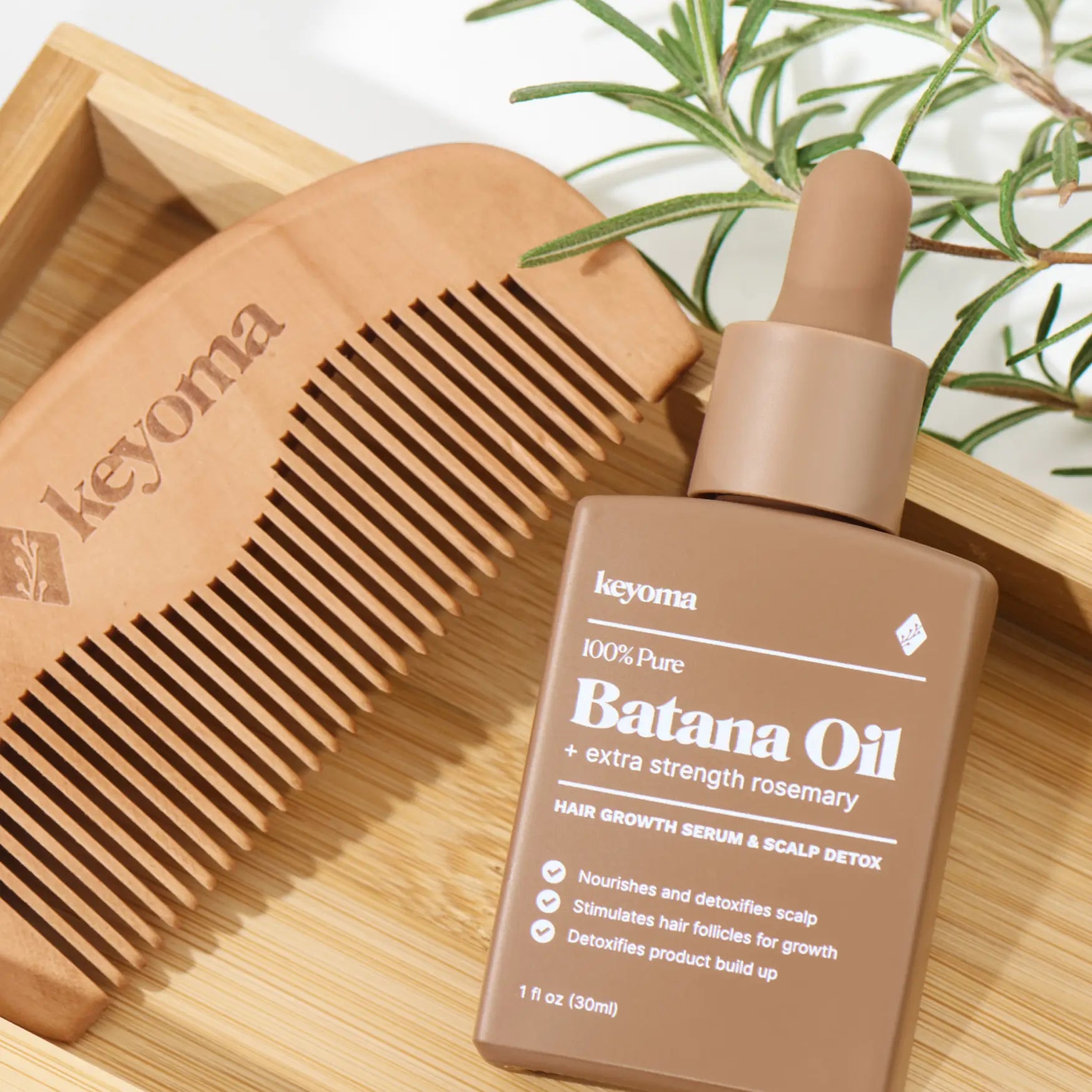
30% Off + 3 FREE Gifts
100% Pure Batana Oil + Rosemary


