

In this article
Protective styles can reduce daily handling, but they can still feel dry, tight, itchy, or heavy when your oil routine is off. A good batana oil protective styling routine should feel light, targeted, and easy to keep up between wash days.
Batana oil can fit into protective styles when you use it sparingly and place it carefully. The goal is not to make your scalp shiny or coat every braid, twist, loc, or extension. The goal is to help dry areas feel softer, add a healthy-looking finish, and support comfort without creating buildup.
It also helps to keep expectations realistic. Batana oil is a rich hair oil, not a guaranteed hair growth treatment. If your style feels painful, your edges are sore, or your scalp has bumps or irritation, adding more oil is not the fix.
Key Takeaways
-
Use batana oil lightly in protective styles to avoid buildup.
-
Apply it only where your scalp or hair needs it.
-
Focus on exposed parts, rough areas, and dry ends.
-
Cleanse when oil, flakes, sweat, or itch start to build up.
Can You Use Batana Oil In Protective Styles?
Yes, you can use batana oil in protective styles, but the amount and placement matter. Batana oil is richer than many lightweight oils, so a little can go a long way on braids, twists, locs, cornrows, and leave-out. When used too heavily, it can sit on the hair or scalp and make the style feel greasy, dull, or harder to refresh.
Where To Put Batana Oil In A Protective Style

The best placement depends on what your style exposes. Some styles give you easy scalp access along clean parts. Others hide most of your natural hair under extension hair. Batana oil works best when it is used only where it can actually reach dry scalp or hair, not poured over the whole style.
Avoid treating every protective style like loose hair. Braids, twists, locs, cornrows, and extensions can trap product differently, especially when gels, edge control, holding sprays, leave-ins, or mousse are already in the routine. Targeted oiling keeps the style fresher and makes wash day less difficult.
Apply It Where You Have Scalp Access
Use a small amount along visible parts if your scalp feels dry. Touch the oil to the scalp with your fingertips, then smooth lightly instead of scratching. Your scalp does not need to look glossy. If the skin looks wet or shiny after application, you probably used more than you needed.
Cornrows, box braids, twists, and locs often give you enough access to apply oil in thin lines or small dots. Focus on the areas that feel dry rather than covering every part. If your scalp often feels tight, flaky, or uncomfortable, this dry scalp resource can help you separate simple dryness from irritation that may need a different approach.
Use Less Around Your Edges
Edges need a lighter hand because they already deal with tension, brushing, gels, scarves, and tight styling. The hairline is also one of the first areas where traction-related thinning may show. AAD guidance for Black hair care says braids, cornrows, or weaves should not hurt, and that pain during styling is a sign of damage.
Use only a trace of oil around the hairline, or skip the area if it feels sore, bumpy, tight, or irritated. Do not use oil to “push through” pain from a tight install. If your edges are tender, the better move is to reduce tension, avoid extra brushing, and stop adding heavy layers of edge control and oil over the same fragile area.
Focus On Dry Ends When They Are Exposed
Dry ends often benefit most from a tiny amount of batana oil, especially when they are exposed in twists, locs, loose braided ends, or leave-out. Warm the oil between your fingers first, then smooth it over the roughest areas. The goal is a softer feel and a smoother finish, not a coated or wet look.
Ends are older and more fragile than new growth, so they often need gentler care. AAD recommends coating the ends with conditioner on wash day because they are the oldest and most fragile part of the hair. Between washes, a light oil touch can help dry ends feel less rough, especially when paired with nighttime friction protection. For more targeted care, see this page on hair oil for dry ends.
Avoid Coating Extension Hair Heavily
Extensions can look dull or feel dry, but heavy oiling usually does not solve that problem. Synthetic hair may not absorb oil the way your natural hair does, so too much can sit on the surface, attract lint, and make the style feel coated. Human hair extensions may tolerate oil better, but they can still become weighed down.
If you are using batana oil for braids, batana oil for twists, or batana oil for locs with added hair, apply it mainly where your natural hair or scalp is accessible. A very small amount can be smoothed over rough-looking areas, but avoid dragging oil down every extension length by default. For loc-specific product choices, this loc maintenance page may help you keep the routine cleaner.
How To Avoid Oil Buildup In Braids, Twists, And Locs
Oil buildup in braids, twists, and locs usually comes from repeated layering. A little oil may feel good on day one, but daily reapplication can mix with sweat, flakes, lint, scalp oil, gels, and sprays. Over time, the style can feel itchy at the roots and dull through the lengths.
A flexible protective style oil routine works better than a fixed daily rule. For dry scalp or dry ends, try oiling one to two times per week. For a normal scalp, once weekly or only when needed may be enough. For an oily scalp, flakes, itch, or visible buildup, reduce oiling and focus on cleansing instead.
AAD notes that shampoo and water are what clean the hair and scalp by removing dead skin cells, oil, microorganisms, and accumulated product. The British Association of Dermatologists also advises washing when there is excess product buildup or unwanted oiliness, since not washing when needed may irritate the scalp or worsen dandruff. Oil should support the routine, not replace cleansing.
Keep these guardrails simple:
-
Do not apply oil daily by default.
-
Do not use oil to hide itch, soreness, flakes, or odor.
-
Avoid layering heavy creams, gels, sprays, mousse, and batana oil over the same areas.
-
Apply oil only to targeted parts, rough spots, or dry ends.
-
Cleanse your scalp when sweat, flakes, oil, or product start to collect.
Night care also matters. A satin bonnet, silk scarf, or satin pillowcase can reduce friction and help keep lint from clinging to oily areas. BAD also recommends covering hair with satin or silk at bedtime to help minimize friction. If buildup is already a recurring issue, this scalp buildup page can help you plan a cleaner routine.
A Simple Batana Oil Protective Styling Routine
A simple routine starts with checking the style before adding anything. Look at your scalp in natural light if you can. Notice whether you are dealing with dryness, flakes, tightness, soreness, buildup, or rough ends. Each issue calls for a slightly different response.
Warm a tiny amount of oil between your fingertips before applying. Batana oil can feel dense, so warming it first helps it spread more evenly. I’ve noticed that rubbing it between fingertips first makes over-application much easier to avoid.
Follow this routine when your style needs a refresh:
-
Check your scalp and style first. Look for dryness, tightness, flakes, soreness, or buildup before applying oil.
-
Warm a tiny amount. Start with a small dab on your fingertips, then add more only if needed.
-
Apply only where needed. Target exposed parts, dry ends, or rough areas instead of coating the whole style.
-
Smooth gently. Press and glide lightly without scratching, tugging, or pulling at the base.
-
Let it settle. Wait before adding more, since rich oils can spread after a few minutes.
-
Cover at night. Use satin or silk to reduce friction, lint, and roughness.
-
Cleanse when needed. Do not keep adding oil over sweat, flakes, odor, or visible buildup.
If your scalp keeps itching even after a lighter routine, do not assume dryness is the only cause. Cleveland Clinic notes that seborrheic dermatitis can cause itchy, flaky, scaly, or greasy patches on the scalp, and scratching can break the skin and raise infection risk. AAD also lists several possible causes of scalp itch, including ringworm, psoriasis, eczema, and other conditions that may need a dermatologist.
For timing, let your scalp guide you more than the calendar. A dry-feeling scalp may do well with light oil once or twice weekly. A balanced scalp may need less. An oily or flaky scalp usually needs less oil and more attention to cleansing. This hair oiling frequency guide can help you adjust without turning oiling into a daily habit.
Use Batana Oil Protective Styling Routine Without Buildup
A good batana oil protective styling routine is light, targeted, and honest about what oil can do. Use it to soften dry ends, add shine, reduce a rough feel, and support scalp comfort where your style gives you access. Do not use it to cover pain, flakes, or heavy buildup.
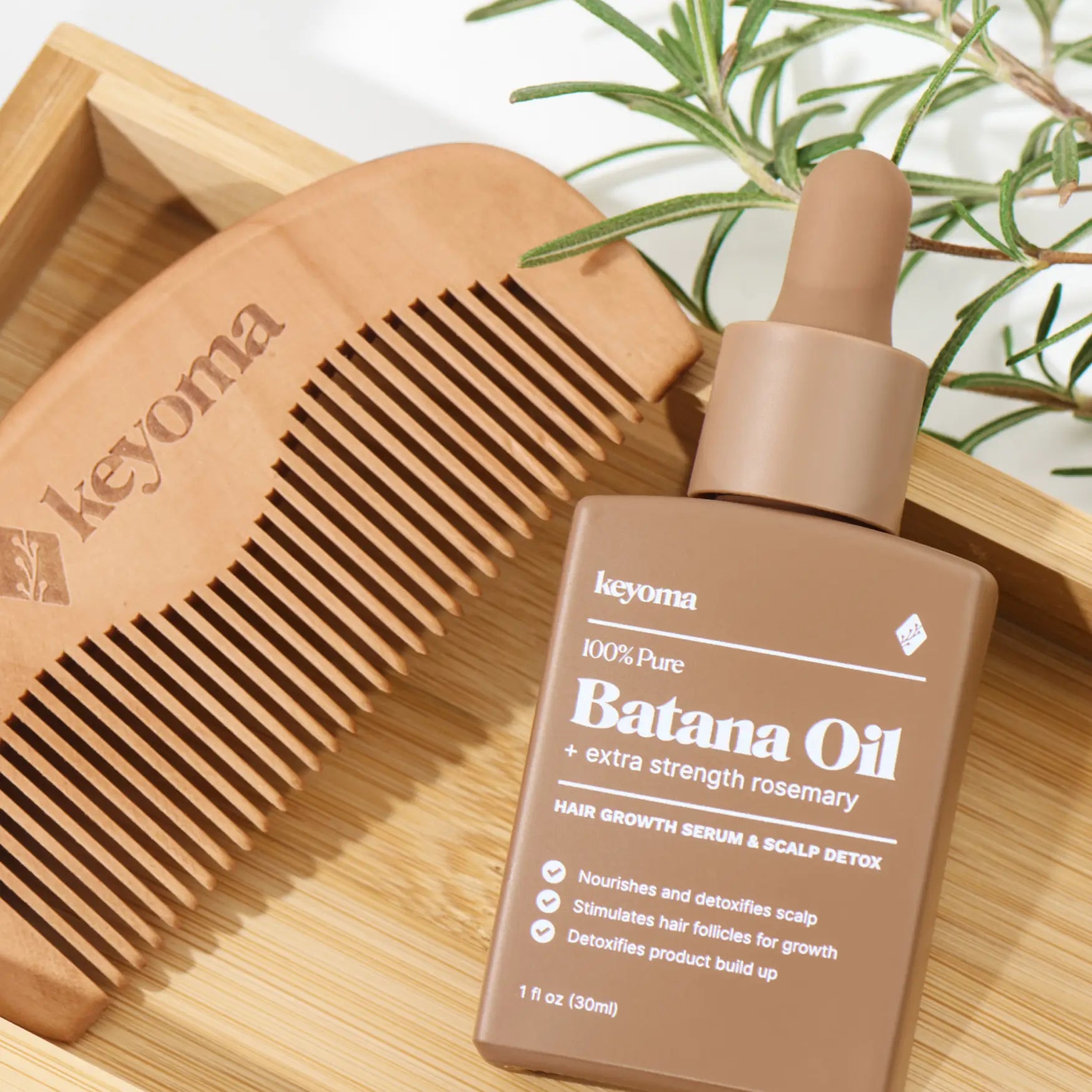
For a simple product option, pure batana oil can be used sparingly on exposed parts, dry ends, and rough areas during protective styling. Use a small amount first, wait for it to settle, and add more only when your hair or scalp truly needs it.
If you want an oil-and-routine option, the Keyoma Starter Kit gives you a more complete starting point for scalp care and hair oiling. Keep the same rule no matter what you use: less oil, better placement, and regular cleansing when buildup appears.
Featured Product
30% Off + 3 FREE Gifts
100% Pure Batana Oil + Rosemary


